
Watch Video Guide
Success Factors
Key Timings
- Upon Waking
- After Meals
- After Playtime
- Before Bedtime
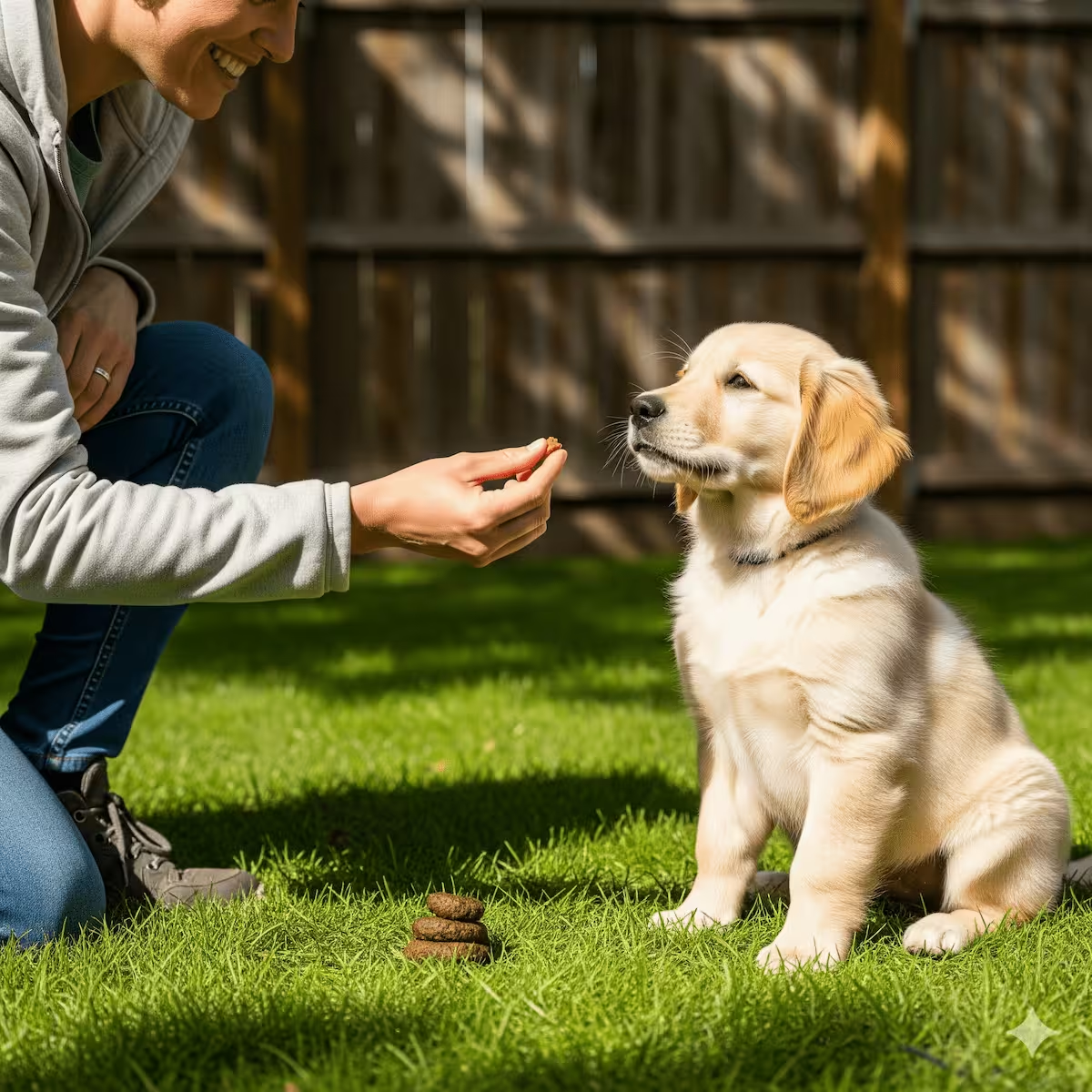
Puppy Potty Training for Beginners
Science-Based Approach
Goal: Build a reliable “go outside” habit via operant conditioning—mark and reward outdoor elimination so the behavior repeats. Prevent indoor mistakes with management.
Why it works: Puppies repeat behaviors that earn immediate, high-value reinforcement. Tight timing (1–2 seconds) after eliminating outdoors creates a clear contingency.
Step-by-Step Plan
- Predictable schedule: After waking, meals, play, and every 60–90 minutes (younger: 30–45 min).
- Designated potty spot: Same area; minimal distractions. Quiet wait.
- Mark & reward: Say “Yes!” as they finish and deliver 3–5 small treats.
- Indoor supervision: Tethers, baby gates, or a small pen between outings.
- Accidents: Interrupt gently; escort outside; enzyme-clean the area.
Common Mistakes & Fixes
- Late rewards: Reinforces door-coming, not pottying. Pay at the spot.
- Too much freedom too soon: Expand access after 7–10 days accident-free.
- Withholding water: Provide normal water; add planned outings instead.
Watch Video Guide
Time Allocation
Core Principles
- Choice & Autonomy
- Go Slow (Sub-Threshold)
- High-Value Rewards
- Never Use for Punishment
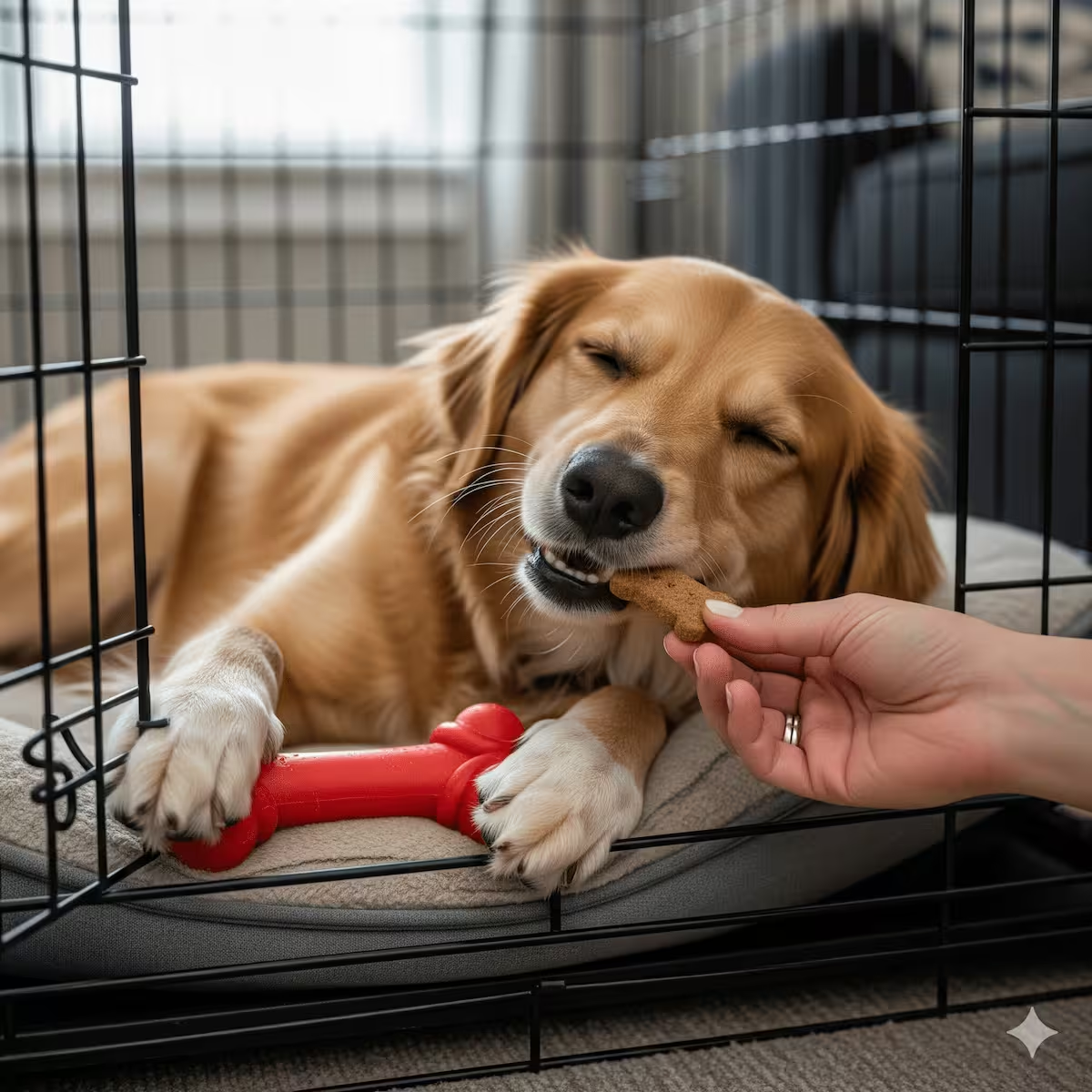
Puppy Crate Training Made Easy
Science-Based Approach
Goal: Pair the crate with comfort and rewards so it predicts safety and rest. Use classical conditioning plus operant conditioning.
Why it works: Short, positive sessions prevent fear and avoid crossing the puppy’s stress threshold. Autonomy (open door, choice to explore) speeds learning.
Step-by-Step Plan
- Set up: Proper size, soft bedding, safe chew. Quiet area.
- First reps: Toss treats just inside; door open; mark “Yes!”.
- Build duration: Stuffed chew with door briefly closed; open while calm.
- Variable exits: Sometimes open before chew is finished.
- Night routine: Last potty break; white noise if needed.
Common Mistakes & Fixes
- Too long, too soon: If whining escalates, shorten sessions and add easier wins.
- Punishment: Crate should never predict isolation after “bad” behavior.
- Skipping needs: Toilet, exercise, chew before crate time.
Understanding Dog Reactivity & Training
An interactive look at the factors behind a dog barking at strangers and the keys to successful training.
The Calm Greeting Training Protocol
Step 1 — Foundation: Create Calm on Cue
Before practicing greetings, teach your dog how to turn down arousal reliably. Calm isn’t luck—it’s a trained behavior.
- Goal: Dog can relax on a mat/bed for 30–60 seconds with light distractions.
- Setup: Quiet room, leash optional, treats ready. Place a comfortable mat near you.
- Criteria: Reinforce any stillness: soft eyes, loose body, exhale, head on paws.
- Capture Calm: When your dog lies down or settles, mark (“Yes”) and deliver a treat on the mat.
- Name It: Add a cue like “Settle” just before your dog is likely to relax.
- Build Duration: Pay first at 1–2s calm → 5s → 10s. If they pop up, reduce criteria.
- Light Distractions: Stand up, sit, shuffle your feet; reinforce if calm holds.
Troubleshooting: If your dog can’t relax, they’re over threshold. Shorten sessions, reduce excitement beforehand (sniff walk, lick mat), and use higher-value rewards.
End While Winning: Release off the mat before fidgeting starts.
Step 2 — Door Routine: Distance & Predictability
Turn the doorbell/knock into a predictable sequence your dog understands.
- Goal: On bell/knock, dog goes to mat and remains calm as a person enters.
- Setup: Leash clipped, mat placed 8–12 ft from the door. Treats ready.
- Fake Door Reps: Play a doorbell sound/knock → cue “Mat” → mark first step toward the mat → treat on the mat.
- Add Duration: Reinforce 1–2s calm on the mat → gradually to 10–15s.
- Add Handler Motion: Practice walking to/away from the door while paying calm on the mat.
- Add a Helper: Helper stands outside; you cue “Mat”; open door a crack. If barking spikes, close and reset at easier criteria.
- Guest Rules: No talk/touch/eye contact; toss one treat to the mat; wait for calm.
Troubleshooting: If your dog breaks the mat, calmly guide back, lower difficulty (door less open, guest farther, shorter duration), and reinforce more often.
Step 3 — Interrupt & Reinforce: “Thank You” Protocol
We don’t punish barking; we interrupt and pay the first pause and pivot to an alternative behavior.
- Marker: Use a neutral, upbeat “Thank you.”
- Rule: Reinforce the very first 0.5–1s of silence or calm orientation (glance, breath out).
- Catch the Gap: Dog barks → you say “Thank you” once → the instant barking pauses, mark and deliver treat to the mat.
- Chain an Alternative: After the pause reward, cue SIT/DOWN or MAT; pay several small treats for staying.
- Short Sets: 30–60s sets with breaks; keep arousal below threshold.
- Distance First: If barking resumes immediately, increase distance to the trigger or break line of sight.
Troubleshooting: If your voice escalates or you repeat cues, the dog may escalate too. Keep tone neutral, cues sparse, and criteria achievable.
Step 4 — Alternative Behaviors: SIT/DOWN/MAT with Guests
Give your dog a job that’s incompatible with jumping/barking and pay it generously.
- Goal: Dog maintains an alternative behavior as guests move/talk.
- Setup: Leash on for safety, guest instructed to toss treats toward the mat without engaging.
- Pick the Behavior: Choose the easiest your dog knows (DOWN or MAT usually best).
- Rapid Reinforcement: Start with 1 treat every 1–2s for staying in position; fade to every 3–5s.
- Add Motion: Guest takes one step → if dog holds position, mark/pay → reset. Build to two steps, then three.
- Approach & Retreat: Guest approaches one step, retreats one; pay your dog for staying calm during both.
- Release to Greet: Only after a stretch of calm. If arousal spikes, end greeting and return to mat practice.
Troubleshooting: If your dog can’t hold the behavior, your rate of reinforcement is too low or criteria too high. Increase payment frequency or distance.
Step 5 — Generalize, Log, and End on a Win
Proof the routine across rooms, people, and contexts. Keep it short, predictable, and successful.
- Goal: Calm, repeatable greetings with different visitors and times of day.
- Metrics: Track time to calm, time to recover, and % of reps without barking.
- New Settings: Practice the full flow in other doorways/rooms; keep criteria easy at first.
- Varied People: Different heights, voices, hats—start at more distance if your dog finds variety challenging.
- Short Sessions: 3–5 mins, then break. Two great minutes beat ten messy ones.
- Logs: Note distance, treat value, success rate. Adjust next session from the data.
- Finish Strong: End while your dog is calm and focused—always before fatigue or frustration.
Troubleshooting: If progress stalls, lower one variable (distance, duration, guest motion) and raise your reinforcement quality for a few sessions.

Christopher Quinn adopted his first dog, Loki, a spirited Border Collie/Jack Russell mix, after exiting Army service in the summer of 2012. That experience sparked a lifelong passion for canine behavior and positive reinforcement training.
He studied Principles of Dog Training & Behavior at Penn Foster and has since worked with hundreds of dogs from all backgrounds. Over the past two years, Christopher has fostered more than 30 rescue dogs, giving each one a chance at a better life.
Today, he continues to write, teach, and share insights on humane dog training, blending hands-on experience with a decade of dedicated study.