
What does Positive Reinforcement Puppy Training Really Mean?
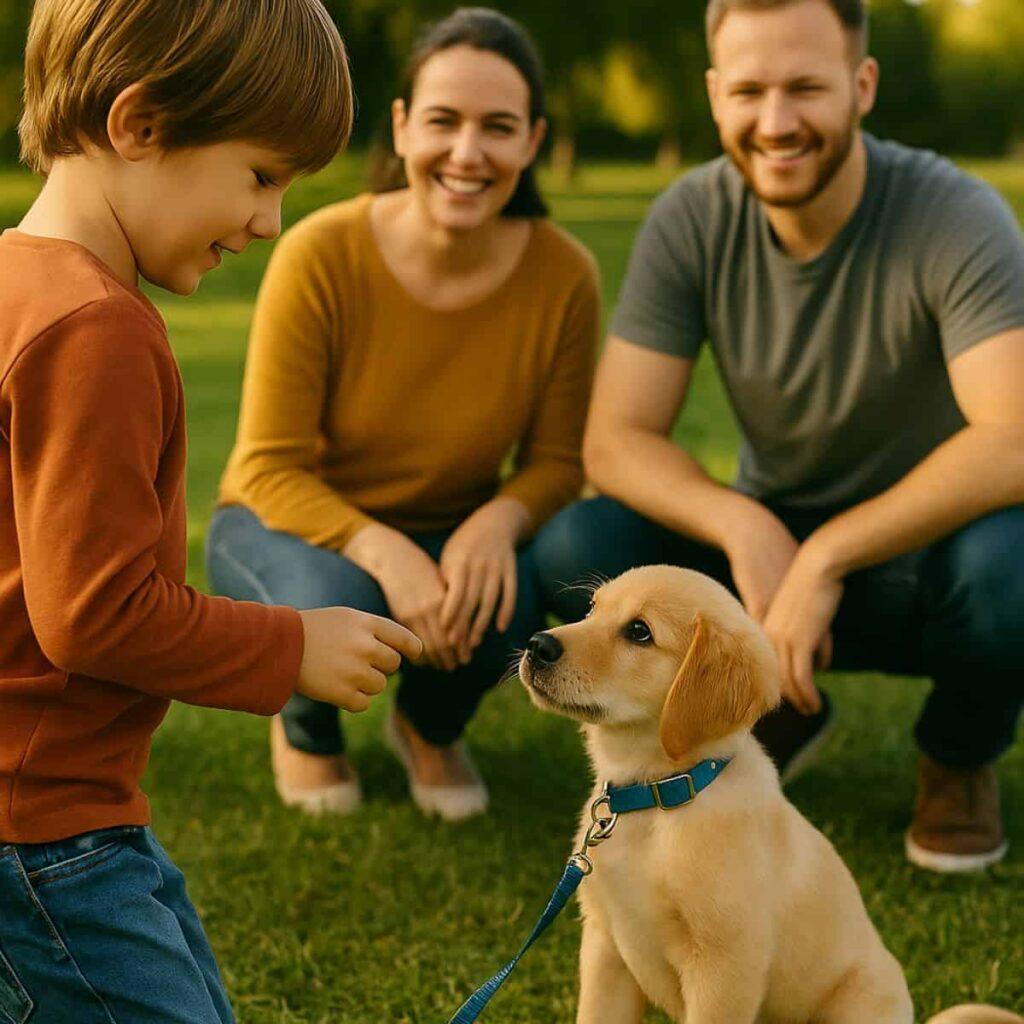
The Long-Term Payoff of Positive Reinforcement Puppy Training
Positive reinforcement puppy training builds trust, resilience, and a confident learner. Puppies trained this way are more likely to:
- 💡 Make good choices on their own
- 🐾 Show fewer behavior problems over time
- 🧠 Learn faster because they feel safe trying new things
Instead of shutting down in fear, they experiment—and learning accelerates.
Examples Beyond Treats
Real-Life Rewards in Action
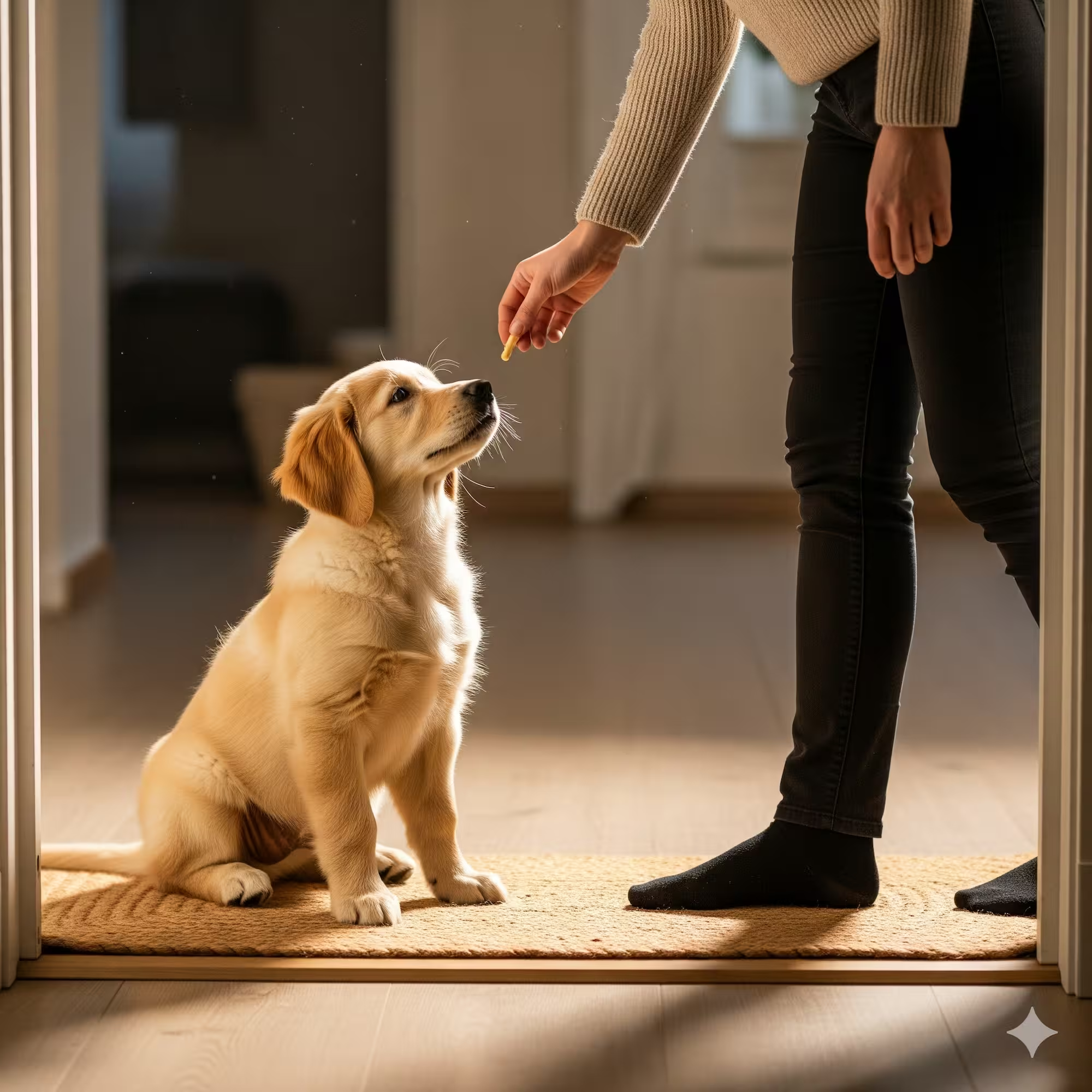
Door Manners
You say “sit” before opening a door → puppy sits → door opens = reward
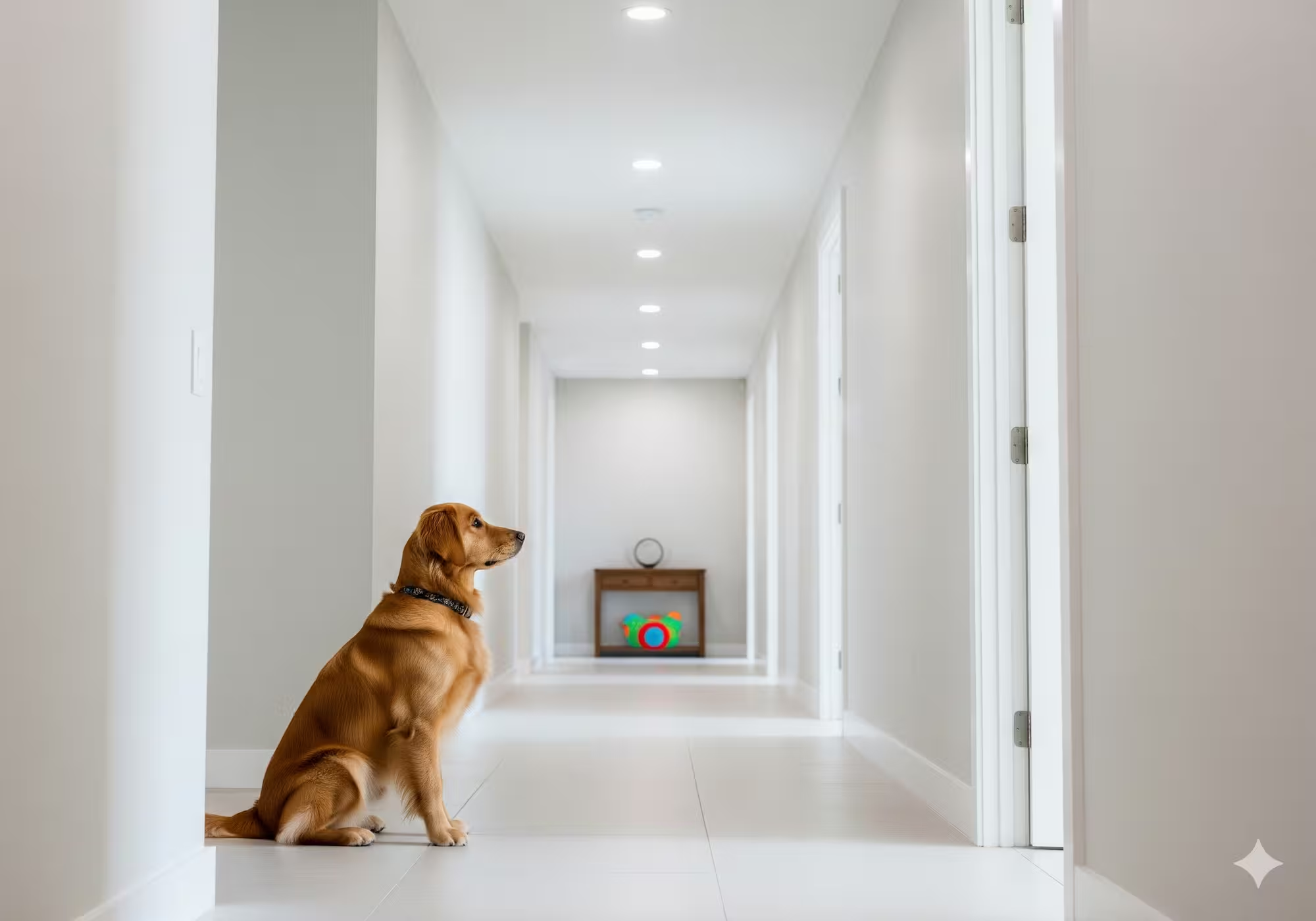
Recall Rewards
You call your pup → they come → leash is clipped off = freedom
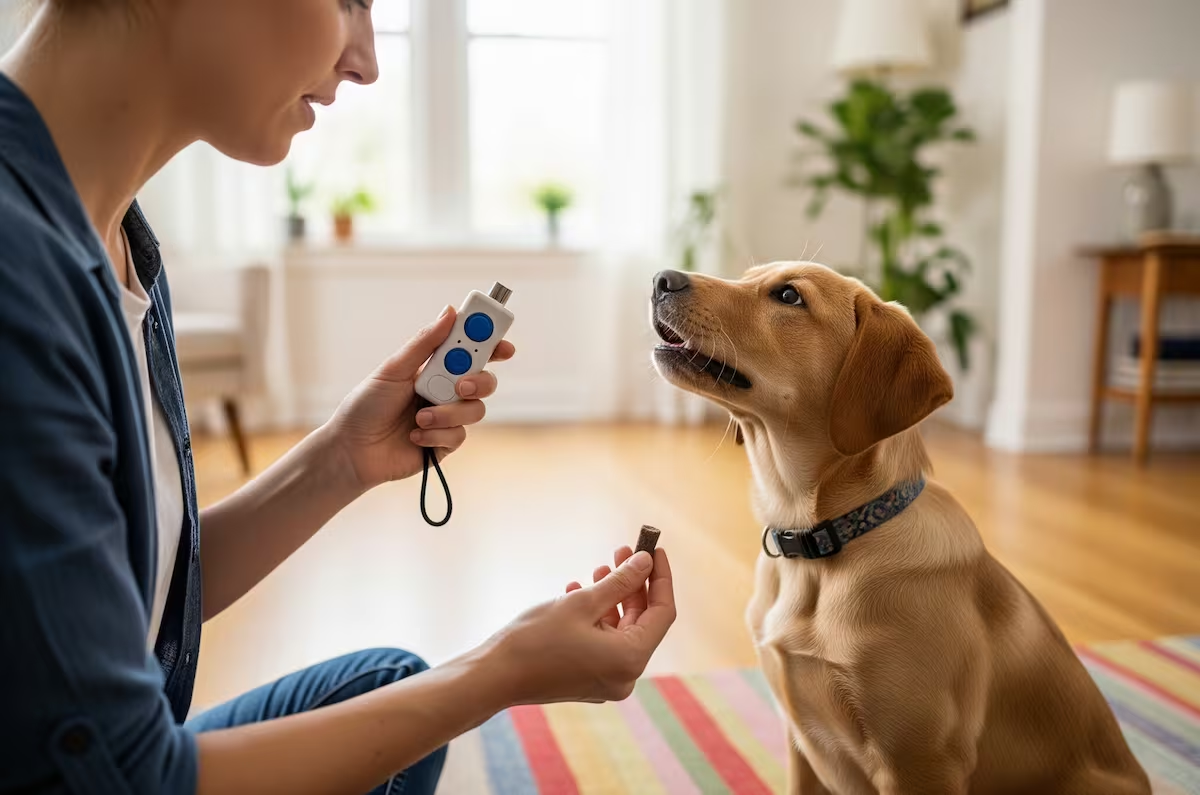
Mat Reinforcement
You ask for “down” → pup lies on their mat → gets a chew toy = reinforcement
These are functional rewards—life rewards—your dog cares about. They work just as powerfully as food. Physical play and exercise can be powerful motivators. Learn how to use potty training with indoor potty trays as part of your reward system.
Why Positive Reinforcement Builds Stronger Relationships
This method isn’t just about obedience—it’s about partnership. Instead of control, you offer clarity. Instead of fear, you build focus.
Dogs trained with positive methods:
- 👁️ Look to you for direction
- 🎯 Respond faster under pressure
- ❤️ Trust you even in new or stressful situations
Ready to Train Without the Stress?
Grab our free quiz and discover your puppy’s ideal training path in under 2 minutes.
📥 Take the Quiz NowA Quick Science Recap
Behavior science uses the term “positive” to mean added—but in practice, it’s also about being constructive.
- 🛑 Positive punishment = adding pain (e.g., leash jerk)
- ✅ Positive reinforcement = adding reward (e.g., praise, treat, play)
Only one of those improves the bond between you and your dog.
Why Positive Punishment Backfires Long-Term
It may work today—but it costs tomorrow. Punishment can:
- 🧨 Suppress behavior without addressing root causes
- ⚠️ Increase stress, which makes problems worse
- 🚫 Damage the relationship and reduce the dog’s confidence
The fallout? A dog who listens… but doesn’t trust.
- Suppresses behavior temporarily, without solving the cause
- Erodes trust and increases anxiety
- Can make dogs hide behavior until it’s worse (e.g., biting with no warning)
Positive Puppy Training
A guide to encouraging good behavior the right way.
- ✓Promotes Confidence: Creates positive associations, making your puppy eager to learn new things without fear.
- ✓Strengthens Your Bond: Builds trust and clear communication, positioning you as a source of fun and safety.
- ✓Encourages Socialization: Teaches calm, polite interactions with new people and other dogs.
- ✓Reward Immediately: Mark the good behavior within 1-2 seconds so your pup connects the action to the reward.
- ✓Keep Sessions Short: Aim for 5-10 minute sessions multiple times a day to maintain focus and prevent boredom.
- ✓Be Consistent: Ensure everyone in the household uses the same commands and rules to avoid confusing your pup.
- ✓Use a Happy Tone: Your positive energy and cheerful voice are powerful reinforcers.
- ✓High-Value Treats: Use small, pea-sized, and extra-tasty treats that your puppy loves and doesn’t get all the time.
- ✓Praise and Petting: Enthusiastic verbal praise like “Yes!” or “Good boy!” paired with affectionate petting can be just as motivating as a treat.
- ✓“Real-Life” Rewards: Use everyday wants as rewards. Opening the door to go outside is a reward for sitting patiently. Clipping off the leash at the park is a reward for coming when called.
“Punishment fails long-term because it teaches a dog what *not* to do, but fails to teach it what *to* do.” – Dr. Ian Dunbar
pupcommand.comWhat Lasts Longer: Fear or Understanding?
Understanding always wins. When your dog learns through reinforcement, they offer better behavior more often and with less stress. They trust you—and want to work with you.
📚Dr. Ian Dunbar on why punishment fails long-term
Still unsure? Consider one of the field’s most respected experts: Dr. Ian Dunbar. A pioneer in modern dog training, Dr. Dunbar introduced science-based, fear-free methods to the public decades before most pet owners understood their power. He’s helped shape the training principles used by behaviorists worldwide.
Dr. Ian Dunbar is widely considered one of the most influential figures in modern dog training, especially in the realm of positive reinforcement. This is a man who’s trained everything from shelter puppies to wild animals—and earned trust, not fear, every step of the way.
How to Use Positive Reinforcement the Right Way
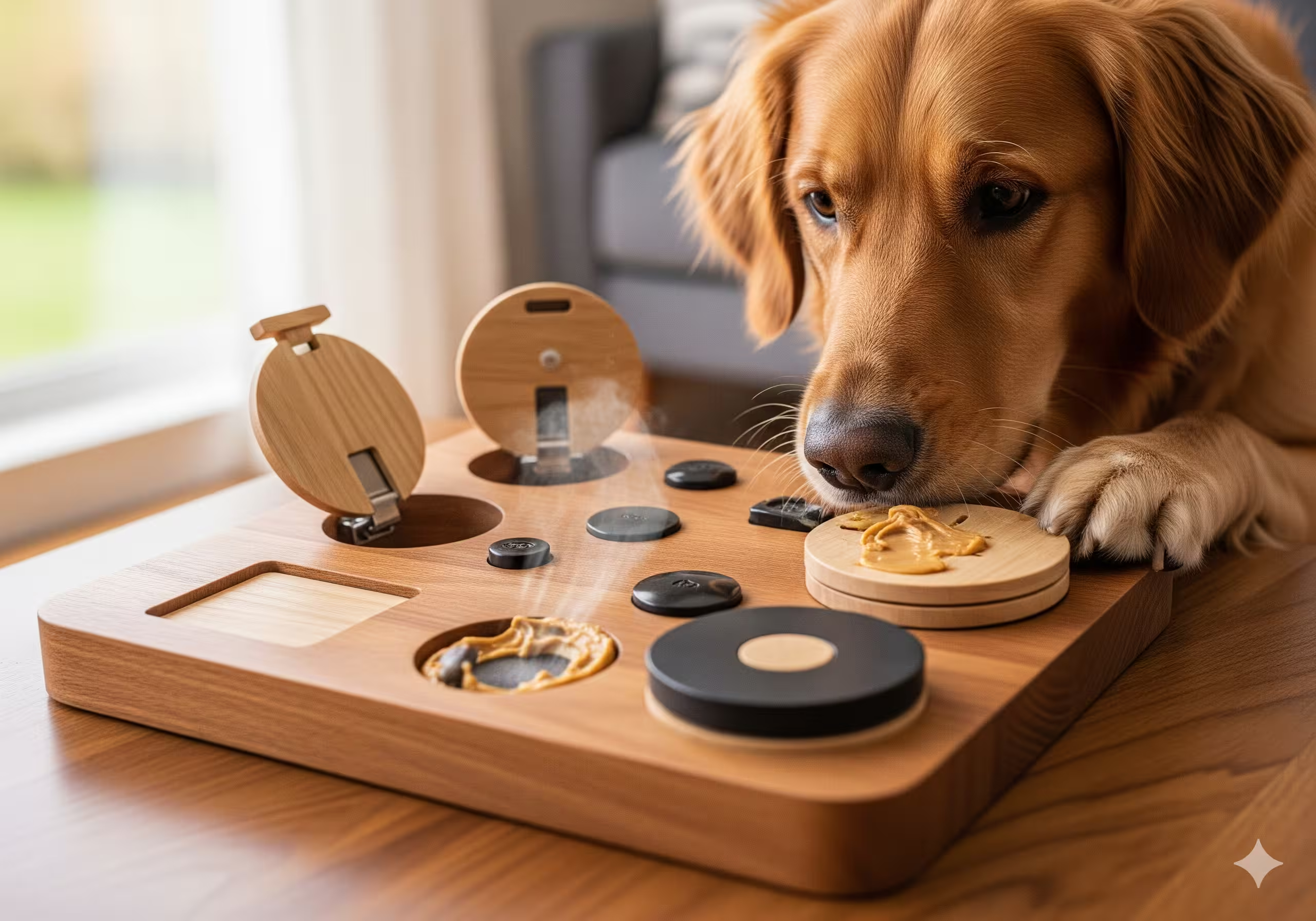
Use High-Value Rewards
Your puppy won’t work for just anything. Use top-tier motivators to build fast, reliable behaviors.
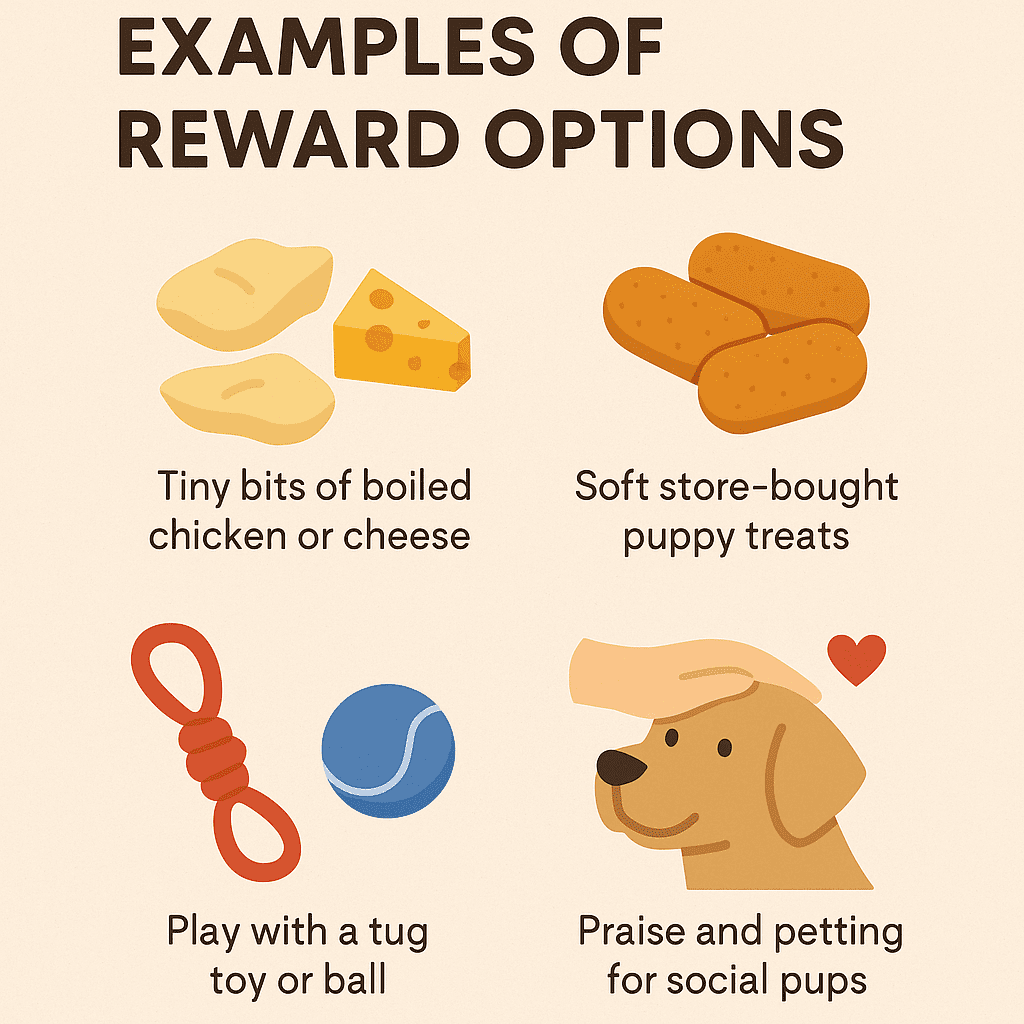
🔑 High-Value Options
- Tiny bits of boiled chicken or cheese
- Soft, moist puppy treats (easy to chew)
- A quick game of tug or fetch
- Enthusiastic praise and petting
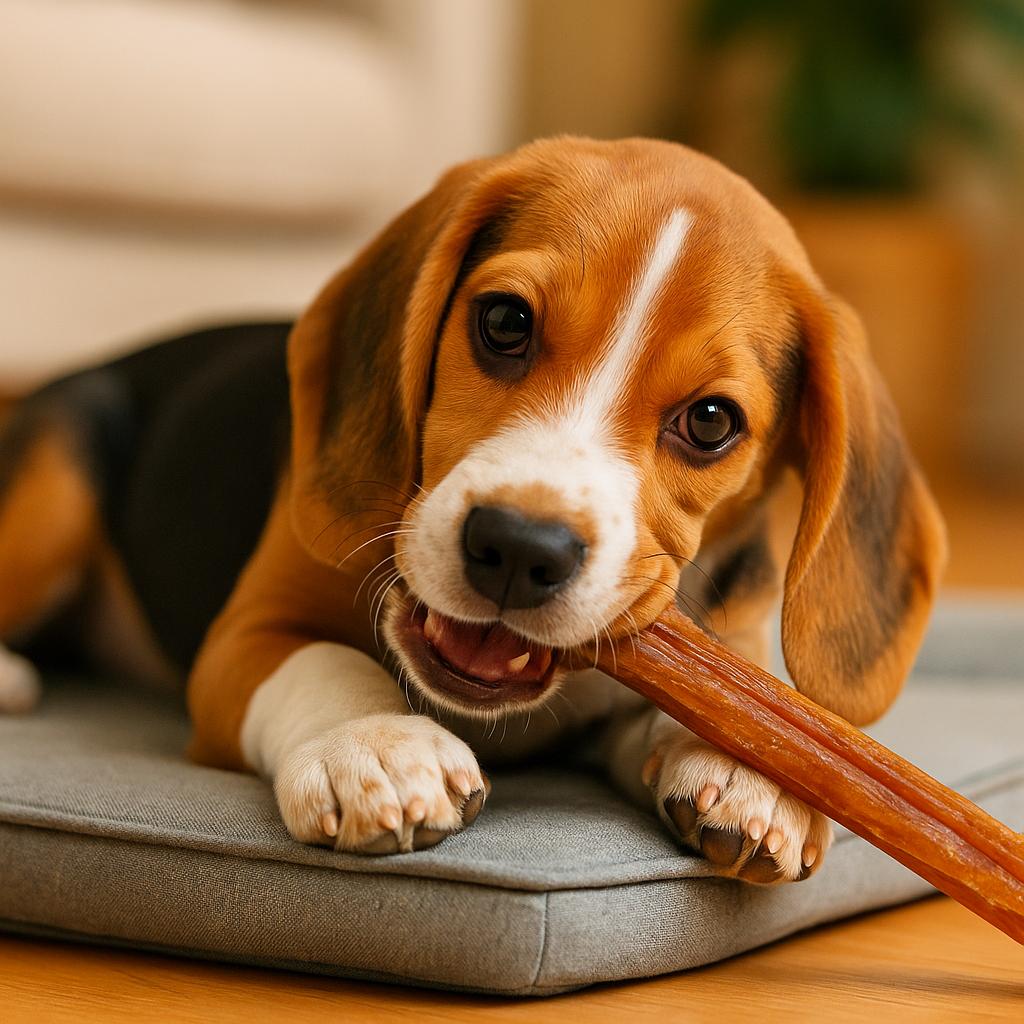
Trainer Tip: Be Prepared
Keep rewards on you at all times. A treat pouch is your best friend for capturing good behavior in the moment.
📌 Why This Works
A treat pouch on your hip means you can provide instant feedback. This direct and immediate connection between an action (like a spontaneous ‘sit’) and a reward is what builds strong, reliable behaviors much faster.
Pick Your Rewards Wisely
Step 1: Use High-Value Rewards
Your puppy won’t work for just anything. Use top-tier motivators to build fast, reliable behaviors.
🔑 High-Value Reward Options:
- 🍗 Tiny bits of boiled chicken or cheese
- 🦴 Soft, moist puppy treats (easy to chew, fast to eat)
- 🎾 A quick game of tug or fetch
- 🐶 Praise and petting (for pups who crave connection)
📌 Trainer Tip: Keep rewards on you at all times. A treat pouch on your hip = instant feedback and faster learning.
For more advanced recall techniques and troubleshooting stubborn dogs, check out our complete puppy training guide for new dog owners.
🧠 Training Cadence:
🎮 Always end on a win. Always make it fun.
🕐 5-minute sessions
📅 2–3 times daily
Step 2
Master the “Magic 3”
These are the non-negotiables of puppy obedience. Nail these first.
- How: Lure a treat from your puppy’s nose up over their head. Their head goes up, and their butt should go down.
- When: The moment their butt touches the floor, say “Yes!” and deliver the treat.
- Why: Reinforces stillness and patience; a building block for other behaviors.
- How: Say your pup’s name and “Come!” in an excited, happy tone. Crouch down with open arms.
- When: The instant they arrive, praise them enthusiastically and give a treat at your feet.
- Important: Never scold for a delay. Coming to you must always be a rewarding event.
For advanced recall, see our complete puppy training guide.
- How: Place a boring treat in your closed fist. Let your puppy sniff, but don’t let them have it.
- When: The moment they pull their head away, say “Yes!” and reward with a better treat from your other hand.
- Why: Teaches impulse control and helps keep your puppy safe from dangerous items.
Positive Reinforcement Puppy Training Milestone Progress Tracker
| Age | Focus Area | Goal |
|---|---|---|
| Week 1–2 | Name & Reward Basics | Responds to name, accepts food as reward |
| Week 3–4 | Crate & Potty Training | Settles in crate, predictable potty schedule |
| Week 5–6 | Sit, Come, Leave It | Basic commands introduced & reinforced |
| Week 7–8 | Public Practice & Distractions | Commands hold in new environments |
| Week 9+ | Problem Solving & Confidence | Calm behavior, consistent response |
Q: What if my puppy isn’t food motivated?
A: Every puppy is motivated—you just need to find the right currency. Try:
- 🧸 Tug toys
- 🎾 Fetch or chase games
- 🎉 Over-the-top praise
- 🏃 Movement and freedom (e.g., running with you)
Pro Tip: For high-drive pups, the action is the reward.
Q: When do I stop using treats?
A: After your dog fully understands the behavior, begin to reduce treat frequency. But never stop completely. Think:
- 🎰 Random rewards = stronger habits
- 📉 Fade out gradually, keep it unpredictable
Q: Why does my dog ignore me outside?
A: You’re battling distractions:
- 🐿️ Squirrels
- 🐕🦺 Other dogs
- 🦴 Smells galore
Start small:
- Begin in quiet places
- Slowly introduce more challenges
- Always set them up to win
Q: My puppy only listens at home. What gives?
A: Dogs don’t generalize behavior automatically. Solution:
- 📍 Train in multiple locations
- 🚶 Add variety to your sessions
- 🔁 Repeat commands in new contexts
Q: How do I stop biting and chewing?
A: Biting is natural. For comprehensive solutions to biting, chewing, and other common issues, see our dog behavior problems and solutions guide. The key is redirection:
- 🪀 Offer a chew toy before they bite
- ❌ Don’t punish—interrupt and redirect
- 🧠 Consistency rewires habits
Q: Is it okay to say “no”? Should I punish?
A: “No” is okay, but it must be paired with guidance:
🔄 Replace the bad behavior with a good one
👎 Saying “no” alone = confusion
👉 Instead: stop, redirect, and reward the right action
The Science Behind Positive Reinforcement
Positive reinforcement puppy training is grounded in behavioral psychology. It taps into operant conditioning, a method discovered by B.F. Skinner. When puppies receive a reward for a specific behavior, they form a neural connection that links that action to a positive outcome—literally rewiring their brain for success.
Training Method Effectiveness
Comparing Positive Reinforcement vs. Correction-Based Training
Common Mistakes to Avoid
Even well-intentioned trainers can misfire. Watch for these errors:
- ❌ Timing the reward too late – If it’s more than 2 seconds after the behavior, your puppy might not understand what they’re being rewarded for. Proper timing is crucial – learn more about capturing timing in dog training to perfect your technique.
- ❌ Inconsistent rewards – Rewarding sometimes but not others confuses your pup and slows learning.
- ❌ Reinforcing the wrong behavior – Accidentally giving a treat when the dog jumps up? You just rewarded jumping.
Beyond Treats: Alternative Rewards
Positive reinforcement puppy training doesn’t have to mean a treat every time.
- 🎾 A quick game of tug
- 🐾 Access to sniff or explore
- 🗣️ Verbal praise in a happy tone
- 🤝 Physical affection (for dogs who love it)
Training this way teaches your puppy that good things come from good choices—a lesson that builds lifetime loyalty and calm, confident behavior.
Final Thought: You’re Building More Than Behavior
Every interaction is a lesson. With positive reinforcement puppy training, you’re not just teaching manners—you’re building trust, resilience, and a lasting bond.
🐾 Your pup’s future is in your hands. Lead with guidance, not fear.
🧠 Trust. Repeat. Reward.
Want to dive deeper into specific training methods? Explore our guides on classical conditioning for dogs and clicker training techniques.
The Psychology: Building a Confident Brain, Not Just a Trained Dog
The psychology of positive reinforcement puppy training goes far beyond simply giving treats. It is an application of operant conditioning that empowers your puppy to become an active participant in their own learning. When a puppy makes a choice and is rewarded for it, their brain releases dopamine, creating a powerful neural pathway that makes them more likely to repeat that behavior. This process builds problem-solving skills and encourages a puppy to experiment and think, rather than just react out of fear.
In contrast, punishment-based methods can increase cortisol (the stress hormone), which inhibits learning and can damage the trust between you and your dog. While punishment may suppress a behavior temporarily, it fails to teach the puppy what they *should* do instead. This is why positive training is more effective long-term; it addresses the root of the behavior by building a desirable alternative, leading to more reliable and joyful compliance.
The Key Takeaway: Shifting from a Controller to a Guide
At its heart, positive reinforcement changes your role from a commander who demands obedience to a trusted guide who provides clear information. Every reward is a “yes!” that tells your puppy they are on the right track. This clarity reduces anxiety and builds a strong foundation of communication and trust. This is how positive reinforcement strengthens the dog-owner bond, creating a dog that looks to you for direction because they see you as a reliable and benevolent partner.
By focusing on building good choices instead of punishing bad ones, you are shaping not just a well-behaved dog, but a resilient, confident, and enthusiastic learner for life.
📚 Want to Master All 5 Training Principles?
Each method builds on the others. Explore them all to truly understand how dogs learn — and how to train with clarity, confidence, and compassion.
🎁 Ready to test your skills?
Get the Free Quiz Pack