

How to Stop My Dog from Barking at Night in the Crate: When to Worry
What if your dog keeps barking at night inside the crate?
If your pup is crying, yapping, or howling in the crate at night, you’re not alone.
Disclosure: This page contains affiliate links, which means we may earn a small commission if you make a purchase through them. We only recommend products we truly believe in.The first step is to identify what’s triggering the barking. Most dogs vocalize because of stress, boredom, or lack of a calming routine before bedtime.
Making the crate a positive space during the day builds confidence when it matters most—at night.
Try these practical solutions:
- 🦴 Use puzzle feeders or chew toys inside the crate to promote calm.
- 🛏️ Make the crate cozy: add soft bedding, dim lighting, and cover if needed.
- 🕒 Stick to a consistent pre-bedtime routine (potty → calm walk → quiet time).
- 🚫 Avoid overexcitement or new stimuli right before bedtime.
Understanding how to stop your dog from barking at night in the crate means listening to what your dog is trying to tell you. Gentle training, consistency, and empathy are the tools that make the biggest difference.
In time, you’ll master how to stop my dog from barking at night in the crate—and your whole household will rest easier.
Example: Building Trust at Midnight
At 2 AM, Shadow, a young rescue Shepherd, began barking nonstop from his crate. His family had tried ignoring it, hoping he’d “self-soothe.” But the barking only escalated — frantic and panicked.
Instead of yelling, his guardian calmly approached, sat near the crate, and quietly reassured him without opening the door. She placed a soft T-shirt she’d worn inside the crate and turned on a white noise machine nearby.
Shadow stopped barking within minutes. The next night, he whimpered once — then settled. By night three, he was sleeping soundly through the night.
The shift wasn’t magic — it was emotional safety. She showed him that even in silence, he wasn’t alone. That trust rewired his fear response, not just his behavior.
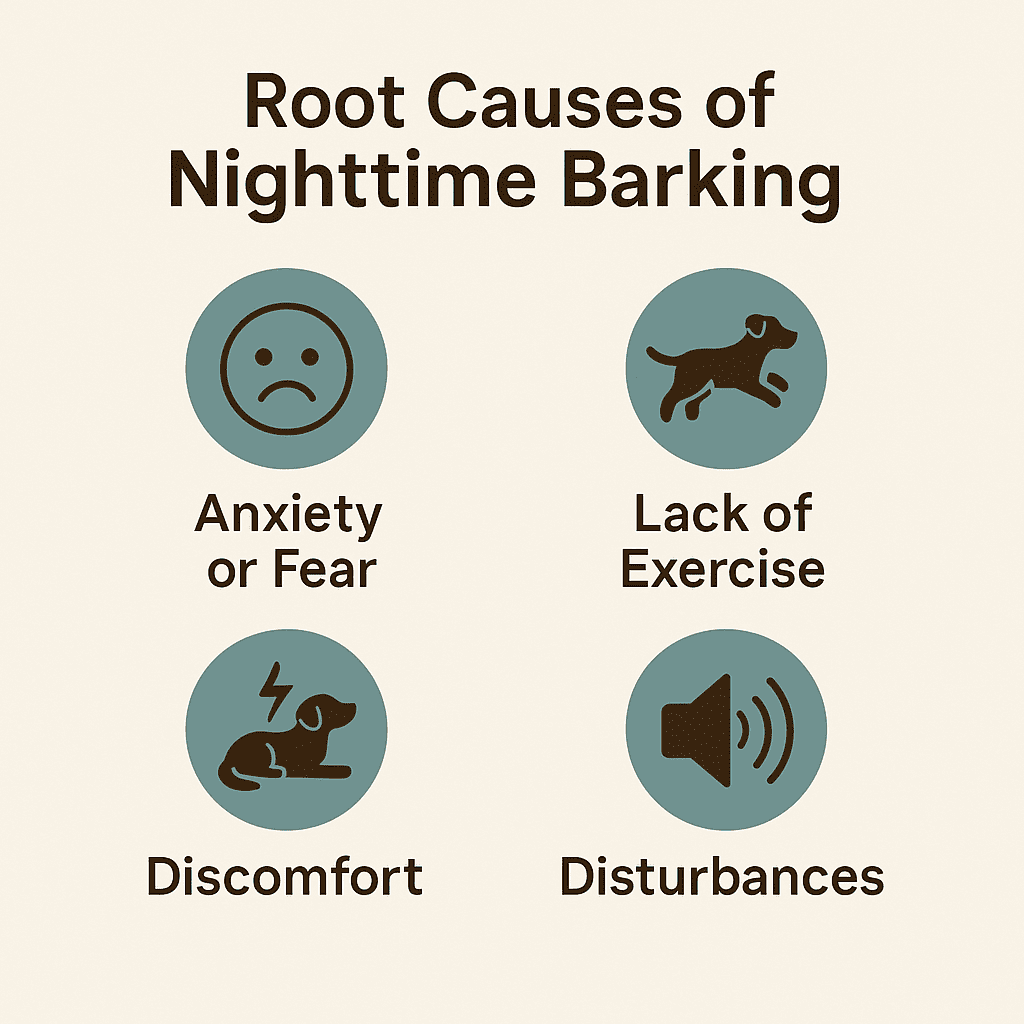
Why Dogs Bark in the Crate at Night: Understanding the Root Causes
Understanding the underlying reasons for dog barking at night in the crate is crucial for effectively addressing the issue. Nighttime barking isn’t just a nuisance; it’s often a signal from your dog. Pinpointing the root cause helps you choose the right solution to stop dog barking in the crate.”
Here are the most common reasons your dog might be barking at night:
Anxiety or Fear (Separation Anxiety):
This is a very common cause of nighttime dog barking. Your dog might feel distressed or abandoned when alone in the crate, especially if they suffer from separation anxiety. This can manifest as whining, howling, or persistent barking in the crate as they try to reunite with you.
Lack of Exercise/Mental Stimulation:
A dog with pent-up energy, whether physical or mental, is less likely to settle down at night. If your dog hasn’t had enough appropriate exercise or mental enrichment during the day, they might bark out of boredom or frustration in their crate.
Attention-Seeking Behavior:
Some dogs learn that barking in the crate, even at night, will get them attention from their owners (e.g., you coming to check on them, talking to them, or letting them out). This reinforces the nighttime barking behavior.
Discomfort or Pain:
Your dog might be barking because they are physically uncomfortable. This could be due to an ill-fitting or uncomfortable crate, an injury, a medical condition, or even just needing to adjust their position. Always rule out pain as a cause for barking in the crate.
Need to Potty:
A very common and often overlooked reason for puppy barking at night or even adult dog barking at night is a full bladder or bowels. Your dog might be signaling that they urgently need to relieve themselves. Always ensure a final potty break close to bedtime.
Environmental Triggers:
External noises (like sirens, neighbors, or wildlife) or visual stimuli can startle or alert your dog, leading to reactive barking in the crate.
Lack of Proper Crate Training:
If your dog wasn’t properly introduced to the crate or has negative associations with it, they might bark due to fear, confinement, or simply not understanding that it’s a place for rest.
Identifying which of these reasons applies to your dog is the first critical step toward implementing effective dog barking solutions and achieving quiet nights for everyone.
How to Stop My Dog from Barking at Night in the Crate: Complete Guide
1. Ensure a Proper Bedtime Routine
If you’re dealing with a dog barking at night in the crate, you’re not alone. Many dog owners face the challenge of stopping nighttime barking, especially during the initial crate training period. Excessive nighttime dog barking can disrupt sleep for everyone, leading to frustrated owners and stressed pups. Establishing a consistent, calming bedtime routine for your dog is the first crucial step to ensure quieter nights and a peaceful bedtime routine for puppies:
✅ Final Potty Break: Take your dog out for a final potty break about 15-20 minutes before their designated bedtime. This helps prevent discomfort and potential barking in the crate due to a full bladder.
✅ Calming Play or Training: Engage in 15-20 minutes of light play or low-impact training activities. Avoid overly stimulating games that might hype them up right before bed. The goal is to gently wind them down.
✅ Bedtime Treat/Chew: Offer a calming chew toy or a special bedtime treat in their crate. This can help create a positive association with their sleeping space and distract them from any initial nighttime crate barking.
Pro Tip: To minimize the need for bathroom breaks and reduce nighttime dog barking caused by discomfort, avoid giving your dog large meals or excessive water right before bedtime. Always ensure your dog remains well-hydrated throughout the day, just time the larger water intake earlier.
Example: Silence as a Signal
Bruno, a 5-month-old Pit Bull pup, barked the moment his guardian left the room each night — escalating to full howls if anyone returned and then walked away again.
At first, his family would check on him every time. But that taught Bruno that barking brought attention. The moment he was quiet? Nothing happened.
They changed tactics. For three nights, they sat outside his crate where he couldn’t see them — listening. Every time Bruno paused for more than 5 seconds, they calmly entered and gave a low-effort reward: a dropped treat, a whispered “good boy,” then left again.
By night four, Bruno was settling faster and barking less. Quiet began to earn what noise never could — comfort. And that reprogramming started the shift from panic to patience.
2. Tire Them Out (But Not Too Late)
A tired dog is a quiet dog! Proper exercise is key to stopping nighttime barking and ensuring your dog sleeps soundly through the night. However, the timing and type of exercise are crucial. You want to sufficiently tire your dog during the day, but avoid over-stimulation right before bedtime. Ensure:
💪 Daily Physical Activity: Aim for at least 30-60 minutes of physical activity spread throughout the day, tailored to your dog’s age and breed. This could include walks, fetch, or playtime at a dog park to help reduce dog barking at night.
🧩 Evening Wind-Down: Include a calmer, longer walk in the early evening, or engage in gentle, mentally stimulating games. This helps your dog unwind and prepares them for rest, reducing the likelihood of barking in the crate due to pent-up energy.
3. Make the Crate Comfortable and Positive
Your dog’s crate should be a safe, inviting, and comfortable den, not a place of punishment or isolation. A positive association with the crate is fundamental to stopping nighttime barking and ensuring your dog feels secure:
🛏️ Soft Bedding & Familiar Items: Line the crate with soft, comfortable bedding. Include a familiar toy or blanket that carries your scent, which can provide comfort and reduce dog anxiety in the crate.
💓 Create a Den-like Atmosphere: Make the crate dark and cozy. Consider covering it with a blanket to mimic a den, which can provide a sense of security and help prevent nighttime dog barking caused by visual stimuli.
📍 Positive Association: Continuously reinforce a positive association with the crate. Feed meals inside, offer high-value treats exclusively in the crate, and never use the crate for punishment. This builds trust and minimizes barking in the crate.
For step-by-step guidance on creating a calm and reliable crate routine, visit our full crate training a puppy guide.
Example: Creating a Den the Dog Actually Loves
Daisy, a 2-year-old rescue, refused to go near her crate after adoption. Her new guardian realized it wasn’t just the crate—it was the lighting, the sounds, and the cold plastic base.
They added a soft memory foam pad, draped a heavy blanket over the top to darken it, and placed a lavender-scented toy inside that had been tucked under their pillow overnight. Within days, Daisy began entering voluntarily and curled up to sleep on her own.
When the crate becomes a sanctuary—not a cell—dogs stop resisting it and start using it to self-soothe. The emotional shift begins with thoughtful design.
4. Ignore the Barking (Within Reason)
Once you’ve ruled out physical needs (like needing to potty) and addressed potential discomfort or fear, sometimes the best strategy for stopping nighttime barking is to ignore it. This approach is primarily for attention-seeking barking.
🚫 No Reinforcement: The key is to avoid inadvertently reinforcing the barking. Do not respond to the barking with attention, eye contact, verbal cues, or by letting your dog out. Any response can be seen as a reward for barking in the crate.
🚫 Patience is Key: This method requires patience. Your dog might initially bark more intensely (an ‘extinction burst’) when you start ignoring them. Consistency is vital for your dog to learn that barking does not result in attention.
🎁 Avoid Punishment: Never punish your dog for barking. Punishment can increase fear and anxiety, making dog barking at night worse and damaging your bond and their association with the crate.
Instead, use positive reinforcement methods to reward the behaviors you want—such as calmness or silence in the crate.
The goal of ignoring attention-seeking nighttime dog barking is to teach your dog that barking is ineffective for getting what they want. Your dog will eventually learn that quiet behavior earns attention and rewards. Consistency is paramount; even a single instance of giving in can set back your progress.
However, always differentiate between attention-seeking barking and dog barking due to anxiety or fear. If you suspect distress, always investigate.
Disclosure: This page contains affiliate links, which means we may earn a small commission if you make a purchase through them. We only recommend products we truly believe in.Barking can temporarily get worse before it gets better. Stay consistent.
5. Introduce a Crate-Only Cue or Soundtrack
Establishing a consistent crate-only cue or a calming soundtrack can be a powerful tool to signal to your dog that it’s time to settle down for the night and help reduce nighttime barking.
🎵 Calming Soundtrack: Play soft, calming music, white noise, or a specialized dog relaxation playlist. This can help mask outside noises that might trigger dog barking at night and create a tranquil environment.
🗣️ Consistent Cue Word: Choose a specific, calm word or phrase, like ‘quiet time’ or ‘bedtime,’ that you only use when directing your dog to their crate for sleep. This builds a strong association with resting and quiet nights.
👕Exclusivity is Key: The effectiveness of a crate-only cue or soundtrack relies on its exclusivity. Only use it when your dog is settling into their crate for sleep. Avoid using it during the day or for other activities to maintain its power as a sleep signal.
Preventing Separation Anxiety During Crate Training at Night
If your dog struggles with being alone or shows signs of distress, start here with our full separation anxiety training guide.
Start slow. Let your dog spend short, positive moments in the crate while you’re still nearby. Gradually build up (Shape) to longer times apart. Use treats, toys, or a favorite blanket to make the crate feel safe and comforting.
One of the biggest mistakes is making a big deal when you leave or return. This teaches your dog that those moments are high-stress. Instead, keep your goodbyes and hellos calm and simple. That way, your dog doesn’t feel like something is wrong when you’re gone.
You can also leave behind a T-shirt with your scent or a calming chew toy. These small touches go a long way in helping your dog settle quietly through the night.
To stop dog barking at night in crate setups, it’s not just about noise—it’s about helping your dog feel secure. Focus on building trust and a calming routine, and the barking will fade.
When to Worry If Your Dog Is Barking in the Crate at Night
While some nighttime dog barking can be managed with consistent training, there are instances where your dog’s barking might signal a more serious underlying issue. Knowing when to seek professional guidance is crucial for your dog’s well-being and to truly stop dog barking at night effectively.
⚠️ Excessive and Persistent Barking: If your dog’s barking in the crate is prolonged, relentless, and doesn’t respond to training techniques, it might indicate significant distress or anxiety.
⚠️ Self-Harm or Injury: Any sign that your dog is trying to escape the crate, leading to injury (e.g., bloody paws, broken nails, rubbing raw spots), is a serious red flag. This often points to severe dog anxiety in the crate or panic.
⚠️ Destruction of the Crate: If your dog is consistently trying to chew, bend, or break out of the crate, causing damage to the crate itself, it suggests extreme discomfort or fear, not just attention-seeking.
Example: Medical Clues Often Overlooked
When Shadow, a 5-year-old German Shepherd, suddenly began barking nonstop at night after months of peaceful crating, her family thought it was just a behavioral relapse.
But a vet visit revealed a urinary tract infection — the barking was her only way of saying she needed to go outside urgently and was in discomfort. After a short course of treatment, the barking stopped.
If your dog’s behavior changes suddenly and dramatically, it’s not always psychological — sometimes, it’s physical. Listening carefully could save your dog days of stress and pain.
House Soiling in Crate: While accidents can happen, if your dog is regularly soiling their crate (beyond initial potty training phases) despite ample opportunities to relieve themselves, it could indicate high stress levels or an underlying medical issue, contributing to their nighttime barking.
Changes in Behavior: If the nighttime barking is a sudden new behavior, or is accompanied by other concerning symptoms like loss of appetite, lethargy, or aggression, consult your vet immediately to rule out medical problems.
If you observe any of these concerning behaviors, it’s highly recommended to consult with a professional dog trainer, behaviorist, or read our puppy settling at night guide. They can help diagnose the specific issue and provide tailored dog barking solutions to ensure your dog’s comfort and your peace of mind.
In these cases, you may be dealing with full-blown crate phobia or clinical separation anxiety, and should consider a behaviorist.
Real Talk: It’s Hard, But You’re Not Alone
Let’s be real: addressing nighttime dog barking can be challenging, especially in the initial stages. The sleepless nights and the worry about your dog can be incredibly frustrating. However, it’s crucial to remember that you are not alone in this journey, and countless dog owners have successfully navigated these challenges to achieve quiet nights.
The key to stopping nighttime barking is consistency, patience, and understanding your dog’s needs. Every step you take towards a more peaceful night is progress. By implementing the strategies outlined in this guide – from establishing a solid bedtime routine for your dog to making the crate a positive space – you are building trust and teaching your dog valuable skills for a lifetime of calm.
Stay persistent, celebrate small victories, and know that your efforts will lead to a happier, quieter home for both you and your beloved companion. We’ve created a complete Crate Training Blueprint to help you succeed even when progress feels slow.
🐾 Want trusted expert guidance on barking behavior?
Explore the ASPCA’s official advice on managing excessive barking to deepen your understanding of what causes crate barking—and how to respond calmly and effectively.
More Help for Crate Training Success
If you’ve been searching for how to stop my dog from barking at night in the crate, this is where your answers begin. Many dogs vocalize due to anxiety, frustration, or confusion—but with consistent positive reinforcement crate training, gentle desensitization, and shaping techniques, you can turn the crate into a calm, safe space.
Whether your dog whines, howls, or barks for attention, this method offers a science-backed solution to eliminate nighttime noise. Learn how to stop barking in the crate and transform your evenings from chaotic to peaceful with strategies that truly work.
Let’s turn those noisy nights into restful ones—together.

Christopher Quinn adopted his first dog, Loki, a spirited Border Collie/Jack Russell mix, after exiting Army service in the summer of 2012. That experience sparked a lifelong passion for canine behavior and positive reinforcement training.
He studied Principles of Dog Training & Behavior at Penn Foster and has since worked with hundreds of dogs from all backgrounds. Over the past two years, Christopher has fostered more than 30 rescue dogs, giving each one a chance at a better life.
Today, he continues to write, teach, and share insights on humane dog training, blending hands-on experience with a decade of dedicated study.