
Potty training a puppy in an apartment might seem intimidating—no yard, long elevator rides, and limited green space all add complexity. But the truth is, you can absolutely potty train a puppy in an apartment using positive reinforcement. With the right structure and tools, you’ll set your pup up for success, even on the 10th floor.
Why Positive Reinforcement Works Best
Positive reinforcement focuses on rewarding the behaviors you want. When you consistently praise and reward your puppy for pottying in the right place, they quickly learn to repeat that behavior. There’s no yelling, no punishment—just clear communication and encouragement.
Benefits of this method:
- Builds trust between you and your puppy
- Encourages faster learning
- Reduces anxiety and confusion
In fact, one of the fastest ways to potty train a puppy in an apartment using positive reinforcement is to create a clear, repeatable routine built around timely rewards. This method also teaches your puppy that good things happen when they follow your lead—making them more likely to obey in other areas of training as well.
To dive deeper into these techniques, check out our complete guide on positive reinforcement puppy training.
Training Readiness Dashboard: Age-Based Puppy Metrics
Explore how bladder control, growth rate, brain development, and training simplicity change with age. Drag the slider (months) to see the metrics update instantly. Values are a normalized 0–100 index to visualize trends (illustrative model for coaching decisions).
What these numbers mean
- Bladder Control: increases with age as sphincter control and scheduling habits mature.
- Growth Rate: fastest early in puppyhood, then slows as adult size approaches.
- Brain Development: rapidly climbs in early months and plateaus toward adulthood.
- Training Simplicity: “graspability” of new routines—often very high in the socialization window (roughly 2–5 months), then steadier later.
These are illustrative coaching indices (0–100) to visualize trends; real dogs vary by breed, size, health, and environment.
Step 1: Choose One Potty Location
Start by designating a specific potty spot. This could be:
- A small patch of grass near your building
- A balcony with a fake grass pad
- A consistent indoor potty pad location
Whichever you choose, keep it the same every time. If you plan to transition from indoor to outdoor, do so gradually. To successfully potty train a puppy in an apartment using positive reinforcement, consistency of location is key.
Try taking your puppy to that location on a leash each time. Use the same path, same verbal cue, and same reward system. This helps them build a strong mental connection between the behavior and the outcome.
You can also learn how to teach your dog the place command to establish clear boundaries in your designated potty area.
Step 2: Stick to a Potty Schedule
Routine builds reliability. Here’s a sample schedule:
- First thing in the morning
- After every meal (within 10–15 minutes)
- After naps
- After play sessions
- Every 1–2 hours during the day
- Right before bed
If you’re wondering how to potty train a puppy in an apartment using positive reinforcement, this schedule is the backbone. Timed breaks plus immediate rewards = fast progress.
You can also use smartphone timers or potty training apps to stay on track. Keeping a predictable rhythm allows your puppy to anticipate what comes next, making them more eager to please.
Step 3: Reward Success Instantly
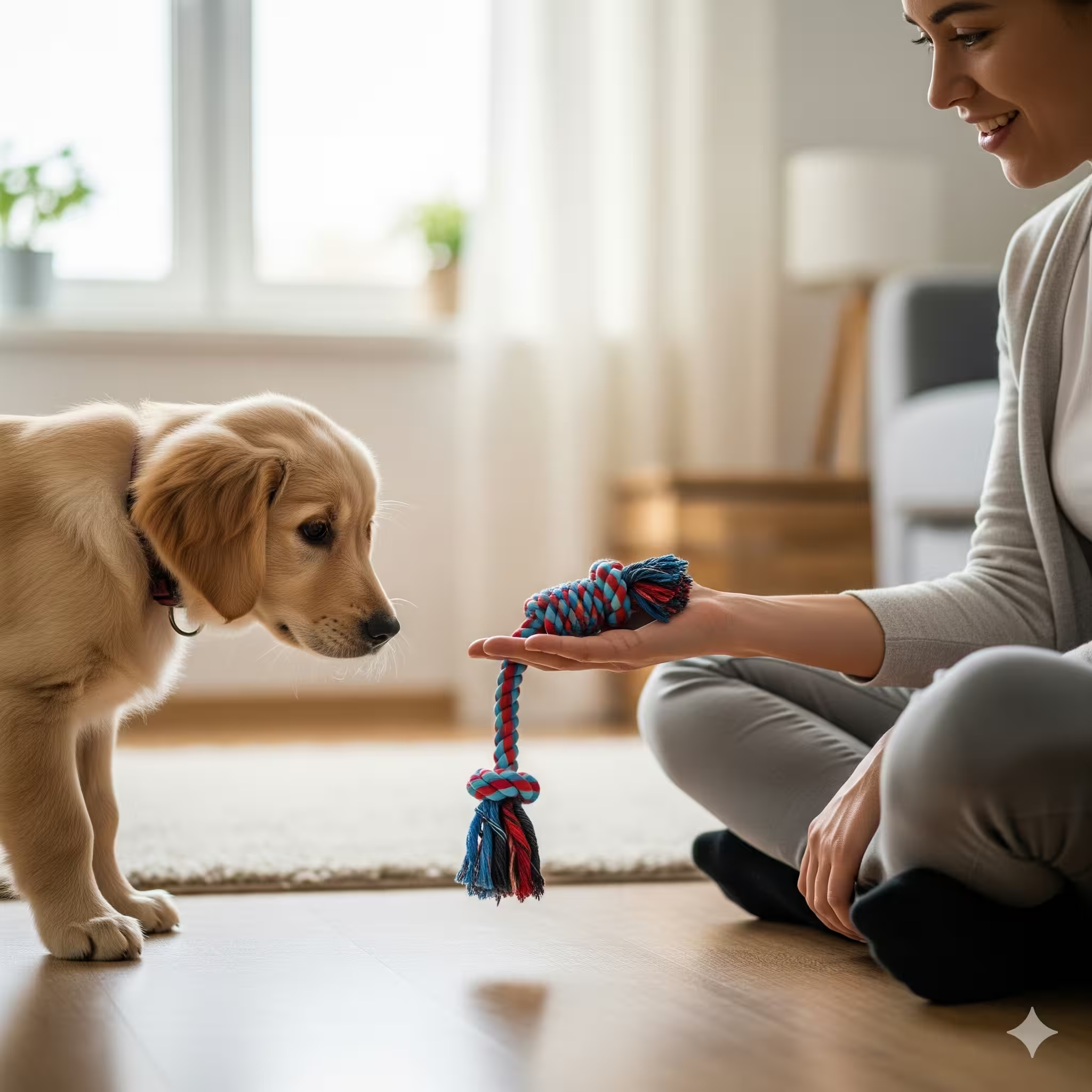
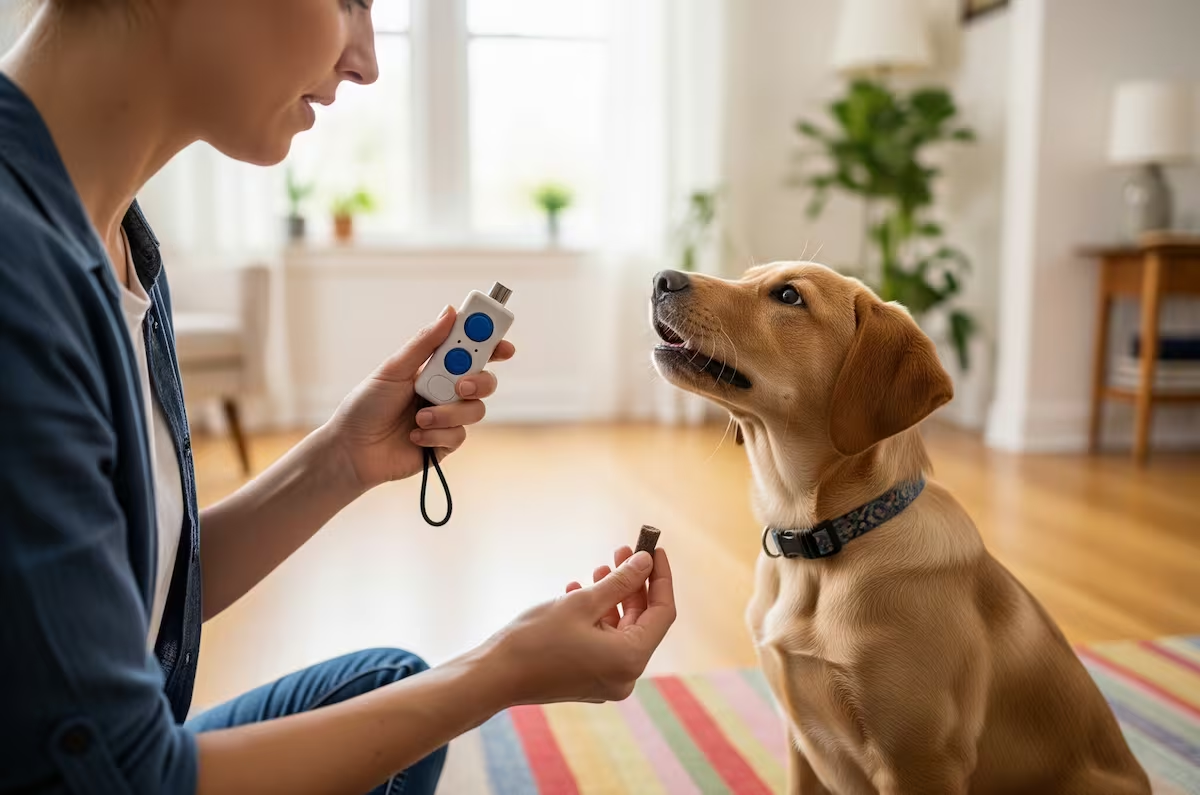
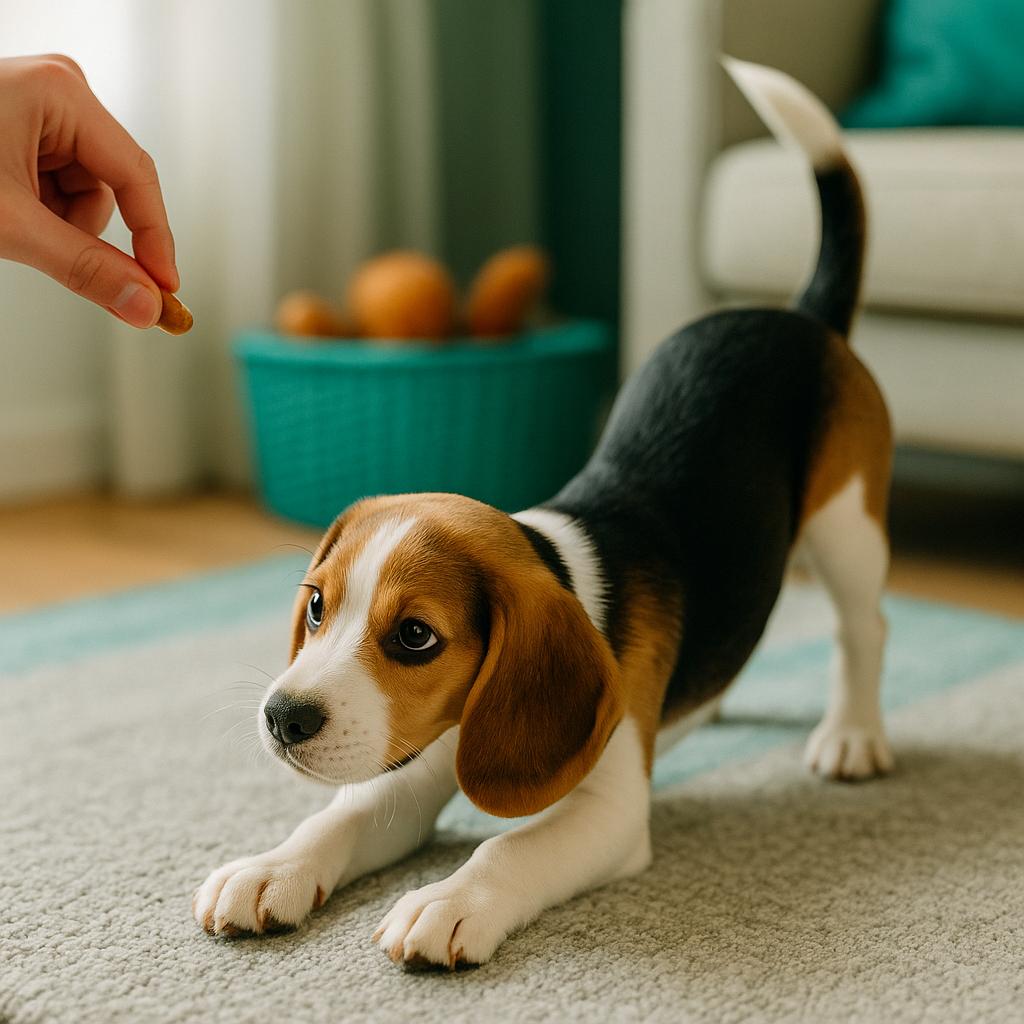
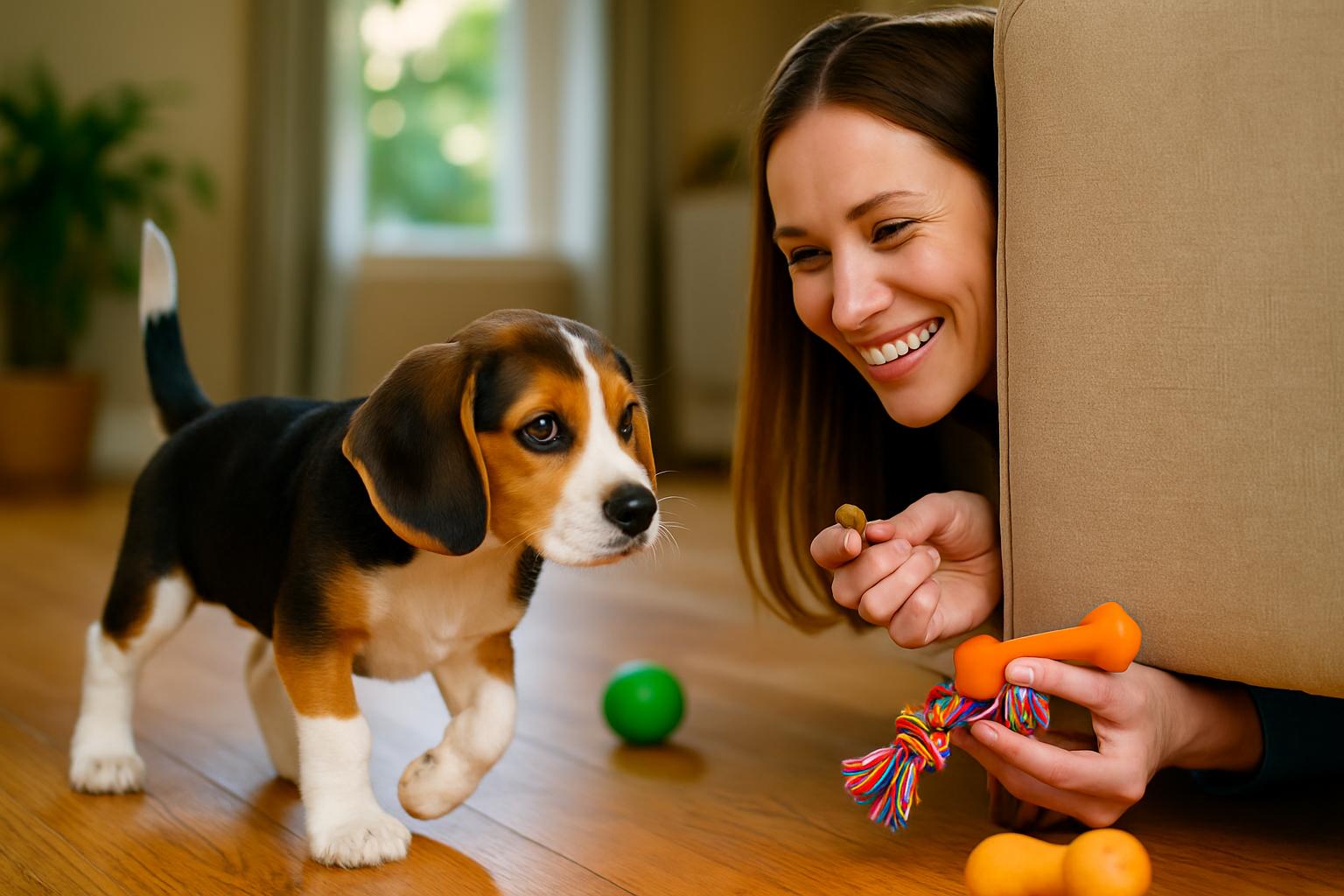
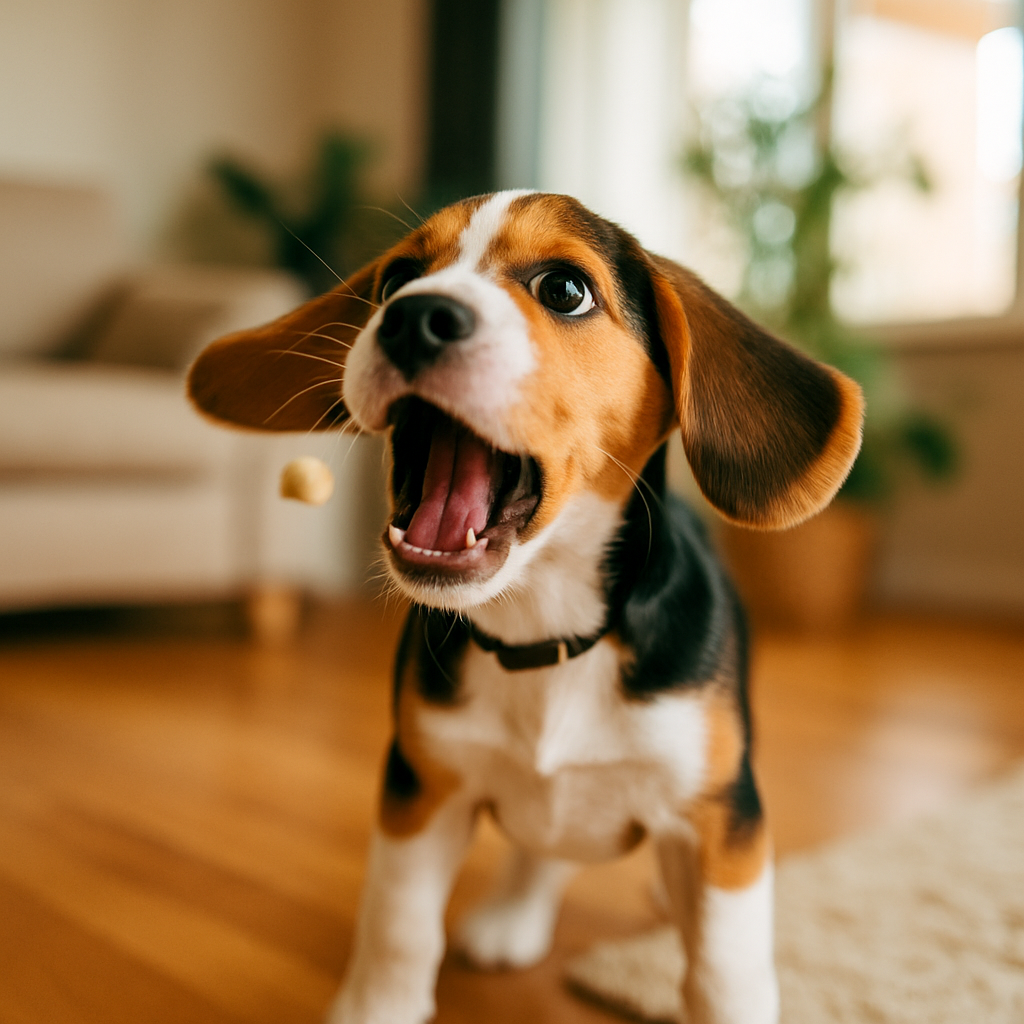
You have 2–3 seconds to mark the behavior. Say a phrase like “Good potty!” and immediately give a treat. If your puppy pees or poops in the right place but you delay the reward, they may not make the connection.
Pro Tip: Keep a treat pouch by the door or in your pocket so you’re always ready. That’s how you potty train a puppy in an apartment using positive reinforcement—through real-time praise.
Over time, you can start phasing out treats in favor of verbal praise and affection. But in the early stages, always reward.
Step 4: Handle Accidents Calmly
Accidents happen. If you catch your puppy in the act:
- Say “Oops!” in a neutral tone
- Redirect them to the potty area
- Clean the spot thoroughly with enzyme cleaner
Punishment sets you back. To effectively potty train a puppy in an apartment using positive reinforcement, your reaction should guide—not scare.
Use the accident as feedback. Did you wait too long? Was the puppy out of sight? Did you miss a cue? These insights will improve your timing moving forward.
For more strategies on addressing challenging behaviors, explore our comprehensive guide on dog behavior problems and solutions.
Step 5: Supervise Constantly
Until your puppy is fully reliable, keep them in your line of sight. Use a leash indoors or tether them to you. Watch for signs like sniffing, circling, or sudden stillness.
This high awareness phase is temporary, but essential if you want to potty train a puppy in an apartment using positive reinforcement and see lasting results.
You can also use baby gates to block off access to rooms where accidents are more likely. The less freedom your puppy has to make mistakes, the quicker they’ll succeed.
Step 6: Use a Crate or Confined Space
Dogs don’t like to soil their sleeping areas. Use this to your advantage. A properly sized crate helps your puppy build bladder control. Use it:
- At night
- When you’re away briefly
- Between potty breaks
Crates must be paired with rewards and never used for punishment. Many people successfully potty train a puppy in an apartment using positive reinforcement alongside crate routines.
If you’re hesitant to use a crate, a confined puppy-proofed area can work. Just be sure to include a potty pad in that space as a backup until the puppy earns more freedom.
For detailed guidance on timing and techniques, learn how to crate train a puppy step-by-step to maximize your success.
Step 7: Track Everything
Keep a potty log. Note:
- Times your puppy goes
- Accidents
- Meal and nap times
Patterns will emerge. One of the best ways to potty train a puppy in an apartment using positive reinforcement is to adapt based on those patterns.
Logging data helps you spot problem times and plan ahead. It also provides reassurance—you’ll see progress written down even if you’re having a tough day.
Step 8: Troubleshoot Apartment-Specific Problems
Can’t get outside quickly enough? Use indoor pads temporarily.
Live in a high-rise? Consider a balcony potty box.
Puppy hates the cold? Keep breaks short and rewarding.
Yes, you can potty train a puppy in an apartment using positive reinforcement—even with challenges.
Other helpful tools:
- Puppy jackets for bad weather
- Non-slip boots for snow or rain
- Portable potty turf systems
Combining apartment potty training with crate training a puppy step-by-step creates a powerful foundation for success.
How Long Should I Keep My Puppy in Their Crate?
Timing matters when it comes to crate training—especially in small apartment spaces where your dog’s range of motion is limited. Puppies can only hold their bladder for so long, and keeping them confined too long can actually cause regression in training.
Use your puppy’s age in months as a baseline (e.g., a 3-month-old may last 3 hours max). Also factor in activity levels, hydration, and recent meals. For a breakdown by age, breed, and situation, here’s our guide on how long a puppy should stay in a kennel.
With the right gear, even urban environments can work for successful training.
What If My Puppy Whines in the Middle of the Night?
It’s common for apartment-raised puppies to cry at night, especially when they’re adjusting to a new routine. The key is to determine whether your puppy truly needs a potty break or is simply seeking attention or reassurance. Avoid rushing to them at the first whimper, as this can reinforce the behavior.
Instead, create a calming nighttime routine, keep the environment quiet and consistent, and ensure your pup has had a chance to relieve themselves before bedtime. If you’re dealing with bedtime barking or crying, check out our guide on how to crate train a puppy at night using gentle, positive techniques.
Interactive Progress: Potty Triggers & Success Rate
These bars start with demo data so you can see trends at a glance. Click Success or Accident to update. Your changes auto-save to this browser.
How to use this graph
- Mark attempts in real time—aim for the 2–3 second window after your puppy finishes.
- Keep one route + one spot + one cue to strengthen the habit loop.
- Use the lowest bars to adjust timing (e.g., add a mid-play break or a balcony turf box).
Common Mistakes to Avoid
- Switching potty locations frequently
- Waiting too long between breaks
- Skipping rewards
- Yelling at accidents
- Free-roaming too early
To potty train a puppy in an apartment using positive reinforcement, you must avoid these pitfalls.
Also avoid confusing your puppy with inconsistent signals. If you sometimes reward and sometimes forget, learning will stall. Be predictable.
How Long Does It Take?
Every pup is different. But with full commitment, most apartment-raised puppies are:
- Mostly trained by 12–16 weeks
- Reliable by 5–6 months
You can potty train a puppy in an apartment using positive reinforcement in as little as 3–4 weeks with tight supervision and reward timing.
Smaller breeds may take longer due to tiny bladders, while larger breeds may gain control more quickly. Adjust your expectations accordingly and stay flexible.
For additional support on crate routines and timing strategies, check out the AKC’s guide to housebreaking puppies.
Final Thought: You’ve Got This
No backyard? No problem. With the right schedule, the right tools, and a whole lot of encouragement, you can absolutely potty train a puppy in an apartment using positive reinforcement—and do it better than many with yards.
Stay patient. Stay consistent. And never forget the treats.
If things aren’t working, don’t give up. Reach out to a certified trainer who specializes in positive reinforcement. Sometimes all it takes is a fresh set of eyes to troubleshoot what’s going wrong.
For more comprehensive strategies on reading your puppy’s body language and establishing the perfect schedule to potty train a puppy in an apartment using positive reinforcement, this detailed guide from Whole Dog Journal offers additional expert insights on apartment-specific challenges.
You’re doing better than you think—and your puppy will thank you for it.
The Psychology: Building a Confident Brain, Not Just a Trained Dog
The psychology of positive reinforcement puppy training explains why you can potty train a puppy in an apartment using positive reinforcement just as reliably as in a backyard. Operant conditioning turns success into a habit loop: same cue, same spot, immediate reward. When you mark “Good potty!” and treat within 2–3 seconds, the brain ties the act to the outcome, strengthening neural pathways that drive repetition. In practice, a single consistent potty location (indoor pad, balcony turf box, or a patch near your building) plus a predictable apartment puppy potty training schedule builds fast, low-stress learning.
Punishment-based tactics often spike stress and confusion, which can suppress behavior without teaching an alternative. By contrast, positive reinforcement potty training clearly answers, “What should I do instead?”—reward the right surface, on time, every time. This clarity is especially powerful for training a puppy in a high-rise apartment where elevators, weather, and long hallways add friction. Trust grows, anxiety drops, and your puppy chooses the right behavior because it reliably pays.
The Key Takeaway: Shift from Control to Guidance
Think like a guide, not a referee. Use one route and cue to the same spot, then pay instantly. Pair that with a repeatable rhythm—first thing in the morning, after meals and naps, after play, every 1–2 hours, and before bed. If you need a management boost, combine this routine with crate training a puppy at night with positive reinforcement or a short, supervised pen between breaks. These choices create an apartment potty training routine your puppy can predict and trust.
Focus on building good choices, not punishing mistakes. With a single potty location, tight reward timing, smart supervision, and gentle crate use, you’re shaping a resilient learner—and proving you can potty train a puppy in an apartment using positive reinforcement quickly and kindly.

Christopher Quinn adopted his first dog, Loki, a spirited Border Collie/Jack Russell mix, after exiting Army service in the summer of 2012. That experience sparked a lifelong passion for canine behavior and positive reinforcement training.
He studied Principles of Dog Training & Behavior at Penn Foster and has since worked with hundreds of dogs from all backgrounds. Over the past two years, Christopher has fostered more than 30 rescue dogs, giving each one a chance at a better life.
Today, he continues to write, teach, and share insights on humane dog training, blending hands-on experience with a decade of dedicated study.