
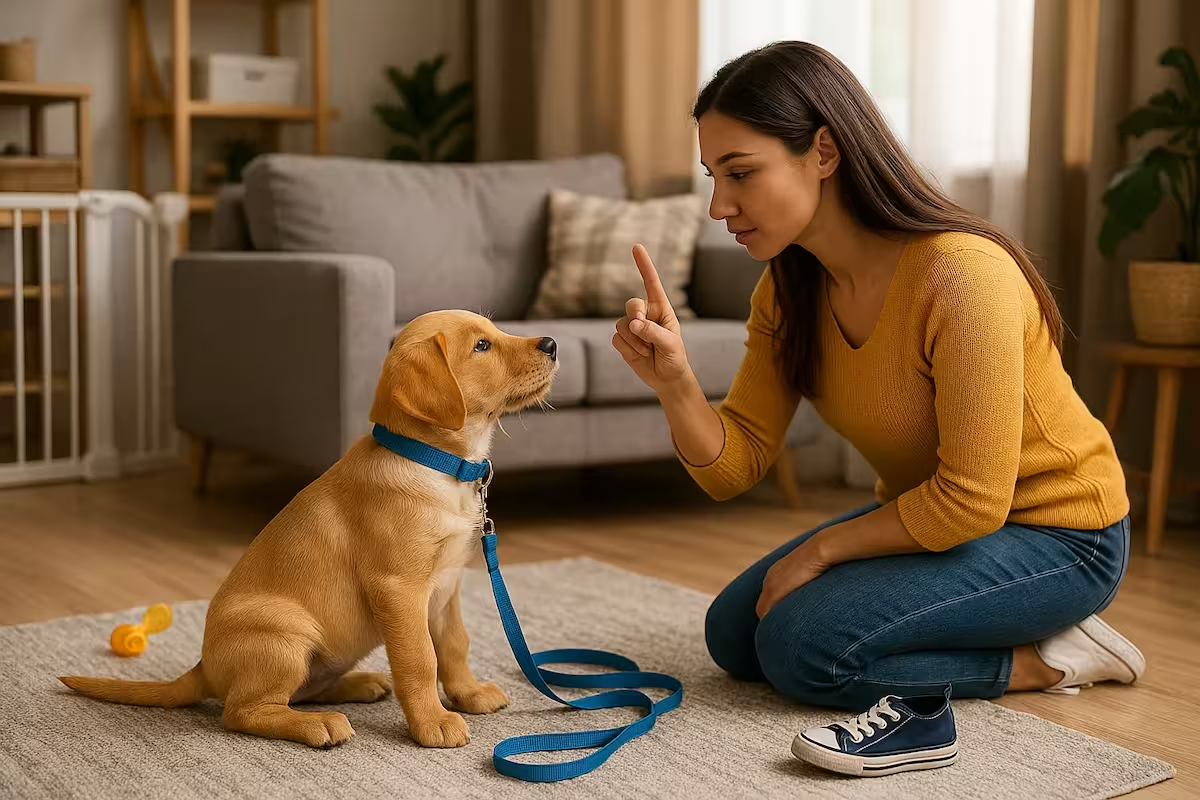
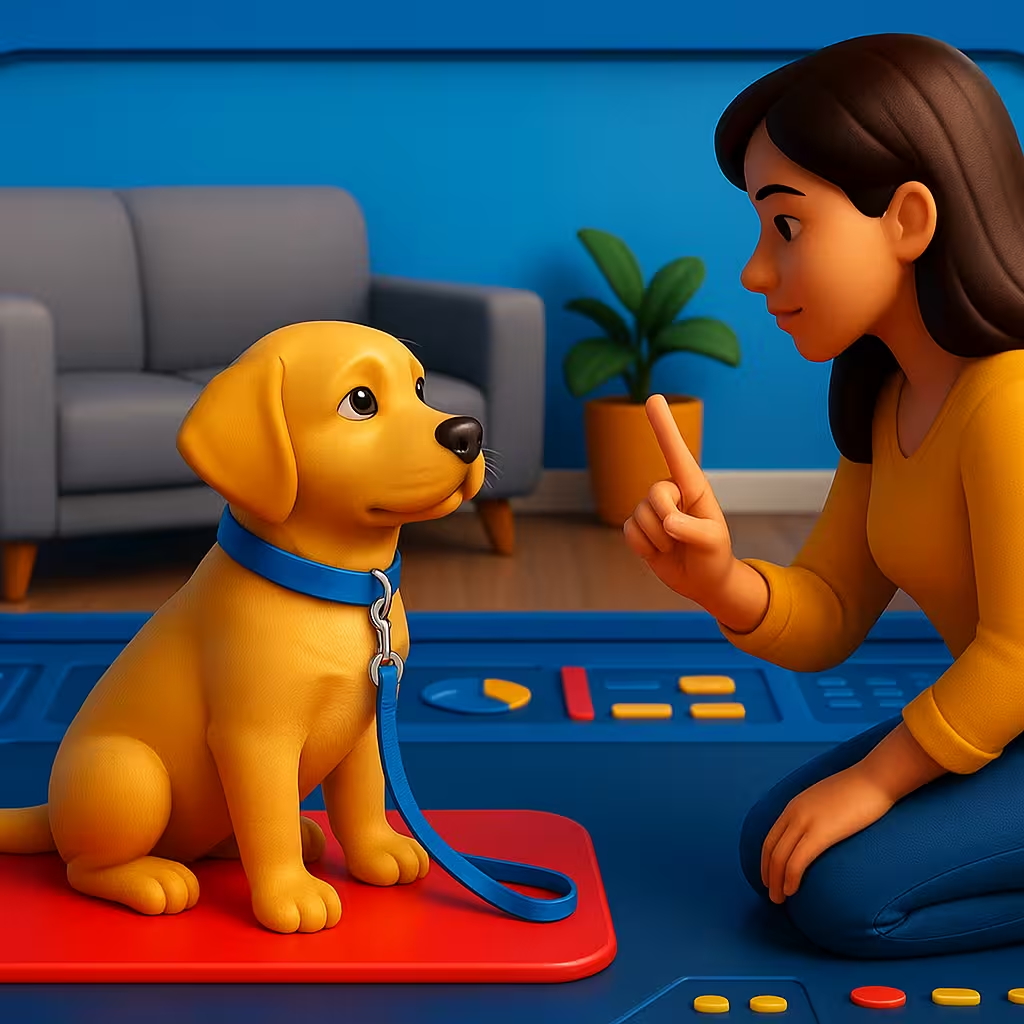
Teaching your puppy to stay is one of the most valuable obedience behaviors you can train. Whether you’re preventing door dashes, managing chaos during mealtime, or just building focus, a solid “stay” is the difference between frustration and freedom.
Many new dog owners underestimate how challenging this skill can be for puppies. Unlike commands like “sit” or “down,” which involve quick physical responses, teaching your puppy to stay requires impulse control, patience, and consistent reinforcement over time. Fortunately, with the right plan, you can help your pup master this command faster than you think.
Let’s break it down step-by-step.
🐾 Why “Stay” Matters
Before diving into the how-to, let’s understand why teaching your puppy to stay should be one of your early priorities.
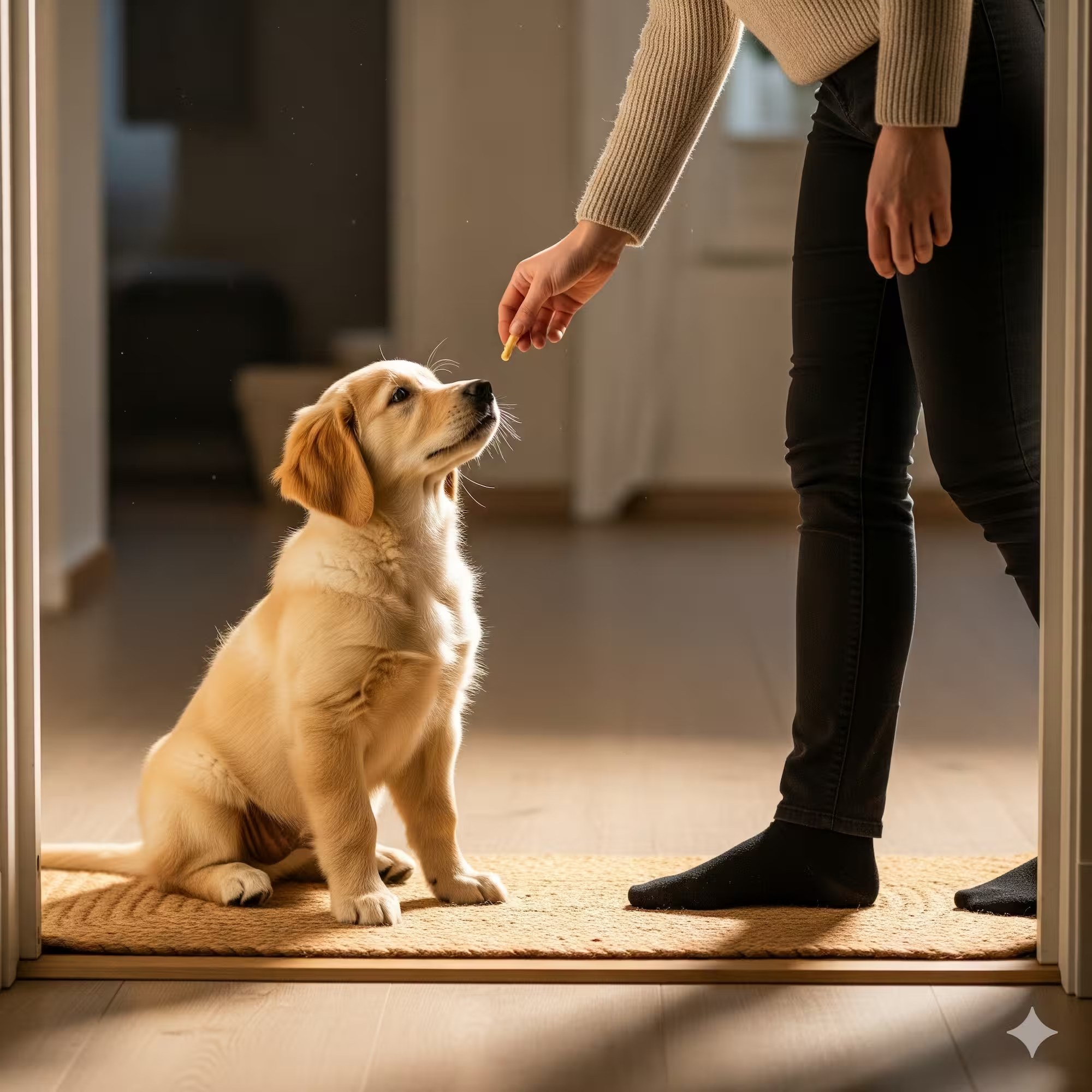
Safety
Safety First
A strong stay command can prevent your puppy from running into traffic, approaching aggressive dogs, or jumping on strangers.
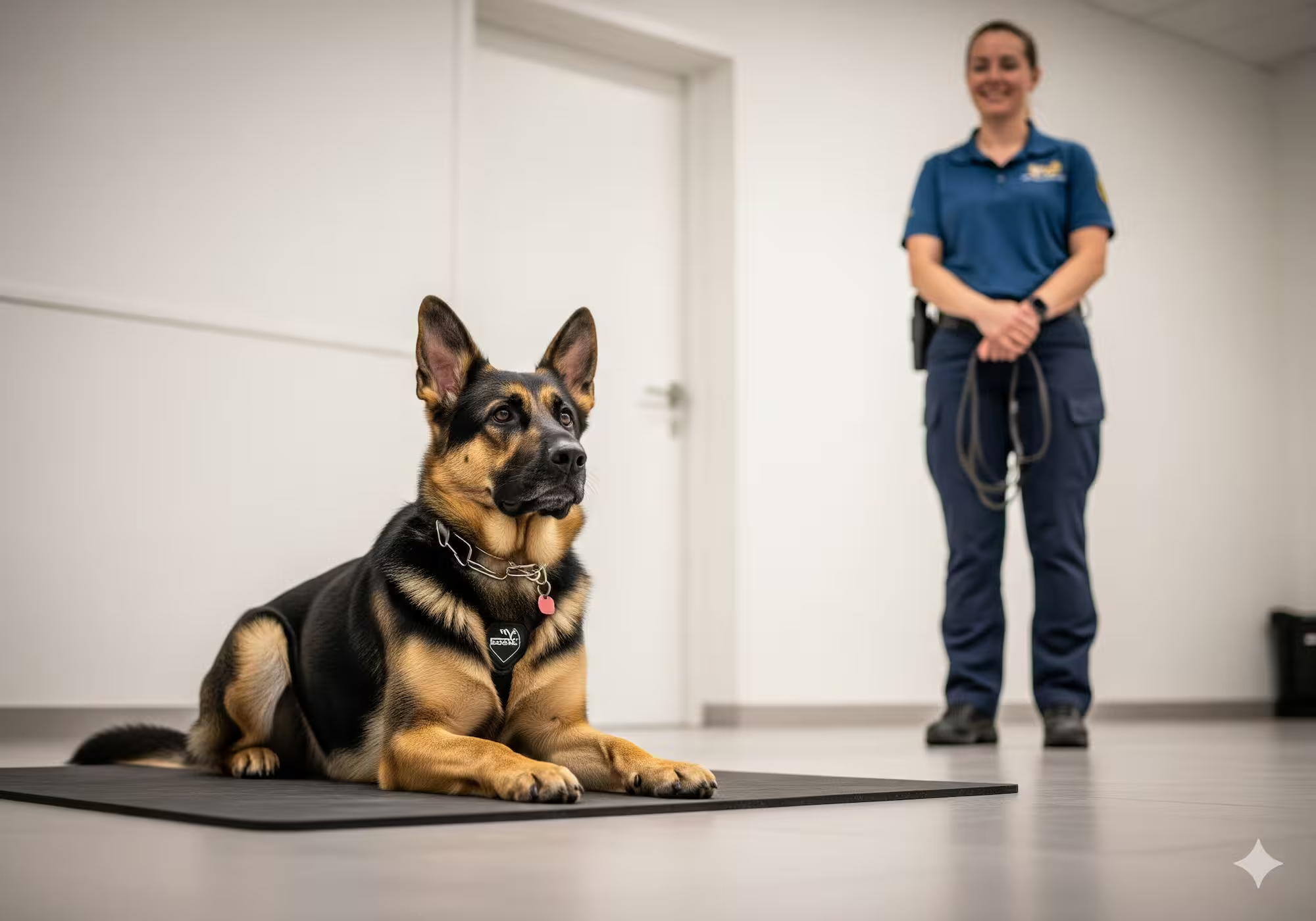
Self-Control
Building Patience
“Stay” helps your puppy practice patience and delay gratification—two skills essential for all types of obedience.
Household Harmony
A Peaceful Home
Whether you’re opening the door for guests or cooking, teaching your puppy to stay gives you much-needed breathing room.
Plus, it builds trust. When your pup learns that staying in place leads to praise, treats, and freedom, they begin to see you as a calm, reliable leader.
🧠 Step 1: Build the Foundation with “Sit”
The first step in teaching your puppy to stay is to build from a position they already understand—usually “sit.” Most puppies learn this quickly, making it a great starting point for layering in more complex behaviors.
Start in a quiet, distraction-free area. Ask your puppy to sit, then wait one second before marking with a “yes!” or clicker and rewarding with positive reinforcement. Gradually increase the pause after they sit before giving the reward.
You’re not saying “stay” yet—you’re simply reinforcing stillness. This micro-step helps your dog associate calmness with good outcomes.
Stay Training Console
A tool for building a rock-solid stay.
Log History
- Start tiny: 3–5 seconds at arm’s length with zero distractions.
- One axis at a time: Increase duration first, then distance, then distraction.
- Release on cue: Say your release word, then reward. Don’t reward for breaking.
- 3-in-a-row rule: After 3 wins, increase difficulty on one axis by 10–20%.
- If they break: Simply reset and reduce the next rep’s difficulty by ~30–50%.
Reset Training Data?
This will permanently delete all session and rep history. This action cannot be undone.
🦴 Step 2: Introduce the Word “Stay”
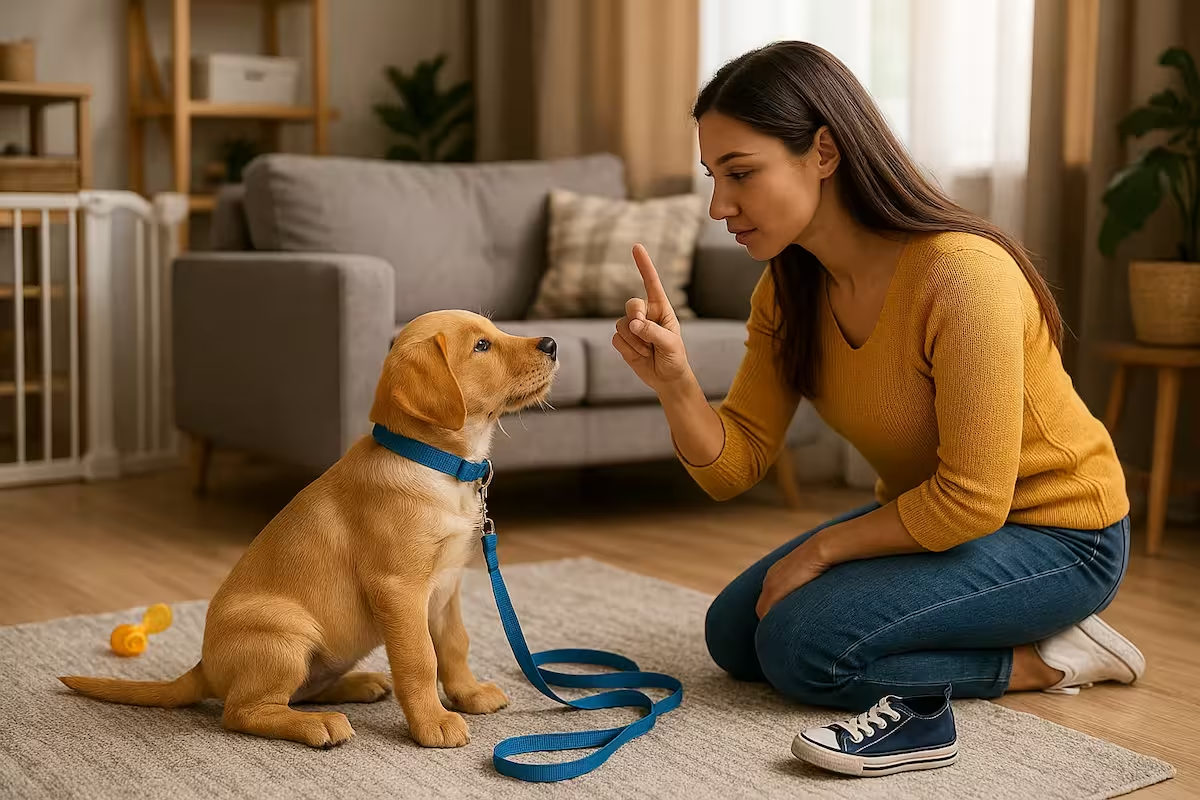
Once your pup can hold a sit for 3–5 seconds consistently, it’s time to introduce the verbal cue. Teaching your puppy to stay works best when the word is paired with calm body language.
Here’s the sequence:
- Ask for a sit.
- Say “stay” in a low, calm voice.
- Hold up a flat hand like a stop sign.
- Take a half-step back.
- Immediately step forward, say “yes!” and reward.
- You can also use utilize clicker training for a quicher marker!
If your pup moves, reset without scolding. It’s normal. The key is to reward even the tiniest bit of stillness.
Repeat this exercise 5–7 times per session, no more than 2–3 sessions a day. Keep them short and fun. Commands like ‘Leave It’ complement ‘Stay’ by reinforcing impulse control.
🌀 Step 3: Increase Distance, Time, and Distraction
When it comes to teaching your puppy to stay, slow and steady wins the race. Most dogs break a stay not out of defiance, but because the challenge became too hard too fast.
Use the “3 D’s” framework to level up:
- Distance: Can you take one step away? Two? Ten?
- Duration: Can your pup hold for 5 seconds? 15? One minute?
- Distraction: Can they stay while a toy is nearby? While someone claps? While another dog walks by?
Only increase one D at a time. If your dog struggles, reduce the challenge and reward success at an easier level.
Every session should end on a win.
Building Reliability and Distance: Advanced Techniques for Teaching Your Puppy to Stay
Once your puppy has a basic understanding of the stay command, it’s time to advance their skills. This stage is crucial for real-world application, especially when you need your dog to remain in place during distractions or at greater distances. In this section, we’ll focus on extending duration, introducing distance, and adding distractions—all while using the same calm, positive techniques introduced earlier in the process of teaching your puppy to stay.
Avoid jumping from short stays to long ones all at once. Like all stages of teaching (shaping) your puppy to stay, gradual increases create long-term stability.
Interactive Stay Training Guide
Visually plan your training sessions and master the “stay” command with your dog.
Foundation: Duration
Start with your dog staying for just a few seconds while you’re right beside them. The goal is success. Gradually increase the time, rewarding calm behavior. Master short durations before adding any distance.
Challenge: Distance
Once your dog can hold a stay, take one step back. Return and reward. Slowly build up the distance. Always return to your dog to release them; never call them out of a stay.
Proofing: Distractions
With a reliable stay, begin adding mild distractions like a person walking by or a toy dropping. Start with low-level distractions and gradually increase the intensity as your dog succeeds.
🔗 For help managing overstimulation or reactivity, visit our guide on dog behavior problems and solutions.
Step 4: Generalize to Multiple Environments
Dogs don’t naturally generalize well. Just because your puppy knows “stay” in the living room doesn’t mean they’ll perform it at the park. Begin practicing in other rooms, your backyard, and eventually in low-distraction public areas.
Each new environment is a fresh opportunity for success—and it helps cement the stay command across different settings.
Always return to easier versions of the behavior in new spaces (shorter duration, less distance) before ramping back up.
Step 5: Use Real-Life Applications
Daily “Stay” Practice
Visualize training difficulty across real-life scenarios.
Adjust Criteria
Difficulty Level
🛒 Groceries Scenario Tip
Start by asking for a “stay” at the doorway with just one bag. Gradually increase the number of trips you make past your dog before releasing them. This builds duration and distraction tolerance in a controlled way.
Make “stay” part of your daily life. Use it at the door when you’re bringing in groceries, while you cook dinner, or before mealtime. Integrating the skill into routines reinforces your training goals and gives your puppy consistent practice.
Need your dog to settle in public spaces like a café patio? Teaching your puppy to stay is the foundation for calm behavior in shared environments.
✅ Consider pairing the stay command with the place command, which designates a location for extended settling.
Troubleshooting Common Problems
Even with a solid foundation, you might face hiccups. Here’s how to solve them:
- Puppy keeps breaking the stay: Return to a shorter duration or closer distance. Rebuild confidence.
- Distraction triggers failure: Reduce the intensity. For example, swap a bouncing ball for a quiet toy until your dog succeeds.
- Boredom sets in: Keep sessions brief and engaging. Vary your rewards—use toys, praise, or high-value treats.
If your dog seems confused, simplify. Teaching your puppy to stay should never feel punishing—it should feel clear and rewarding. If your puppy becomes anxious or reactive during stay practice, counterconditioning can help shift their emotional response to triggers using gentle, reward-based exposure.
Layering the Stay with Other Skills
Once your puppy is proficient, consider layering the stay with other commands or routines. For example:
- Ask for “stay” before a recall command (“come”).
- Use “stay” before entering a car or crossing a street.
- Integrate it into trick routines to build focus and mental stimulation.
Each of these moments adds to your dog’s skillset and reinforces their ability to remain calm under pressure.
Celebrate Progress and Reinforce Regularly
Training isn’t one-and-done. Regular reinforcement keeps the stay command sharp. Even well-trained adult dogs benefit from a tune-up.
Use occasional training games to refresh the behavior:
Fun Training Games
Stay-and-Seek
A fun game to build excitement and reliability for the stay command.
How to Play
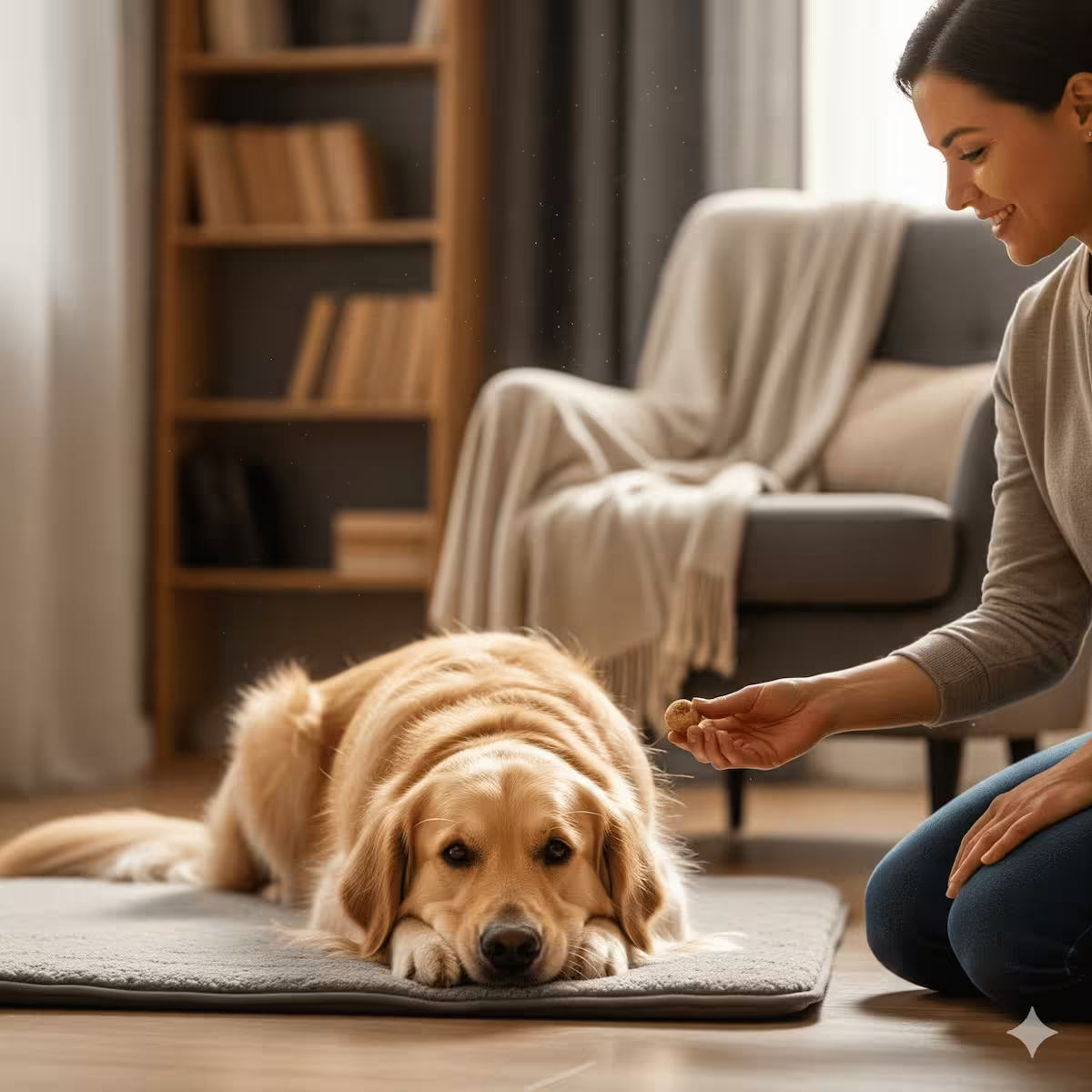
- Ask your dog for a ‘stay’ in a safe, familiar room.
- Duck just out of sight for only 1-2 seconds (e.g., behind a door).
- Pop back out and cheerfully release and reward them for holding their position.
- Gradually increase the hiding time as they get more confident.
Stay Relay
Tests focus by adding controlled movement and distraction around your dog.
How to Play
- With a partner, ask your dog to ‘stay’ between you.
- Gently toss or roll a soft toy back and forth, a few feet away from your dog.
- Keep the energy calm and frequently reward your dog for holding the stay.
- If they break, reset with an easier toss (slower, further away) to ensure success.
Both games make teaching your puppy to stay fun and interactive.
]Find another professional perspective on shaping long-duration stays, explore this guide.
Don’t Skip the Emotional Layer
Stay training isn’t just obedience—it teaches emotional regulation. A puppy who can remain in place while you prepare dinner is learning patience. A dog who holds a stay when excited guests arrive is learning composure.
For more on the emotional benefits of positive training, check out our piece on dog socialization with confidence.
Positive Puppy Enrichment — Quick Preview
Three unique, trainer-approved ideas. Open the full console for filters, time limits, and 40+ activities!

Lick Mat — Frozen
Details
- Spread thin layers (yogurt, pumpkin, wet food).
- Freeze 30–60 minutes to extend duration.
- Serve on a non-slip mat; rinse and rotate flavors.
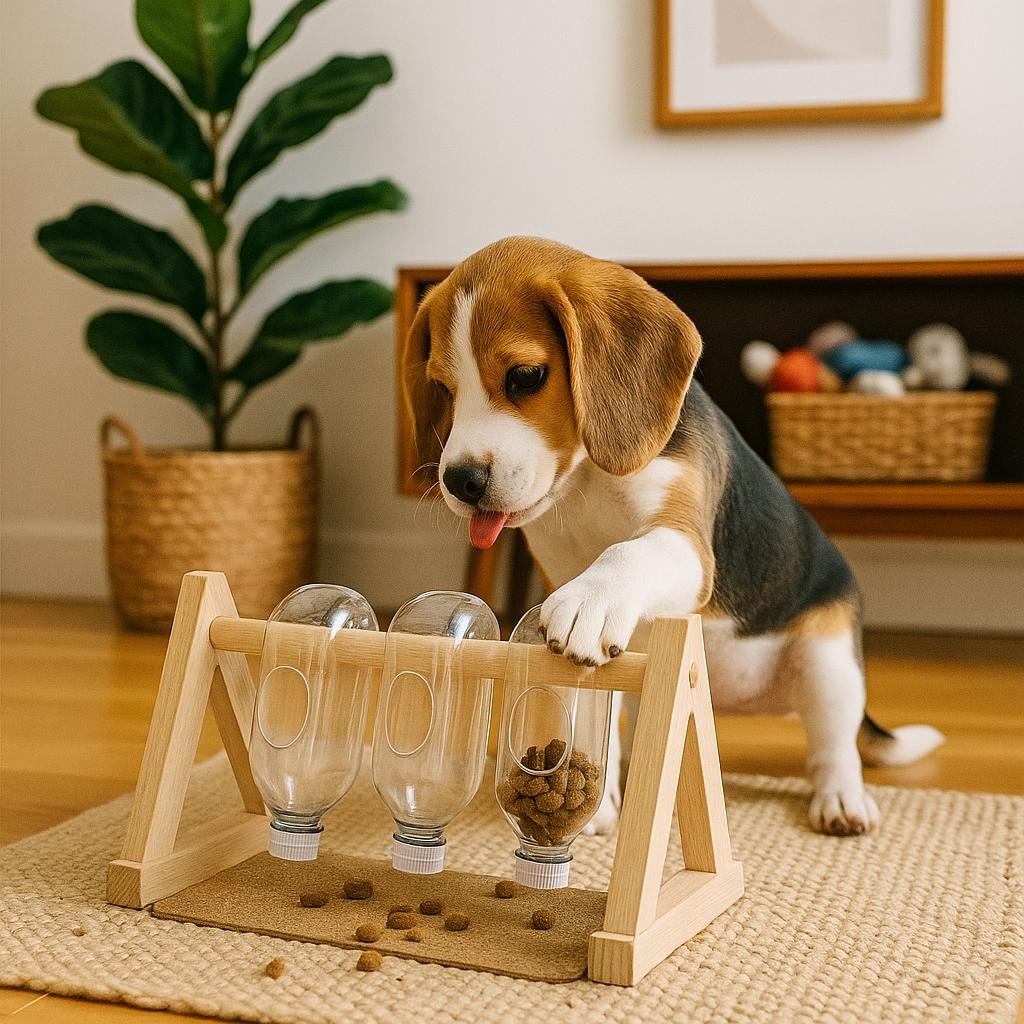
Bottle Feeder Rack
Details
- Load kibble; show one easy win.
- Let your pup learn to spin bottles for food.
- Short sessions prevent frustration; tidy edges.

Flirt Pole Bursts
Details
- 2–3 short chases with easy catches.
- Insert calm breaks; finish with sniffing.
- Avoid tight circles; protect growing joints.
Final Thoughts
At this stage, teaching your puppy to stay becomes less about the mechanical command and more about building your dog’s emotional self-control. By focusing on consistency, clarity, and a strong reward system, you’ll build a dog who not only listens—but thrives in real-world environments.
The Psychology: Why “Stay” Teaches More Than Just Stillness
The “Stay” command is one of the most powerful exercises in a dog’s psychological development. Unlike simple physical cues, the psychology of teaching a dog to stay is centered on building impulse control and emotional regulation. When you ask your puppy to hold a position while you move away or a distraction appears, you are actively teaching them to delay gratification and manage their excitement. This mental work is crucial for developing a patient, focused companion who can remain calm under pressure.
This training succeeds by using the behavioral principle of “shaping.” By rewarding tiny, successive approximations of the final goal—stillness for one second, then three, then five—you ensure the puppy is always winning. This positive reinforcement approach makes the learning process a confidence-building game rather than a frustrating test. It shows your puppy that building focus and patience is a rewarding activity, which strengthens their desire to work with you.
The Key Takeaway: Fostering Trust Through Clarity
A reliable stay is built on a foundation of trust. When you consistently return and reward your puppy for holding their position, they learn that you are a predictable and fair leader. This process solidifies your bond because it demonstrates that following your guidance leads to positive outcomes. Mastering how “stay” teaches a dog emotional regulation is less about dominance and more about creating a secure partnership where your dog trusts your cues.
Ultimately, teaching your puppy to stay provides them with a critical coping skill for real-world situations, helping them navigate exciting or stressful environments with a calm and controlled mindset.

Christopher Quinn adopted his first dog, Loki, a spirited Border Collie/Jack Russell mix, after exiting Army service in the summer of 2012. That experience sparked a lifelong passion for canine behavior and positive reinforcement training.
He studied Principles of Dog Training & Behavior at Penn Foster and has since worked with hundreds of dogs from all backgrounds. Over the past two years, Christopher has fostered more than 30 rescue dogs, giving each one a chance at a better life.
Today, he continues to write, teach, and share insights on humane dog training, blending hands-on experience with a decade of dedicated study.