

New puppy scared of everything?
Bringing a new puppy home should feel joyful, but what if your puppy seems scared of everything? From sudden noises to people, even harmless household objects—some puppies act like the world is out to get them. If this sounds familiar, you’re not alone.
Let’s break down the possible causes of fear in puppies, what it means for their development, and how you can gently guide your pup from fearful to confident—using positive reinforcement and science-backed techniques.
🚨 Is It Normal for Your Puppies to Be Scared?
Yes—especially at certain developmental stages. Puppies go through what’s known as fear periods, which are brief windows in their early life where they become especially sensitive to new experiences. This is evolution’s way of teaching caution.
But when fear persists—or escalates—it can interfere with socialization, learning, and your bond with your dog. If your puppy seems constantly scared of everything, it may be time to take intentional steps to help them feel safe.
🧠 Common Reasons for Puppy Fear
Select a category and click a bar for more details.
🧠 Common Reasons Why Your Puppy Is Scared of Everything
Understanding why your puppy is scared is the first step in building confidence. Here are the most common reasons:
1. Lack of Early Socialization
If your puppy wasn’t exposed to a variety of sounds, surfaces, people, or environments between 3–14 weeks of age, they may be more sensitive to novelty. This is why teaching your puppy to stay in various environments during this critical period is so important. This isn’t your fault—many puppies are adopted after this critical window has passed.
2. Fear Periods
Puppies go through at least two natural fear stages:
- Around 8–11 weeks
- Again around 6–14 months
During these times, even well-socialized puppies may suddenly act afraid of things they were fine with before. The American Kennel Club’s research on puppy fear periods confirms this is a normal part of canine development that requires patient, positive handling.
3. Genetic Predisposition
Some breeds and individual dogs are more cautious or sensitive by nature. Breeds like Border Collies, Shiba Inus, or rescue mixes may lean more reactive.
4. Trauma or Overwhelm
Even one scary experience—being grabbed, loud yelling, rough handling—can create lasting associations. Similarly, overexposing a puppy to too much too fast (flooding) can increase fear instead of reducing it.
🚶 What Does Fear Look Like in Puppies?
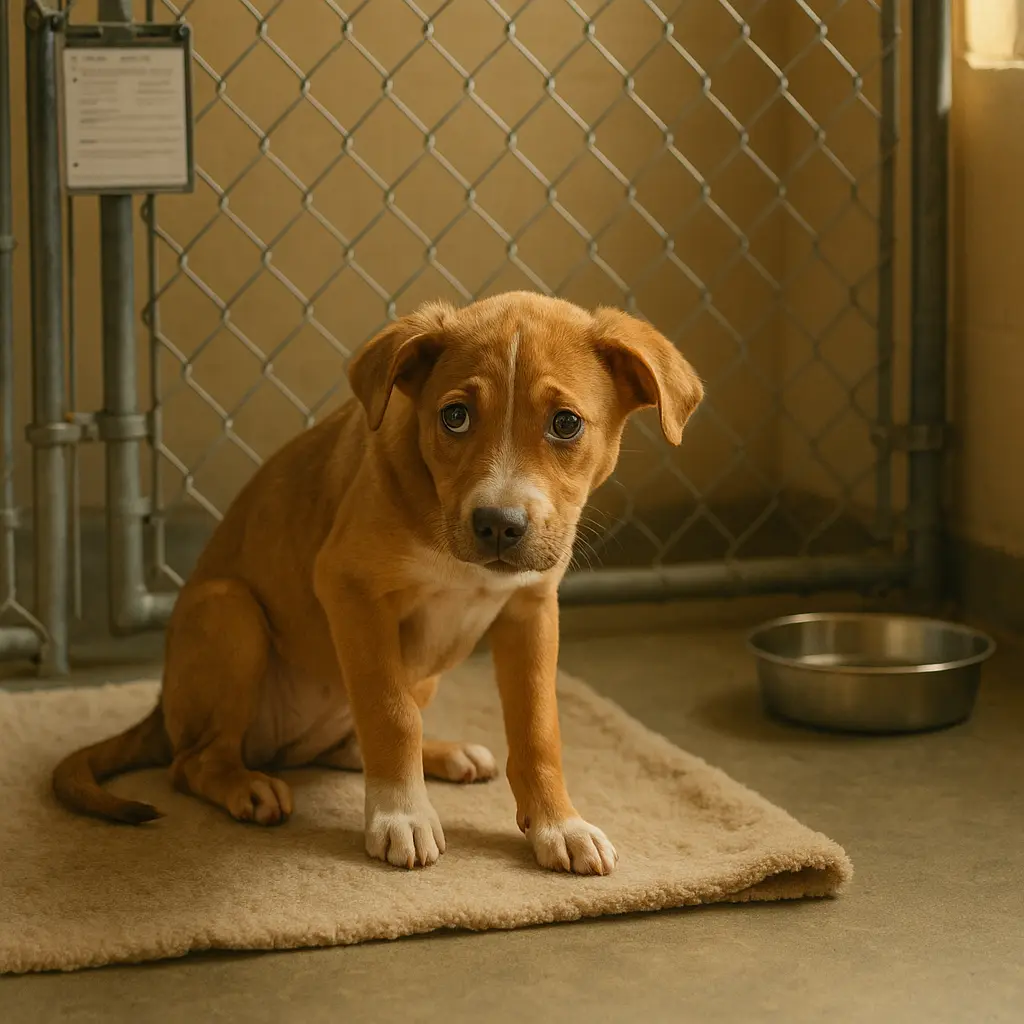
🚶 What Does Fear Look Like in Puppies?
Fear isn’t always dramatic. Some puppies don’t bark or run—they freeze, crouch, or avoid. Watch for subtle signs.
- Tail Tucked: Curled tightly under the belly.
- Posture: Cowering, flattened, or making themselves small.
- Stress Signals: Lip licking, yawning, or panting when not hot or tired.
- Avoidance: Averting their gaze or retreating from people.
- Refusing Treats: Too stressed to eat during training.

✅ What Does Confidence Look Like?
A confident puppy is relaxed and ready to engage. They show comfort through their body language.
- Tail Position: Held in a neutral position or wagging loosely.
- Relaxed Body: Soft, loose posture, not tense or stiff.
- Engaged & Playful: Eager to accept treats and initiate play.
- Gentle Eye Contact: Comfortable looking at you without staring.
- Curious Explorer: Happily investigates new environments.
Fear isn’t always dramatic. Some puppies don’t bark or run—they freeze, crouch, or avoid. Watch for signs like:
- Tail tucked under the belly
- Cowering or flattened posture
- Lip licking, yawning, or panting when not tired
- Avoiding eye contact or retreating from people
- Refusing treats during training
The earlier you notice these signs, the easier it is to help.
💡 How to Help a Scared Puppy Gain Confidence
Helping a fearful puppy requires patience, consistency, and compassion. Here’s what works:
✅ 1. Create a Safe Base
Your puppy needs a reliable environment where they can relax without being constantly startled. Start by setting up a cozy crate or pen in a low-traffic area – our crate training a puppy at night guide explains exactly how to make this space comfortable and secure.
🧡 Pro Tip: Let your puppy retreat when they need to. If your puppy shows signs of separation anxiety when left alone, our guide on understanding separation anxiety in dogs can help you address this specific fear. Pushing them into scary situations increases stress and teaches them to avoid you.
✅ 2. Use Positive Reinforcement
Any time your puppy interacts calmly with something that used to scare them, reward them with treats and praise. If they only glance at it from a distance, that’s okay—reward that, too. We call this technique counterconditioning, which is a cornerstone of positive reinforcement puppy training.
This builds new associations: “That thing is weird… but I get chicken when I see it? Cool.”
Is Your Puppy Scared of Everything?
A science-backed guide to building a brave, happy, and confident companion.
Interactive Fear Symptom Checker
Check the signs you’ve noticed. Fear periods are normal (especially around 8-11 weeks & 6-14 months), but recognizing the signs is the first step!
Core Counterconditioning Tactics
The goal is simple: change your puppy’s negative association into a positive one.
Reward Strategy
- ✓ Pair scary things with amazing treats (chicken, cheese).
- ✓ Start far away, where your puppy sees the trigger but isn’t scared.
- ✓ Reward *before* a reaction happens, not after.
Timing & Frequency
- ✓ Use a quick marker (“Yes!” or click) the moment they see the trigger calmly.
- ✓ Keep sessions short (1-5 mins) but do them often.
- ✓ Toss treats on the ground to redirect focus with movement.
⚠️ The Golden Rule: If your puppy won’t take a treat, you’re too close to the trigger. Create more distance and try again!
4-Step Confidence Building Plan
Follow these steps sequentially to create a secure environment for your puppy.
When to Seek Professional Help
If you’re not seeing progress or the fear is severe, contact a Certified Professional Dog Trainer (CPDT-KA) or veterinary behaviorist. Seek help if fear:
✅ 3. Start with Low-Intensity Exposure
Don’t bring your scared puppy to a crowded park or farmer’s market and hope they “get used to it.” Instead:
- Watch other people from a distance
- Let them observe a vacuum from across the room
- Record sounds (like fireworks) and play them at a low volume while feeding treats
This is called desensitization, and it works best when combined with rewards.
✅ 4. Stick to a Calm Routine
Unpredictability can spike anxiety. Puppies thrive on structure. Try to:
- Feed at the same times daily
- Use consistent indoor puppy potty training with positive reinforcement schedules
- Walk the same route at first before adding variety
Routine builds security, and security builds confidence.
✅ 5. Enroll in Gentle Puppy Training
Group classes or app-based programs like Brain Training for Dogs or the Dogo app can provide structured, fear-free guidance. Just make sure whatever method you use is 100% positive reinforcement-based—no scolding, leash pops, or dominance-based tactics.
✨ Fear-based training will make a fearful puppy worse—not better.
🐕 Puppy Scared of Everything? When to Seek Help
Positive Puppy Enrichment — Quick Preview
Three unique, trainer-approved ideas. Open the full console for filters, time limits, and 40+ activities!

Lick Mat — Frozen
Details
- Spread thin layers (yogurt, pumpkin, wet food).
- Freeze 30–60 minutes to extend duration.
- Serve on a non-slip mat; rinse and rotate flavors.
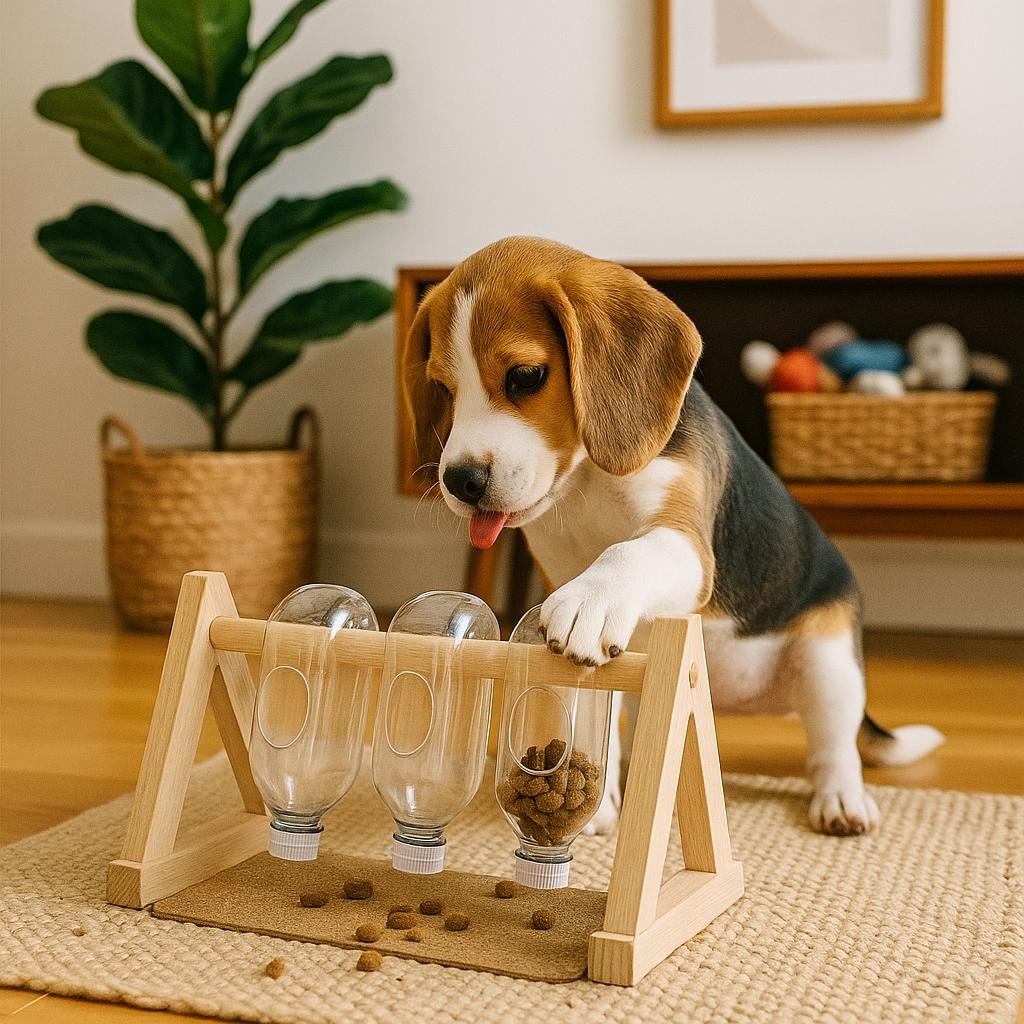
Bottle Feeder Rack
Details
- Load kibble; show one easy win.
- Let your pup learn to spin bottles for food.
- Short sessions prevent frustration; tidy edges.

Flirt Pole Bursts
Details
- 2–3 short chases with easy catches.
- Insert calm breaks; finish with sniffing.
- Avoid tight circles; protect growing joints.
If your puppy’s fear:
- Interferes with daily life (won’t leave the crate, refuses walks)
- Escalates into aggression (growling, snapping)
- Doesn’t improve over time
…consider working with a Certified Professional Dog Trainer (CPDT-KA) or veterinary behaviorist. You don’t have to do this alone.
The Psychology: Understanding Your Puppy’s Fearful Mind
The psychology behind a puppy’s fear is often rooted in normal developmental biology, not misbehavior. Puppies experience sensitive “fear periods” where their brains are hardwired to form strong, lasting memories about threats. This evolutionary safety mechanism can make them suddenly wary of harmless things. Additionally, the critical socialization window (3-14 weeks) is a crucial time for neurological development; a lack of positive exposure during this phase can lead to a lifetime of anxiety around novelty.
Effective solutions work by changing a puppy’s underlying emotional response through two key behavioral principles: desensitization and counter-conditioning. By exposing a puppy to a trigger from a distance where they feel safe (desensitization) and pairing it with high-value rewards (counter-conditioning), you are actively rewiring their brain. This process helps them form new neural pathways, transforming an association of fear into one of positive anticipation. This is how to build a puppy’s confidence with positive reinforcement.
The Key Takeaway: Safety Is the Foundation of Confidence
A puppy cannot learn or overcome fear if their nervous system is in a state of high alert. Creating a predictable and safe environment is the most critical first step. A secure home base and a consistent routine reduce ambient stress, allowing the puppy’s brain to be more receptive to learning. This is why a predictable routine helps anxious puppies; it provides the psychological security needed before any active training or exposure can be effective.
By understanding these principles, you shift from trying to “fix” a scared puppy to patiently guiding them. You become a source of safety, empowering them to learn that the world, while sometimes surprising, is ultimately a safe and rewarding place.
🌱 Final Thoughts
It’s not your job to force bravery—it’s your job to provide a safe space where confidence can grow. A scared puppy isn’t broken. They just need guidance, patience, and time.
With gentle, consistent support, your puppy can learn the world isn’t such a scary place after all.

Christopher Quinn adopted his first dog, Loki, a spirited Border Collie/Jack Russell mix, after exiting Army service in the summer of 2012. That experience sparked a lifelong passion for canine behavior and positive reinforcement training.
He studied Principles of Dog Training & Behavior at Penn Foster and has since worked with hundreds of dogs from all backgrounds. Over the past two years, Christopher has fostered more than 30 rescue dogs, giving each one a chance at a better life.
Today, he continues to write, teach, and share insights on humane dog training, blending hands-on experience with a decade of dedicated study.