
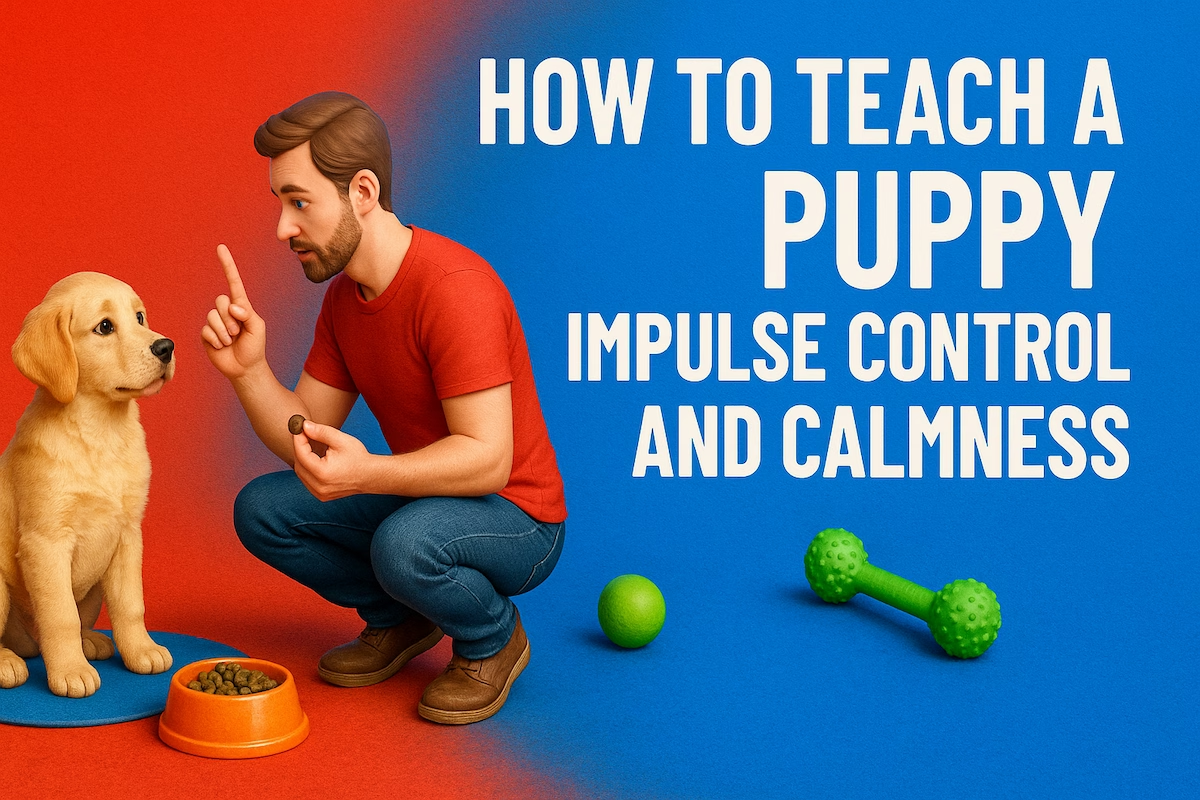
Teaching your puppy impulse control and calmness isn’t just about having a well-behaved dog — it’s about creating a lifetime of trust, safety, and mutual respect. Puppies are naturally energetic, curious, and excitable.
Without guidance, they can develop habits like jumping, mouthing, excessive barking, or charging toward distractions. Fortunately, with a few simple, positive reinforcement exercises, you can channel that energy into polite, thoughtful behavior.
In this guide, we’ll walk through exactly how to teach a puppy impulse control and calmness step-by-step, so your pup learns to think before acting — even in exciting situations.
Behavior Router
Describe the problem
Recommended plans
No exact match—try different keywords or adjust filters.
Why Puppy Impulse Control Matters
Impulse control is the ability to pause and make a better choice instead of reacting instantly. In puppies, this skill is crucial because it:
- Prevents dangerous situations — like darting into the street or grabbing unsafe items.
- Makes training easier — a calm puppy is more focused and receptive to cues.
- Reduces stress — both for you and your dog.
- Improves social interactions — with other dogs, people, and children.
When you know how to teach a puppy impulse control and calmness, you’re not just fixing problem behaviors — you’re building the foundation for a well-adjusted adult dog.
Key Principles Before You Start
- Set realistic expectations — Puppies don’t develop full self-control overnight. Progress happens in small steps.
- Use positive reinforcement — Reward calm choices with treats, praise, or play. For comprehensive guidance on positive reinforcement techniques, check out our positive reinforcement puppy training guide.
- Manage the environment — Prevent situations where your puppy can repeatedly “practice” bad habits.
- Stay consistent — Everyone in the household should follow the same rules.
The American Kennel Club emphasizes that positive reinforcement is the most effective method for teaching dogs impulse control, as it builds confidence while developing self-restraint skills.
Essential Puppy Training Tips
Keep Sessions Short
Start Small & Build Up
Reward Immediately
Stay Consistent
Stay Patient & Positive
Practice Everywhere
Step-by-Step: How to Teach a Puppy Impulse Control and Calmness
1. Start with “Wait” at the Food Bowl
This is one of the easiest impulse control exercises for beginners. If your puppy struggles with basic commands, start with our complete puppy training guide for new dog owners to establish foundation skills.
- Hold your puppy’s food bowl and wait for them to sit or stand calmly.
- If they jump or paw at you, lift the bowl slightly and wait again.
- The moment they hold still, place the bowl down.
- Over time, add a verbal cue like “Wait” before releasing them to eat.
Why it works: Your puppy learns that calm behavior makes the good thing happen.
2. Teach a Solid “Leave It”
“Leave It” teaches your puppy to resist the urge to grab something instantly.
- Hold a treat in your closed fist and present it to your puppy.
- When they stop trying to get it, say “Yes” and reward them with a different treat from your other hand.
- Practice with different items, gradually making it more challenging. For advanced techniques, explore our how to teach a dog to leave it comprehensive guide.
Pro tip: Always reward with something better than what they left behind. This keeps the command positive.
3. Introduce “Settle” on a Mat
This exercise builds calmness in different environments.
- Place a mat or dog bed on the floor.
- Lure your puppy onto it with a treat, then reward them for sitting or lying down.
- Gradually increase the duration they stay on the mat before rewarding.
- Use “Settle” as the cue for relaxing when guests arrive or when you need quiet time. This technique is especially helpful for puppies experiencing separation anxiety, as it provides a calm foundation behavior.
Why it works: The mat becomes a cue for calm, relaxed behavior.
4. Practice Doorway Manners
Many puppies explode with excitement when the door opens. This behavior often stems from poor socialization. Learn more about how to socialize a shy puppy with strangers to address underlying excitement issues.
- Approach the door with your puppy on a leash.
- Ask for a “Sit” and wait for calm before opening it.
- If they lunge forward, close the door gently and try again.
- Only open the door fully when they remain seated.
This reinforces the idea that calm behavior earns access to exciting places.
5. Add Controlled Distractions
Once your puppy is doing well in calm settings, practice around mild distractions.
- Start with family members walking past.
- Progress to toys being rolled on the floor or light noises.
- Reward your puppy for staying calm instead of reacting.
The goal is to help them practice impulse control in real-world scenarios. For specific issues like leash pulling, see our loose leash walking training guide.
Puppy Impulse Control Training
Master effective puppy impulse control training techniques with step-by-step calmness exercises
Common Mistakes to Avoid
- Inconsistency — Mixed signals slow progress.
- Over-correcting — Harsh punishment can cause fear or frustration.
- Too much too soon — Increase difficulty gradually so your puppy succeeds often. Remember that crate training can also support impulse control by providing structured quiet time for your puppy.
According to the American Veterinary Society of Animal Behavior, reward-based puppy training methods are scientifically proven to be more effective than punishment-based approaches for developing impulse control.
How Long Until You See Results?
Every puppy is different, but with daily practice, you can expect noticeable improvement in 2–4 weeks. For nighttime training issues, consider our puppy sleep through the night strategies. Remember: the goal is progress, not perfection.
The Big Picture: Calmness as a Life Skill
Impulse control isn’t just a trick — it’s a mindset. The more often you give your puppy opportunities to pause, think, and choose the right behavior, the more it becomes their default. Whether it’s greeting guests politely, walking past another dog without lunging, or sitting patiently before crossing the street, these small moments add up.
By learning how to teach a puppy impulse control and calmness, you’re creating a reliable, respectful companion who’s a joy to live with.
Final Tip: Keep sessions short and fun. End on a win, and your puppy will be excited to practice again tomorrow.

Christopher Quinn adopted his first dog, Loki, a spirited Border Collie/Jack Russell mix, after exiting Army service in the summer of 2012. That experience sparked a lifelong passion for canine behavior and positive reinforcement training.
He studied Principles of Dog Training & Behavior at Penn Foster and has since worked with hundreds of dogs from all backgrounds. Over the past two years, Christopher has fostered more than 30 rescue dogs, giving each one a chance at a better life.
Today, he continues to write, teach, and share insights on humane dog training, blending hands-on experience with a decade of dedicated study.