
Teach Your Dog to Come, Every Time
Build a lightning-fast recall with our free session tracker. Learn fun games, track progress, and get smart timing recommendations to make training effective and fun.
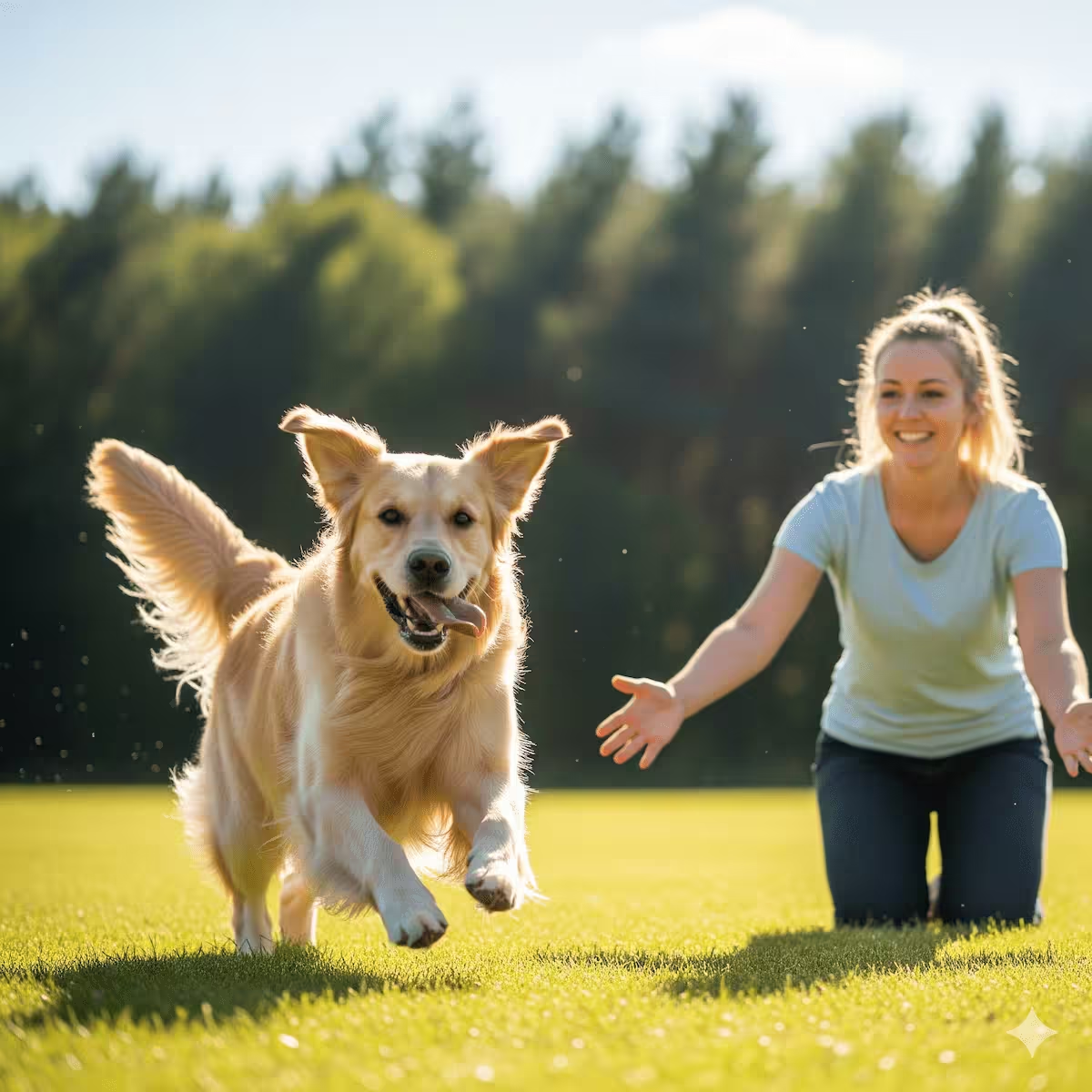
Why Tracking Your Training Matters
A reliable recall isn’t built in one long session; it comes from many successful, short, and fun repetitions. This tool helps you avoid guesswork by tracking session time, success rate, and providing a recommended length that adapts to your puppy’s age and environment. Structure is key to clear communication.
We’re combining two powerful learning principles: pairing your recall cue with amazing things (see Classical Conditioning) and reinforcing the specific behavior of running to you (see Operant Conditioning).
How the Recall Tool Works
As you train, mark each repetition: ✅ for a successful return, ⚠️ for no response, 🎁 for a high-value jackpot reward, and 🐿️ if a distraction occurs. The tool provides a live timer, a success-streak meter, and a recommended session length based on your settings and results.
Remember, timing is everything. Mark the moment your dog turns toward you and reward them the instant they arrive. This precision is the foundation of Capturing & Reward Timing and helps build reliable Stimulus Control.
🛰️ Recall Training Mission Console
- Cue Once, Pay Big: Mark the turn, treat at your thigh. Your excitement is part of the reward!
- Run Away: Moving backward makes you a fun, moving target. Reward enthusiastically for sprints.
- Protect the Cue: If there’s no response, don’t repeat. Reset by making it easier.
- End on a Win: Always finish the session with a successful repetition to build confidence.
Fun Recall Games to Play
Turn training into a game to build enthusiasm and speed. A dog that wants to come back is more reliable than one that feels they have to.
- Ping-Pong Recall: With a partner, sit 10-15 feet apart. Take turns calling the dog. When they come, reward them and have the other person immediately call them back. This builds speed and a love for the game.
- Hide and Seek: In your house or a safe, fenced area, have someone lightly hold your dog while you hide. Call them once with an excited voice. Celebrate with a huge party (treats, praise, toys) when they find you.
- Catch Me If You Can: Say your recall cue and immediately run away from your dog. Most dogs love to chase. This makes coming to you an exciting game of pursuit. Reward them when they catch up.
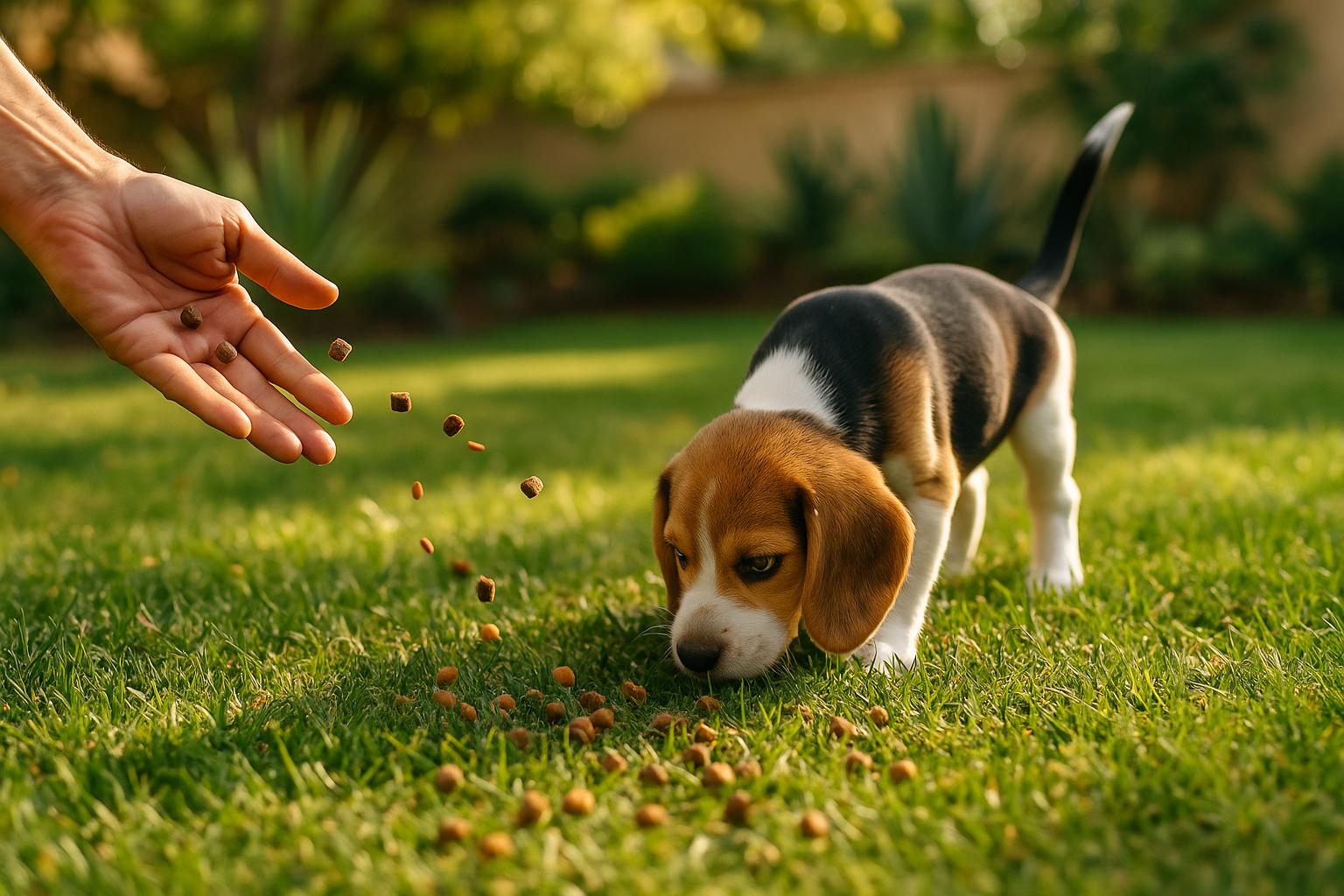
Step-by-Step Progression Plan
Start where your puppy can succeed, then increase difficulty by changing only one variable at a time: distance, duration, or distractions. A long line is your best friend for safety and to prevent your dog from learning to ignore you (a key part of Environmental Management).
| Stage | Setup | Goal |
|---|---|---|
| 1. Home Base | 3–10 ft, quiet room | Build a strong, positive association with the cue. |
| 2. The Yard | 10–25 ft, mild distractions (smells, sounds) | Introduce jackpots for fast sprints. |
| 3. Quiet Park | 15–40 ft, on a long line | Maintain success with low-level distractions. |
| 4. Busy Park | Shorter distance, higher value rewards | Proofing the recall around real-world distractions. |
If your dog gets distracted and can’t focus, you’ve likely gone over their threshold. Simply make the next repetition easier by shortening the distance or moving to a calmer spot.
Common Recall Mistakes to Avoid
- Poisoning the Cue: Never call your dog to you for something they dislike (like a bath, nail trim, or leaving the park). This punishes the recall. If you must do something unpleasant, just go and get them.
- Repeating the Cue: Saying “Come! Come! Fido, COME!” teaches your dog that the cue is “Come-Come-Fido-COME.” Say it once. If they don’t respond, you know the setup was too difficult.
- Training When They Can’t Succeed: Don’t practice recalls at a busy dog park for the first time. Build a strong foundation in low-distraction environments first.
- Letting the Reward Become Boring: Keep your rewards exciting and varied. Sometimes it’s a treat, sometimes it’s a favorite toy, and sometimes it’s an exciting game of tug.
Recall Training FAQs
What treats should I use for recall training?
Use high-value rewards that your puppy absolutely loves and only gets during recall training. Small, soft, smelly treats like cheese, chicken, or freeze-dried liver work well. The goal is to make coming to you the best decision they could possibly make.
Why is my puppy’s recall getting worse?
This is common, especially during adolescence (around 6-18 months). The world becomes more interesting than you are! Go back to basics: use a long line, increase the value of your rewards, play more games, and reduce distractions until they are reliable again.
How do I handle distractions?
Management is your best tool. Use distance and a long line to prevent your dog from reaching a distraction. Gradually decrease the distance to the distraction as your dog proves they can still respond to you. See our guide on environmental management for more strategies.