
Snuffle Mat: Calm Focus Through Nosework
A snuffle mat for dogs channels foraging into slow, satisfying work. It pairs beautifully with positive reinforcement.
Keep first sessions short and predictable—especially for puppies. If arousal spikes, skim threshold management to keep reps winnable.
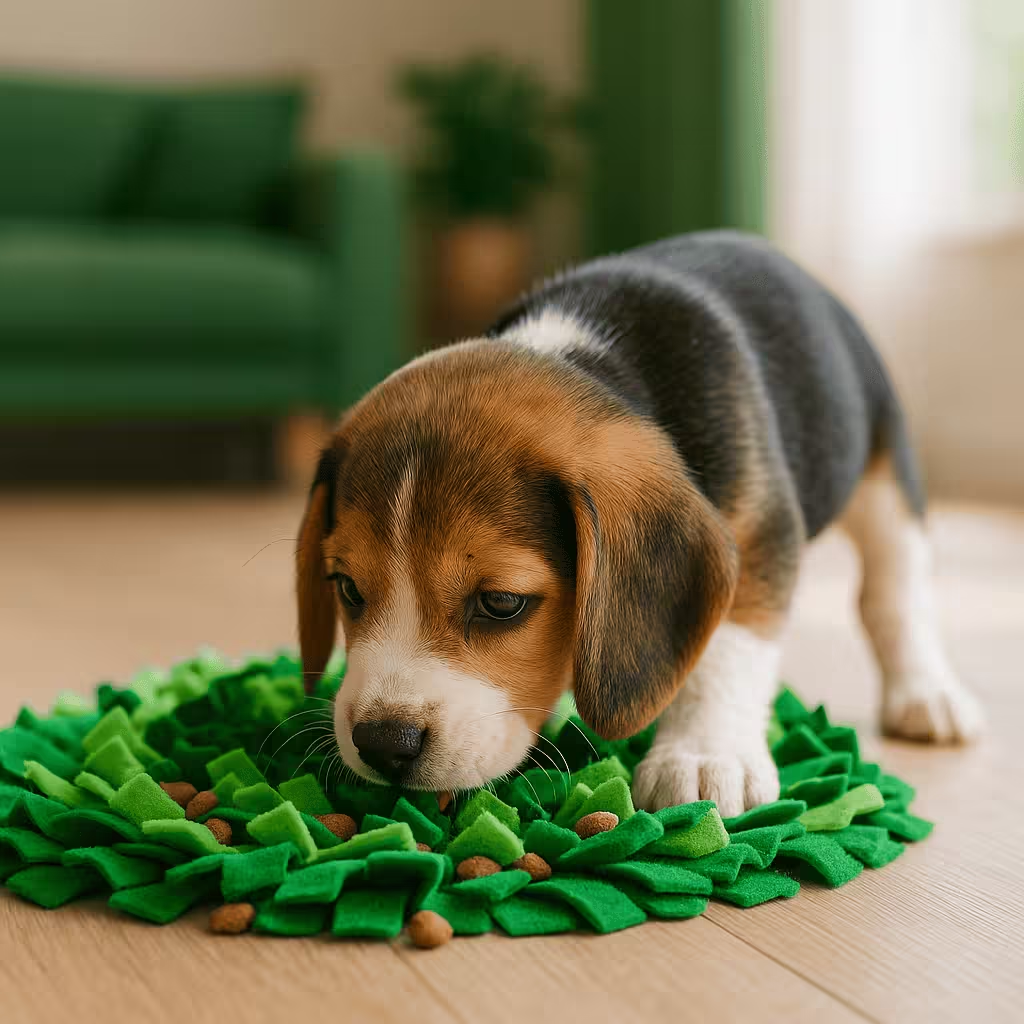
Why snuffle mats calm dogs
Sniffing lowers heart rate and nudges dogs into the “rest and digest” state. Because each win is quick, a snuffle mat is ideal for building confidence in sensitive dogs and puppies.
You get quiet time with minimal mess and easy resets. For longer, more soothing sessions later in the day, rotate a Frozen Kong for dogs.
Surfaces, sizing, and safety
Non-slip setup
Place the mat on a tray or silicone base so it doesn’t skate around. Work on tile or another washable surface to simplify cleanup between sets.
Portion control
Count food toward meals to manage calories. Start with small amounts for puppies and increase gradually as they relax into the game.
Texture choice
Dense fleece slows searching and lengthens sessions. Once your dog is fluent, deeper pockets add gentle challenge without frustration.
Clean & inspect
Wash the mat regularly to prevent buildup and odors. Replace it if fabric tears or threads begin to fray so the activity stays safe.
For timing and criteria, review operant conditioning so your reinforcers land exactly when calm happens.
How to use a snuffle mat (3 steps)
Fast prep
- Load a few shallow pockets with kibble or soft treats.
- Cue “Find it!” and let your dog forage at their own pace.
- Refill once or twice, then end while it’s still easy.
Make it winnable
- Start with easy hides along the edges, then go deeper later.
- Use higher-value food for worried or brand-new learners.
- Keep early sessions under five minutes; grow from success.
Browse more ideas in our dog enrichment activities hub.
Browse 6 Snuffle Mat Variations
-
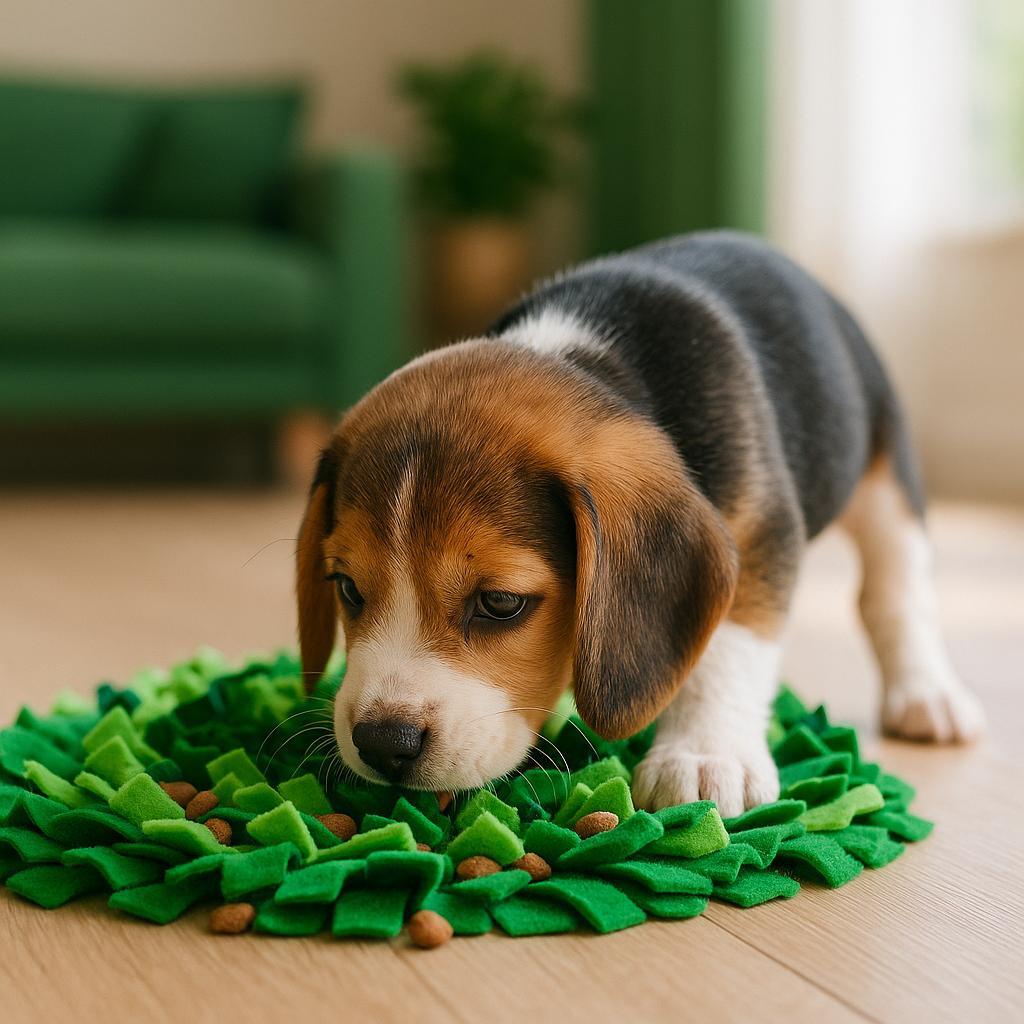
Fleece Snuffle Rug (Classic)
Why it’s good: Dense fleece slows foraging and creates fast wins for new learners.
Ingredients & Steps
Ingredients: Fleece snuffle mat • Kibble or tiny treats- Seed easy pieces across the top.
- Cue “Find it!” and reinforce relaxed search.
- Hide deeper pieces after a few successful reps.
-
Towel Roll Snuffle (DIY)
Why it’s good: Quick, budget-friendly option that packs flat for cafés or travel.
Ingredients & Steps
Ingredients: Bath towel • Kibble/treats- Sprinkle treats on the towel.
- Fold and roll with loose layers.
- Unroll together for the first few sessions.
-
Cardboard Snuffle Box (DIY)
Why it’s good: Paper filler adds gentle search effort without much mess.
Ingredients & Steps
Ingredients: Shallow box • Paper strips • Kibble/treats- Layer paper strips loosely.
- Hide 6–8 pieces across layers.
- Close flaps loosely or leave open for beginners.
-
Pocket Snuffle Garden
Why it’s good: Deeper pockets create longer searches for confident dogs.
Ingredients & Steps
Ingredients: Pocket-style mat • Kibble/treats- Start with edge pockets.
- Mix easy and medium-depth hides.
- Finish with one jackpot pocket.
-
Shallow Tray Snuffle (Low Mess)
Why it’s good: Great for apartments and quick rinses after sessions.
Ingredients & Steps
Ingredients: Baking tray/bin • Fabric strips • Kibble- Line the tray loosely with strips.
- Scatter 20–30 tiny pieces.
- Lift and reset fast between reps.
-
Travel Snuffle Pouch
Why it’s good: Opens into a foraging circle for lobbies or café patios.
Ingredients & Steps
Ingredients: Travel snuffle pouch • Kibble/treats- Open and flatten pouch.
- Seed easy edge pieces first.
- Tighten slightly as skill improves.
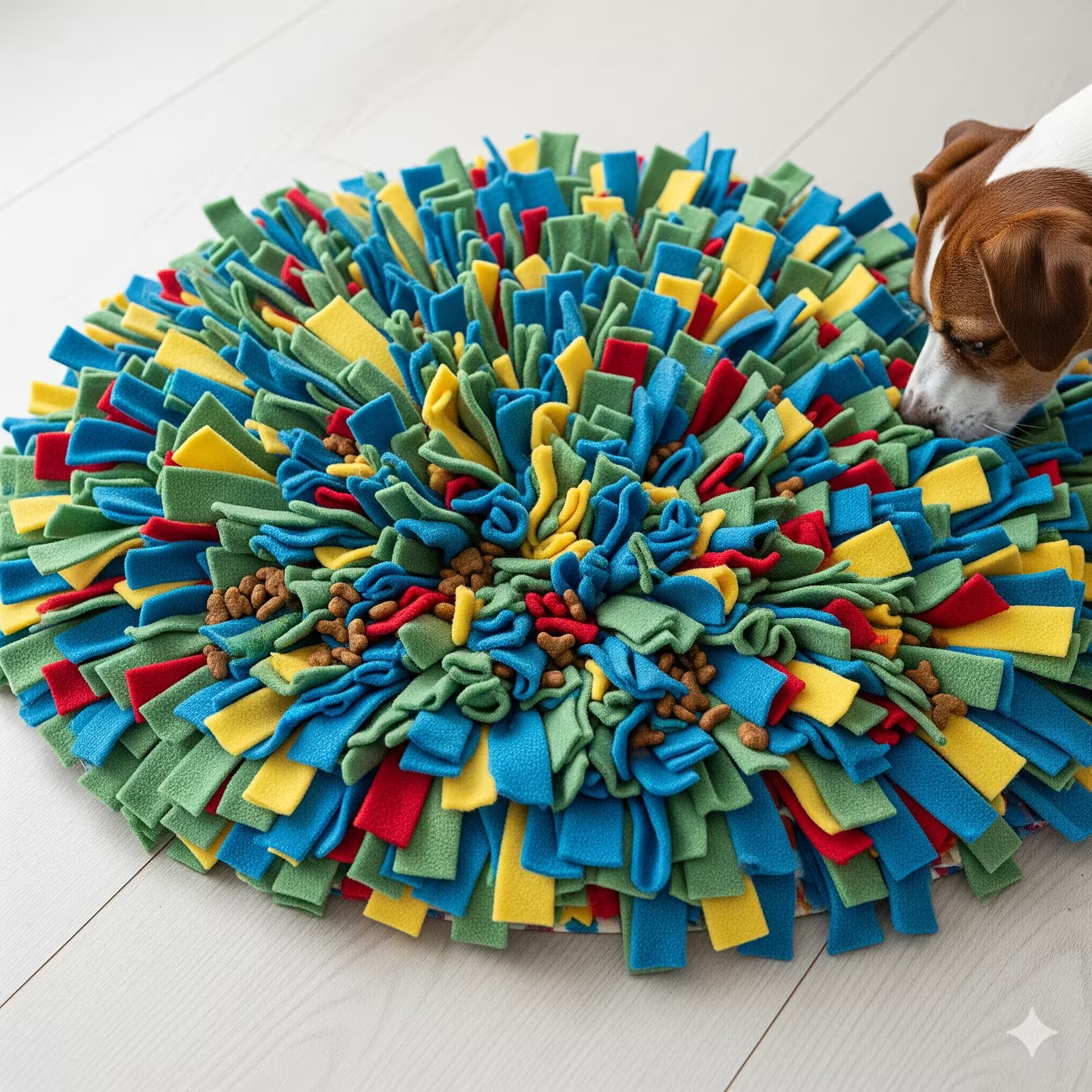


Make sniffing part of your daily routine
Two or three mini searches a day beat one long session. Dogs reset faster, and you avoid frustration that can come from hard hides or over-stuffed mats.
Rotate rooms—kitchen, office, hallway—and keep hides predictable. Calm public exposures help too; see how to socialize a dog properly for simple field trips that won’t over-stimulate your dog.
Q&A and troubleshooting
How to stop my dog from flipping their snuffle mat?
How often should I use a snuffle mat?
What are the best foods for a puppy snuffle mat?
Can a snuffle mat help with separation training?
Ready to build a calm, satisfying routine?
Start with one snuffle session each day, then add length or new rooms as confidence grows.
See more snuffle variations
Christopher Quinn adopted his first dog, Loki, a spirited Border Collie/Jack Russell mix, after exiting Army service in the summer of 2012. That experience sparked a lifelong passion for canine behavior and positive reinforcement training.
He studied Principles of Dog Training & Behavior at Penn Foster and has since worked with hundreds of dogs from all backgrounds. Over the past two years, Christopher has fostered more than 30 rescue dogs, giving each one a chance at a better life.
Today, he continues to write, teach, and share insights on humane dog training, blending hands-on experience with a decade of dedicated study.