
The Sniffari Walk: A Complete Guide to Dog-Led Enrichment
Unlock the power of your dog’s most profound sense. A “sniffari” is more than just a walk; it’s a journey of decompression, mental stimulation, and profound enrichment that can transform your dog’s well-being.
What’s Inside This Guide
What Exactly IS a Sniffari Walk?
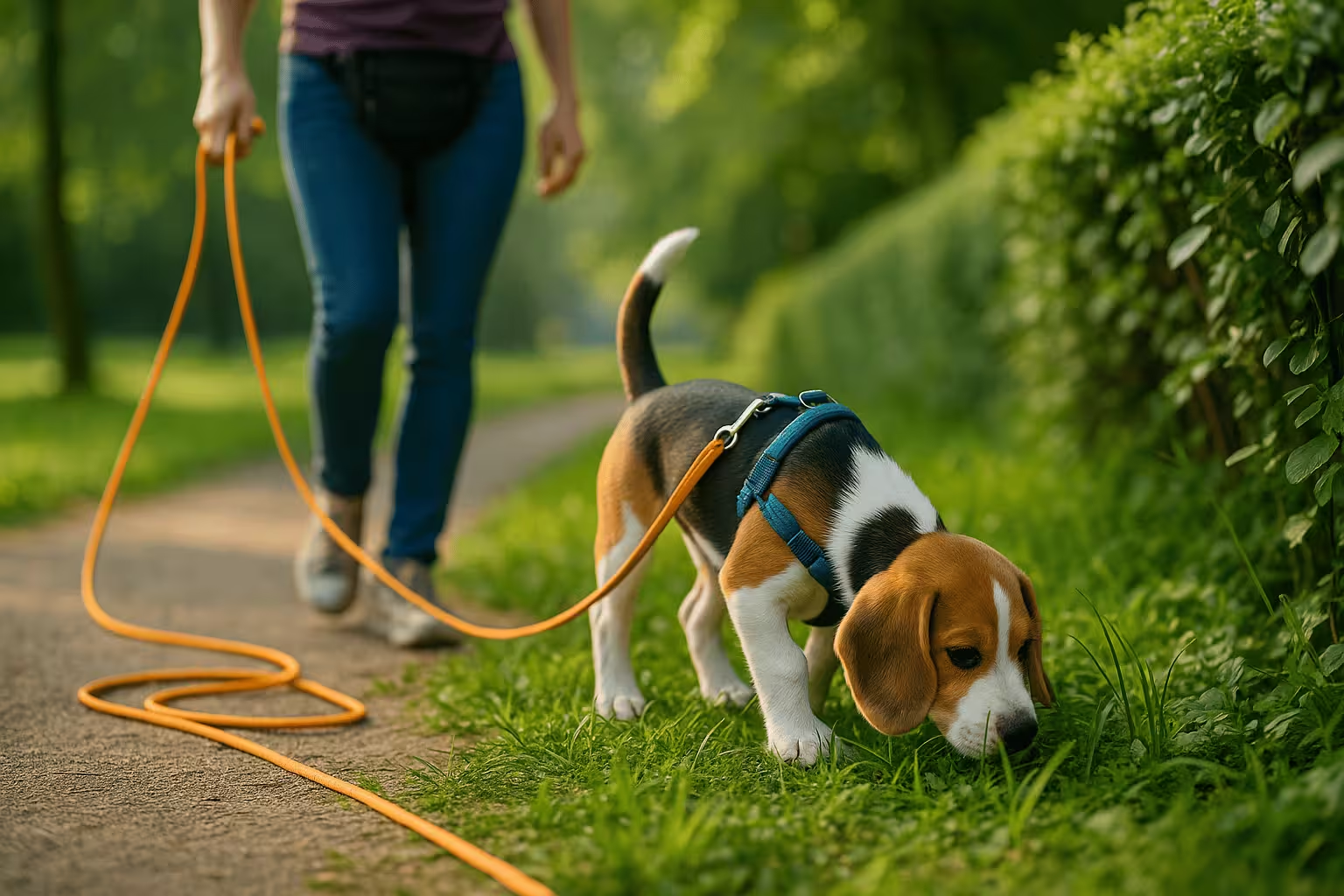
A “sniffari” is a dog-led decompression walk where the primary goal is to let your dog’s nose lead the way. Unlike a structured heel or a brisk exercise walk, the sniffari is all about mental stimulation and sensory exploration. You follow your dog’s lead, allowing them to stop, sniff, and process the world at their own pace. This simple shift in mindset from “walking the dog” to “experiencing the world with my dog” is fundamental. It’s one of the most powerful and accessible canine enrichment activities available to any owner.
For many dogs, especially those in urban environments or those with anxiety, the world can be overwhelming. A dog-led walk gives them agency and control, which is a core tenet of effective dog training management and environmental control. It’s not about distance or speed; it’s about the quality of the sensory experience.
The Science-Backed Benefits of Sniffing
Letting your dog sniff is not an indulgence; it’s a biological necessity. A dog’s sense of smell is up to 100,000 times more powerful than ours, and processing all that information is mentally taxing in the best way possible. Here are the key benefits:
- Reduces Stress & Anxiety: Studies have shown that sniffing lowers a dog’s heart rate and promotes calmness. It’s a natural form of canine meditation. This makes it an essential tool for helping a puppy who is scared of everything build confidence in the world.
- Provides Mental Stimulation: A 20-minute sniffari can be more tiring for a dog than a 60-minute run. Deciphering scents is a complex cognitive task that burns significant mental energy, preventing boredom and destructive behaviors.
- Builds Confidence: By allowing your dog to make choices about their path and what to investigate, you build their confidence and independence. This is a subtle but powerful application of the principles of positive reinforcement, where the environment itself provides the reward.
- Strengthens Your Bond: Sharing these quiet, exploratory moments strengthens your relationship. You learn to read your dog’s subtle cues, and they learn that you are a safe base from which to explore.
How to Go on a Successful Sniffari (Step-by-Step)
A great sniffari is easy to do but requires a slight shift in your approach to walks. Follow these steps to provide your dog with the ultimate sensory experience.
1. Gear Up for Success (Materials)
The right equipment makes all the difference. Ditch the short leash and choke chain. You’ll need:
- A comfortable, back-clip harness
- A long line (15-30 feet)
- High-value treats for rewarding check-ins.
2. Choose Your Location Wisely
Find a quiet area with lots of interesting smells, like a park or trail. Understanding your dog’s limits is key to good threshold management in dog training.
3. Let Go of the Leash (Figuratively!)
Let your dog lead. Your job is to be the “anchor,” but your dog is the “captain.” If they want to spend five minutes sniffing one blade of grass, let them. This process of allowing choice is a powerful form of shaping in dog training.
4. Reward the Check-In
When your dog looks back at you, mark with a “Yes!” and toss a treat. This reinforces your connection without interrupting their exploration, a perfect example of operant conditioning.
Interactive Gear Check: Are You Ready?
Choose your gear to see if it’s optimized for a sniffari.
Collar or Harness
Leash Length
The Components of a Great Sniffari
A balanced sniffari isn’t just about sniffing; it’s a mix of activities. Here’s a typical breakdown for a 20-minute walk.
Interactive Sniffari Examples
A sniffari isn’t just random wandering. Your dog is actively gathering information. Here are a few common sniffing scenarios you might encounter, brought to life with interactive cards.
The “Pee-Mail” Post
Social Updates
When a dog intensely sniffs a fire hydrant or pole, they’re reading complex messages left by other dogs—who was here, their status, health, and more. It’s their version of social media.
Grassy Patch Investigation
History Log
A single patch of grass holds a history of every creature that has passed through. Your dog is analyzing the lingering scents of squirrels, rabbits, other dogs, and people.
Catching Scents on the Wind
Future Forecast
When your dog lifts their nose high, they are “air scenting”—catching distant smells on the breeze, like a BBQ miles away or another dog approaching.
Frequently Asked Questions
It’s the opposite! By using a long line, there is no constant tension on the leash to pull against. You can use a specific cue like “Go sniff!” to signal when it’s sniffari time versus a structured walk. This helps your dog understand contexts, great for a new puppy adjusting to your home.
Ideally, every walk should have some sniffari time. Even 5-10 minutes of sniffing can make a huge difference. For anxious or high-energy dogs, 2-3 dedicated sniffaris per week is a fantastic goal.
Yes, it’s a wonderful family activity! It teaches children patience and helps them understand the world from their dog’s perspective, complementing lessons on how to teach a puppy to be gentle with kids. Ensure an adult is always in control of the long line.

Christopher Quinn adopted his first dog, Loki, a spirited Border Collie/Jack Russell mix, after exiting Army service in the summer of 2012. That experience sparked a lifelong passion for canine behavior and positive reinforcement training.
He studied Principles of Dog Training & Behavior at Penn Foster and has since worked with hundreds of dogs from all backgrounds. Over the past two years, Christopher has fostered more than 30 rescue dogs, giving each one a chance at a better life.
Today, he continues to write, teach, and share insights on humane dog training, blending hands-on experience with a decade of dedicated study.