
Scent Swaps: The Beginner’s Guide to Calm Canine Enrichment
Engage your dog’s most powerful sense to reduce boredom, ease anxiety, and build confidence in just minutes a day.
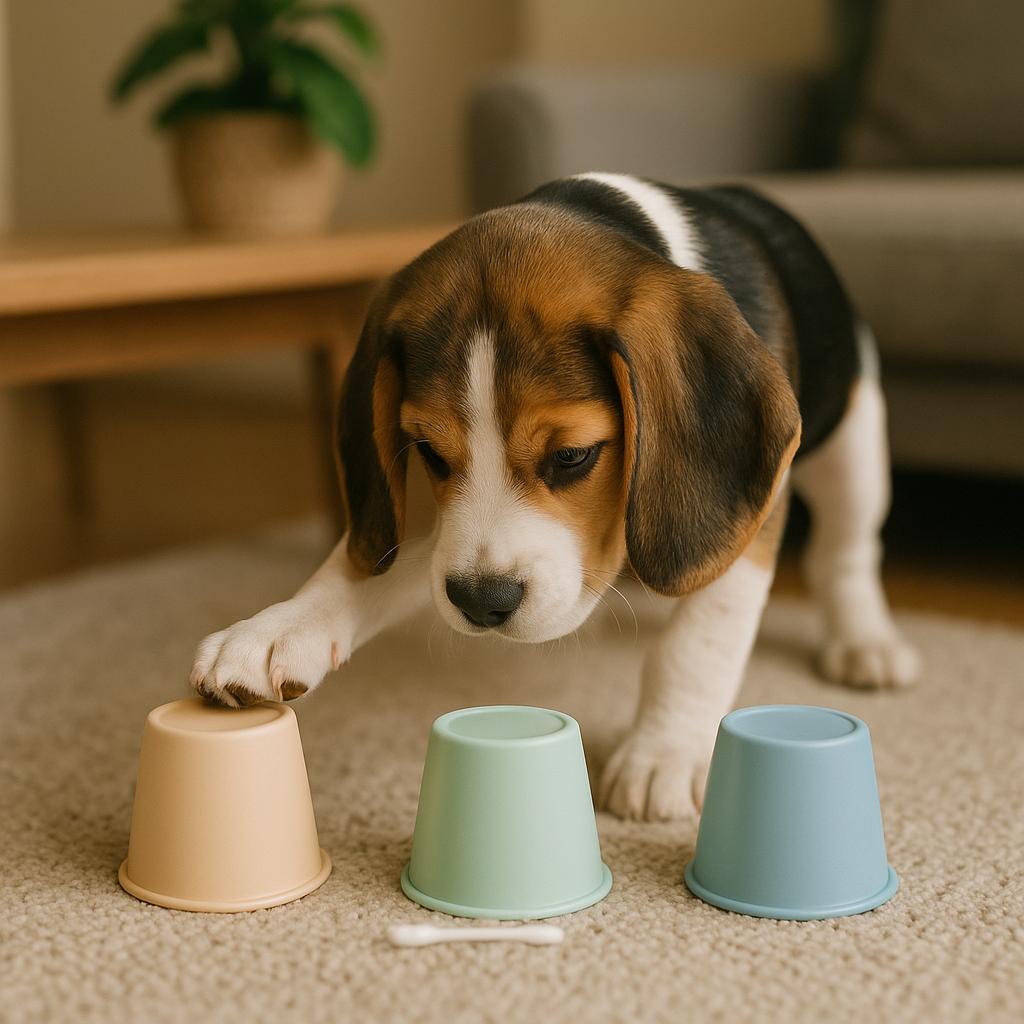
Mission Brief: How to Entertain a Dog Indoors
The Scent Swap is one of the easiest ways to provide passive enrichment. A dog’s primary sense is smell—by introducing safe, novel scents, you engage their brain, satisfy curiosity, and reduce stress without intense physical activity. It’s a foundational part of a balanced canine enrichment plan.
Goal: Provide a rotating variety of safe smells. Mark and reward calm investigation to build positive associations.
How-To: Your Scent Swap Routine
- Prepare the Scent. Apply a tiny amount of your chosen scent (like one drop of vanilla extract) to a cloth or place a natural item (like a pinecone or interesting leaf) on a piece of cardboard.
- Present the Scent Swap. Place the item on the floor and let your dog discover it on their own terms. This respects their autonomy, a key part of positive reinforcement training.
- Mark and Reward Calm Sniffing. The moment your dog calmly investigates the scent with their nose, say “Yes” and drop a small treat nearby. This reinforces exploration.
- Rotate Scents Weekly. The power of this exercise lies in novelty. Keep a small library of safe scents and swap them out every few days to keep things interesting for your dog’s brain.
Why Scent Work Calms Anxious Dogs
Sniffing is a natural calming behavior for dogs. It lowers their heart rate, reduces cortisol (the stress hormone), and provides significant mental exercise with zero physical impact. For a dog, a 5-minute scent session can be as tiring as a 20-minute walk.
By providing a structured outlet for this behavior, Scent Swaps help reduce boredom-related issues like chewing or barking. It’s an especially powerful enrichment activity for dogs on crate rest, senior dogs with limited mobility, or anxious dogs who need help decompressing after a stressful event.
Scent Enrichment Quality
Not all scents are created equal. Complex, natural scents provide the highest quality mental stimulation. Here’s a quick comparison:
Troubleshooting Common Issues
My dog seems uninterested.
Try a more potent, high-value scent! Natural scents from a new park (moss, bark, dirt) are often more compelling than extracts. Also, present it when your dog is calm and relaxed, not expecting a high-energy game.
My dog gets overexcited or mouthy.
This often means the session is a bit too stimulating. Keep sessions very short (30-60 seconds) and reward only for gentle nose touches, not frantic sniffing or pawing. If mouthing occurs, calmly withdraw the item for a few seconds before re-presenting.
My dog is sneezing a lot.
The scent is likely too strong or irritating. Immediately remove the item. Stick to very subtle, natural smells like leaves or a cloth with a faint scent from another (healthy) pet. When in doubt, less is more.

Christopher Quinn adopted his first dog, Loki, a spirited Border Collie/Jack Russell mix, after exiting Army service in the summer of 2012. That experience sparked a lifelong passion for canine behavior and positive reinforcement training.
He studied Principles of Dog Training & Behavior at Penn Foster and has since worked with hundreds of dogs from all backgrounds. Over the past two years, Christopher has fostered more than 30 rescue dogs, giving each one a chance at a better life.
Today, he continues to write, teach, and share insights on humane dog training, blending hands-on experience with a decade of dedicated study.