
Indoor Enrichment • DIY Nosework
Box Maze Foraging: Build a Safe, Engaging “Find-It” Course at Home
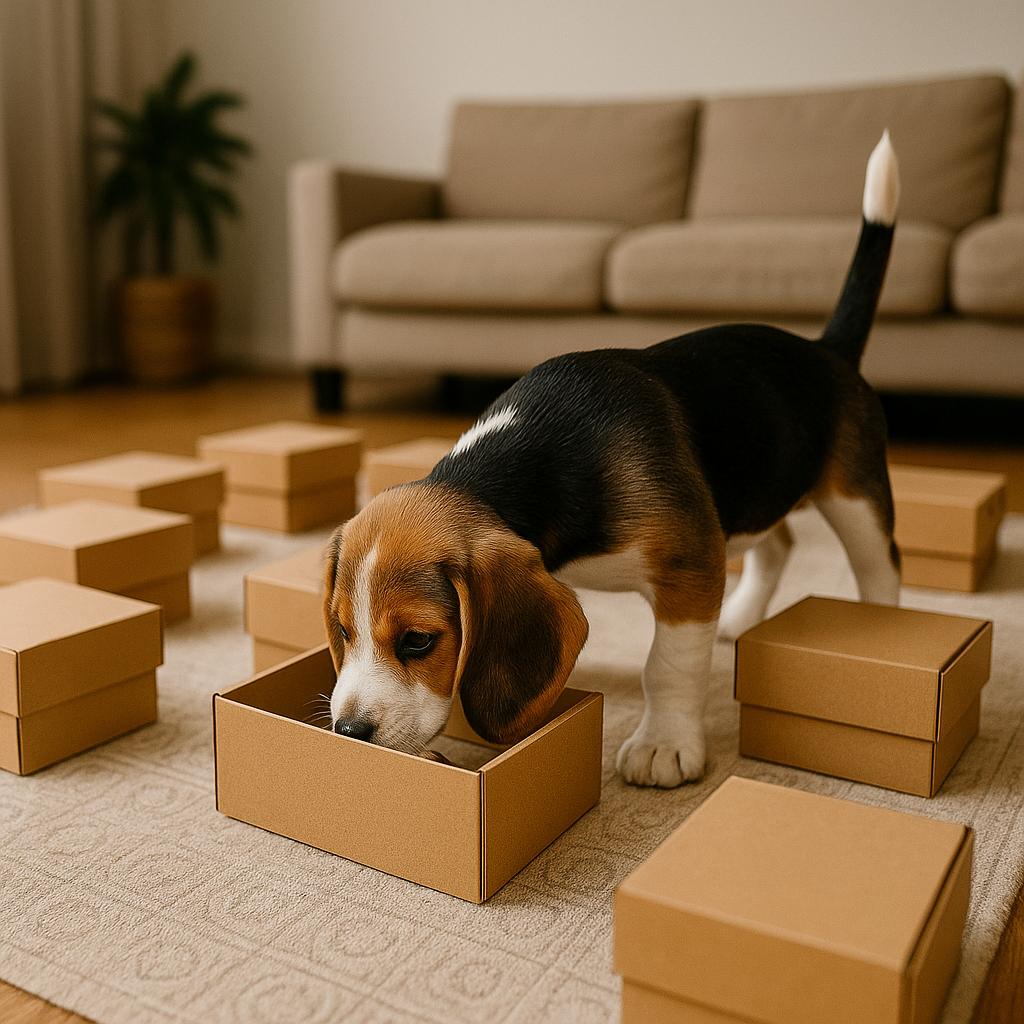
Use 4–8 cardboard boxes to create a tiny maze that rewards sniffing, problem-solving, and calm navigation. This guide shows you exactly how to set it up with positive reinforcement, shaping, and clean criteria.
Why Box Maze Foraging Works
This activity taps into your dog’s natural seeking system. Short, successful nosework reps release feel-good dopamine and reduce restlessness. You’ll also practice clean operant contingencies: sniff → find → earn. Keep arousal in the “green zone” using threshold management.
Session Structure (example)
Three short rounds keep motivation high. Hover bars for tips.
Skill Emphasis
How-To: Build Your Box Maze
Materials
- 4–8 clean cardboard boxes (remove staples/tape)
- Non-slip surface (rugs/yoga mats)
- Pea-sized treats or a few kibble “jackpots”
Safety: Focus is search & navigation—not shredding. Supervise and recycle boxes if they tear.
Setup
- Arrange boxes into a small maze: corridors + 1–2 dead-ends.
- Hide treats in only 2–3 boxes to preserve the hunt.
- Cue “Find it!” once, then let your dog work; stay neutral.
Reinforcement Plan
- Mark quiet investigating (nose in, paw targeting is OK if calm).
- Pay at source—right where the treat is found.
- Reset paths, add a new hide, then play another short round.
Pro Tip: Between rounds, add a calm “Place” break (see enrichment ideas) to avoid over-arousal.
Shaping Plan: Raise Criteria Gradually
- Discovery: Open tops; treats at the front edges.
- Easy navigation: Treats just inside, boxes spaced wider.
- Depth: Treats under or behind a flap; introduce a simple dead-end.
- Problem-solving: Combine two light obstacles (turn + flap).
- Generalization: Rotate box positions each round; change one thing at a time.
This is classic shaping: tiny increments, high success, and frequent resets.
Troubleshooting
My dog starts shredding the boxes
- Lower difficulty: open tops and make the first treats visible.
- Raise treat rate briefly to keep sniffing “winning.”
- End the round after 1–2 finds; reset with sturdier boxes.
Puppy seems nervous about the maze
Reduce novelty and manage thresholds. Start with one box and scatter a few freebies nearby. For sensitive pups, pair the game with gentle socialization planning and see help for worried puppies.
Dog barrels through and misses hides
- Add narrow corridors and more corners to slow movement.
- Use slightly smellier treats for deeper hides.
- Insert a brief “Place/Mat” reset between rounds to lower arousal.
How do I reinforce without luring?
Mark after your dog investigates a box, then deliver to the source. This keeps the behavior under operant control—review operant conditioning basics.
Safety & Management
- Remove staples/tape; recycle compromised boxes.
- Use non-slip flooring and keep pathways clear.
- Supervise; the goal is nosework and navigation—not shredding.
- Pair with smart management & environmental control.
- New to training? Brush up on positive reinforcement.
Keep Building Skills
Foundation Reading
For Puppies & Families
Next Activities
FAQ
How often should we play Box Maze Foraging?
2–4 times per week works well for most dogs. Keep rounds short (5–7 minutes). Rotate box shapes to keep novelty high.
Can I use toys instead of treats?
Yes—hide a favorite toy in one box and pay with a quick game when your dog finds it. If arousal spikes, return to food rewards.
What cue should I use?
“Find it!” is common. Say it once at the start of each round. Let your dog work independently—this keeps problem-solving strong.

Christopher Quinn adopted his first dog, Loki, a spirited Border Collie/Jack Russell mix, after exiting Army service in the summer of 2012. That experience sparked a lifelong passion for canine behavior and positive reinforcement training.
He studied Principles of Dog Training & Behavior at Penn Foster and has since worked with hundreds of dogs from all backgrounds. Over the past two years, Christopher has fostered more than 30 rescue dogs, giving each one a chance at a better life.
Today, he continues to write, teach, and share insights on humane dog training, blending hands-on experience with a decade of dedicated study.