
Puzzle Feeder Level 4 — Advanced Dog Puzzle Protocol
Run Puzzle Feeder Level 4—multi-step, two-lock puzzles that build sequencing and self-control while protecting your dog’s frustration budget. Live charts, pro shaping, and fix-it flows included.
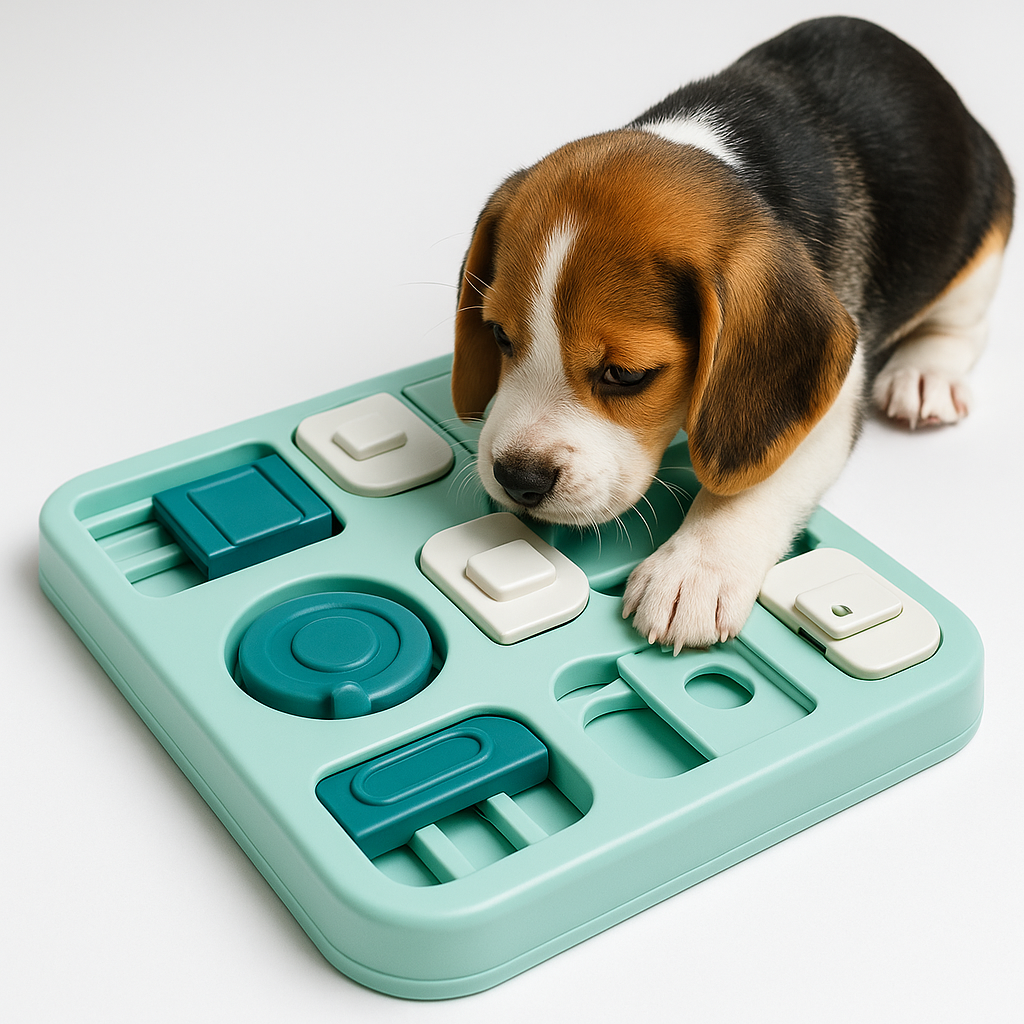
How-To: Run a Clean Level 4 Session
Session Basics
- Time: 10–18 minutes total (2–3 short rounds). Stop earlier if engagement dips.
- Gear: Expert puzzle with two-step locks, high-value soft treats, non-slip mat.
- Safety: Supervise to protect puzzle parts; end on success and clear the area.
Step-by-Step
- Demo one move. Show a correct action, then wait. Mark and pay any toward-solution try. Refresh positive reinforcement timing.
- Build a chain. Reinforce small wins that lead to the next step. Use back-chaining from the final dispenser—see shaping.
- Guard the budget. When latency rises, insert an easy win or a brief reset; watch the budget donut below.
- Jackpot the solve. On full sequence completion, celebrate; then reset easier once.
- Finish calm. End while motivation is high—classic operant conditioning.
New to indoor structure? Tighten environment with management & environmental control. For sensitive dogs, pair with low-arousal enrichment and work under thresholds.
Why Puzzle Feeder Level 4 Works
Learning Theory in Action
Level 4 reinforces a sequence: orient → manipulate → unlock → dispense. A high rate of reinforcement for “toward-solution” keeps the loop moving and prevents extinction bursts—clean operant contingencies.
Back-chaining (rewarding the last step first) clarifies the end picture and shortens time to jackpot—see shaping. Tight thresholds and short sets minimize frustration while increasing competence.
Welfare & Engagement
Complex puzzles satisfy natural problem-solving needs and build grit. Blend sessions with low-arousal breaks (sniff, lick-mats) from our enrichment ideas. For dogs that escalate quickly, stage the room using environmental management.
Frustration Budget
Keep effort under budget so learning stays fun. Hover/tap the ring to update the label.
Latency per Step (seconds)
Lower is better. Hover/tap a bar to read exact latency.
Troubleshooting
- Lower difficulty: open one lock or prime the first move.
- Raise rate for “toward-solution” attempts.
- Work farther from distractions—stay under thresholds.
Pause and reset easier. Reinforce calm attempts; avoid feeding frustration spikes. Watch the budget donut.
Trade away with high-value food; use a light line and staged distance. Build trust with predictable swaps and clean reinforcement.
End if latency trends up for two steps, food interest drops, or scanning replaces problem-solving. For sensitive pups, use the socialization planner and guidance for fearful puppies.
FAQ
Next Steps
Run Level 4 twice weekly, log latency, and celebrate full sequences. Keep rooms calm, manage thresholds, and refresh clean reinforcement. When your dog cruises here, rotate puzzles and vary sequence length.

Christopher Quinn adopted his first dog, Loki, a spirited Border Collie/Jack Russell mix, after exiting Army service in the summer of 2012. That experience sparked a lifelong passion for canine behavior and positive reinforcement training.
He studied Principles of Dog Training & Behavior at Penn Foster and has since worked with hundreds of dogs from all backgrounds. Over the past two years, Christopher has fostered more than 30 rescue dogs, giving each one a chance at a better life.
Today, he continues to write, teach, and share insights on humane dog training, blending hands-on experience with a decade of dedicated study.