
Cat Behavior Interpreter
Decode your cat’s language and get an actionable plan.
Cat Body Language: A Complete Guide to Feline Signals
Learning how to read cat body language is key to understanding your feline friend. This guide deciphers everything from tail positions and ear twitches to complex vocalizations. We’ll explore real-world examples of feline body language, common behavior problems, and humane tips to improve your cat communication.
Last updated: September 12, 2025. Trainer-reviewed by Christopher Quinn
How to Read Cat Body Language (With Examples)
Understanding feline body language involves observing the whole cat—tail, ears, eyes, and posture—simultaneously. For example, a purring cat isn’t always happy; if its ears are pinned back and body is tense, the purr is likely a self-soothing mechanism due to stress, not contentment.
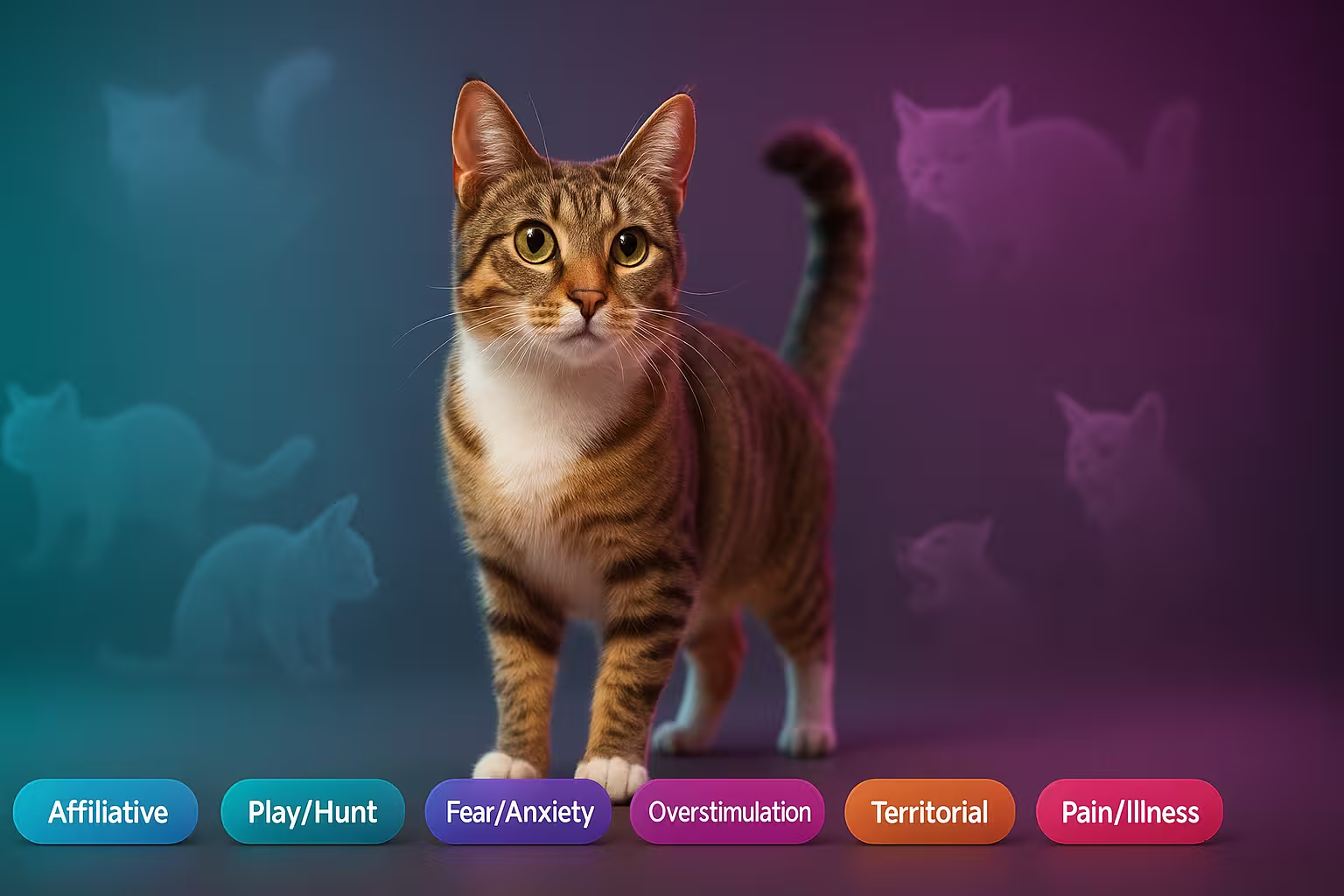
- Relaxed Cat: Loose, soft body; tail held gently; ears forward and neutral; soft eyes, perhaps half-closed.
- Playful Cat: “Question-mark” tail; pupils might be slightly dilated; whiskers forward; may exhibit stalking or pouncing from the classic prey sequenceThe instinctual hunt pattern: stalk → chase → pounce → grab → bite. All cat play is a variation of this sequence..
- Stressed/Fearful Cat: Crouched low; tail tucked or puffed; ears flattened sideways or pinned back; wide eyes with large pupils.
Key Takeaway: Context is everything. A cat chirping at a window is different from one chirping under the bed. Observe the environment to fully grasp cat body language meanings.
Cat Tail Positions & What They Mean (Chart)
A cat’s tail is one of its most expressive features. Paying attention to its position and movement can give you immense insight into your cat’s emotional state.
Cat Tail Language Chart
- Straight Up (or with a quiver): Confident, happy, and friendly greeting. A quiver can indicate extra excitement to see you.
- Question-Mark Curl: Playful and curious. This is often an invitation to engage in a play session.
- Tucked Under or Low: Insecurity, anxiety, or submission. The cat is trying to make itself smaller.
- Puffed Up / “Bottle Brush”: Extreme fear or agitation. The cat is trying to appear larger to ward off a perceived threat. Do not approach; create space.
- Whipping or Thumping: Agitation, annoyance, or potential redirected aggressionWhen a cat is aroused by a stimulus it can’t reach (like a cat outside), it may redirect its aggression onto a nearby target (like a person or another pet).. The cat is highly aroused and may swat.
Why Is My Cat Flicking Its Tail When I Pet It?
A gentle, slow tail swish is usually fine, but sharp, fast flicks mean your cat is experiencing overstimulationA state where a cat receives more sensory input (petting, noise) than it can process, leading to irritation and defensive reactions like swatting or biting.. This is a clear signal to stop petting before the cat feels the need to escalate to a swat or bite. It’s one of the most common cat behavior signals owners misinterpret.
Cat Ear Positions: Forward, Sideways, Pinned—Meanings
With 32 muscles controlling each ear, cats can rotate them 180 degrees, making them precise instruments for both hearing and communication.
- Forward and Neutral: Relaxed, interested, and attentive to their surroundings.
- Slightly Sideways (“Airplane Ears”): Uneasy, anxious, or irritated. This is a common sign of escalating stress.
- Pinned Back and Flat: Defensive, fearful, or angry. This is a definitive “back off” signal. A cat with pinned ears is ready to fight if cornered.
Cat Eye Signals (Including the Slow Blink)
A cat’s eyes provide direct insight into their arousal level and feelings of trust.
Cat Slow Blink Meaning & How to “Blink Back”
The slow blink is one of the most wonderful forms of cat communication. It’s a sign of deep trust and affection, often called a “cat kiss.” A cat that slow-blinks at you is signaling that it feels completely safe and comfortable in your presence. You can return the gesture by looking softly at your cat, slowly closing your eyes for a second, and then opening them again. This reinforces your bond.
Cat Dilated Pupils in Bright Light—Stress or Play?
While pupils naturally dilate in low light, large, round pupils in a brightly lit room indicate high emotional arousal. This could be excitement from play, but if paired with a tense body or pinned ears, it’s a clear sign of fear, stress, or potential pain. Assess the context to understand the cause.
Common Behavior Problems & Solutions
Why is my cat yowling at night (especially seniors)?
Introducing a new cat: Step-by-step guide
Cat hiding more lately? Stress vs. Illness
Decoding Feline Instincts
Understanding the evolutionary drivers behind your cat’s actions is key. Many behaviors that seem odd to us are perfectly normal expressions of their core instincts as solitary hunters.
- Territory & Scent: Cats use scent pheromonesChemical signals used for communication. Cats deposit them from glands in their cheeks, paws, and flanks to mark territory and signal safety or stress. from glands in their cheeks, paws, and flanks to mark their territory. When a cat rubs against you (allorubbingThe social behavior of rubbing against another cat or a person to share a common scent, reinforcing a group bond.), it’s marking you as part of its safe, central territory.
- Predatory Sequence: All cat play is rooted in the hunt: stalk → chase → pounce → grab → bite. Providing outlets for this sequence with toys like wand feeders is crucial for their mental health.
- Social Bonds: While descended from solitary hunters, domestic cats form strong social bonds. They engage in allogroomingThe act of one cat grooming another, which strengthens social bonds and creates a shared colony scent. It is a sign of deep trust. (grooming each other) to reinforce these connections.
Home Setup & Environmental Enrichment
A stimulating environment prevents boredom and reduces stress-related behaviors like over-grooming or destructive scratching. Environmental enrichmentAdding items to a cat’s environment to stimulate their minds and encourage natural behaviors, reducing stress and preventing boredom. is not a luxury; it’s a necessity.
Cat trees and shelves build confidence.
Engage their brain during meals. See our favorite puzzle feeders for cats.
Offer tall sisal posts AND horizontal cardboard scratchers.
Play and meal times create security.
When to Call the Vet (Red Flags)
Always consult your vet for sudden, unexplained behavior changes. What looks like a “behavior problem” can often be a symptom of pain or illness.
- Straining to urinate, or making frequent trips to the litter box with no result. This is a medical emergency, especially in male cats, and could indicate a blockage. See our guide on litter box avoidance for more.
- Sudden aggression, increased hiding, lethargy, or changes in appetite/thirst.
- Poor coat condition or lack of grooming, which can be a sign of pain or discomfort.
Frequently Asked Questions
Why does my cat show me its belly but hate belly rubs?
What does it mean when my cat chirps at birds?
Cat kneading meaning (making biscuits)?
What’s the difference between bunting and rubbing?
Is tail puffing always aggression?
How can I tell if my cat is overstimulated?
How long does it take cats to get along?

Christopher Quinn adopted his first dog, Loki, a spirited Border Collie/Jack Russell mix, after exiting Army service in the summer of 2012. That experience sparked a lifelong passion for canine behavior and positive reinforcement training.
He studied Principles of Dog Training & Behavior at Penn Foster and has since worked with hundreds of dogs from all backgrounds. Over the past two years, Christopher has fostered more than 30 rescue dogs, giving each one a chance at a better life.
Today, he continues to write, teach, and share insights on humane dog training, blending hands-on experience with a decade of dedicated study.