
Pup Command • Dog Training Guides
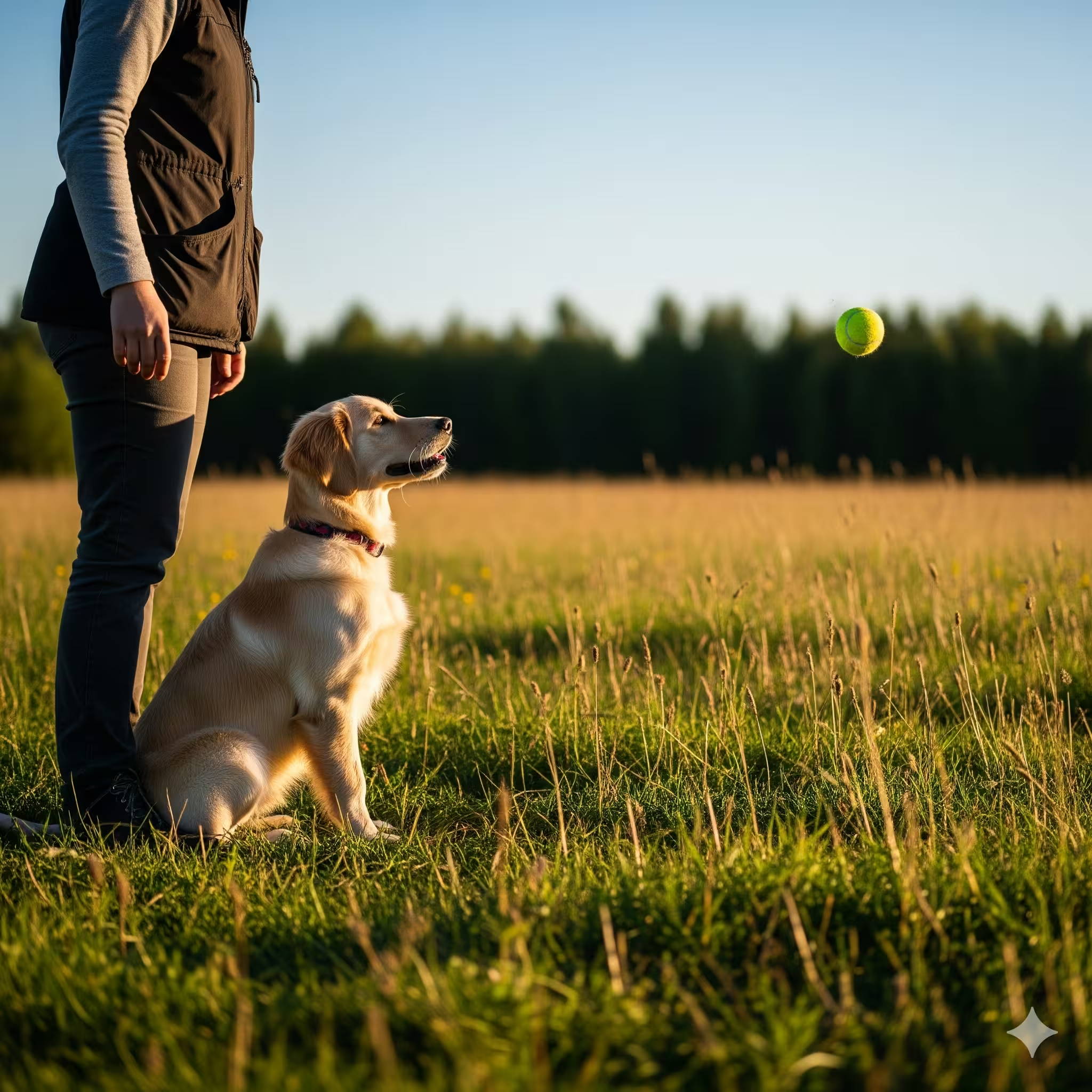
Walk-Ups (Dog Steadiness Training): Master Impulse Control Before a Retrieve
The Walk-Up is a cornerstone dog steadiness training drill that forges powerful impulse control in the face of intense excitement. It teaches your dog to channel its natural drive into a partnership, sitting instantly after a throw and waiting for your cue before earning the retrieve. This guide provides a comprehensive breakdown of the exercise, grounded in behavioral science. For foundational theory, ensure you understand positive reinforcement and operant conditioning in dog training.
Start Training NowHow to Teach Walk-Ups (Sit Fast, Stay Steady, Then Retrieve)
Materials Needed
- High-value toy or retrieving bumper
- Standard 6-foot leash
- Open, low-distraction area
Session Details
- Difficulty: Intermediate
- Time: 5–10 minutes
- Energy: Medium
Step-by-Step Instructions
This retrieving drill is a fluid sequence. Read through all steps before you begin to understand the flow. Your timing and consistency are critical to success.
-
Step 1: Start in a Connected Heel.
Begin with your dog on a leash in a proper heel position at your side. Before moving, ensure you have their focus. Are they looking at you, or scanning the environment? The goal is a mental connection, not just a physical position. Hold the toy in the hand opposite your dog to avoid accidental cues. Start walking forward together at a normal pace. This initial movement builds engagement and a small amount of forward momentum, which is key to the exercise.
-
Step 2: Toss While Moving (The “Flush”).
As you continue to walk, fluidly swing the hand holding the toy forward and toss it out in a visible arc. The toy should land 15–20 yards ahead of you. This action should feel natural, like an extension of your stride, simulating a flushing bird or rabbit. The movement itself is a major trigger for a dog’s prey drive; the goal is to teach them to manage the excitement that this visual stimulus creates.
-
Step 3: Cue the “Sit” Instantly.
The absolute instant the toy leaves your hand, give your “Sit” cue in a calm, clear voice. This is the most crucial part of dog steadiness training. Your timing connects the sight of the flying toy directly to the command to sit. If the dog begins to lunge forward (breaks), use gentle, steady leash pressure to prevent forward movement and guide them into the sit. Avoid a harsh jerk or verbal correction. This is a moment for precise environmental control, not punishment.
-
Step 4: Hold the Moment of Steadiness.
Once your dog is sitting, enforce a brief but distinct pause. This is the moment where impulse control is forged. Initially, this may only be for a single second. During this pause, the dog must remain sitting calmly, with their focus shifting from the fallen toy back to you. They are learning to ask for permission. If the dog remains fixated on the toy or whines, they are likely over their arousal limit; you’ll need to make the next rep easier. Being aware of your dog’s state is key to effective threshold management.
-
Step 5: Release to Retrieve.
After the successful pause, give your release cue (e.g., “Fetch!”, their name, “Get it!”) in an upbeat, exciting tone. The retrieve is the powerful, earned reward for their patience and self-control. This sequence teaches the dog that stillness and focus on you is the fastest, most reliable way to get what they want.
Why This Retrieving Drill Builds Elite Impulse Control
The Walk-Up is far more than a simple command sequence; it’s a sophisticated psychological exercise that rewires your dog’s brain. At its core, this retrieving drill is a masterclass in applying learning theory. When your dog successfully waits, the retrieve serves as powerful positive reinforcement for the calm sit. When they break, the denial of the retrieve (and the reset) acts as negative punishment—the removal of a desired outcome. This is classic operant conditioning in its purest form.
Over many successful repetitions, your dog makes a profound cognitive shift. They learn that the impulsive, instinctual path (chasing) is fruitless, while the thoughtful path (sitting and waiting for permission) is the one that leads to reward. Through this process, you are actively shaping not just a behavior, but a state of mind: a dog that can remain calm and thoughtful even when highly aroused. This foundational impulse control is the same skill that prevents door-dashing, counter-surfing, and lunging at squirrels. Always respect your dog’s limits by applying good threshold management to keep arousal in a productive zone.
Core Components of the Walk-Up Drill
Hover over a segment for details
Troubleshooting Common Walk-Up Problems
Frequently Asked Questions
Next Steps: Proofing Steadiness for the Real World
Mastering the Walk-Up in a quiet field is just the beginning. True dog steadiness training involves “proofing” the behavior against distractions. Once your dog is proficient on leash, you can begin to generalize the skill. Start by practicing off-leash in a secure, fenced area. Gradually increase the distance of your throws. Introduce controlled distractions, like a second person walking by or another (calm) dog at a distance. Vary the types of toys you use and the surfaces you train on.
Each new variable you add is a chance to reinforce the core lesson: your dog’s success and access to fun comes from focusing on you. For more ideas on how to keep your dog’s brain engaged and build a stronger bond, explore the live tools on our Enrichment HUD and browse our curated list of dog enrichment activities. Strong impulse control is a lifestyle, not just a single drill.
Review the Steps
Christopher Quinn adopted his first dog, Loki, a spirited Border Collie/Jack Russell mix, after exiting Army service in the summer of 2012. That experience sparked a lifelong passion for canine behavior and positive reinforcement training.
He studied Principles of Dog Training & Behavior at Penn Foster and has since worked with hundreds of dogs from all backgrounds. Over the past two years, Christopher has fostered more than 30 rescue dogs, giving each one a chance at a better life.
Today, he continues to write, teach, and share insights on humane dog training, blending hands-on experience with a decade of dedicated study.