
Turn your daily skate into an exhilarating team sport. Mastering rollerjoring with a dog builds an incredible bond through high-energy, focused teamwork. This advanced activity combines your love for skating with your dog’s instinct to run and pull, creating a unique and powerful enrichment experience.
Ready to find your next canine adventure? Explore hundreds of enrichment activities with PupCommand.
Imagine gliding effortlessly down a smooth path, the only sound the whir of your wheels and the happy panting of your canine partner ahead. This is the heart of rollerjoring with a dog, an intense and rewarding sport that forges an unparalleled connection.
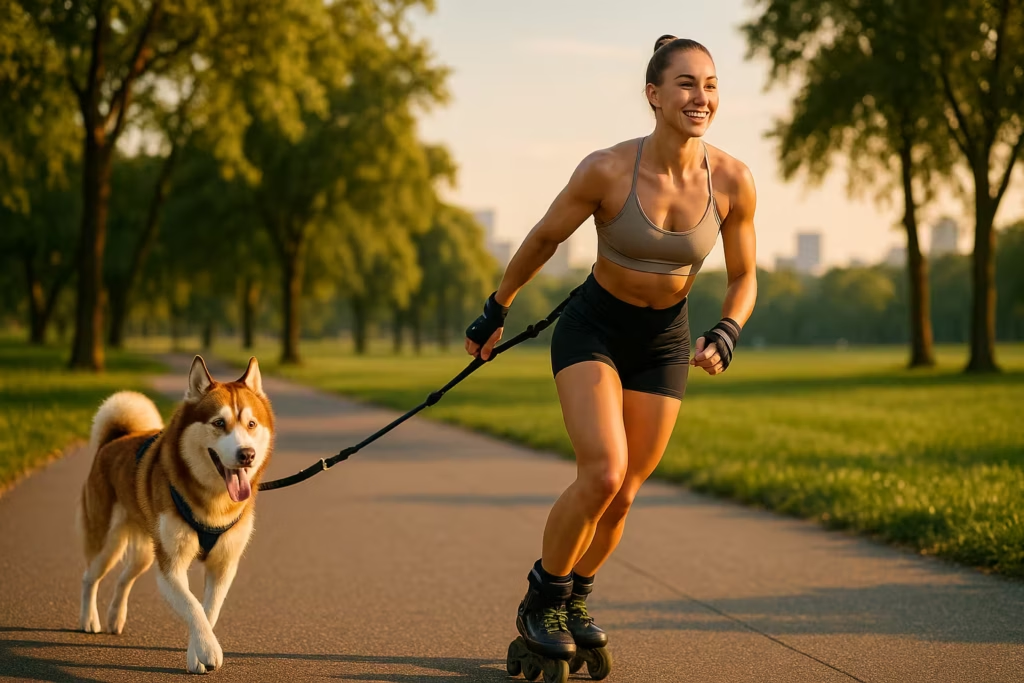
But it’s more than just a ride—it’s a dialogue on wheels, demanding precise communication, absolute trust, and shared enthusiasm.
This guide is your comprehensive manual for safely exploring the world of rollerjoring with a dog. We’ll cover everything from the essential gear and foundational training to the behavioral science that makes this sport so fulfilling.
Whether you’re an experienced skater looking for a new challenge or a dog owner seeking the ultimate energy outlet for your pup, you’ll find the expert, actionable steps you need to get started.
What is Rollerjoring? A High-Octane Team Sport
Rollerjoring is a dynamic dog sport where one or more dogs, fitted with a specialized pulling harness, pull a person on inline skates (rollerblades) or quad skates. The human and dog are connected by a bungee line attached to the human’s hip belt, creating a safe and effective system for propulsion and control.
It’s a form of “dryland mushing,” a category of sports developed for sled dogs to train during the off-season when there’s no snow.
While it shares DNA with other mushing sports like canicross (running) and bikejoring (biking), rollerjoring presents unique challenges. The lack of traditional brakes on skates means that control relies almost entirely on your skating skill and your dog’s training.
The smooth, fast glide is exhilarating, but it also reduces the margin for error, making this a sport exclusively for advanced skaters and well-trained dogs.
The activity of rollerjoring with a dog is not just for northern breeds like Huskies or Malamutes. Many high-energy breeds with a natural inclination to pull can excel and find immense joy in this structured, powerful work. It transforms a simple skate into a focused mission, giving your dog a “job” that satisfies deep-seated instincts.
Is This Sport Right for You and Your Dog?
Before you invest in gear and start training, an honest assessment of both team members is critical. This sport has high prerequisites for both the human and the canine.
The Human Half: Skating Proficiency is Non-Negotiable
This cannot be overstated: you cannot learn how to skate while learning rollerjoring with a dog. You must be a confident, proficient skater before you even consider attaching a canine partner.
Your required skill set includes:
- Effortless Braking: You must be able to come to a quick, controlled T-stop or plow stop on varied terrain. You are the emergency brake.
- Excellent Balance: You need to remain stable while being pulled, absorbing shocks from the bungee line and adjusting to your dog’s movements.
- Confident Turning: Carving smooth, controlled turns is essential for navigation.
- Situational Awareness: You must be able to scan your environment for potential hazards—pedestrians, other dogs, cracks in the pavement, debris—and react instantly.
If you are not yet at this level, dedicate several months to improving your skating skills solo before you begin.
The Canine Half: Health, Temperament, and Drive
Not every dog is built for or interested in rollerjoring. A suitable canine candidate has the right combination of physical structure, fitness, and mental attitude.
- Age and Physical Maturity: Rollerjoring with a dog is a high-impact sport. A dog must be fully grown, with closed growth plates, before starting. This is typically between 18 to 24 months for medium and large breeds. Starting too early can cause severe, lifelong joint damage. Always consult your veterinarian for a health check-up.
- Size and Build: Dogs should generally be at least 35-40 pounds to safely pull an adult. They should have a healthy, athletic build. Breeds like Siberian Huskies, German Shorthaired Pointers, Border Collies, and powerful mixed breeds often excel.
- Temperament and Confidence: The ideal dog is confident and focused. A dog that is environmentally sensitive or anxious may find the experience overwhelming. If you have a puppy that is scared of everything, you must focus on building their confidence in calmer settings first. A well-socialized dog is also crucial; our puppy socialization tool can provide a framework for creating a stable adult dog.
- Natural Drive to Pull: Some dogs are natural pullers. This sport channels that instinct into a productive job. If your dog has no interest in pulling, it’s better to find a different activity you can both enjoy.
Essential Gear for Safe Rollerjoring with a Dog
Rollerjoring with a Dog Training Prerequisites
Track your progression through essential skills and phases.
Add New Skill
Using the correct equipment is not just about performance; it’s the foundation of safety. Never compromise on gear. Expect to invest between $200 and $500 for a quality, safe setup.
For the Human
- Skates ($100-$300+): Choose high-quality inline or quad skates that you are comfortable and proficient with.
- Helmet ($40-$80): A certified multi-sport or skate helmet is mandatory. No exceptions.
- Pads ($30-$60): Wrist guards, elbow pads, and knee pads are essential. Falls can happen.
- Joring Belt ($50-$100): Do not simply hold the line. A specialized hip belt distributes the pulling force across your core, lowering your center of gravity and freeing your hands. This is a critical piece of safety equipment.
For the Dog
- Pulling Harness ($40-$80): This is the most important piece of gear. A standard walking harness is dangerous and can cause injury. You need a specially designed pulling harness (like an X-back) that allows for full range of motion in the shoulders and distributes weight evenly.
- Bungee Line ($30-$60): A 6-to-9-foot line with an integrated bungee section is crucial. The bungee acts as a shock absorber, protecting both your back and your dog’s from jarring movements.
- Paw Booties (Optional, $20-$50): For long distances or rough pavement, booties can protect your dog’s paw pads.
- Water and Collapsible Bowl: Always carry water, even on short runs.
How to Start Rollerjoring with Your Dog: A Step-by-Step Guide
Training is a gradual process built on a strong foundation of communication. Do not rush these steps.
Prerequisites
- Human: You have mastered braking, turning, and controlling speed on your skates without a dog.
- Dog: Your dog has reliable basic verbal cues. This training process is built on clear communication, a cornerstone of positive reinforcement 101. You will need:
- “Hike / Let’s Go”: To start pulling.
- “Whoa / Stop”: To stop.
- “Easy”: To slow down.
- “On-By”: To ignore distractions.
- “Gee / Haw” (Right / Left): For turning.
Phase 1: Foundation on Foot (2-4 Weeks)
- Introduce the Harness: Make the pulling harness the best piece of equipment your dog owns. Associate it with treats and praise.
- Teach Pulling Pressure: Start by jogging with your dog in their harness and the line attached to your belt. Encourage them to move out ahead. When the line goes taut, reward them. You are using the principles of shaping in dog training to build the behavior.
- Solidify Cues: While jogging, practice your verbal cues. Say “Easy” as you slow down, “Whoa” as you stop, and “Hike!” as you start up again.
Phase 2: Introducing the Skates (2-4 Weeks)
- Practice Solo: Take your skates to your chosen training path and practice. Drill your T-stops. The key to safety is effective dog training management and environmental control—choose a flat, smooth, wide, and low-traffic area.
- The First Connection: Put on all your gear. Start on grass next to the path. Attach the line to your belt and have your dog sit. Stay calm.
- The First Pulls: Step onto the pavement. Ask for a simple “Hike.” The moment your dog pulls and you roll a few feet, say “Whoa!” and praise them lavishly. Step off your skates onto the grass to ensure a full stop. Keep these first sessions incredibly short.
Phase 3: Building Duration and Confidence (Ongoing)
- Extend the Distance: Gradually increase the distance of your pulls as you both become more confident.
- Introduce Turns: Rollerjoring with a dog at a very slow pace, use your “Gee” and “Haw” cues. Guide the turn with your body and skates.
- Navigating Distractions: This is where rollerjoring with a dog becomes an advanced skill. Give the “On-By” command early and confidently. It’s vital to work on threshold management in dog training, ensuring distractions are at a distance where your dog can still succeed.
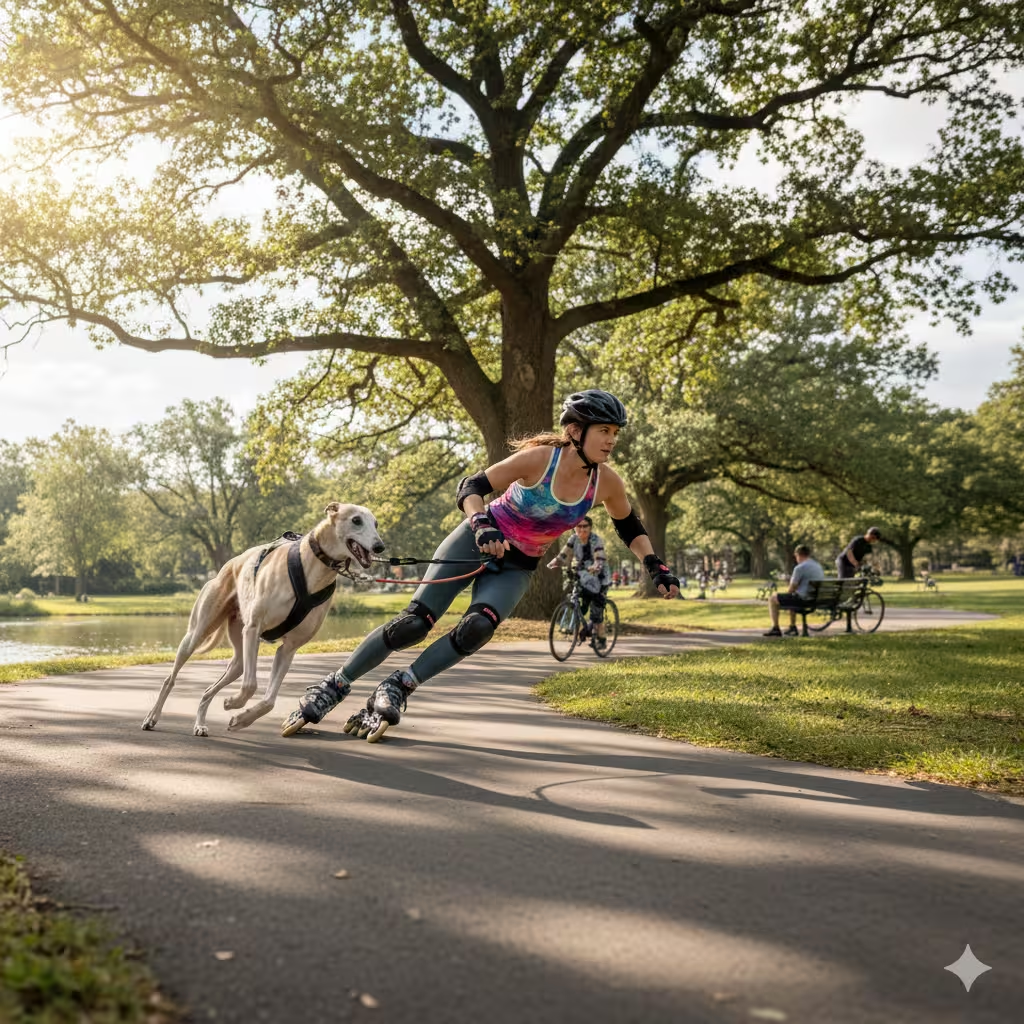
Foundation on Foot
Building the core skills without skates.
Phase 1 Details
- Introduce the Harness: Make the pulling harness the best piece of equipment your dog owns. Associate it with treats and praise.
- Teach Pulling Pressure: Start by jogging with your dog in their harness and the line attached to your belt. Encourage them to move out ahead. When the line goes taut, reward them.
- Solidify Cues: While jogging, practice your verbal cues. Say “Easy” as you slow down, “Whoa” as you stop, and “Hike!” as you start up again.
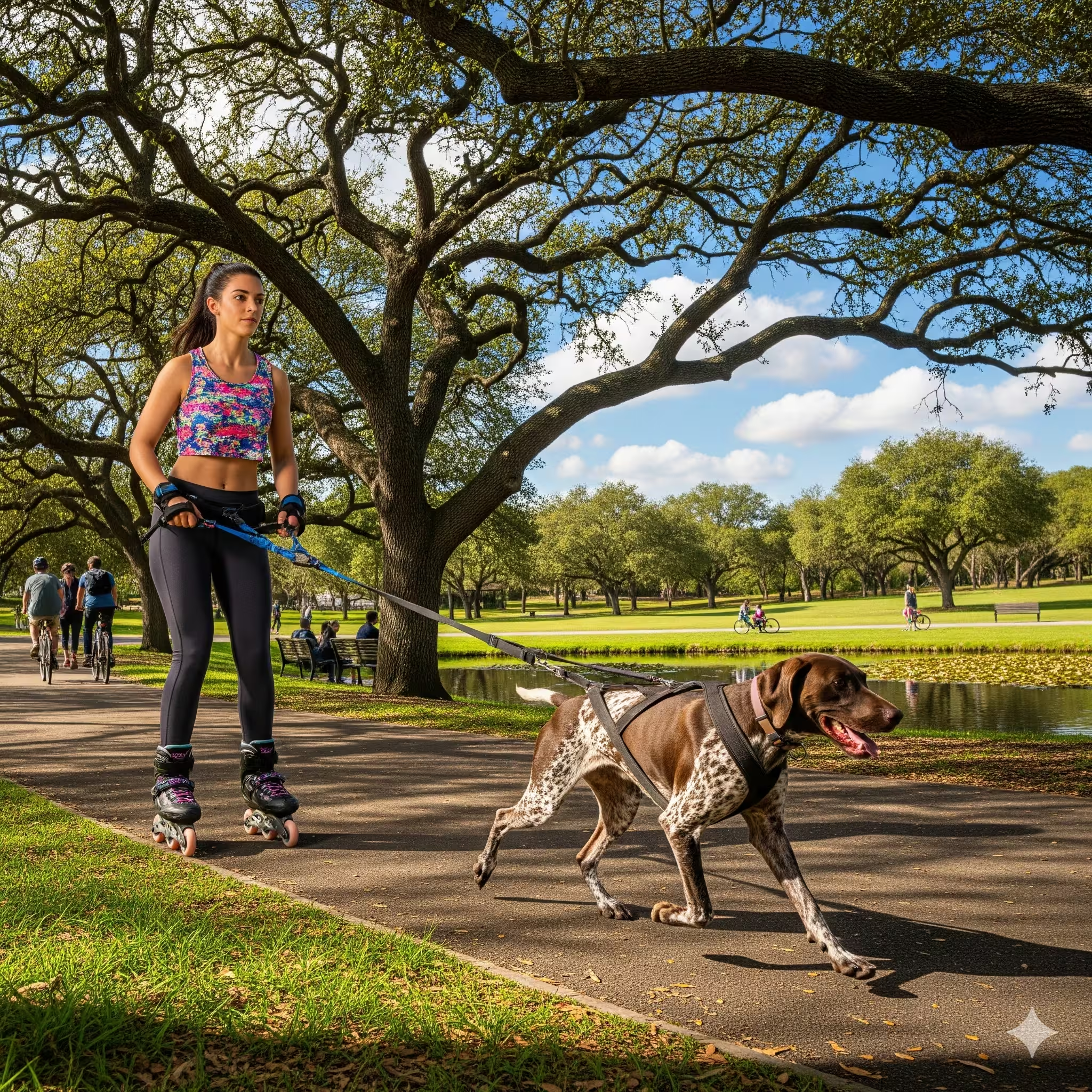
Introducing the Skates
The first exciting steps on wheels.
Phase 2 Details
- Practice Solo: Take your skates to a flat, smooth, wide, and low-traffic area. Drill your T-stops for safety.
- The First Connection: Put on all your gear. Start on grass next to the path. Attach the line to your belt and have your dog sit. Stay calm.
- The First Pulls: Step onto the pavement. Ask for a simple “Hike.” The moment your dog pulls and you roll a few feet, say “Whoa!” and praise them lavishly. Step off onto the grass to stop.
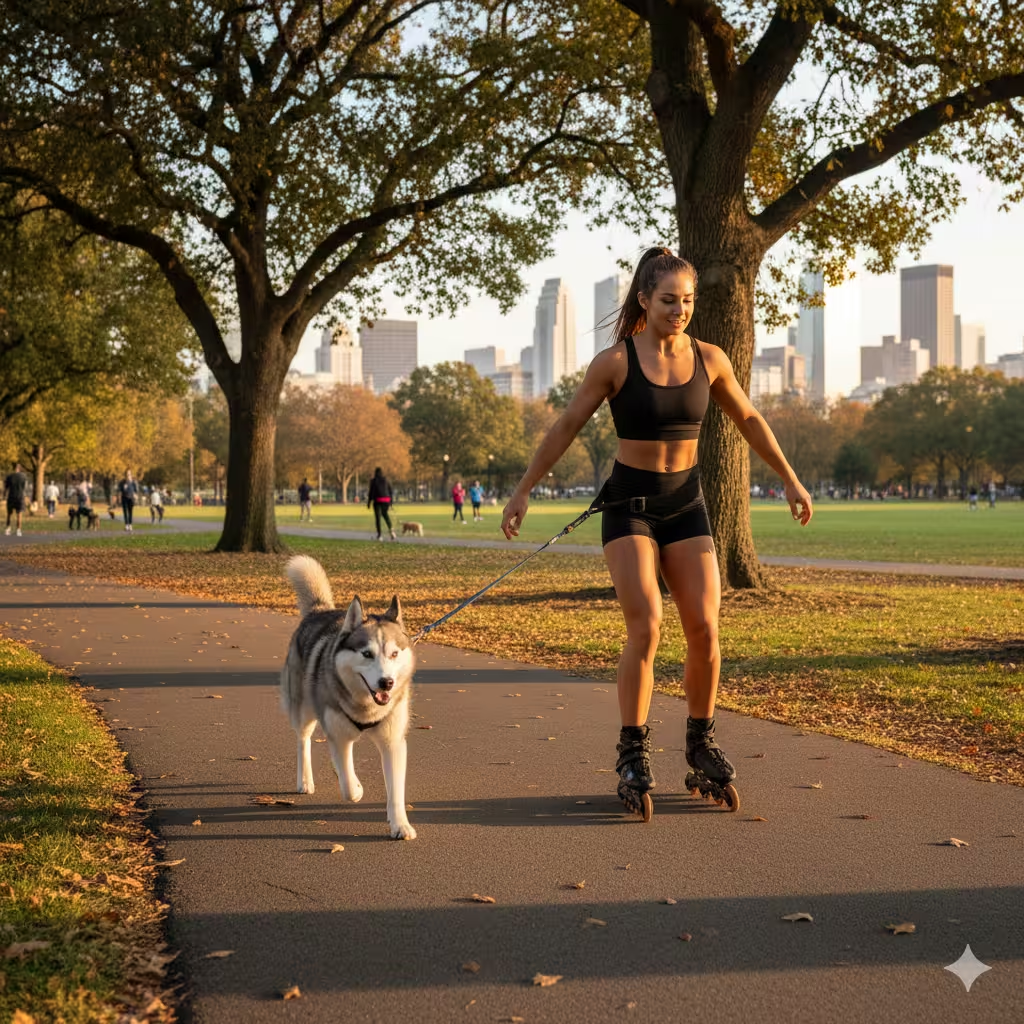
Building Confidence
Advancing your skills for longer, smoother runs.
Phase 3 Details
- Extend the Distance: Gradually increase the distance of your pulls as you both become more confident.
- Introduce Turns: At a very slow pace, use your “Gee” (right) and “Haw” (left) cues. Guide the turn with your body and skates.
- Navigating Distractions: Give the “On-By” command early and confidently. It’s vital to work on threshold management, ensuring distractions are at a distance where your dog can still succeed.
Why Rollerjoring Works: The Science of Teamwork and Enrichment
Rollerjoring with a dog is more than just exercise; it’s a powerful behavioral tool that taps into canine psychology.
Behavioral Rationale
- Fulfills Primal Instincts: For many breeds, the desire to run and pull is hardwired. This sport provides a “job” that satisfies this instinct, making it one of the most intense dog enrichment activities you can provide.
- Builds Confidence: Mastering a complex task with a human partner is a massive confidence booster for a dog.
- Strengthens the Bond: The sport operates on a foundation of clear communication and absolute trust. This shared reliance creates an incredibly deep partnership.
Application of Learning Theory
The entire process is a masterclass in learning theory. Understanding the fundamentals of operant conditioning in dog training is key. The dog learns that pulling on cue leads to the wonderful reward of running with their favorite person. By consistently applying these principles, we build a dog who is not just compliant but enthusiastic.
Top Breeds for Rollerjoring — Interactive Trait Comparison
Use this interactive chart to compare leading breeds for rollerjoring with a dog. Toggle traits, sort the list, and hover or focus bars for a precise breakdown. Scores are expert-estimated (1–10 per trait) and combined into a 0–100 suitability score.
Tip: Click a legend chip to hide/show that trait in the stack. Use the “Sort by” menu to reorder breeds.
Troubleshooting Common Challenges
Problem: My dog gets distracted and won’t pull straight. The Fix: The environment is more rewarding than the activity. Shorten sessions and increase reinforcement. Go back to “On-By” drills on foot. Ensure your dog isn’t pulling toward a distraction out of anxiety; the principles of how to help a new puppy adjust to your home can apply here.
Problem: My dog suddenly stops or seems scared. The Fix: Stop immediately. Never force your dog to continue. Check their gear and paws. Reassure them calmly. End the session on a positive note. Forcing them to work through fear will create a negative association with the sport.
Problem: The line keeps getting tangled. The Fix: This typically happens if the line is too long or you’re losing momentum during turns. Ensure your bungee line is the appropriate length (6-9 feet) and practice turns at a very slow, controlled speed.
Frequently Asked Questions
1. How fast do you go when rollerjoring with a dog? Speed should never be the goal. A comfortable pace is a steady trot or slow canter for the dog (about 8-12 mph). Always skate within your ability to stop quickly.
2. Can I use my small dog? No. For the dog’s safety, this sport is only for medium to large breeds (35 lbs+) that are physically capable of pulling without strain.
3. How do I stop safely? Your primary method is your own skating skill (T-stop). Your dog’s “Whoa” command is the second part. In an emergency, carve sharply to one side or step onto grass.
4. What are the most important commands? “Whoa” (stop) and “On-By” (ignore distraction) are the two most critical safety commands for anyone rollerjoring with a dog.
5. Is this sport safe around children? Due to the speeds involved, practice in low-traffic areas away from small children. While on the trail, focus is key, but good manners are always important. For general training, it’s beneficial to understand how to teach a puppy to be gentle with kids.
Rollerjoring with a dog not for you? For a comprehensive guide on similar activities. review this The Best Winter Dog Sport Ever: Skijoring from the American Kennel Club.
Conclusion: Your Next Adventure Awaits
Rollerjoring with a dog is the pinnacle of human-canine teamwork. It’s a demanding sport that requires dedication, skill, and a deep respect for safety. By investing time in proper training and using the correct gear, you can unlock an activity that provides incredible exercise, sharpens your dog’s mind, and strengthens your bond.
Start slow, celebrate small victories, and always listen to your canine partner. The journey of learning together is just as rewarding as the thrill of the ride itself.

Christopher Quinn adopted his first dog, Loki, a spirited Border Collie/Jack Russell mix, after exiting Army service in the summer of 2012. That experience sparked a lifelong passion for canine behavior and positive reinforcement training.
He studied Principles of Dog Training & Behavior at Penn Foster and has since worked with hundreds of dogs from all backgrounds. Over the past two years, Christopher has fostered more than 30 rescue dogs, giving each one a chance at a better life.
Today, he continues to write, teach, and share insights on humane dog training, blending hands-on experience with a decade of dedicated study.