
Master the Tree Indication (quiet hold)
Channel your hound’s innate instinct to “tree” prey into a focused, silent, and powerful communication tool. The Tree Indication (quiet hold) builds incredible impulse control and transforms frantic energy into a calm, clear signal, strengthening your scentwork partnership. This skill is essential for anyone serious about scentwork.
Explore More Enrichment Activities
Key Takeaways
- The Tree Indication (quiet hold) channels a hound’s natural “treeing” instinct into a calm, silent signal.
- Reward Placement is Critical: Always reward your dog at the source on the tree to build value for holding the position.
- Silence is Golden: Only mark and reward quiet behavior. Withholding rewards for barking is a key part of this training.
- Start Low and Slow: Begin with the target scent low on the trunk to encourage a grounded, focused nose-at-source indication.
- This exercise is a powerful form of threshold management, teaching high-drive dogs to remain calm and focused.
How to Teach the Tree Indication (quiet hold)
- 1 Initial Placement: Without your dog present, place the target odor source low on the tree trunk (1-2 feet high). Making it easy to find initially is key for building confidence in the Tree Indication (quiet hold).
- 2 Guided Approach: Bring your dog into the area on leash. Let them discover the scent naturally. Guide them gently toward the tree if they need help, but avoid pulling. The discovery should feel like their idea.
- 3 Mark the Moment: The instant your dog’s nose makes contact with the source, mark with “Yes!” or a clicker. Immediately deliver a high-value treat *right at their nose, against the tree*. This is a crucial step for building a solid positive reinforcement loop.
- 4 Build Duration: For the next rep, wait just a split second *before* marking. You’re now marking for a brief, quiet hold at source. Gradually increase this duration from a fraction of a second to 2-3 seconds over several sessions. This process, known as shaping, refines the behavior step-by-step. Proper shaping is essential for a reliable Tree Indication (quiet hold).
- 5 Add a Cue (Optional): Once your dog is reliably offering the quiet hold at source, you can add a verbal cue like “Show me!” just as they are about to make contact.
- 6 Keep Sessions Short: Conduct 6-10 repetitions per session. Always end on a successful rep to keep motivation high. The goal is calm focus, not high-energy frustration. This is a great, low-impact addition to your regular dog enrichment activities.
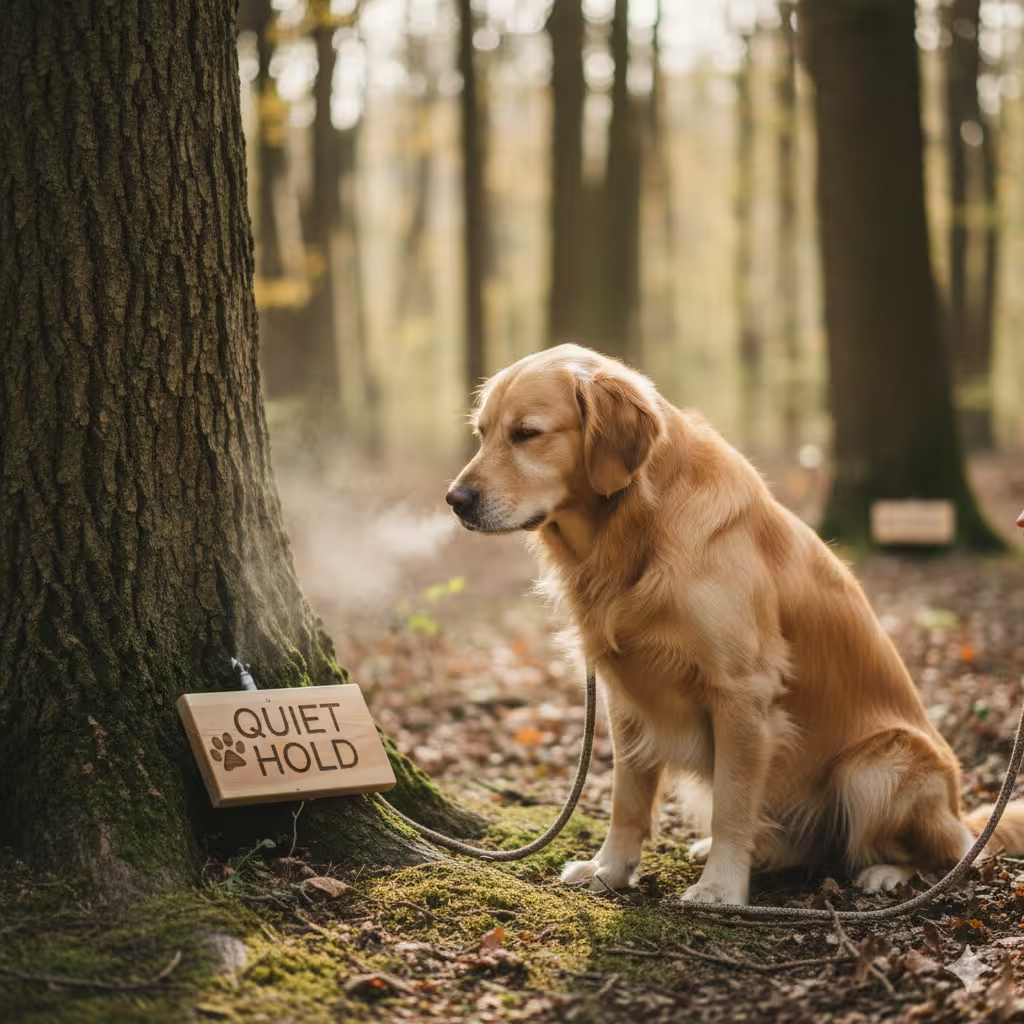
The goal is to make the source the most valuable place in the world. Rewarding at the source pins the dog’s focus and builds the foundation for a durable hold. A successful Tree Indication (quiet hold) depends on this step.
Gear Spotlight
- Target Odor Source: A small tin with scented cotton swabs (birch, anise, clove) is standard for scentwork. For beginners, a favorite toy with a distinct smell can also work well to build motivation.
- High-Value Treats: These should be small, soft, and extra delicious (think cheese, chicken, or commercial training treats). The goal is a quick, high-impact reward that doesn’t require a lot of chewing. This makes the Tree Indication (quiet hold) more rewarding.
- Long Line: A 15-20 foot long line gives your dog freedom to search without compromising safety. It prevents them from wandering off while allowing for independent problem-solving. It’s a key piece of equipment for safe hound tree indication training.
Training Control Panel: Key Moves for the Tree Indication (quiet hold)
Hide Target Low
(Click to Flip)
Placing the source low encourages a direct nose-at-source indication and prevents jumping or craning, which can increase arousal. It sets the dog up for a calm, grounded success.
Mark the Hold
(Click to Flip)
Timing is everything. Mark the exact moment of stillness, not the search. Reward at the source to build value for staying put. This teaches your dog that duration, not just discovery, earns the reward.
Reward Quiet
(Click to Flip)
Only mark and reward silence. If the dog barks, withhold the marker and reward. This is a clear application of operant conditioning—the desired behavior (quiet) gets reinforced, making it more likely to happen again.
Why It Works: The Behavioral Science Behind the Tree Indication (quiet hold)
The A-B-C of Behavior
Arousal and Threshold Management
Clear Handler Communication
Best Breeds for Tree Indication (quiet hold)
Troubleshooting the Tree Indication (quiet hold)
Dog barks instead of holding quietly
Dog paws or scratches the bark
Dog loses interest after finding the source
Dog fixates high on the trunk
Dog generalizes to random trees
Frequently Asked Questions
What age can I start teaching a silent treeing indication?
How does wind affect training for a Tree Indication (quiet hold)?
How high should the target be?
How often should we practice?
Is this the same as a competition scentwork indication?

Christopher Quinn adopted his first dog, Loki, a spirited Border Collie/Jack Russell mix, after exiting Army service in the summer of 2012. That experience sparked a lifelong passion for canine behavior and positive reinforcement training.
He studied Principles of Dog Training & Behavior at Penn Foster and has since worked with hundreds of dogs from all backgrounds. Over the past two years, Christopher has fostered more than 30 rescue dogs, giving each one a chance at a better life.
Today, he continues to write, teach, and share insights on humane dog training, blending hands-on experience with a decade of dedicated study.