
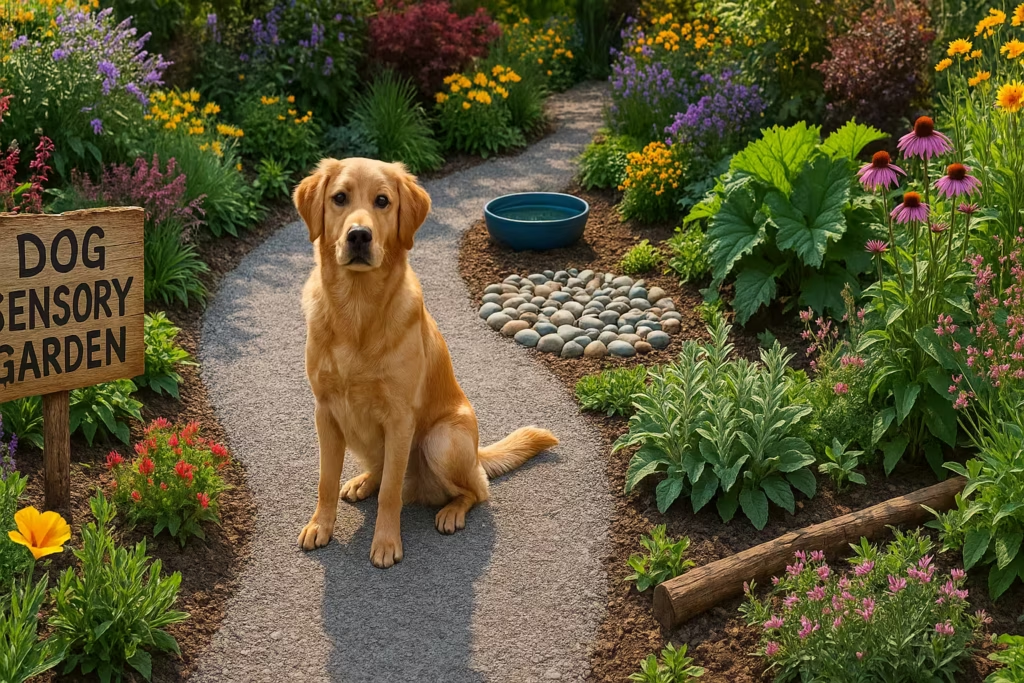
In our human world, we often forget that our dogs experience life primarily through their noses. While we see in high-definition color, they smell in breathtaking 3D. A dog’s sense of smell is estimated to be 10,000 to 100,000 times more acute than our own, with a third of their brain devoted to interpreting odors.
Yet, in our clean homes and structured neighborhoods, we often deny them their most profound sensory joy: sniffing. This is where creating a collection of dog sniff pots can change your dog’s world.
Creating a dedicated sensory garden for dogs is one of the most powerful and simple ways to provide profound mental enrichment. It’s an activity that reduces stress, builds confidence, and allows your dog to simply be a dog. If you’re looking for a way to enrich your dog’s life beyond the daily walk, you’ve found it.
What Are Dog Sniff Pots? (And Why Your Dog Needs Them)

The Calming Power of Lavender
Aromatherapy for Canine Well-being
Lavender ($Lavandula$) is a scientifically recognized calming agent. The key is a compound called linalool, which sends signals to the brain’s limbic system, a key area for emotions.
This interaction can reduce cortisol levels, the stress hormone, promoting a state of calm. This makes lavender a vital component of any DIY sniff pot garden.
It’s excellent for canine enrichment and mental health, helping to soothe anxious pups and making scent work a truly relaxing activity for canine anxiety relief.
Minty Fresh Exploration
Stimulating the Olfactory Bulb
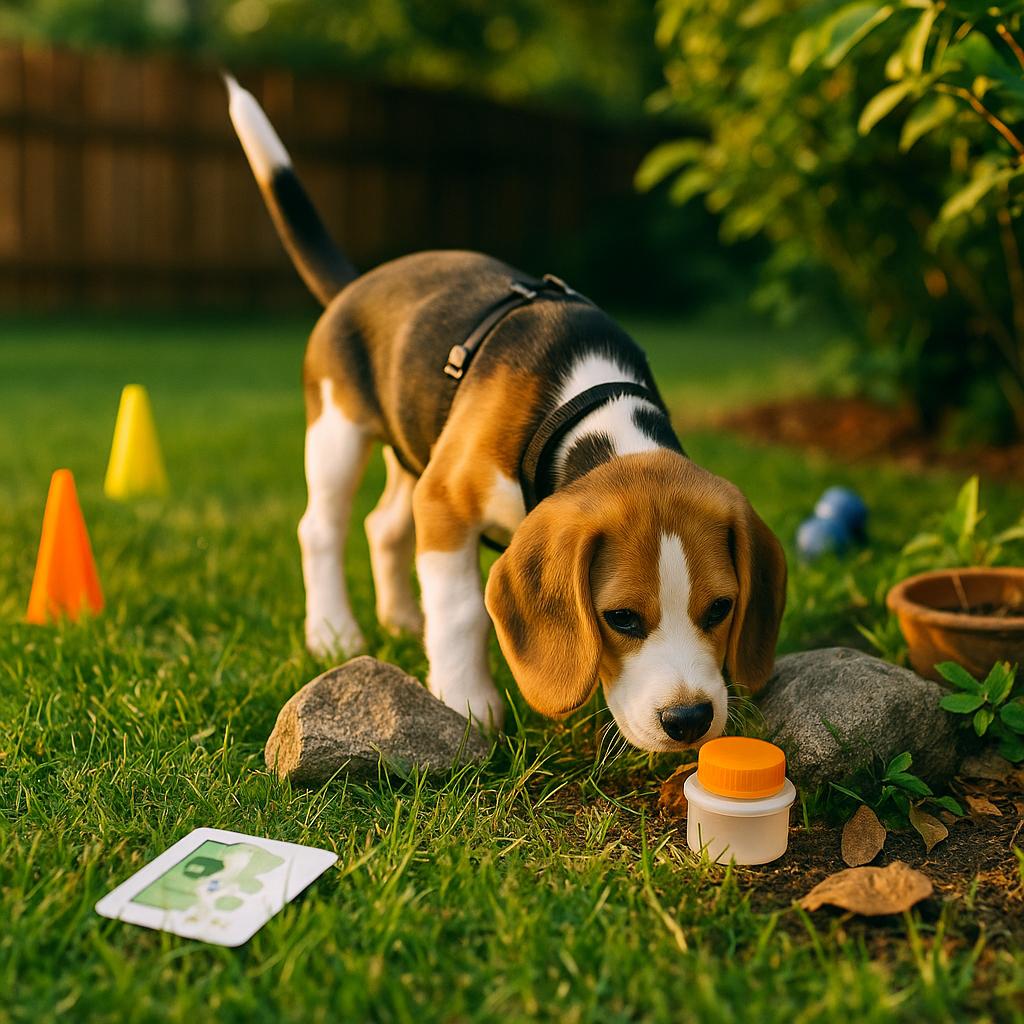
Mint, specifically peppermint ($Mentha \times piperita$), provides a stimulating scent experience for dogs. Its primary active compound, menthol, excites the trigeminal nerves in a dog’s snout, creating an invigorating sensation.
This sensory stimulation encourages deep, focused sniffing, which is a fantastic form of mental exercise and a core part of any dog sniffari.
Scientifically, this scent work engages the canine olfactory bulb. Providing varied and safe scents like mint contributes to your dog’s cognitive health and sensory enrichment.
Earthy Rosemary Scent
Grounding and Instinctive Scent Work
Rosemary ($Salvia rosmarinus$) offers a deeply grounding aroma that resonates with a dog’s natural instincts. Its scent profile, rich in compounds like 1,8-cineole and camphor, provides a complex olfactory puzzle for a dog to decipher.
This type of canine scent work is not just for fun; it’s a vital part of a dog’s cognitive and emotional landscape. By engaging in focused sniffing, dogs are fulfilling a fundamental biological need to explore their environment.
A Sniff Pot Parade with plants like rosemary provides a controlled, safe outlet for this behavior. It can reduce boredom and build confidence, all while contributing to the physical and mental benefits of dog enrichment at home and canine mental stimulation.
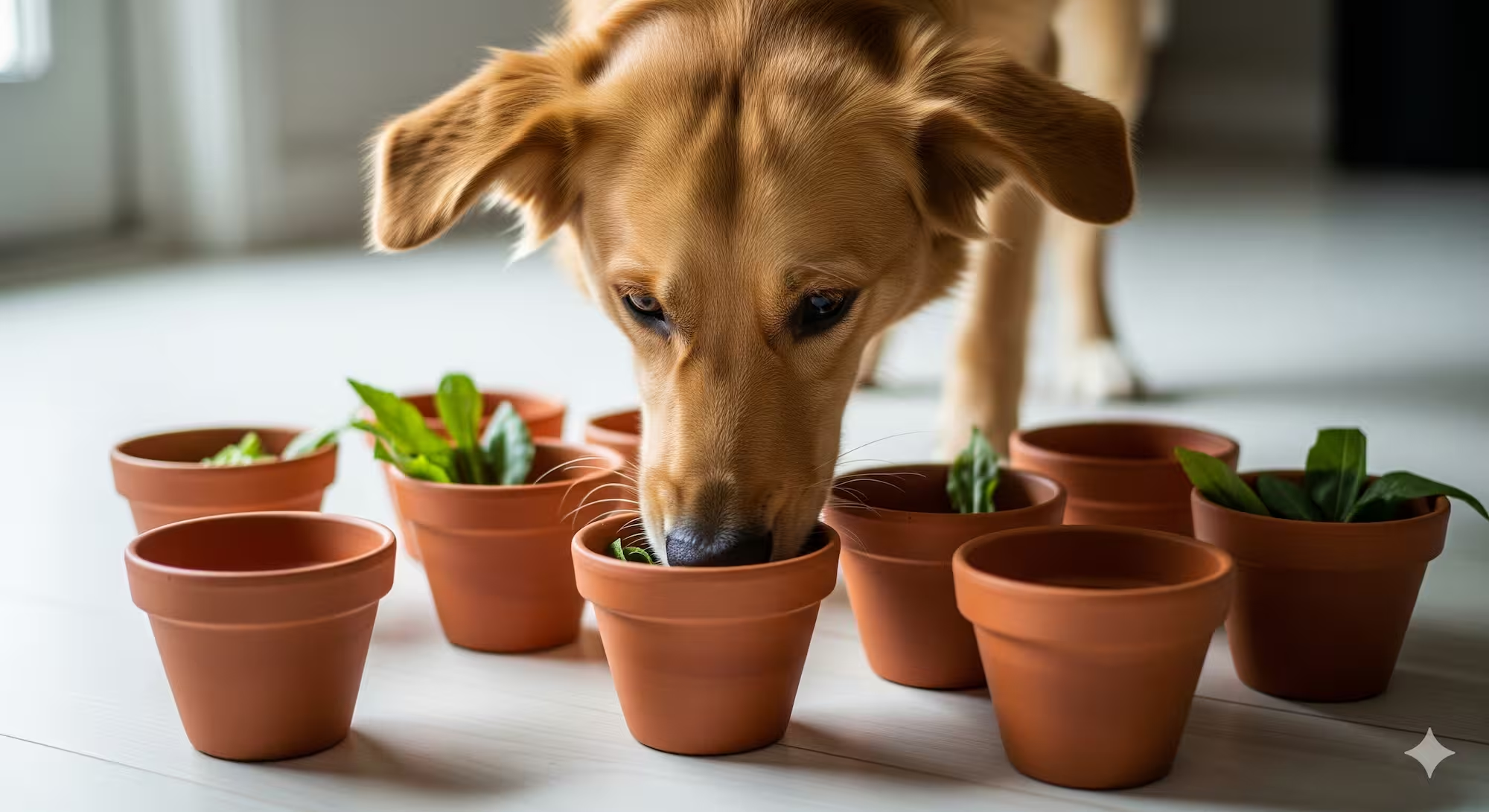
Dog sniff pots are a collection of containers—like terracotta pots, planters, or even cardboard boxes—each holding a different dog-safe, aromatic item. Arranged together, they create a sensory garden for dogs they can explore at their own pace. Think of it as an olfactory art gallery for your canine companion.
The benefits are immense:
Mental Stimulation: Just five minutes of intense sniffing can be more tiring for a dog than a half-hour walk. It engages their brain in complex problem-solving as they decipher each scent.
Stress and Anxiety Reduction: Scientific studies have shown that the act of sniffing actively lowers a dog’s pulse rate. This makes a sensory garden for dogs a fantastic tool for calming an anxious or over-excited dog.
Confidence Building: For timid dogs, exploring new scents in a safe, controlled environment is a huge confidence booster. It’s an empowering activity where they are in complete control, which is crucial when trying to socialize a shy puppy with strangers.
Fulfills Natural Instincts: Foraging and scenting are innate canine behaviors. Providing an appropriate outlet for these instincts can prevent boredom-related behaviors from developing.
This is a low-impact activity suitable for dogs of all ages, from curious puppies to senior dogs with limited mobility.
The Science of Sniffing: How a Sensory Garden for Dogs Calms and Engages
When a dog sniffs, they’re not just smelling—they’re gathering vast amounts of information. The moist, spongy membrane inside their nose, called the nasal mucosa, contains hundreds of millions of olfactory receptors. As they sniff, they paint a detailed picture of the world.
This intense focus is a form of canine mindfulness. It roots them in the present moment, pushing aside anxieties and fears. This is particularly effective if you have a puppy scared of everything, as it gives them a predictable and rewarding activity to focus on. A well-designed sensory garden for dogs becomes a safe space where they can decompress.
How to Make Dog Sniff Pots: A Step-by-Step Guide
Building your own collection of dog sniff pots is easy and inexpensive. You can set it up in your backyard, on a patio, or even in a corner of your living room.
Step 1: Gathering Your Supplies
You’ll need a variety of pots or containers. Terracotta, plastic, and fabric grow bags all work well. You’ll also need different substrates to hold the scents, such as organic potting soil (no chemical fertilizers), sand, mulch (avoid cocoa mulch, which is toxic to dogs), or even shredded paper.
What to Put in Dog Sniff Pots: Safe Scent Garden Ideas
The key is variety. You want to offer a “menu” of smells for your dog to explore. Here are some safe and stimulating ideas:
Calming Herbs: Lavender, chamomile, basil, and mint. (Use dried herbs, as concentrated essential oils can be overwhelming and harmful).
Foraged Items: Pinecones, interesting leaves, moss, and different types of bark or wood chips.
Animal Scents: This is often the most exciting category for dogs. Ask a friend for some shed fur from their cat or dog, or use feathers, sheep’s wool, or clean bedding from a rabbit or guinea pig.
Spices: A light dusting of cinnamon or ginger in a pot can be very intriguing.
Always ensure the items are non-toxic and used in moderation. The goal is a whisper of scent, not an overwhelming cloud.
Step 3: Assembling Your Sensory Garden for Dogs
Fill each pot with your chosen substrate. Then, sprinkle or bury the scent item within it. Arrange the pots in a designated area. Start with just 3-4 pots to avoid over-stimulation. You can always add more as your dog gets used to their new sensory station.
Sniff Pot Parade — Setup & Science
Create a dog-safe herb garden to power olfactory enrichment and natural foraging behavior.
Why a Scent Garden Works
A sniff pot parade scent garden supplies structured canine olfactory enrichment. Dogs have up to ~220 million olfactory receptors (humans ~6 million), so short, choice-led sniff sessions can reduce arousal and support calm.
Dog-safe herb ideas:
- Mint (Mentha spp.), rosemary (Rosmarinus officinalis), thyme (Thymus vulgaris)
- Lemon balm, chamomile (mild, soothing aromas), basil, parsley
Avoid toxic plants (e.g., lilies, foxglove, azalea, sago palm). Use unsprayed plants; potting mix with no cocoa mulch.
Rotate pots and positions weekly to maintain novelty. Keep sessions short (3–10 minutes) to prevent over-arousal and to model a calm “decompression” routine.
How to Run the Sniff Pot Parade
A simple protocol for confidence, decompression, and calm focus.
Step-by-Step
- Arrange 4–6 pots (dog-safe herbs) in a simple loop with space to move.
- Guided sniff tour: Walk slowly on a loose leash or long line. Let your dog choose which pot to investigate; quietly praise calm sniffing.
- Hide a reward: Occasionally place a small treat near the base of one pot to reinforce nose-down exploration.
- Rotate weekly: Swap plant order and introduce a new, safe scent source to sustain novelty.
Session tips:
- Keep it brief (3–10 minutes). End while your dog is still engaged.
- Pair with a calm “finish” cue and a settle on a mat for generalization.
- Avoid concentrated essential oils; even dog-tolerant oils (e.g., lavender) should be used sparingly and never ingested.
This dog scent garden idea doubles as a predictable, choice-driven ritual—perfect before training or as a stress-relief decompression routine.
Training Goals & Behavior Benefits
From anxiety relief to confidence and impulse control.
What the Scent Garden Supports
- Reduced arousal & anxiety: Nose-down foraging promotes parasympathetic “rest-and-digest.”
- Confidence building: Choice-driven success helps timid or shy dogs approach novelty.
- Impulse control & focus: Calm sniffing transitions well to mat work, loose-leash walking, and stays.
Safety & hygiene:
- Use pesticide-free plants; rinse leaves after outdoor exposure if needed.
- Discourage digging or soil eating; elevate pots if necessary.
- Supervise; end session if ingestion of plant material becomes excessive.
How to Introduce Your Dog to Their New Sniff Pots
The introduction should be calm and free of pressure. Many owners find it helpful to start on leash, not to control the dog, but to gently guide them toward the area. Using the principles of loose leash walking training, let them have plenty of slack to explore freely once they show interest. Don’t command them to do anything. The collection of dog sniff pots is their space to investigate on their own terms. This is the opposite of structured obedience like teaching your puppy to stay; it’s about freedom and choice.
Success looks like relaxed body language: a soft, swishing tail, deep and focused sniffing, and maybe even a “flehmen response” (a teeth-baring grimace that helps them process intense scents).
Integrating Enrichment Into Your Routine
A sensory garden for dogs shouldn’t be a one-time novelty. Make it part of your dog’s life.
Use it as a 5-minute calming exercise before a walk or after a stressful event like a vet visit.
Rotate the scents every week to keep it fresh and exciting.
Providing this kind of enrichment is a core tenet of positive reinforcement puppy training, as it meets your dog’s needs proactively.
A dog whose mind is fulfilled is less likely to develop problem behaviors. A bored puppy is more likely to engage in destructive chewing or nipping. Providing an outlet with dog sniff pots can be more effective than constantly correcting them. It addresses the root cause, not just the symptom, which is also key when you want to stop aggressive puppy biting.
This holistic approach is the same philosophy behind successful crate and potty training; you are managing the environment to set your puppy up for success. Whether you are working on crate training a puppy at night or a solid recall, a fulfilled dog is a more trainable dog.
Beyond the Basics: Advanced Ideas for Your Sensory Garden for Dogs
Sensory Garden Elements for Dogs
Discover a variety of surfaces and features to make your dog’s sensory garden a rich, stimulating, and safe environment for exploration and enrichment.

Smooth Stones & Pebbles
Grounding textures for paw pads
Learn More
Smooth Stones & Pebbles
Grounding textures for paw pads
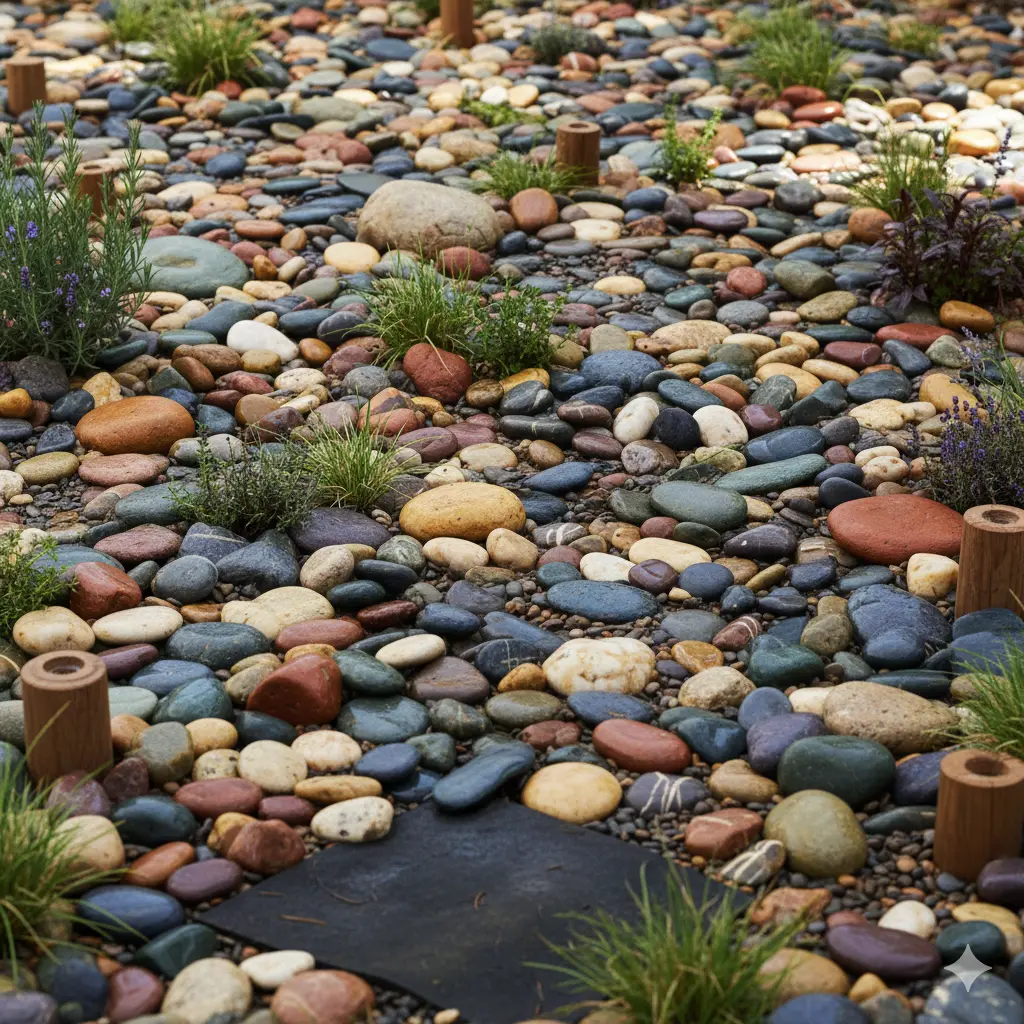
Using smooth, large river stones or polished pebbles can provide a unique tactile experience for your dog’s paws. This helps desensitize their foot pads to different surfaces and offers a grounding sensation.
Benefits:
- Paw Pad Stimulation
- Sensory Integration
- Natural Cooling
Aromatic Mulch Paths
Safe, soft, and fragrant walkways
Learn More
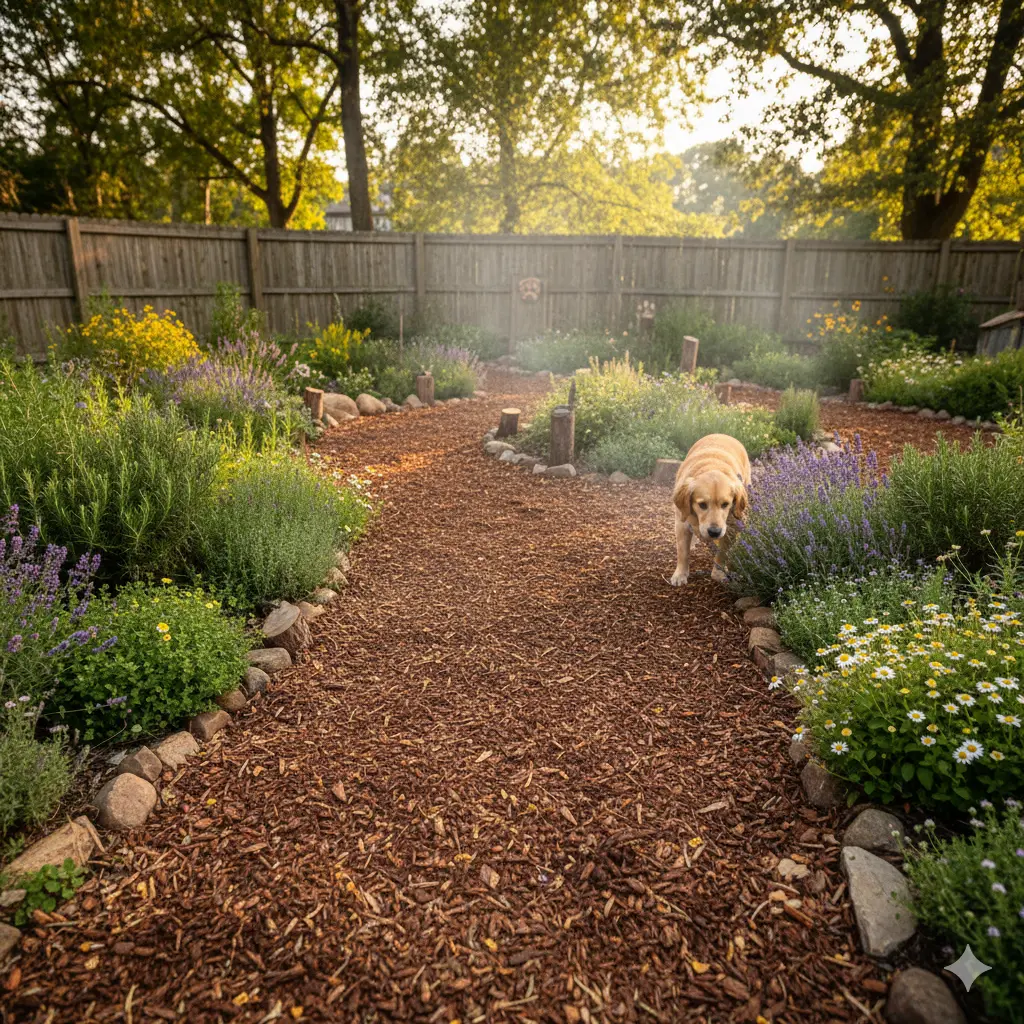
Aromatic Mulch Paths
Safe, soft, and fragrant walkways
Natural, untreated mulch from dog-safe woods like cedar or cypress can create a soft pathway with a subtle, earthy scent. Avoid cocoa mulch, which is toxic to dogs.
Benefits:
- Olfactory Enrichment
- Paw Protection
- Foraging Opportunity
Shallow Water Feature
A refreshing and soothing element
Learn More
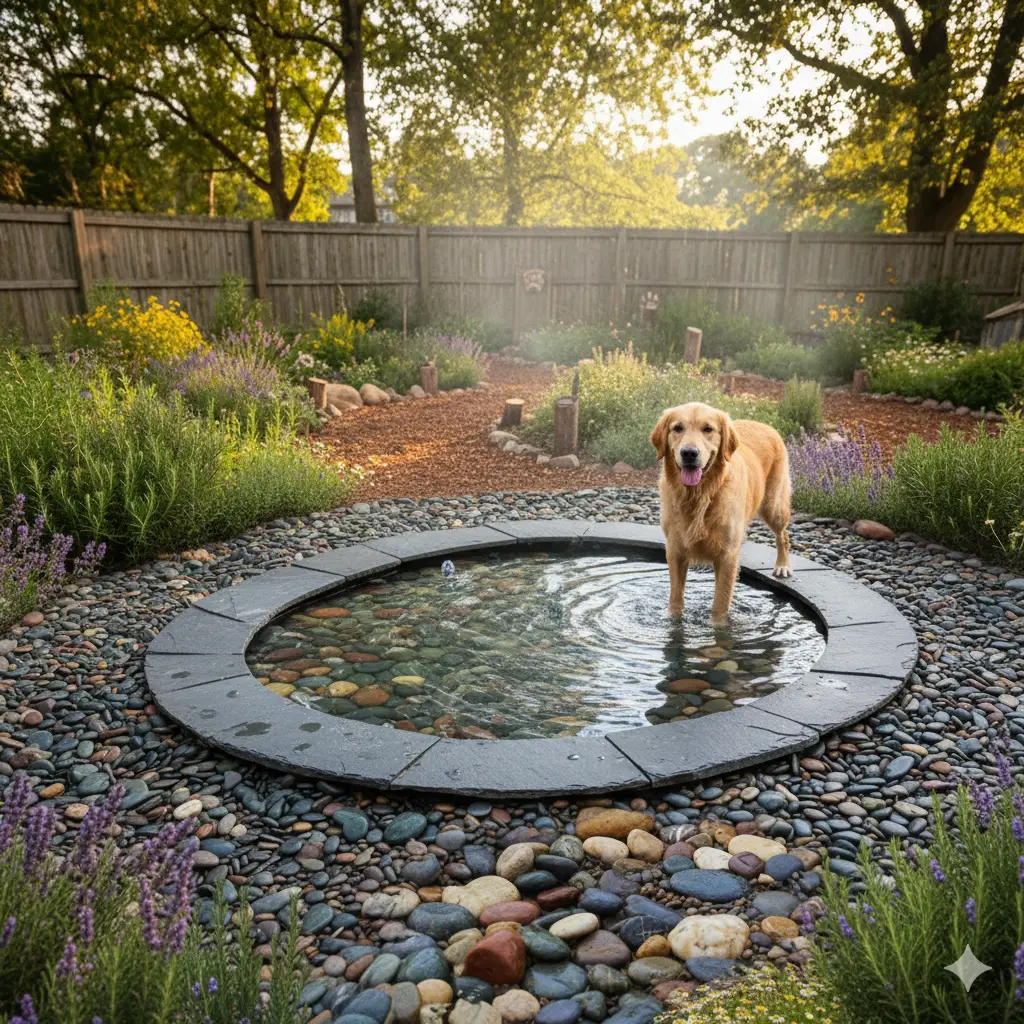
Shallow Water Feature
A refreshing and soothing element
A simple, shallow basin or a small fountain with circulating water provides a cool-down spot and a source of sound enrichment. The gentle sound of trickling water can be very calming.
Benefits:
- Calming Sound
- Cooling Station
- Introduces Novelty
Sand or Loose Soil Patch
A designated spot for digging
Learn More
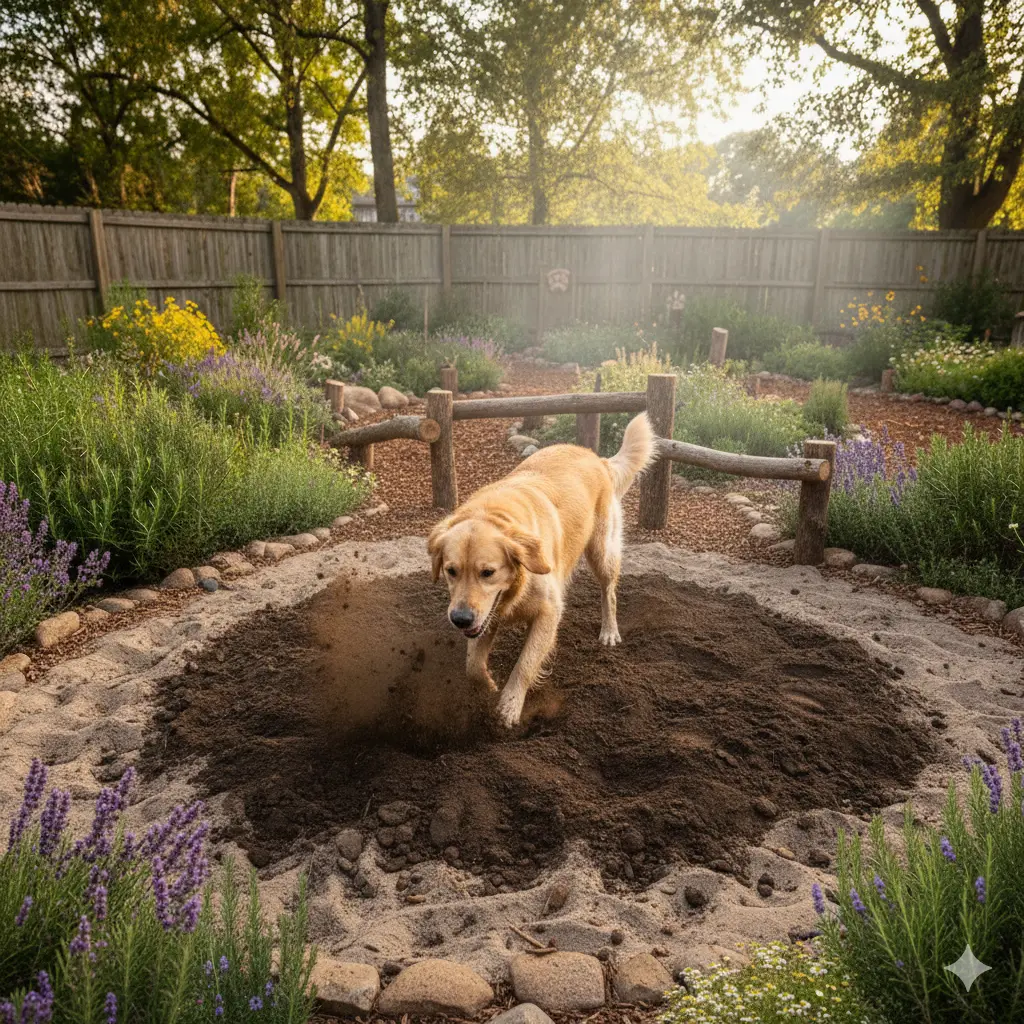
Sand or Loose Soil Patch
A designated spot for digging
Many dogs have a natural instinct to dig. A designated sand or soil pit allows them to fulfill this behavior in a controlled way, preventing damage to other areas of the garden.
Benefits:
- Instinctual Release
- Mental Stimulation
- Stress Reduction
Log or Wood Obstacles
A natural climbing and chewing feature
Learn More
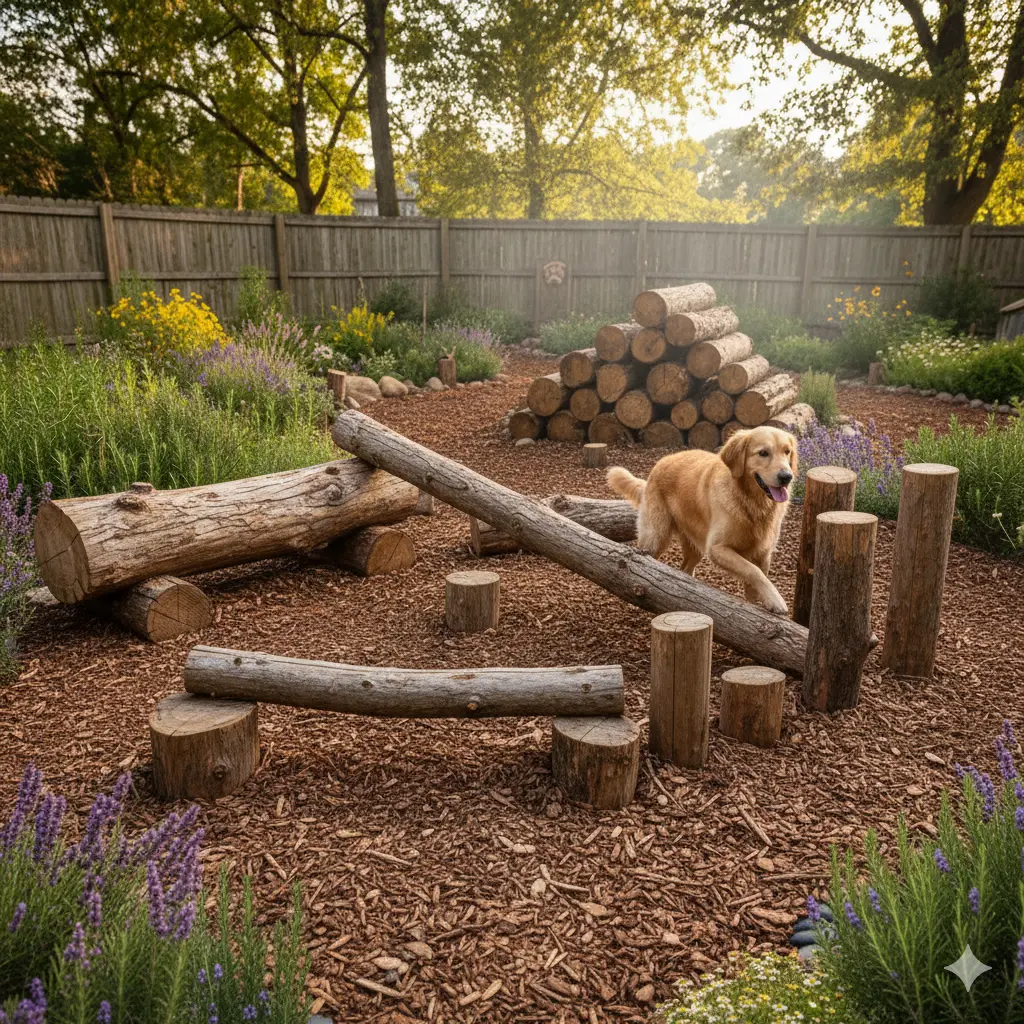
Log or Wood Obstacles
A natural climbing and chewing feature
Placing large, untreated logs or stumps in the garden offers natural climbing surfaces and textures to explore. Always ensure the wood is safe and free of splinters or toxic sap.
Benefits:
- Physical Challenge
- Chewing Outlet
- Scent Marking
Loose Leaves or Branches
A seasonal sensory experience
Learn More
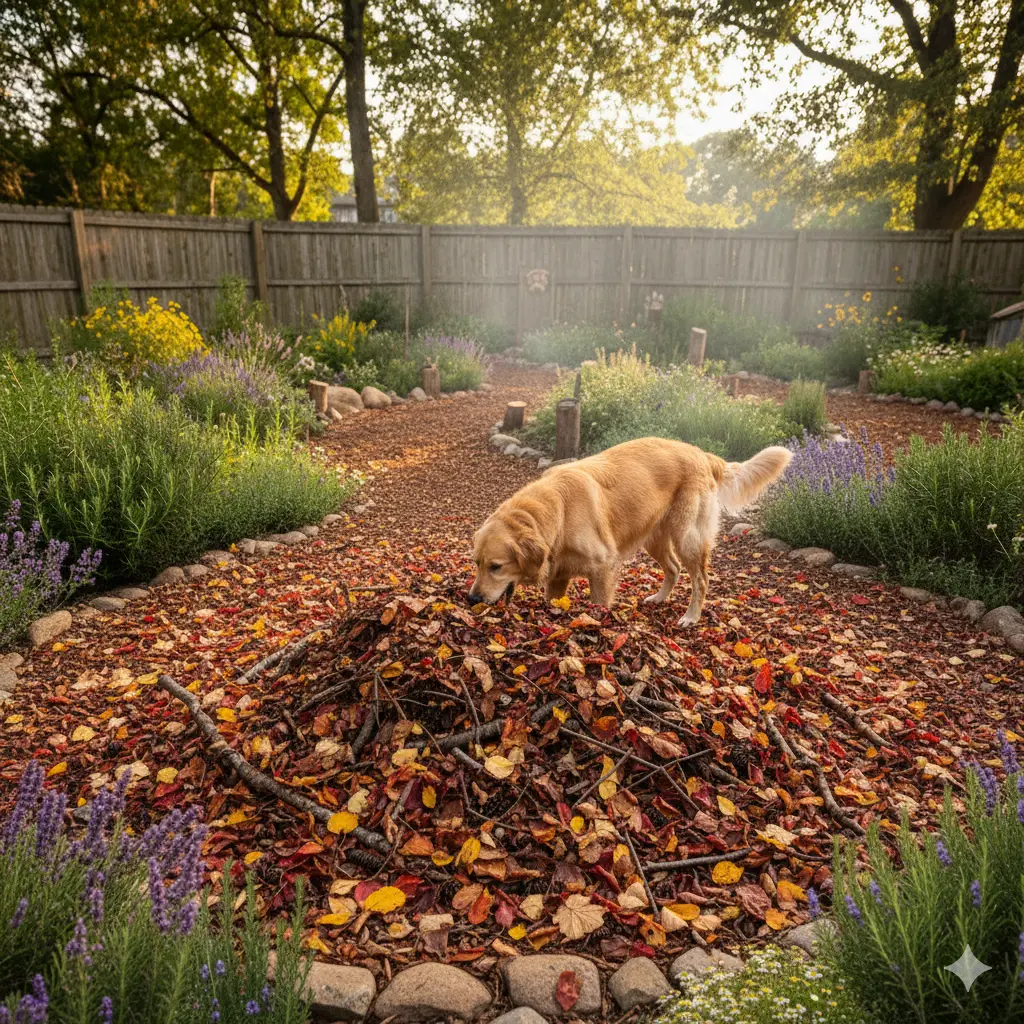
Loose Leaves or Branches
A seasonal sensory experience
A simple pile of clean, dry leaves or twigs provides a rustling sound and a different texture for your dog to explore. You can hide treats in the pile for a rewarding foraging game.
Benefits:
- Auditory Stimulation
- Hiding Spot
- Seasonal Enrichment
Once your dog is a sniffing pro, you can level up a sensory garden for dogs.
Foraging Fun: Hide a few high-value treats in one or two of the pots. This turns the sniffing session into a treasure hunt and rewards them for using their nose. This is also a fantastic, low-pressure way to practice skills. For instance, after they find a treat, you can practice the how to teach a dog the “drop it” command with a toy as a fun trade.
Scent Work Prep: Use the pots to introduce specific target odors used in sports like Nose Work or Scent Work.
Enrichment activities like this are foundational for building a well-behaved family member. They help you teach a puppy to be gentle with kids by teaching them appropriate outlets for their energy. A calm dog is less likely to be jumpy or mouthy. These principles are part of a complete training picture, just as vital as teaching foundation skills like how to teach your dog the ‘place’ command. Even your potty training a puppy positive reinforcement guide will be more effective when your puppy’s overall needs are met.
Create Your Scent Garden
Design a dog-friendly herb garden to provide safe sensory enrichment and a calming space for your pet. Choose your plants and learn about the benefits!
What is a Scent Garden?
A scent garden, or “Sniff Pot Parade,” is a collection of dog-safe plants arranged to encourage natural sniffing and foraging behaviors. Engaging a dog’s powerful sense of smell is a scientifically-proven way to reduce stress, build confidence, and provide valuable mental stimulation.
Choose Your Plants
Select the plants you’d like to include in your garden. Click on a card to add or remove it.
Your Scent Garden
A Calm Dog is a Happy Dog
Creating a collection of dog sniff pots is more than just a fun DIY project; it’s an act of empathy. It’s a way of acknowledging your dog’s primary sense and giving them an outlet that is deeply satisfying on an instinctual level. By investing a little time into a sensory garden for dogs, you are investing in your dog’s mental health and well-being, strengthening your bond in the process. It’s one of the most effective and rewarding enrichment activities for dogs you can provide.
The Psychology of a Sniff Pot Parade
A Sniff Pot Parade is more than just a novelty garden; it is a meticulously designed environment focused on a dog’s primary sense: smell. For dogs, their olfactory world is as rich and detailed as our visual one. Engaging this powerful sense through a curated scent garden is a fundamental form of canine enrichment. It offers a profound mental stimulation for dogs that goes beyond simple physical exercise.
When a dog engages in scent work, it activates complex cognitive processes. The act of investigating novel odors provides a form of problem-solving that stimulates their brain, leading to a state of calm focus and contentment. This deep engagement with their natural instincts can also significantly reduce stress and anxiety by lowering cortisol levels, promoting a sense of well-being and security.
This experience is a healthy outlet for their instinctive behaviors, such as foraging and exploration. A scent garden for dogs provides a safe and stimulating space for them to be dogs, which is essential for their overall happiness and balanced behavior. It is a powerful tool for improving dog mental health and building confidence.
Why Scent Work is a Cognitive Workout
The canine olfactory system is an evolutionary marvel. A dog’s sense of smell is estimated to be 10,000 to 100,000 times more acute than a human’s. When they enter a scent garden, they are not just passively smelling; they are actively processing a vast amount of information.
This process engages the frontal lobe of the canine brain, which is responsible for cognitive functions and decision-making. Scent work directly improves their focus and concentration, making it a valuable tool for behavioral training and simply giving them a fun, enriching challenge.

Christopher Quinn adopted his first dog, Loki, a spirited Border Collie/Jack Russell mix, after exiting Army service in the summer of 2012. That experience sparked a lifelong passion for canine behavior and positive reinforcement training.
He studied Principles of Dog Training & Behavior at Penn Foster and has since worked with hundreds of dogs from all backgrounds. Over the past two years, Christopher has fostered more than 30 rescue dogs, giving each one a chance at a better life.
Today, he continues to write, teach, and share insights on humane dog training, blending hands-on experience with a decade of dedicated study.