
Ready to combine your love for cycling with your dog’s boundless energy? Welcome to the thrilling world of bikejoring with a dog—a high-speed, outdoor mushing sport where your canine companion becomes your engine.
While it might look simple, bikejoring is an advanced activity that requires proper equipment, specific training, and a deep commitment to safety.
This comprehensive guide will walk you through everything you need to know to get started, from choosing the right gear to understanding the science behind your dog’s drive.

Table of Contents
-
What Is Bikejoring with a Dog?
-
Is Your Dog a Good Candidate?▼
- Physical and Breed Considerations
- Temperament and Training
-
Essential Bikejoring Equipment▼
- The Big Three
- The Human & The Bike
-
Safety First: Route, Weather, and Trail Etiquette▼
- Route Selection and Pre-Ride Checks
- Trail Etiquette
-
How to Start Bikejoring with a Dog (Step-by-Step)▼
- Step 1: The Gear Up
- Step 2: Start on a Quiet Path
- Step 3: Line Tension and Speed Management
- Step 4: Practice Your Commands
-
Why Bikejoring with a Dog Works▼
- The Scientific Framework
- Enrichment and Threshold Management
-
Troubleshooting
-
FAQ
-
Conclusion: Next Steps
What Is Bikejoring with a Dog?
Bikejoring is a canine-powered sport where a single dog or a team of dogs is tethered to a bicycle and pulls a rider. Think of it as urban dog sledding, only on wheels and without the snow. It’s a fantastic way to give a high-energy dog a fulfilling workout and is part of a larger family of dog mushing sports like scooterjoring vs bikejoring (with a scooter) and canicross vs bikejoring (running with your dog).
Unlike canicross, which is human-powered running with assistance from the dog, bikejoring is primarily dog-powered, allowing your dog to reach higher speeds and cover more ground.
This sport is not just about speed; it’s about teamwork. You are the guide, using verbal commands to direct your dog while managing your bike’s speed and steering. The dog is the leader, pulling confidently and following your cues. Successful bikejoring with a dog builds an incredible bond and offers a unique form of enrichment, tapping into your dog’s natural instincts to run and pull.
Is Your Dog a Good Candidate?
Not every dog is built for the rigors of bikejoring. The ideal candidate is physically sound, of an appropriate age, and has the right temperament. Remember, this is a high-impact, high-speed activity, and safety must always be your top priority.
Physical and Breed Considerations
- Breeds: While many breeds can learn, those bred for pulling or endurance excel. Think Alaskan Huskies, Siberian Huskies, German Shorthaired Pointers, or other athletic mixes. Their lean builds, thick coats (for cold weather), and strong drive make them perfect for this sport. That said, any fit, medium-to-large-sized dog with a high energy level can potentially enjoy it.
- Weight and Age: Your dog should be at least 30–35 pounds and fully grown to handle the demands. Avoid bikejoring with a dog that is still a puppy, as their growth plates are not fully developed. Wait until at least 12–18 months of age, or even longer for larger breeds, to avoid serious injury.
- Health: A clean bill of health is non-negotiable. Consult with your veterinarian before starting any new, high-impact sport to rule out orthopedic issues or other health concerns.
Temperament and Training
Your dog should have a strong desire to run and pull and be able to focus on the trail despite distractions. A dog that is naturally comfortable with novel sights and sounds is a great start. Early and consistent exposure to new experiences through a structured puppy socialization tool is a huge benefit. They must be confident and non-reactive to other dogs, people, and vehicles, as you’ll be on shared trails.
Top Breeds for Bikejoring — Color Bar Graph
Top 5 shown. Switch traits to re-rank. Open the dropdown for the rest.
Show more breeds (25)
Essential Bikejoring Equipment
You can’t do this with just a leash and a mountain bike. Proper gear is a critical part of a safe and successful bikejoring with a dog experience.
The Big Three
- Harness: A properly fitted, sport-specific pulling harness is a must. This is not a walking harness. A well-designed pulling harness, like an X-back or H-back style, distributes the pulling force evenly across your dog’s chest and shoulders, preventing injury and maximizing their comfort.
- Bungee Line: A specialized bungee line is the umbilical cord of the sport. The bungee section acts as a shock absorber, smoothing out bumps and sudden pulls from the dog. This protects both your dog’s joints and your own. A quality bungee line will have a strong, non-tangle design.
- Antenna (Bike Joring Attachment): This is a metal or carbon fiber arm that mounts to the front of your bike. It keeps the bungee line and antenna away from the front wheel, preventing it from getting tangled and causing a serious accident. This is one piece of essential bikejoring equipment for dogs that you should never skip.
The Human & The Bike
While almost any mountain bike can work, a good bike with reliable brakes is essential. Look for a bike with disc brakes for superior stopping power in all weather conditions. You’ll also need proper personal protective equipment (PPE), including a well-fitting helmet, gloves, and protective eyewear. Remember that in bikejoring with a dog, you’ll be hitting higher speeds, so be prepared.
Safety First: Route, Weather, and Trail Etiquette
Before you hit the trail, you need a plan. Safety starts long before you ever get on the bike.
Route Selection and Pre-Ride Checks
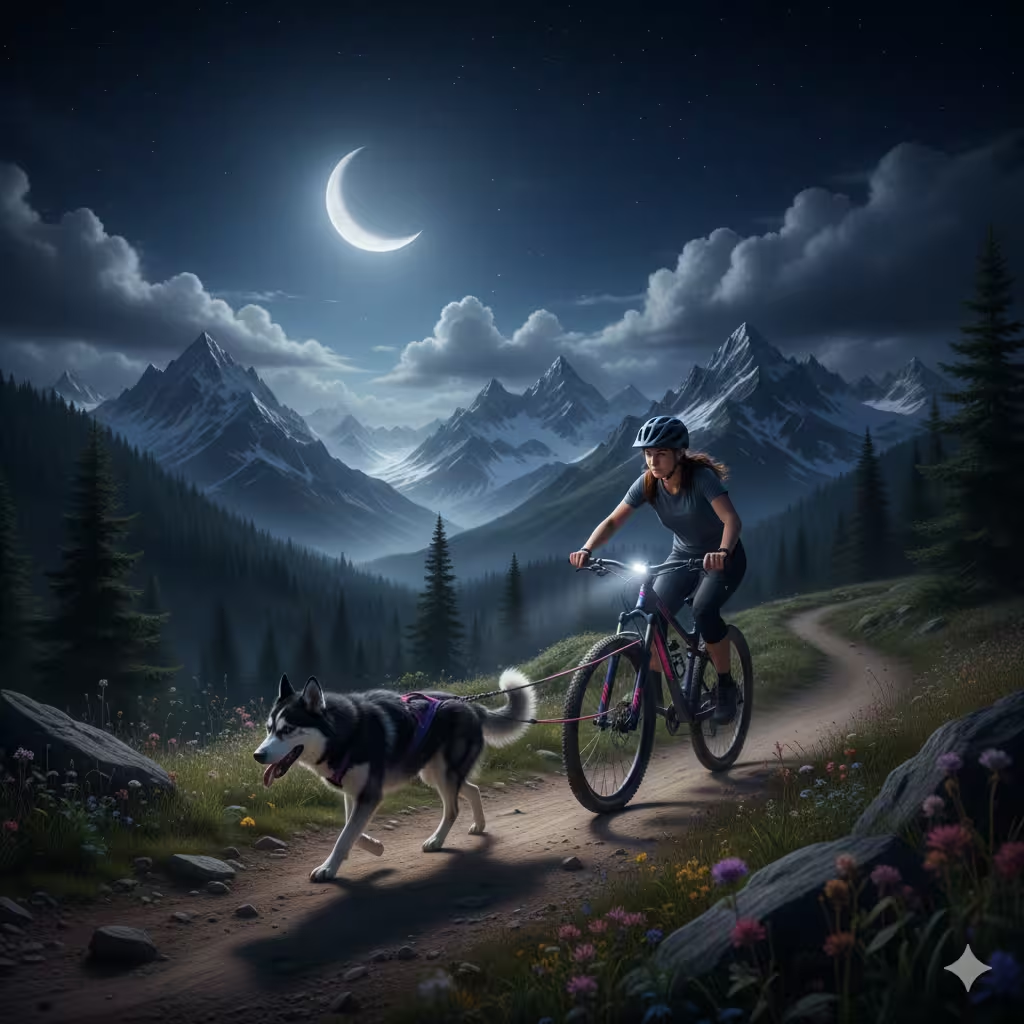
Your first runs should be on wide, flat, and quiet paths without traffic. Avoid crowded areas, technical single-track trails, and routes with sharp turns. Preview the route for potential hazards like potholes, glass, or other obstacles.
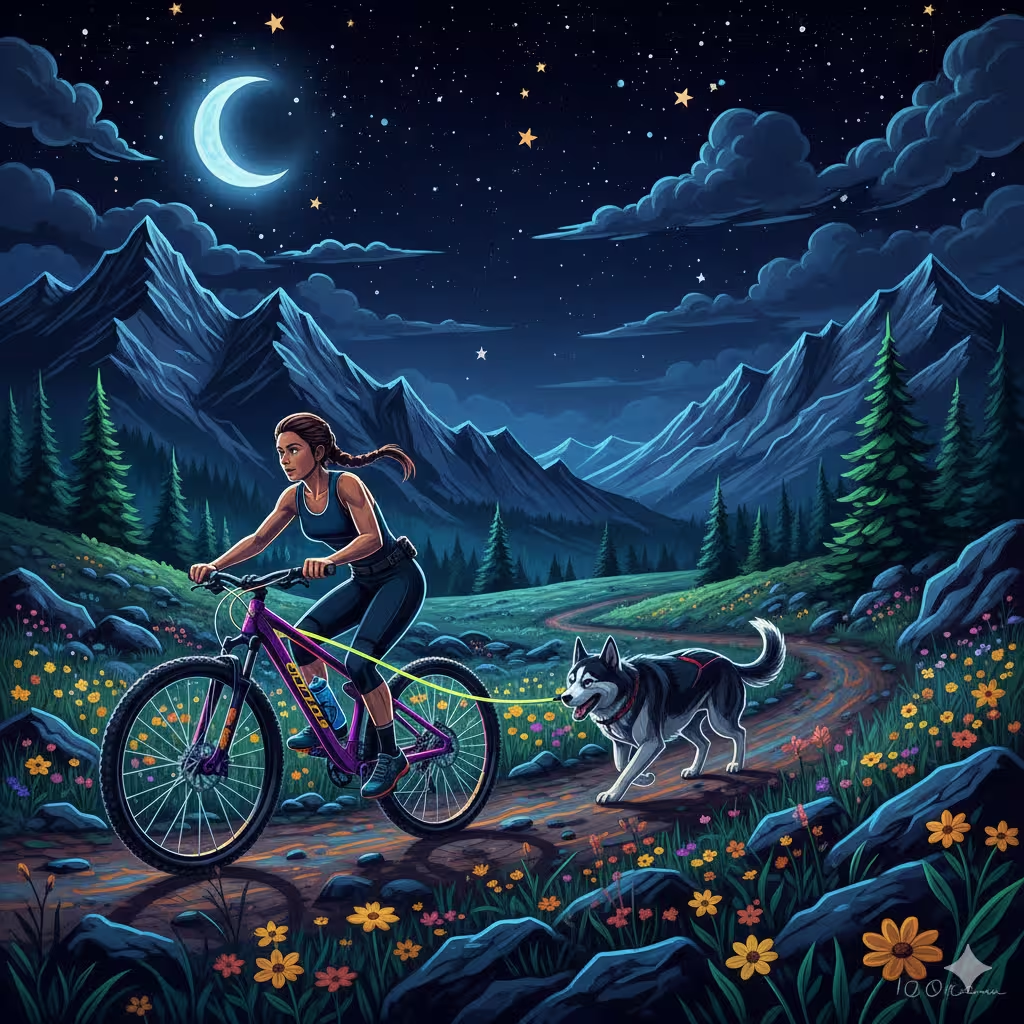
Dogs overheat quickly, especially while working. Always check the temperature and humidity. Never bikejor in hot weather. If it’s too warm for you to run comfortably, it’s too hot for your dog to work. Heat safety for dogs is paramount.
Trail Etiquette
When you’re out bikejoring with a dog, you are sharing the trail with others. Always be a good trail citizen. Your dog must be under control at all times. A good way to handle unexpected interactions is by using environmental control and moving off the path to allow others to pass. When approaching others, slow down, give a verbal warning, and keep your dog close to you. This is especially important for interactions with families. Teaching your dog calm behavior around children is crucial, as is understanding how to teach a puppy to be gentle with kids and other people. Your trail etiquette for dog sports will be an example for others.
How to Start Bikejoring with a Dog (Step-by-Step)
This is a marathon, not a sprint. Take your time, focus on foundation skills, and build slowly. The goal is to build a confident, strong, and safe partner for bikejoring with a dog.
Bikejoring Safety Checklist
- Always check the temperature and humidity.
- Hydrate your dog before, during, and after runs.
- Inspect all gear before each use.
- Start with short, easy routes.
- Always be aware of your surroundings.
- Give your dog breaks and praise.
Estimated Time & Cost: Initial setup can cost anywhere from $200–$600+ for quality gear. Training time varies greatly but can take several weeks or months of consistent, short sessions to build a solid foundation. This is a journey, not a destination.
Step 1: The Gear Up
Attach the antenna to your bike’s front fork or headset. Connect the bungee line to the antenna and your dog’s harness. Check all connections and buckles. Double-check that your helmet is secure and your brakes are working. This pre-ride checklist is key.
Why Bikejoring with a Dog Works
The success of bikejoring with a dog isn’t magic—it’s based on solid learning theory. It’s a sport that builds on your dog’s natural instincts and uses a framework of positive reinforcement and behavioral science.
The Scientific Framework
This training leverages principles of operant conditioning, where behaviors that are followed by a positive consequence (like forward movement or a reward) are more likely to be repeated. Your dog learns that pulling is rewarding because it leads to the exhilarating experience of a run. You are essentially using positive reinforcement to shape the desired behavior of pulling.
By rewarding your dog for even small steps in the right direction, you are using shaping in dog training to build the full behavior. Over time, your dog learns that forward momentum is the best reward.
Enrichment and Threshold Management
Bikejoring offers a powerful form of physical and mental dog enrichment activities, allowing your dog to fulfill their natural urge to run and work. It’s a fantastic outlet for pent-up energy. When dogs become overly excited or anxious, they may cross a behavioral threshold. Understanding threshold management in dog training is key, especially when you’re bikejoring with a dog.
For example, if your dog is getting too excited and starts to misbehave, you can stop and take a moment to allow them to calm down and get back below their threshold before continuing.
Troubleshooting
Every team hits a snag. Here are common issues and how to fix them.
Troubleshooting — open for issues and fixes ▼
Dog won’t pull or gets distracted ▼
This is often a lack of motivation or confidence. Start with shorter distances, use high-value treats and praise, and train in a quiet area. You can also have a partner run ahead to encourage forward movement. Some dogs, like a puppy scared of everything, will need extra time and patience to build their confidence. Remember to make it a fun game, not a chore.
Side pull or line tangles ▼
A dog pulling to the side or not in a straight line can be a common issue. This is usually corrected with consistent verbal cues and by keeping forward momentum. Ensure your harness fits properly. In some cases, this can be a sign that the dog is distracted or lacks confidence in their role. If your dog isn’t used to a harness or a long line, start by letting them get used to wearing the harness and running alongside you before introducing the bike.
Sudden stop/refuses to move ▼
A sudden refusal to move can indicate several things: fatigue, discomfort, or an environmental factor (like a squirrel!). Never force your dog. If your dog suddenly stops, first check them for any signs of injury or discomfort. If they are fine, try to gently encourage them forward with a high-value treat and praise. It could also be that they are overstimulated or are not comfortable with the noise of the bike. Start with shorter, more manageable sessions. Think of this in the same way you would help a new puppy adjust to your home—you wouldn’t rush them; you’d give them time and space.
Handling people, kids, and other dogs on the trail ▼
This is where your training pays off. The “On-By” command is your best friend. As you approach a distraction, give a clear “On-By” cue and use a high-value reward for keeping focus. If the distraction is too high, it’s a good idea to slow down or even stop and pull off the trail to allow them to pass. This reinforces that you are in control and your dog does not need to react. This is a key part of your urban bikejoring strategy.
When to stop or adjust your run ▼
Your dog’s body language is the best indicator. Watch for signs of fatigue: excessive panting, lagging behind, or a lack of enthusiasm. Never push your dog past their limits. If you see these signs, it’s time to take a break or end the session. It’s always better to end a run with your dog wanting more than to push them to the point of exhaustion or injury. Safety is the most important part of bikejoring with a dog.
FAQ
Frequently Asked Questions — open for answers ▼
Can I bikejor with a small dog? ▼
Generally, no. Bikejoring requires significant pulling power to move both the bike and the rider. It’s too high-impact for small dogs, whose joints and skeletal structure can be easily damaged by the force. Canicross or urban dog mushing on foot is a much better option for smaller breeds.
What are the key bikejoring commands? ▼
The most common bikejoring commands are “Hike!” (start/go), “Whoa” (stop), “Gee” (turn right), “Haw” (turn left), and “On-By” (pass a distraction). Consistency is key to training your dog on these commands. Learning these commands is a cornerstone of safe bikejoring with a dog.
Can I bikejor with a retractable leash? ▼
Absolutely not. Retractable leashes are dangerous for this sport. They lack the necessary bungee component to absorb shock, and they can easily snap or malfunction under the pressure of your dog’s pull, leading to serious injury for both of you.
How fast can you go when bikejoring with a dog? ▼
Speed depends on your dog’s breed, fitness, and enthusiasm. Speeds can easily reach 15–20 mph (24–32 km/h) or more, making proper braking and control absolutely critical. This is why bikejoring with a dog is considered an advanced sport.
Is bikejoring with a dog safe? ▼
When done correctly with the right gear, training, and a focus on safety, bikejoring can be very safe. The biggest risks come from improper equipment, lack of training, or neglecting safety measures like heat management. Always prioritize your dog’s well-being above all else.
Conclusion: Next Steps
Bikejoring with a dog is a uniquely rewarding activity that strengthens your bond and provides an incredible physical and mental outlet. It’s a high-speed adventure, a powerful workout, and a masterclass in teamwork. Starting slow, prioritizing safety, and using positive, reward-based training will set you up for success. The trail is waiting, and with the right approach, you and your dog can conquer it together.
Ready to discover more ways to enrich your dog’s life? Explore our interactive enrichment hub for fresh ideas and activities to keep your dog happy and engaged. Get started by clicking here: Dog Enrichment Hub.

Christopher Quinn adopted his first dog, Loki, a spirited Border Collie/Jack Russell mix, after exiting Army service in the summer of 2012. That experience sparked a lifelong passion for canine behavior and positive reinforcement training.
He studied Principles of Dog Training & Behavior at Penn Foster and has since worked with hundreds of dogs from all backgrounds. Over the past two years, Christopher has fostered more than 30 rescue dogs, giving each one a chance at a better life.
Today, he continues to write, teach, and share insights on humane dog training, blending hands-on experience with a decade of dedicated study.