

Welcome to the our complete puppy training guide for new dog owners!
If you’ve just brought home your first puppy and feel overwhelmed by conflicting training advice, you’re in the right place.
This complete puppy training guide for new dog owners will walk you through every fundamental skill your puppy needs to learn in their first 8 weeks home, using proven positive reinforcement methods that build trust while achieving reliable results.
Training a new puppy doesn’t have to be stressful or confusing. With the right approach and realistic expectations, most new dog owners can master the fundamentals and see dramatic improvements in just a few weeks. The key is understanding what to teach when, and how to communicate clearly with your puppy using methods that strengthen your bond rather than damage it.
Why Positive Reinforcement Is the Foundation of All Effective Puppy Training
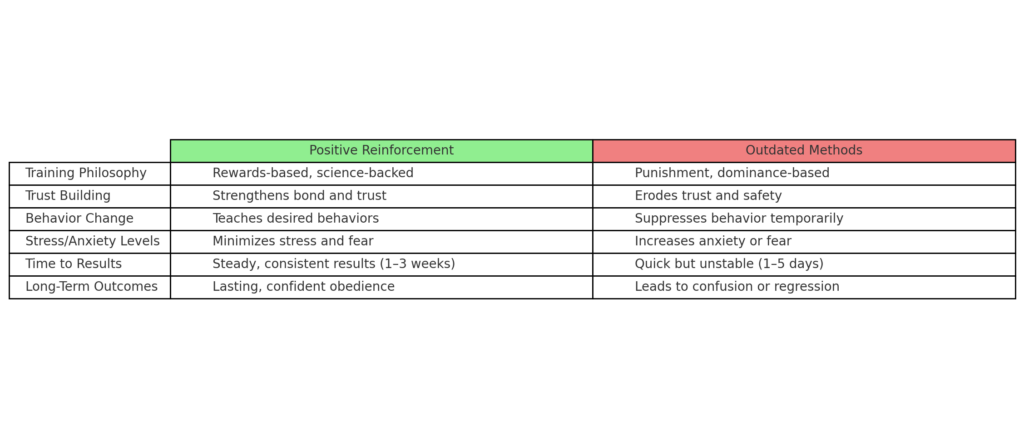
Before diving into specific training protocols, it’s crucial to understand why positive reinforcement forms the backbone of modern dog training. Unlike outdated dominance-based methods that can damage your puppy’s trust and confidence, positive reinforcement puppy training works by rewarding desired behaviors, making your puppy eager to repeat them.
The science is clear: dogs learn faster, retain information longer, and develop stronger bonds with their owners when training focuses on positive outcomes rather than corrections or punishment. This approach is particularly important during the puppy stage when your dog’s brain is rapidly developing and forming lasting associations about the world around them.
Positive reinforcement doesn’t mean being permissive or allowing unwanted behaviors. Instead, it means being strategic about what you reward and when, while redirecting or managing unwanted behaviors without creating fear or anxiety. This foundation will serve you well as we explore each aspect of puppy training.
Week 1-2: Foundation Training for New Puppy Owners
📅 8-Week Puppy Training Overview
- Week 1: Bonding & Name Recognition
- Week 2: Crate Comfort & Potty Routine
- Week 3: Sit & Come Commands
- Week 4: Loose Leash Training
- Week 5: Stay & Leave It
- Week 6: Socialization Focus
- Week 7: Distraction Training
- Week 8: Reliable Obedience & Review
Now that you understand why positive reinforcement forms the foundation of our complete puppy training guide for new dog owners, let’s dive into the week-by-week training timeline.
The Socialization Period (3-14 weeks) is perhaps the most crucial window for shaping your puppy’s future temperament. During this time, positive experiences with people, animals, sounds, and environments will help prevent fear-based behaviors later in life. While you may not have your puppy for the entire socialization period, every moment counts.
Understanding your puppy’s developmental stages is essential for timing your training efforts effectively. According to the American Kennel Club, puppies go through several critical developmental periods that directly impact their learning capacity and social development. The socialization period (3-14 weeks) is particularly crucial for shaping your puppy’s future temperament.
The Fear Period (8-11 weeks) overlaps with early socialization and requires careful attention. Traumatic experiences during this time can have lasting effects, which is why gentle, positive training methods are non-negotiable.
The Juvenile Period (12 weeks to sexual maturity) is when most formal training takes place. Your puppy’s attention span is increasing, but they’re still highly impressionable and responsive to positive reinforcement.
Understanding these stages helps explain why some training challenges are normal and temporary, while others require immediate attention. It also reinforces why starting with positive methods from day one sets the foundation for lifelong success.
Mastering Puppy Potty Training: From Accidents to Reliability
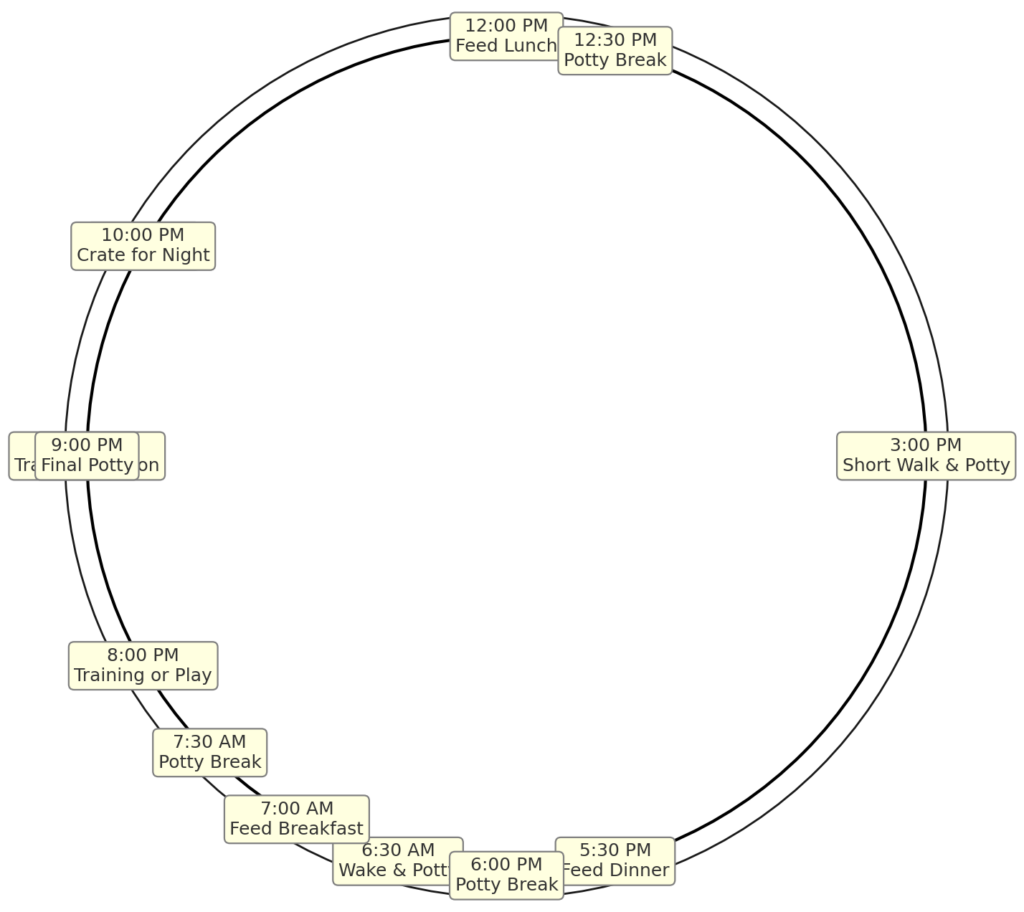
Potty training is often the first major training challenge new puppy parents face, and it’s where many people make critical mistakes that prolong the process. The key to successful potty training lies in understanding your puppy’s natural instincts and working with them, not against them.
Puppy potty training using gentle methods focuses on prevention, consistency, and positive reinforcement rather than punishment for accidents. Puppies naturally want to keep their sleeping and eating areas clean, but they need clear guidance about where the appropriate bathroom areas are located.
The foundation of potty training success is establishing a consistent routine. Puppies need to eliminate after eating, drinking, sleeping, and playing. By taking your puppy outside during these predictable times and rewarding successful outdoor elimination, you’re teaching them that outside is the preferred location.
For apartment dwellers or those with limited outdoor access, indoor puppy potty training methods can provide solutions that don’t compromise the training process. The key is maintaining consistency in your chosen method rather than switching between indoor and outdoor options, which can confuse your puppy.
Management is equally important as active training. When you can’t supervise your puppy directly, confining them to a appropriately-sized space prevents accidents and reinforces their natural desire to keep their immediate area clean. This is where crate training becomes an invaluable tool.
Crate Training: Creating Your Puppy’s Safe Haven
🚀 Crate Training in 5 Simple Steps
- Introduce the Crate: Leave it open in a quiet area with a comfy bed and toy. Let your puppy explore freely.
- Feed Inside: Offer meals near or inside to create positive associations.
- Short Sessions: Encourage brief naps inside. Gradually close the door for short periods.
- Ignore Whining: Only open the crate when your puppy is calm—don’t reward fussing.
- Use at Night: Keep the crate near your bed. Comfort them with a soft voice or touch.
Crate training is far more than a house training tool—it’s about creating a safe, comfortable space where your puppy can rest, decompress, and feel secure. When introduced properly, the crate becomes your puppy’s bedroom, not a punishment area.
Crate training a puppy at night addresses one of the most challenging aspects for new puppy parents: getting through those first few weeks of sleep disruption. The key is making the crate a positive space from day one through careful introduction and positive associations.
Start by feeding your puppy meals in the crate with the door open. Toss treats inside randomly throughout the day. Place comfortable bedding and a favorite toy inside. These positive associations help your puppy view the crate as their special place rather than confinement.
The sizing of your crate is crucial for potty training success. Your puppy should have enough room to stand, turn around, and lie down comfortably, but not so much space that they can eliminate in one corner and sleep in another. For growing puppies, consider a crate with a divider that allows you to adjust the space as they grow.
Nighttime crate training requires patience and realistic expectations. Young puppies may need one or two bathroom breaks during the night initially. Rather than viewing this as a setback, see it as part of the natural progression toward full bladder control.
As we progress through this complete puppy training guide for new dog owners, Week 3-4 focuses on essential commands that provide immediate safety and management benefits.
Week 3-4: Essential Commands Every New Dog Owner Must Teach
While formal obedience training can wait until your puppy has settled into your home, certain basic commands provide immediate safety and management benefits. These foundational skills also establish the communication patterns that will serve you throughout your dog’s life.
“Sit” – The Gateway Command
Teaching sit is often the easiest command for puppies to learn because it’s a natural behavior. Use a treat to lure your puppy’s nose upward, which naturally causes their bottom to lower. The moment they sit, mark the behavior with “yes” or a clicker and reward. Practice this several times daily during natural interactions.
“Stay” – Building Self-Control
Teaching your puppy to stay develops impulse control and patience. Start with very short durations (just a second or two) and gradually increase the time as your puppy succeeds. This command is invaluable for safety situations and daily management.
“Come” – The Most Important Safety Command
A reliable recall can literally save your puppy’s life. Start practicing in a small, enclosed area with high-value treats. Make coming to you the best thing that can happen to your puppy by using enthusiastic praise and excellent rewards. Never call your puppy to come for something they perceive as negative.
🔍 Real-Life Snapshot: Scout’s First Walk
Scout was a bold little rescue pup, full of curiosity—until the first time he encountered a skateboard.
The sound sent him lunging backward, tail tucked, barking uncontrollably. Instead of pulling or yelling, his foster paused and crouched low, gently rewarding any calm glance toward the noise.
Within minutes, Scout sat beside her again. The fear didn’t vanish, but trust had formed.
This is the power of positive socialization: progress over perfection.
“Leave It” – Preventing Problem Behaviors
Teaching “leave it” helps manage your puppy’s natural curiosity about inappropriate items. This command is essential for safety and saves countless items from puppy teeth. Start with low-value items and gradually work up to more tempting distractions.
“Place” – Creating Calm Behavior
Teaching your puppy to go to place provides a structured way to manage their energy and create calm moments throughout the day. This command is particularly useful when guests arrive or during family meals.
Understanding and Preventing Common Puppy Behavioral Issues
Prevention is always easier than correction when it comes to puppy behaviors. Understanding why puppies engage in certain behaviors helps you address the underlying needs rather than just suppressing symptoms.
Puppy Biting and Mouthing
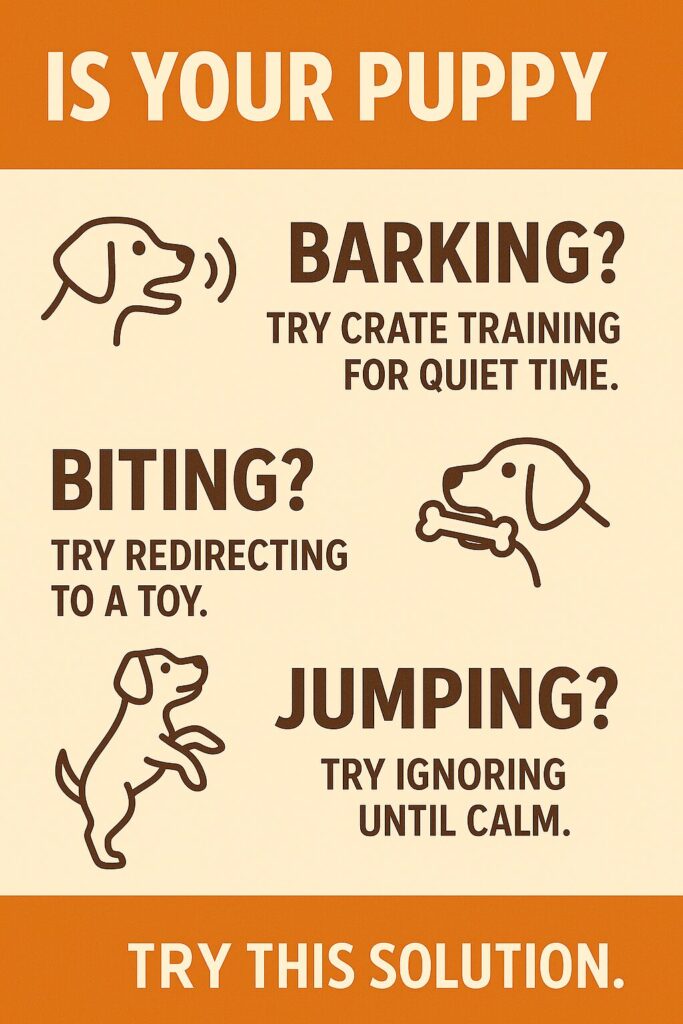
All puppies go through a biting phase as they explore their world and learn bite inhibition from their littermates and mother. When they come to your home, you become responsible for continuing this education. Redirect biting to appropriate toys, provide plenty of mental stimulation, and ensure your puppy gets adequate rest.
Excessive Barking
While some barking is normal communication, excessive barking can indicate boredom, anxiety, or overstimulation. Stopping barking at strangers requires understanding what triggers the behavior and teaching alternative responses through positive reinforcement.
Destructive Chewing
Puppies need to chew—it’s how they explore and relieve teething discomfort. Provide appropriate chew toys, manage their environment to prevent access to inappropriate items, and ensure they get enough physical and mental exercise.
Jumping on People
Jumping is a natural greeting behavior that becomes problematic as dogs grow larger. Teach your puppy that sitting gets attention while jumping gets ignored. Consistency from all family members and visitors is crucial for success.
The Science Behind Effective Puppy Training Methods
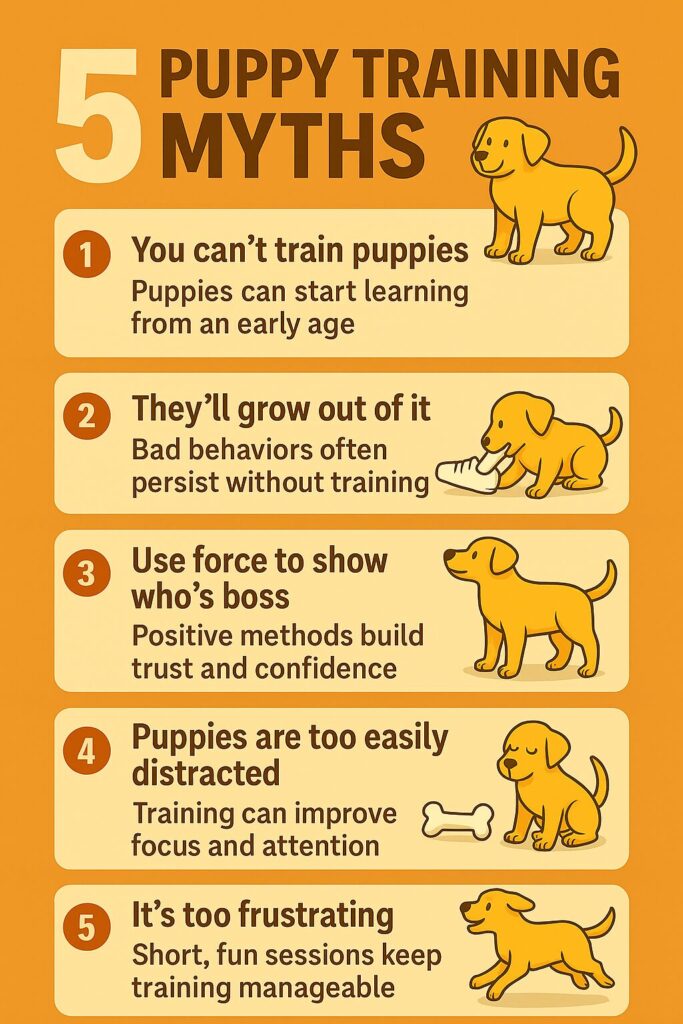
Modern puppy training is based on decades of research in animal behavior and learning theory. Understanding these principles helps you become a more effective trainer and explains why certain methods work better than others.
Classical Conditioning in Puppy Training
Classical conditioning helps your puppy form positive associations with new experiences. By pairing neutral or slightly scary stimuli with excellent things (like treats), you can help your puppy develop confidence and positive emotions about their environment.
Operant Conditioning and Timing
The timing of your rewards and markers is crucial for clear communication. Dogs learn through immediate consequences, so marking the exact moment your puppy performs the desired behavior helps them understand what earned the reward.
🐾 Snapshot: Luna and the Fire Truck
Luna, a gentle Goldendoodle, loved meeting people—but city noises terrified her. One day, a fire truck roared by just as her owner offered a treat near the curb.
Instead of fleeing, Luna glanced back nervously—then took the treat. Her owner smiled and whispered, “Brave girl.”
It took weeks of practice, but by introducing loud sounds slowly and pairing them with comfort, Luna learned to walk confidently—even when sirens blared.
The Power of Clicker Training
Clicker training for dogs provides precise communication that accelerates learning. The clicker marks the exact moment your puppy does something right, followed by a reward. This precision helps puppies understand exactly what behavior you want to see repeated.
Capturing Natural Behaviors
Capturing in dog training involves rewarding behaviors your puppy naturally offers. This method is particularly effective for shy or sensitive puppies who might be hesitant about more active training approaches.
Shaping Complex Behaviors
Shaping in dog training allows you to teach complex behaviors by breaking them down into small, achievable steps. This method builds confidence and maintains motivation by ensuring your puppy experiences frequent success.
Socialization: The Foundation of a Confident Adult Dog
Proper socialization represents a critical component of any complete puppy training guide for new dog owners, yet it’s often the most misunderstood aspect of puppy development.
How to socialize a dog properly involves careful exposure to new experiences at a pace your puppy can handle. The goal is building confidence, not overwhelming your puppy with too much too quickly.
Quality matters more than quantity in socialization. One positive interaction with a friendly, well-behaved dog is worth more than ten chaotic encounters that stress your puppy. Focus on creating successful experiences rather than checking items off a socialization list.
Environmental socialization is equally important as social encounters. Your puppy needs positive experiences with various surfaces, sounds, objects, and situations they’ll encounter as an adult dog. Car rides, grooming procedures, handling exercises, and urban environments all require gradual, positive introduction.
The critical period for socialization ends around 14 weeks, but socialization continues throughout your dog’s life. Ongoing positive experiences help maintain the confidence built during puppyhood and can help address fears that may develop later.
Addressing Special Circumstances and Challenges

A truly complete puppy training guide for new dog owners must address the unique challenges that some puppies face, requiring modified training approaches for optimal success.
Fearful or Shy Puppies
Some puppies are naturally more cautious or may have had limited early socialization. These puppies benefit from slower-paced training with extra emphasis on building confidence. Force or pressure will backfire with fearful puppies, making patience and positive associations even more critical.
High-Energy Puppies Breeds with high energy requirements need adequate physical and mental stimulation before they can focus on training. Incorporating play and movement into training sessions keeps these puppies engaged while burning excess energy.
Rescue Puppies with Unknown Backgrounds Puppies from rescue situations may have gaps in their early socialization or traumatic experiences. These puppies often need extra time and patience to build trust. Focus on creating positive associations with your presence and the training process itself.
Multi-Pet Households
Training a puppy when you have other pets requires additional management and consideration. Existing pets may need breaks from puppy energy, and training sessions may need to occur separately initially to prevent distraction or competition.
Creating a Training Schedule That Works for Your Lifestyle
Consistency is more important than intensity in puppy training. Short, frequent training sessions throughout the day are more effective than long, infrequent sessions that tire your puppy’s developing attention span.
Creating a sustainable training routine is essential to the success of this complete puppy training guide for new dog owners.
📍 Real-Life Snapshot: Finn’s Training Journal Discovery
Finn, a 12-week-old Labrador pup, struggled to focus during afternoon training. His owners grew frustrated—until they began keeping a training log. Over a week, they noticed Finn performed best in the early morning after a short walk and breakfast.
Once sessions were shifted to his natural “golden window,” progress skyrocketed. Sit, stay, and even loose-leash walking became smoother—proving that tracking patterns can transform training success.
Daily Training Structure
Incorporate training into your daily routine rather than viewing it as a separate activity. Practice sit before meals, work on stay during grooming, and use walks as opportunities for leash training and socialization.
Age-Appropriate Expectations
Young puppies have limited attention spans and physical stamina. Keep training sessions short (5-10 minutes) and end on a positive note. As your puppy matures, you can gradually increase session length and complexity.
Tracking Progress
Keep a simple training log to track your puppy’s progress and identify patterns. Note which times of day your puppy is most receptive to training and which rewards motivate them most effectively.
Building Long-Term Training Success
The habits you establish during puppyhood with your complete puppy training guide for new dog owners will influence your dog’s behavior for life. Focus on building a foundation of trust, communication, and positive associations that will serve you well as your puppy grows into an adult dog.
Consistency Across Family Members
Everyone in your household should use the same commands and reward the same behaviors. Mixed messages confuse puppies and slow training progress. Take time to ensure all family members understand and can implement your training protocols.
Patience and Realistic Expectations
Puppy training is a process, not a destination. Some skills will come quickly while others require weeks or months of consistent practice. Celebrate small victories and remember that setbacks are normal parts of the learning process.
Professional Support When Needed
Don’t hesitate to seek professional help if you encounter challenges beyond your experience level. A qualified positive reinforcement trainer can provide personalized guidance and help you troubleshoot specific issues.
Watch the video above by Miss Marci Media, which covers core positive reinforcement puppy training techniques in a clear, beginner-friendly style!
Take Command of Your Puppy’s Future
The investment you make in training during your puppy’s first few months will pay dividends throughout their life. By focusing on positive reinforcement methods, understanding your puppy’s developmental needs, and maintaining consistency in your approach, you’re setting the foundation for a well-behaved, confident adult dog.
Remember that every puppy learns at their own pace, and what works for one may need modification for another. The key is maintaining patience, celebrating progress, and always prioritizing your puppy’s emotional well-being alongside their training goals.
This complete puppy training guide for new dog owners provides everything you need to transform your puppy into a well-behaved family member. The 8-week framework gives you realistic timelines and measurable milestones, while the positive reinforcement methods ensure you build a strong relationship with your new dog from day one.
For ongoing support and advanced training techniques, explore our comprehensive library of training resources designed to help you and your puppy succeed together. The time you invest now in building a strong foundation will reward you with years of joy and companionship with your well-trained dog.