
How to Build a DIY Dog Bottle Foraging Rack: An Advanced Guide
Turn plastic bottles into a powerful brain game. This guide provides an expert, step-by-step protocol to build a **DIY dog bottle foraging rack**—an advanced enrichment toy that challenges problem-solving skills and satisfies natural instincts.
Start Building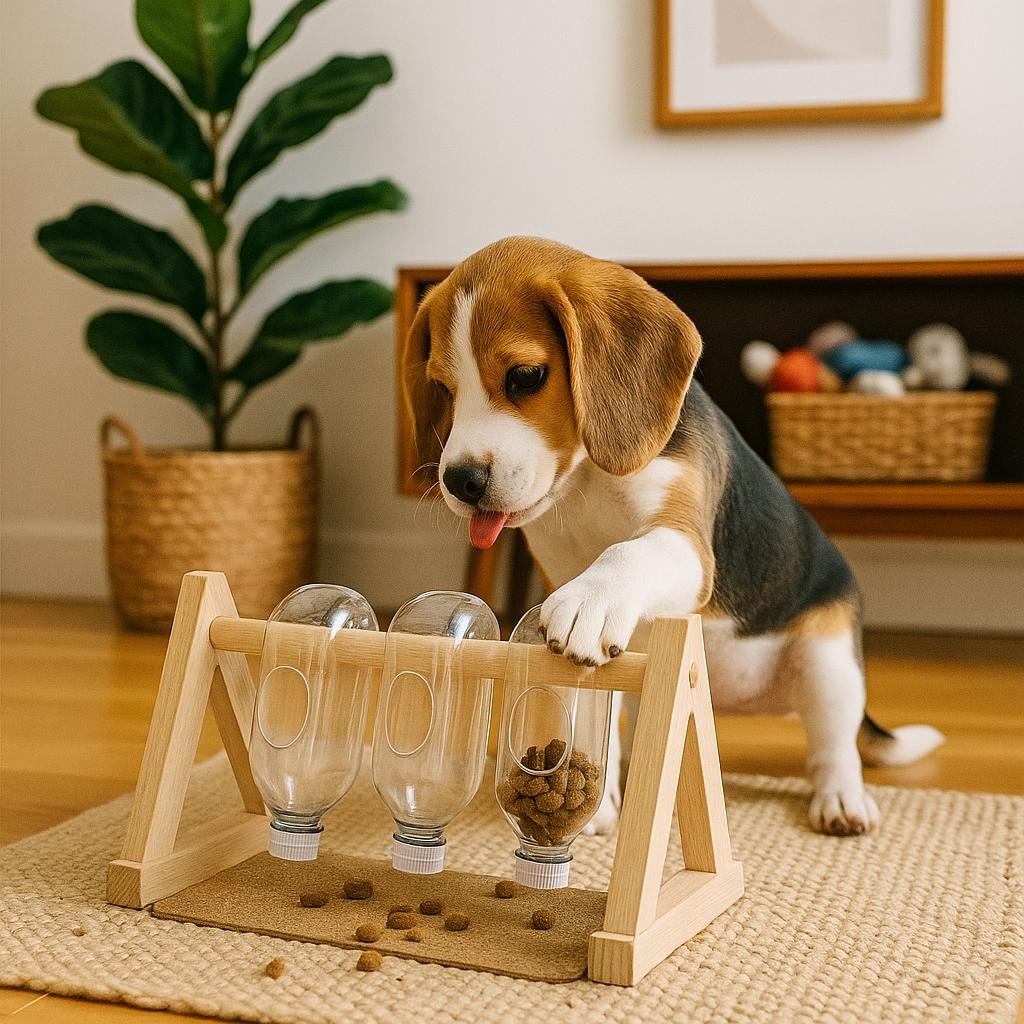
How-To: The Bottle Rack Protocol
This project is straightforward but requires careful attention to safety. Follow these steps for a successful build and introduction.
Session Quick-Look
- Time Required: 15-20 minutes for setup, 8-10 minutes per session.
- Materials: Dowel/rod rack (e.g., small wine rack), 2-3 empty plastic bottles, kibble.
- Supervision: Mandatory. This is a puzzle, not a chew toy.
Step-by-Step Build & Introduction
- Prepare the Bottles: Carefully cut several kibble-sized holes into the sides of each bottle. Crucially, ensure all cut edges are smooth. You can use a lighter to briefly melt and smooth the plastic edges or sand them down. This is a vital part of environmental management to ensure safety.
- Assemble the Rack: Slide the dowel rod through the bottles so they can spin freely. If needed, drill holes through the center of the bottles. Fill with a small amount of your dog’s food.
- Introduce the Concept: Place the rack on the floor. Let your dog investigate. If they’re hesitant, gently spin a bottle yourself to show them food comes out. Reward any sniffing or interaction. This initial process is a form of shaping their behavior toward the solution.
- Manage the Introduction: For a puppy that’s scared of new things, introduce the rack without bottles first. Then add bottles without food. Go slow and work under their comfort thresholds.
Why It Works: The Behavioral Science
The DIY dog bottle foraging rack is more than a toy; it’s an exercise in cognitive problem-solving. Here’s the science behind its effectiveness:
- Operant Conditioning: The dog learns a clear contingency: “If I spin the bottle, I get food.” This action-reward loop is the core of operant conditioning.
- Contrafreeloading: This is the innate tendency for animals to choose to work for their food even when an identical free meal is available. This puzzle directly satisfies that drive.
- Problem-Solving & Confidence: Successfully solving the puzzle builds confidence and resilience. It’s a key part of a well-rounded plan of canine enrichment activities.
Enrichment Value Breakdown
This puzzle targets multiple dimensions of your dog’s intelligence. Hover over or tap the bars below to see the contribution of each skill.
Troubleshooting & Fixes
Frequently Asked Questions

Christopher Quinn adopted his first dog, Loki, a spirited Border Collie/Jack Russell mix, after exiting Army service in the summer of 2012. That experience sparked a lifelong passion for canine behavior and positive reinforcement training.
He studied Principles of Dog Training & Behavior at Penn Foster and has since worked with hundreds of dogs from all backgrounds. Over the past two years, Christopher has fostered more than 30 rescue dogs, giving each one a chance at a better life.
Today, he continues to write, teach, and share insights on humane dog training, blending hands-on experience with a decade of dedicated study.