
The Ultimate Food Art Lick Board Guide
Transform mealtime into a masterpiece! Learn how to create a beautiful, engaging, and calming Food Art Lick Board for Dogs—the perfect enrichment activity for any dog.
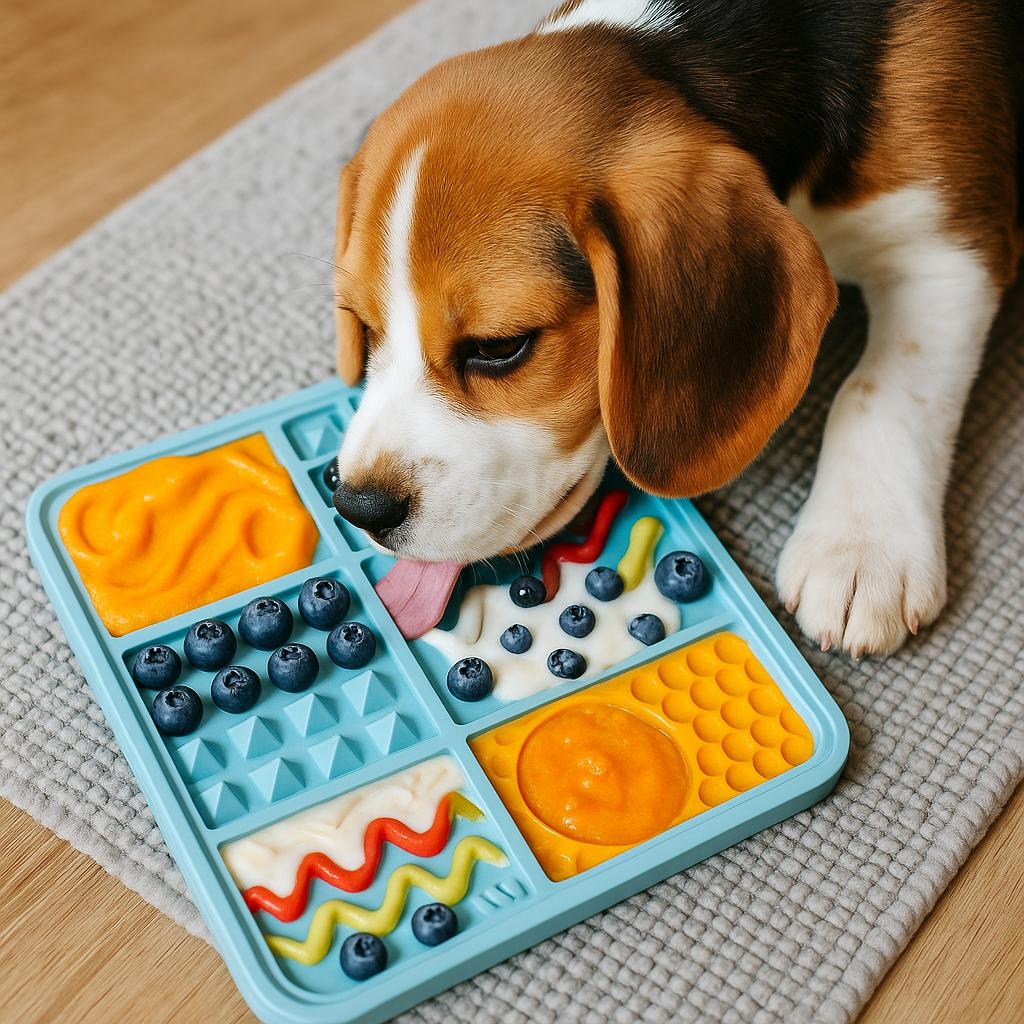
Table of Contents
What’s a Food Art Lick Board for Dogs?
A Food Art Lick Board is more than just a snack—it’s one of the most versatile dog enrichment activities you can offer. It takes a standard silicone lick mat and turns it into an edible canvas. By spreading, swirling, and stenciling various dog-safe foods, you create an engaging puzzle that encourages the natural behavior of licking. This simple act provides immense mental stimulation, helps reduce anxiety, and turns a quick treat into a long-lasting, calming experience.
The Science: Why Licking Equals Calm
The magic of a lick board lies in its ability to soothe the canine nervous system. The repetitive motion of licking releases endorphins, which are natural “feel-good” chemicals in a dog’s brain. This process has several key benefits:
- Reduces Stress: Licking is a self-soothing behavior. It can lower a dog’s heart rate and promote relaxation in stressful situations, making it a powerful tool for managing anxiety thresholds.
- Combats Boredom: It provides a focused “job” for your dog, channeling their mental energy into a productive and rewarding task.
- Slows Down Eating: For dogs who inhale their food, a lick board forces them to slow down, which can aid digestion and prevent bloating.
This is a perfect example of positive reinforcement in action: the calming behavior of licking is immediately rewarded by the delicious food, encouraging the dog to continue the soothing activity.
How-To: Your First Masterpiece in 5 Minutes
Creating your first Food Art Lick Board for Dogs is simple. You don’t need to be an artist to make something your dog will love.
Step 1: Choose Your Canvas & Paints
Start with a silicone lick mat and 2-3 dog-safe “paints” from the list below. Think about a spreadable base, a colorful accent, and a textured topper.
Step 2: Composition 101
- Spread Your Base: Use a spatula to spread a thin layer of your base (like yogurt or pumpkin) across the entire mat.
- Add Accents: Use the back of a spoon to create swirls or dots with your accent color (like mashed berries or sardine paste).
- Sprinkle a Topper: Finish by sprinkling something small, like crushed kibble, seeds (chia or flax), or dried parsley over the top for added texture.
Step 3: Serve or Freeze
For a quick treat, serve it immediately. For a longer-lasting challenge, freeze the board for at least 30 minutes. Always supervise your dog, especially the first few times.
Safety First, Chef!
Only use foods you know are safe for dogs. Avoid xylitol (often in peanut butter), chocolate, grapes, raisins, onions, garlic, and macadamia nuts. When in doubt, ask your vet. This is especially important when introducing new foods to a newly adopted puppy or dog.Pantry Paints: Your Dog-Safe Color Palette
Mix and match these ingredients to create endless combinations. Aim for a variety of textures and flavors.
- Bases (Spreadable): Plain Greek yogurt, kefir, pumpkin purée, mashed sweet potato, unsweetened applesauce, wet dog food.
- Accents (Flavorful): Xylitol-free peanut butter, cream cheese, mashed banana, sardine paste, puréed liver.
- Colors (Natural Dyes): Mashed blueberries (purple), turmeric powder (yellow, mix with yogurt), beet purée (pink), spirulina powder (green).
- Toppers (Textural): Crushed kibble, chia seeds, flax seeds, shredded carrots, chopped parsley.
Level Up the Challenge
As your dog becomes a pro, you can make the boards more challenging. This process of gradually increasing difficulty is known as shaping in dog training.
- Freeze It Solid: Freeze the board for 2+ hours for a serious, long-lasting puzzle.
- Use Complex Mats: Choose mats with deeper, more intricate grooves and patterns.
- Create Texture Layers: Freeze a smooth base layer first, then add a chunkier second layer on top.
- Pair with Training: Use the board to create positive associations with grooming, nail trims, or as a reward for settling on a mat.
How a Lick Board Promotes Calm
For All Paws: Puppies, Seniors & Sensitive Tummies
The Food Art Lick Board for Dogs is infinitely adaptable.
- Puppies: A fantastic puppy socialization tool! Use gentle, simple recipes and serve fresh or lightly frozen. It can also help teach kids how to interact calmly with the puppy.
- Seniors: Avoid freezing solid to be kind to older teeth. Focus on softer ingredients like goat milk kefir or meat-based baby food.
- Sensitive Stomachs: Stick to single-protein or limited-ingredient designs. Pumpkin and plain yogurt are often well-tolerated.
- Anxious Dogs: For a dog that is scared of everything, a lick board can be a predictable, soothing ritual that builds confidence.
Troubleshooting Tips
The Fix: Place the lick board on an easy-to-clean surface like a tile floor or inside a baking sheet with a rim. Freezing the board makes the food less likely to drip. For dogs with long ears or beards, use a snood to keep their fur clean.
The Fix: Increase the difficulty. Use a mat with more complex patterns, freeze it completely solid, and press the food firmly into the grooves. You can also embed larger, solid treats (like a blueberry or piece of kibble) into the spread, forcing them to work harder to get it out.
Frequently Asked Questions
You can offer a lick board 3-4 times a week, depending on the ingredients. Use it as a special tool for calming or during training. Be sure to account for the calories in your dog’s daily intake to maintain a healthy weight.
Both work well! Freezing the board for 30-60 minutes creates a longer-lasting challenge, perfect for hot days or extended calming sessions. Serving it fresh is great for a quick, less intense activity, and is often better for senior dogs or those with sensitive teeth.
If a dog bites the mat, it’s often a sign of frustration or that they don’t understand the ‘licking’ part yet. Supervise their first few sessions. Use a simpler, flatter mat and spread the food thinly so it’s easy to lick. If they start to bite, calmly remove the board for a minute before re-offering it. This is a key part of environmental management to teach appropriate behavior.

Christopher Quinn adopted his first dog, Loki, a spirited Border Collie/Jack Russell mix, after exiting Army service in the summer of 2012. That experience sparked a lifelong passion for canine behavior and positive reinforcement training.
He studied Principles of Dog Training & Behavior at Penn Foster and has since worked with hundreds of dogs from all backgrounds. Over the past two years, Christopher has fostered more than 30 rescue dogs, giving each one a chance at a better life.
Today, he continues to write, teach, and share insights on humane dog training, blending hands-on experience with a decade of dedicated study.