
The Ultimate Guide to Frozen Carrot Dog Chews
A complete, vet-friendly walkthrough for using frozen carrots as a low-calorie enrichment activity that supports dental health, teething relief, and calmer behavior—grounded in positive reinforcement training.
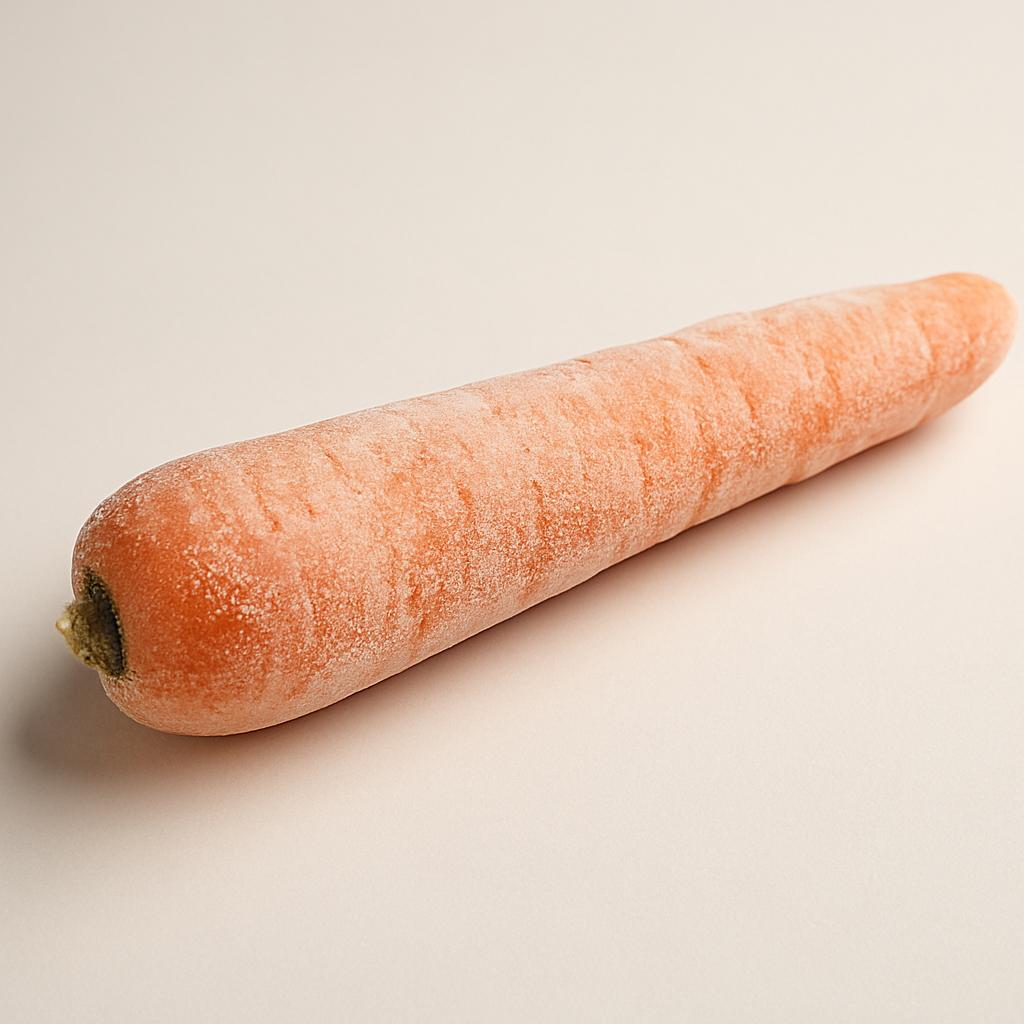
Frozen Carrot Chews (Vet-Approved How-To)
Why frozen carrot chews help dogs feel better and behave better
A whole, frozen carrot delivers friction for gentle plaque disruption, cold pressure for teething relief, and a satisfying outlet for natural chewing—all while staying remarkably low in calories. When you pair that outlet with positive reinforcement and clear criteria from operant conditioning in dog training, you reinforce quiet, relaxed behavior around novel objects and build confidence without confrontation.
For a nervous dog or a puppy that is cautious about new things, let the carrot exist in the space first, then mark curiosity with a treat—sniff, lick, or paw—before you ever ask for sustained chewing. Layer in variety via the PupCommand Enrichment HUD and rotate ideas from the dog enrichment activities guide to keep novelty predictable rather than overwhelming.
↑ Back to topKey benefits of a frozen carrot (interactive cards)
Natural dental helper
The firm, frozen texture increases mechanical abrasion as a dog gnaws. That scraping helps disrupt early plaque and supports gum health as a supplement—not a replacement—to daily brushing and professional care.
Teething relief for puppies
Cold pressure soothes inflamed gums while giving young dogs a clear outlet for biting. Pair the chew with brief, shaping-based sessions to reward calm handling and early household rules.
Calmer behavior through needs-based outlets
Chewing meets an innate need. When combined with dog training management and environmental control and smart threshold management, a carrot session lowers arousal without over-exciting the dog.
Low-calorie enrichment
Whole carrots are nutrient-dense yet light on calories. They are ideal for enrichment that respects the 10% treat rule and for households balancing training rewards with weight management.
Primary uses distribution
Distribute sessions across categories to avoid over-reliance on one outcome. Rotate ideas with the Enrichment HUD and log what works in your household.
↑ Back to topCalorie comparison: smarter swaps for daily enrichment
Use this tool with your training management plan to prevent “stealth calories.” Values are typical; always check labels and adjust for your dog’s size and activity.
For a 600 kcal/day dog, the 10% cap is ~60 kcal. A single large biscuit can consume most of that allowance; a frozen carrot leaves room for training treats.
Bully sticks vary widely (often 200–400+ kcal). Reserve for occasional use or split across days to keep your plan sustainable.
Step-by-step preparation guide
Start with one or two large, whole carrots. Wash thoroughly under cool water; peeling is optional because the skin contains useful fiber and texture. For medium and large dogs, freezing whole maximizes chewing time. For small breeds or sensitive mouths, split lengthwise so the profile sits comfortably on the molars.
- Select & wash: Choose a firm, straight carrot. Rinse and scrub; no peeling required.
- Freeze solid: Place the carrot in the freezer for 6–8 hours or overnight until fully solid.
- Serve on a mat: Present on a towel, washable mat, or outside to contain moisture and color.
- Supervise & swap: If large chunks break off, trade for a treat and remove the piece. Supervision is part of best practice in environmental control.
If you’re also working on manners with children, combine chew time with calm presence exercises from teaching a puppy to be gentle with kids and sprinkle in short reps from the Puppy Socialization Tool.
↑ Back to topShaping plan tracker: reinforce calm chewing
Use shaping to reward tiny slices of the final behavior and avoid flooding. Mark and treat for orientation to the carrot, gentle mouthing, and short bursts of relaxed chewing. Keep initial sessions brief and end while the dog is successful; this preserves motivation and builds momentum for the next rep.
For mechanics and timing, review shaping in dog training and foundations in Positive Reinforcement 101.
↑ Back to topTroubleshooting common issues
My dog ignores the carrot. How do I spark interest?
It gets messy fast.
My dog eats it too quickly.
Is this safe for a power chewer?
Frequently asked questions
Can dogs eat frozen carrots every day?
Are frozen carrots good for teeth?
Do I need to cook carrots before freezing?
What about baby carrots?
Looking for more calm-building routines? Explore the Enrichment HUD and rotate low-arousal ideas from the dog enrichment activities library.
↑ Back to top
Christopher Quinn adopted his first dog, Loki, a spirited Border Collie/Jack Russell mix, after exiting Army service in the summer of 2012. That experience sparked a lifelong passion for canine behavior and positive reinforcement training.
He studied Principles of Dog Training & Behavior at Penn Foster and has since worked with hundreds of dogs from all backgrounds. Over the past two years, Christopher has fostered more than 30 rescue dogs, giving each one a chance at a better life.
Today, he continues to write, teach, and share insights on humane dog training, blending hands-on experience with a decade of dedicated study.