
Learning how to socialize a dog properly is one of the most valuable investments you can make as a dog owner.
Whether you’re raising a new puppy or working with a rescued adult, proper socialization helps prevent fear, aggression, and anxiety—and builds the emotional foundation your dog needs to thrive in the world.
In this guide, you’ll learn exactly how to socialize a dog properly using science-backed methods and positive reinforcement techniques that create calm, confident canine companions.
What Does It Mean to Socialize a Dog Properly?
To socialize a dog properly means exposing them to a variety of people, animals, environments, sounds, and situations in a way that’s safe, gradual, and rewarding. The goal is to teach your dog that new experiences are not threatening—they’re interesting, manageable, and often fun.
Simply exposing a dog to lots of stimulation isn’t enough. If your dog feels overwhelmed or unsafe, the experience can backfire. That’s why knowing how to socialize a dog properly matters so much.
Why Proper Dog Socialization Is So Important
If you don’t know how to socialize a dog properly, your dog may develop:
- Fear of strangers, sounds, or new places
- Leash reactivity or barking
- Anxiety during vet visits or grooming
- Aggression toward dogs or people
- General nervousness or unpredictability
But when you do socialize a dog properly, you build:
- Confidence and curiosity
- Emotional resilience
- Trust in new situations
- A foundation for all future training
The American Kennel Club emphasizes that proper socialization creates well-adjusted dogs who can handle new experiences with confidence.
When to Socialize a Dog (Proper Timing Is Key)
🐶 Puppy Socialization: Start Early (3–16 Weeks)
If you’re wondering how to socialize a puppy properly, the most important window is between 3 and 16 weeks. This is when puppies are developmentally primed to form positive associations with the world.
Even before full vaccination, controlled and safe exposure can begin—especially inside your home or yard, with visitors, sounds, and friendly adult dogs.
For new dog owners just starting their journey, our complete puppy training guide for new dog owners covers all the essentials you’ll need alongside proper socialization.
If you’re wondering how to socialize a puppy properly, the most important window is between 3 and 16 weeks. According to the American Veterinary Society of Animal Behavior (AVSAB), this is when puppies are developmentally primed to form positive associations with the world.
🐕 Adult Dog Socialization: Slower but Still Possible
Don’t worry if you missed the early window. You can still learn how to socialize an adult dog properly—it just requires a bit more structure, patience, and sometimes professional support.
If you’re dealing with nighttime anxiety as part of socialization challenges, learn how to stop your dog from barking at night in the crate.
How to Socialize a Dog Properly (Step-by-Step)
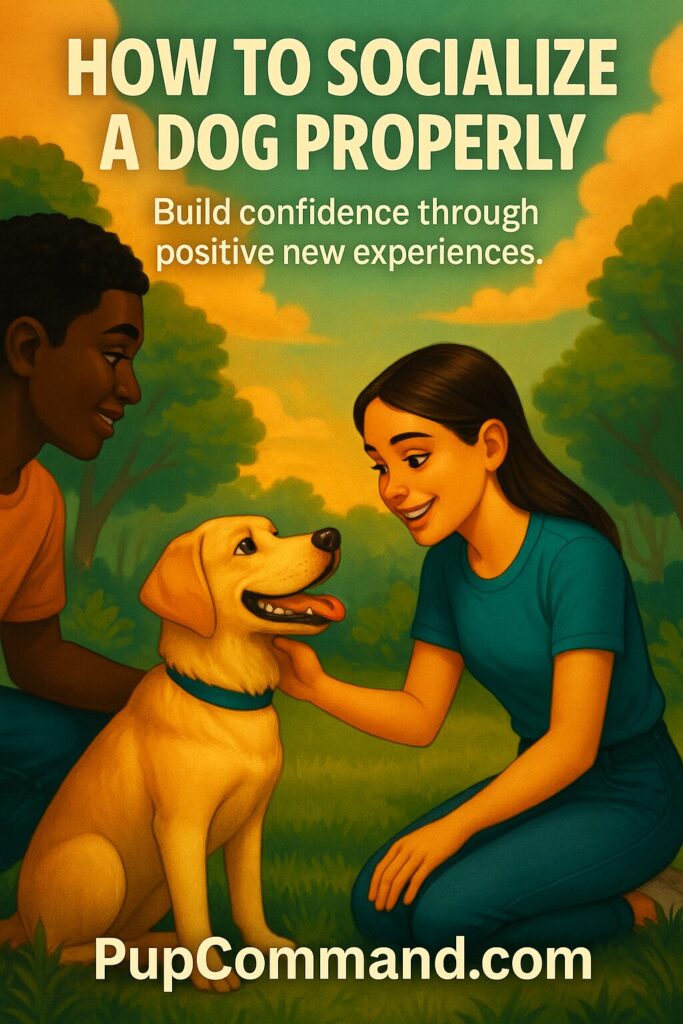
✅ 1. Choose the Right Environment
Start in a calm, low-distraction setting where your dog can observe without pressure. Gradually introduce new people, sounds, and environments at a pace your dog can handle.
✅ 2. Use Positive Reinforcement Every Step of the Way
Always pair new experiences with high-value rewards like:
- Treats
- Praise
- Play
- Clicker training
Mark and reward calm behavior, curiosity, and voluntary engagement. For more specific techniques on rewarding good behavior, check out our comprehensive guide on positive reinforcement puppy training.
Learn more about capturing the right moments in dog training with proper timing to maximize your rewards.
✅ 3. Watch Body Language and Back Off When Needed
Understanding how to socialize a dog properly means recognizing stress signals:
- Lip licking
- Yawning
- Turning away
- Whale eye (showing white of the eye)
- Stiff posture or raised hackles
Back away and reset if your dog is overwhelmed. Never force interaction.
Real-World Socialization Opportunities
When learning how to socialize a dog properly, plan to expose your dog to:
| Category | Examples |
|---|---|
| People | Kids, elderly, people with hats or canes |
| Animals | Dogs of various sizes, cats, birds |
| Surfaces | Grates, wood, sand, tile, stairs |
| Environments | Parks, stores, parking lots, vet offices |
| Sounds | Fireworks (via audio), traffic, alarms |
Socialization Tips for Rescue Dogs
If your dog missed early socialization, you’ll need to go slower. Proper socialization for adult dogs often requires counterconditioning and distance-based desensitization.
- Reward from a distance
- Let your dog observe rather than engage directly
- Keep sessions short and always end on a positive note
- Use tools like calming chews or enrichment toys during exposure
If your rescue dog shows specific behavioral challenges during socialization, explore our guide on dog behavior problems and solutions for targeted training approaches.
Socialization Mistakes to Avoid
❌ Flooding your dog with too much, too soon
❌ Skipping rewards or ending sessions on stress
❌ Confusing exposure with proper socialization
❌ Failing to follow up socialization past the puppy stage
Learning how to socialize a dog properly means balancing structure, patience, and positive experiences. For detailed training techniques, check out our clicker training guide for dogs.
Signs You’ve Socialized Your Dog Properly
- Relaxed body in new places
- Calm around unfamiliar people or dogs
- Enjoys being handled or groomed
- Adjusts easily to sounds, crowds, or new routines
- Eager to explore without reactivity
Final Thoughts: How to Socialize a Dog Properly for Life
Knowing how to socialize a dog properly doesn’t just make life easier—it sets the foundation for every behavior your dog will learn. Confidence, trust, and resilience are earned over time with consistent, reward-based exposure to the world.
No matter your dog’s age or background, it’s never too late to start. Use patience, observe your dog’s signals, and celebrate every brave step forward.
Need help building a custom dog socialization plan? Start with our crate training blueprint to establish a safe space, then explore our other positive reinforcement articles to support your training journey.