
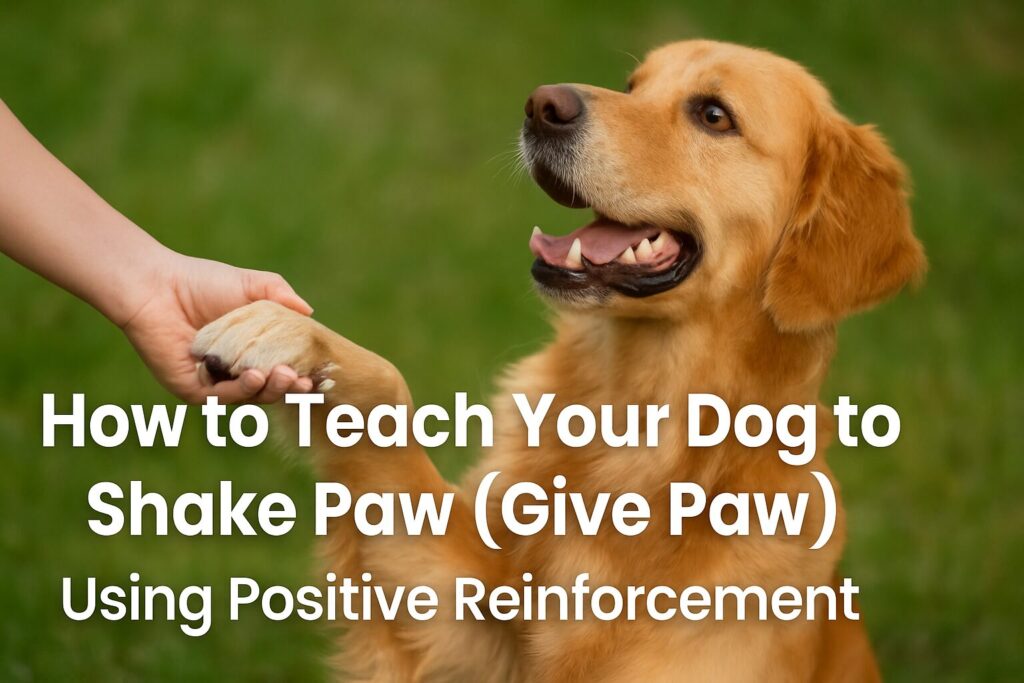
Teaching your dog to shake paw—also known as “give paw”—is one of the most beloved and beginner-friendly dog tricks. It’s cute, quick to learn, and surprisingly helpful when building trust with your dog. Whether you have a rambunctious puppy or a laid-back adult dog, learning how to teach your dog to shake can be both fun and rewarding.
In this guide, we’ll walk you through every step of training the “shake paw” trick using positive reinforcement. We’ll also explore why this skill matters beyond the cuteness, and how it connects to better behavior and stronger bonding.
Why Teach Your Dog to Shake Paw?
Before diving into technique, let’s talk about why this trick is worth teaching:
- ✅It builds trust. Dogs who are shy or unsure about paw handling can become more confident when reinforced gently for offering their paw voluntarily. The ASPCA recommends positive reinforcement methods as the most humane and effective approach to dog training.
- This is especially important for dogs with separation anxiety, as building confidence through positive interactions helps reduce overall stress.
- ✅ It reinforces impulse control. Waiting for a cue and offering a specific response builds patience.
- ✅ It sets up future tricks. Shake can evolve into high five, wave goodbye, or even cooperative care routines like nail trims.
When to Start Teaching “Give Paw”
You can begin shake paw training as soon as your puppy is comfortable with basic commands like sit. If you’re just starting out, check out our complete puppy training guide for new dog owners to establish a solid foundation first. Most dogs pick this up quickly, especially if they already enjoy offering their paw naturally. If your dog is hesitant about paw handling, start with simple touch exercises first to build comfort.
🧠 Pro Tip: Make sure your dog is sitting calmly before each rep. This ensures they’re stable and focused, preventing jumping or overexcitement.
What You’ll Need
- A quiet, low-distraction training space
- A handful of small, high-value treats
- A clicker (optional, but useful if you already use clicker training)
- Patience and a few short sessions a day
Step-by-Step: How to Teach a Dog to Shake Paw
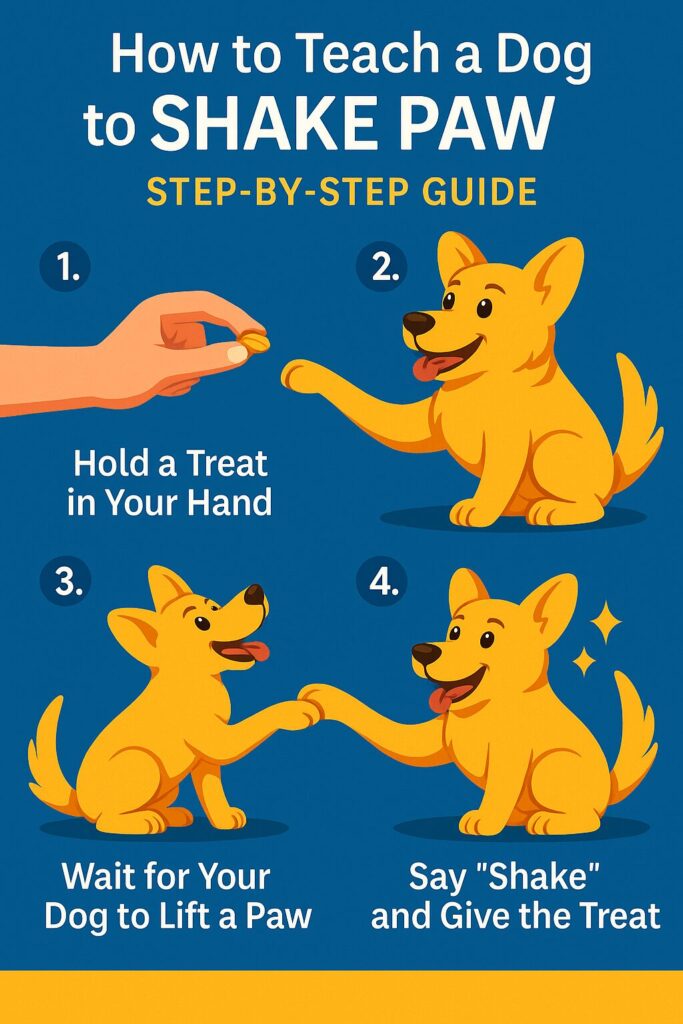
Step 1: Get Your Dog into a Sit
Start by having your dog sit. This helps them stay balanced and focused. If your dog struggles with basic positioning, our guide on teaching your dog the place command can help establish better impulse control and positioning skills. Make sure you’re at their level, either kneeling or sitting in front of them.
Step 2: Capture or Prompt the Paw Lift
Hold a treat in your hand, then lower it close to your dog’s leg—just off to the side of their paw. Some dogs will naturally try to paw at your hand. If they do, mark the moment with a “Yes!” or click, and immediately reward.
🧠 If your dog doesn’t offer a paw yet:
Lightly tap or lift one front paw an inch off the ground, say “Yes!” or click, and reward. Repeat several times. Dogs quickly begin to associate paw lifting with a reward.
Step 3: Add the Cue “Shake” or “Give Paw”
Once your dog is reliably offering a paw after 5–10 repetitions, begin adding your cue. Say “Shake” just before you expect the paw to come up. Then mark and reward.
Repeat this step several times until the verbal cue alone triggers the behavior.
Step 4: Introduce the Handshake Position
Now it’s time to actually “shake.” Extend your hand in a palm-up position, say your cue, and wait. When your dog places their paw into your hand, mark and treat.
Common issue: Dog only touches with nails or swipes—hold your hand closer to the elbow or higher to encourage a full paw placement. This gentle approach is part of positive reinforcement dog training principles that focus on encouraging desired behaviors rather than correcting unwanted ones.
📘 Real-Life Example: Success Teaching “Shake Paw”
A friend of mine recently taught her rescue dog how to shake paw using nothing but patience, a handful of treats, and positive reinforcement. At first, her dog was unsure—he’d never learned basic commands before. But she followed a consistent routine every morning: sit, cue “shake,” and reward even the smallest effort.
Within just a few days, he was offering his paw with confidence. She told me it was the first trick he learned that truly made him light up with pride. Watching her go through the process reminded me how effective positive reinforcement is when learning how to teach a dog to shake paw.
Step 5: Practice with Both Paws
Eventually, try offering your other hand and see if your dog offers the opposite paw. You can name each paw (e.g., “Shake Left,” “Shake Right”) if you want to get fancy, or simply reward either response.
Keep sessions short, upbeat, and end on success!
Reinforcement Tips for Success
- Reward timing matters. Be precise—mark exactly when the paw lifts or makes contact.
- Use soft, easy-to-chew treats. This keeps the flow smooth and the dog motivated.
- End before they lose focus. Three to five minutes is usually plenty for early training.
Dogs learn fastest through repetition with clarity. Don’t drill too long—space it out with play or short breaks. The American Kennel Club emphasizes that positive reinforcement training is based on the science of animal learning, making it the most effective approach for teaching new behaviors.
For more advanced training concepts, explore our science behind positive reinforcement in dog training to understand why this approach works so effectively.
🐾 Real Life Shake Paw Success Story
When I first started teaching my dog to shake paw, he wasn’t sure what I wanted—until the day he gently placed his paw in my hand and lit up when I praised him. That moment clicked, and we’ve been building on it ever since. Now he loves “give paw” sessions and even offers his paw on his own!
Using positive reinforcement training made the process easy and stress-free. If you’re wondering how to teach a dog to shake paw, remember: consistency and gentle rewards go a long way.
Common Troubleshooting Scenarios
🐾 My dog won’t offer their paw.
Start by rewarding any slight shift or lift of the paw. You may need to shape the behavior in tiny steps (known as capturing). You can also gently nudge the paw to get the motion started.
🐾My dog gets too excited and jumps. Return to a seated position and reward calm energy. For persistent jumping issues, our guide on positive reinforcement for problem behaviors provides additional strategies for managing overexcitement. Only reinforce when your dog is sitting and focused.
🐾 My dog paws too hard or scratches.
Reinforce softer contact by withholding treats when the touch is too rough, and only rewarding gentler attempts.
Real-Life Uses for the “Shake” Command
This isn’t just a party trick. Teaching your dog to shake paw lays the foundation for cooperative care and is an excellent example of positive reinforcement puppy training in action:
- Nail trimming comfort
- Wiping muddy paws
- Calm interactions with children or guests
- Confidence building for anxious dogs
The more you reinforce gentle, voluntary paw handling, the less stress your dog will feel during vet visits or grooming. This cooperative approach is especially valuable for helping your puppy settle at night and establishing calm, trusting routines.
Final Thoughts: Shake Paw Builds More Than Tricks
By learning how to teach a dog to shake paw using positive reinforcement, you’re not just teaching a novelty—you’re strengthening communication, deepening trust, and reinforcing calm behavior. This foundational skill pairs perfectly with other essential commands like teaching your dog to stay in one place and teaching your dog to lie down.
It’s a stepping stone toward a well-mannered dog that feels safe and understood. So grab some treats, kneel down, and offer your hand—because sometimes, a paw is the beginning of a better bond.

Christopher Quinn adopted his first dog, Loki, a spirited Border Collie/Jack Russell mix, after exiting Army service in the summer of 2012. That experience sparked a lifelong passion for canine behavior and positive reinforcement training.
He studied Principles of Dog Training & Behavior at Penn Foster and has since worked with hundreds of dogs from all backgrounds. Over the past two years, Christopher has fostered more than 30 rescue dogs, giving each one a chance at a better life.
Today, he continues to write, teach, and share insights on humane dog training, blending hands-on experience with a decade of dedicated study.