
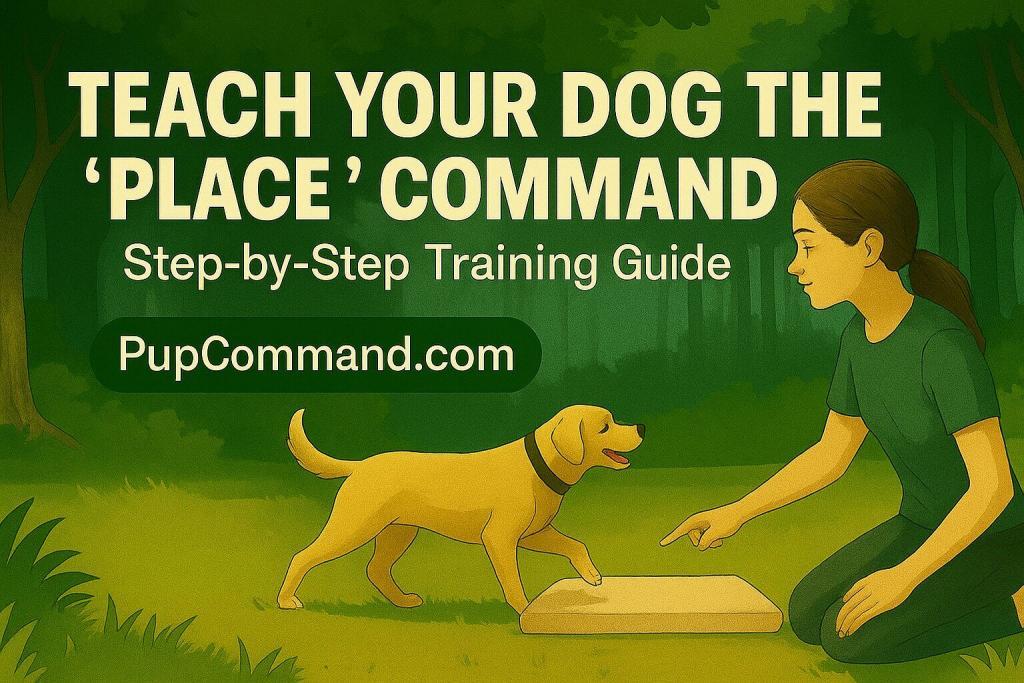
Are you wondering how to teach your dog the place command?
Teaching your dog the Place command can dramatically reduce things like chaos, barking, or clingy behavior. By giving them a clear, calming job: go to a spot and stay there until released. This is especially effective during mealtime, guest visits, or when you need focus.
Here’s how to teach your dog ‘go to spot or place’ using positive reinforcement:
What You’ll Need:
- A designated “place” (mat, bed, or towel)
- High-value treats
- A clicker (optional)
- Leash (if your dog tends to wander)
- Patience and 10–15 minutes per day
Step 1: Introduce the Spot
Stand near the designated spot and wait for your dog to investigate. As soon as they step on or touch it, click and reward. If you’re not using a clicker, simply say “Yes!” and treat.
Repeat this 5–10 times until your dog starts offering the behavior naturally.
Pro Tip: Don’t use commands yet—just reward interest in the spot. This approach aligns with positive reinforcement training principles.
Dogs naturally explore novel textures and surfaces. Encouraging them to see this space as rewarding will increase their comfort and confidence over time.
Repeat this in a few different locations to build generalization early. Dogs don’t naturally transfer skills between contexts, so mix up the practice area to encourage flexible thinking.
Master the Place Command: Dog Training Console
- Introduce the mat as a high-value area (treat jackpots).
- Cue “Place,” then lure or target to help if needed.
- Reward calm behavior with all four paws on the mat.
- Build one criteria at a time: Duration → Distance → Distraction.
- Use the release word before inviting them off the mat.
- If they break, reset calmly and reduce criteria for the next rep.
Step 2: Add the Cue
Once your dog consistently touches the spot, introduce your cue: “Place” or “Go to Bed”. Say the cue just before they step onto the spot, then reward as before.
Timing matters. If you say “Place” too early or late, your dog won’t associate the word with the action. Repeat this pairing until your dog begins heading to the mat when they hear the word.
Eventually, you’ll say the word before they move, and they’ll follow the cue without hesitation.
Step 3: Duration & Down
When your dog reaches the spot, ask for a down or sit (whichever they know). Reward them while they remain on the mat—not after they leave.
Gradually increase the time they must stay before earning the reward.
If they pop up, calmly reset without scolding. This teaches them that patience earns reinforcement.
You can even offer calm praise every few seconds to encourage them to stay relaxed and focused.
Step 4: Add Distance
Start taking small steps away while they stay on the mat. If they remain, return and reward. If they break position, guide them gently back and try again.
Goal: You want to be able to walk around or across the room without them leaving their place.
Eventually, practice leaving the room entirely for a few seconds, then longer durations. Always return and reward if they stay put. This builds on the foundation of teaching your dog to stay.
Use household activities—like cooking or folding laundry—as opportunities to practice real-world scenarios.
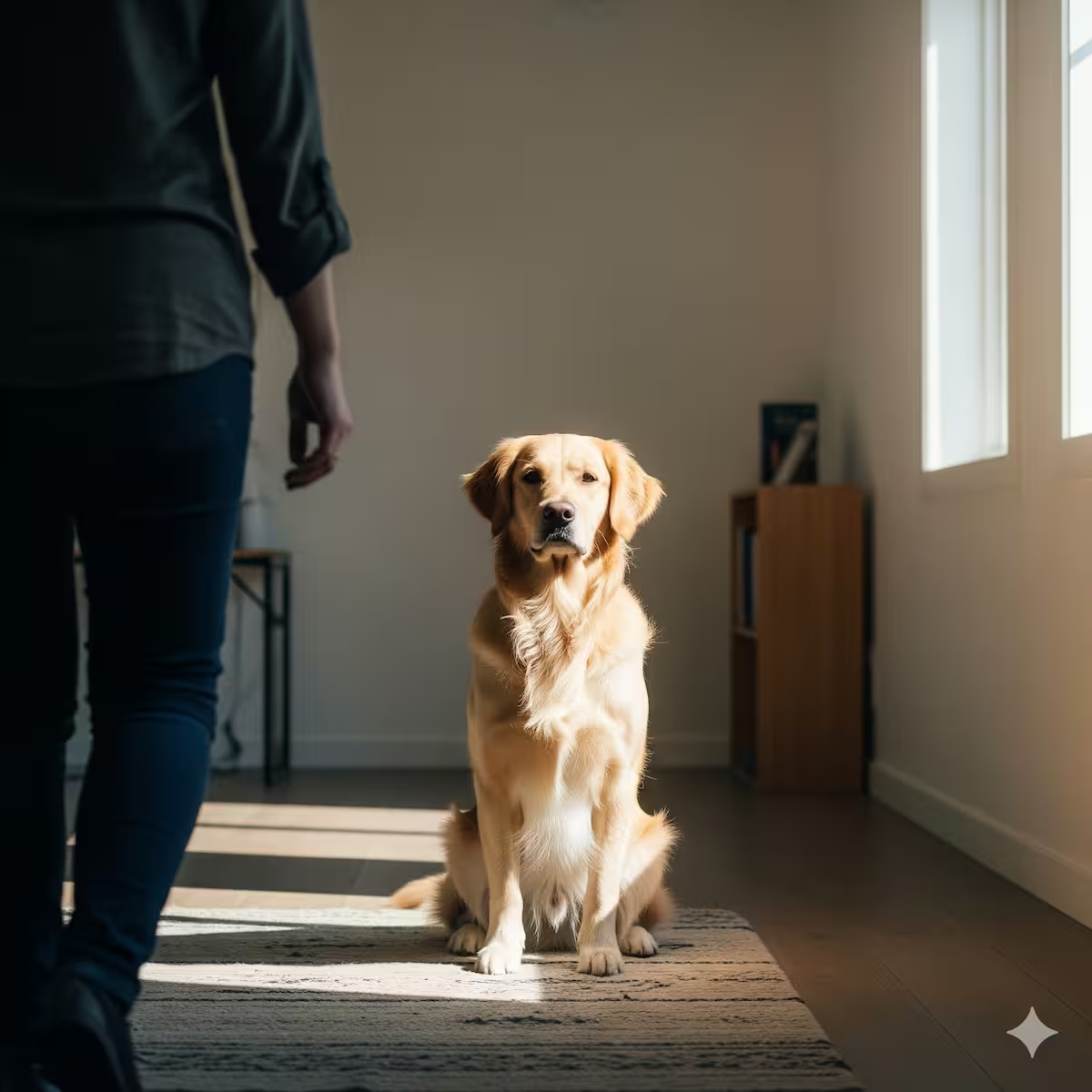
The Release Word
Tap or hover for details
The Release Word
Teach a release word like “Free”, “Break”, or “Okay” to clearly end the command. This gives your dog clarity: they stay until released.
Always pair the word with a cheerful voice and movement away from the mat, so your dog understands it means they can leave their place.
Avoid using the dog’s name as a release—it can cause confusion in multi-dog households.
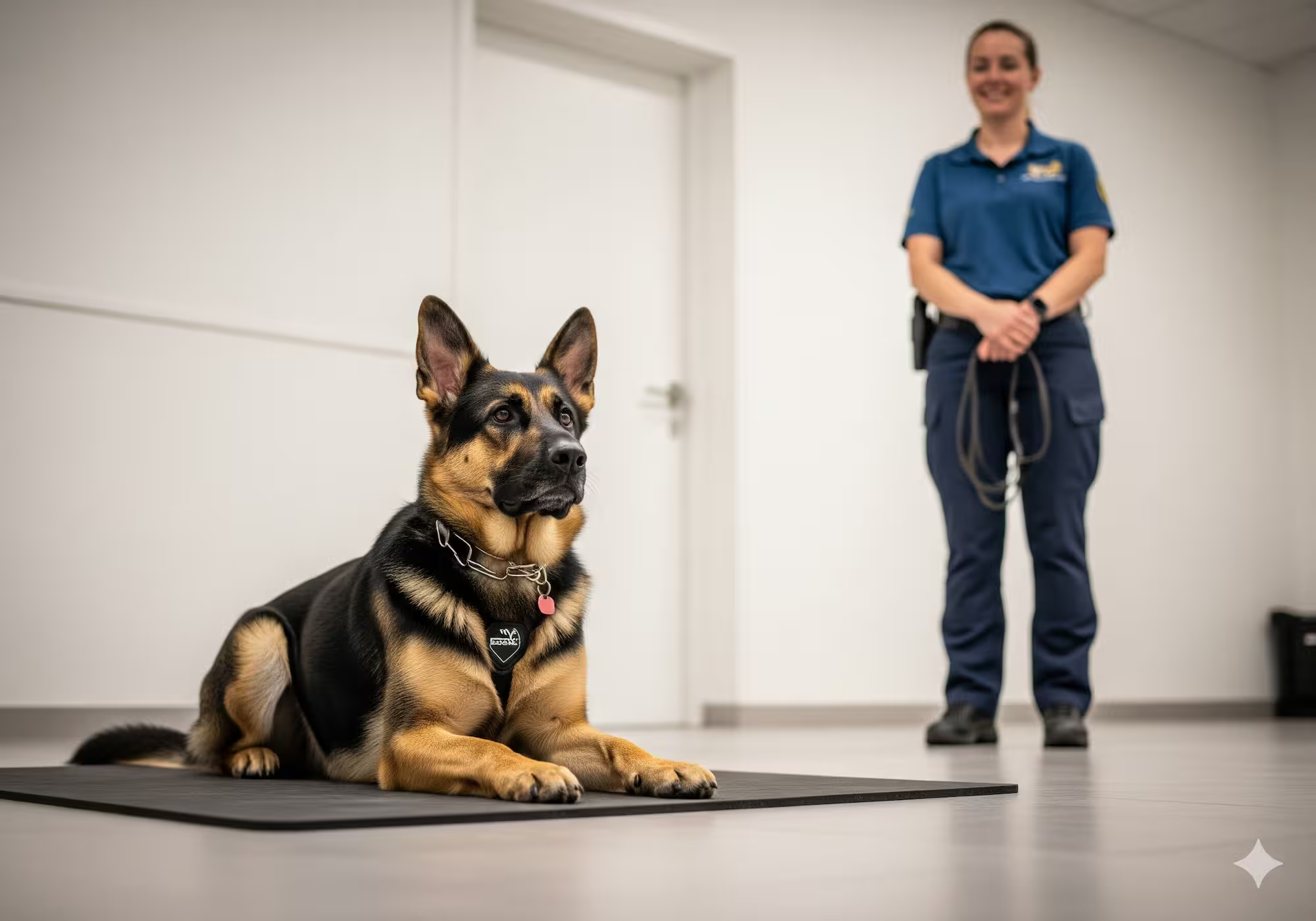
Real-Life Examples
Tap or hover for details
Real-Life Examples
- During Dinner: Prevents begging and underfoot pacing.
- When Guests Arrive: Keeps dogs from rushing the door or jumping.
- Working From Home: Reduces interruptions by anchoring them in a calm zone.
- Multi-Dog Homes: Helps control arousal and separation.
- Crate Transition: Use as a stepping-stone for more freedom.
Step 5: Add Distractions
Bring in low-level distractions—drop a toy nearby, open a door, walk past them. Reward only if they stay in place.
Slowly escalate distractions over multiple sessions until your dog can hold their place even during real-life chaos (like dinner parties or doorbells).
Try having someone ring the doorbell or walk by with another dog while your dog holds position. This increases long-term reliability.
Bonus: The Release Word
Teach a release word like “Free”, “Break”, or “Okay” to clearly end the command. This gives your dog clarity: they stay until released.
Always pair the word with a cheerful voice and movement away from the mat, so your dog understands it means they can leave their place.
Avoid using the dog’s name as a release—it can cause confusion in multi-dog households.
Real-Life Examples
- During Dinner: Place prevents begging and underfoot pacing. For more specific guidance, see our puppy potty training guide for establishing routines.
- When Guests Arrive: Keeps dogs from rushing the door or jumping. This complements training your dog to greet guests calmly.
- Working From Home: Reduces interruptions by anchoring them in a calm zone.
- Multi-Dog Homes: Helps control arousal and separation.
- Crate Transition: Use “Place” as a stepping-stone for crate-trained dogs transitioning to more freedom.
Step-by-Step Place Training
Select a step below to view the instructions.
Step 1: Introduce the Spot
Stand near the designated spot and wait for your dog to investigate. As soon as they step on or touch it, click and reward. If you’re not using a clicker, simply say “Yes!” and treat.
Repeat this 5–10 times until your dog starts offering the behavior naturally.
Step 2: Add the Cue
Once your dog consistently touches the spot, introduce your cue: “Place” or “Go to Bed”. Say the cue just before they step onto the spot, then reward as before.
- Timing matters. If you say “Place” too early or late, your dog won’t associate the word with the action.
- Repeat this pairing until your dog begins heading to the mat when they hear the word.
- Eventually, you’ll say the word before they move, and they’ll follow the cue without hesitation.
Step 3: Duration & Down
When your dog reaches the spot, ask for a down or sit (whichever they know). Reward them while they remain on the mat—not after they leave.
- Gradually increase the time they must stay before earning the reward.
- If they pop up, calmly reset without scolding. This teaches them that patience earns reinforcement.
- You can even offer calm praise every few seconds to encourage them to stay relaxed and focused.
Step 4: Add Distance
Start taking small steps away while they stay on the mat. If they remain, return and reward. If they break position, guide them gently back and try again.
- Goal: You want to be able to walk around or across the room without them leaving their place.
- Eventually, practice leaving the room entirely for a few seconds, then longer durations. Always return and reward if they stay put.
- Use household activities—like cooking or folding laundry—as opportunities to practice real-world scenarios.
Step 5: Add Distractions
Bring in low-level distractions—drop a toy nearby, open a door, walk past them. Reward only if they stay in place.
- Slowly escalate distractions over multiple sessions until your dog can hold their place even during real-life chaos.
- Try having someone ring the doorbell or walk by with another dog while your dog holds position. This increases long-term reliability.
Bonus: The Release Word
Teach a release word like “Free”, “Break”, or “Okay” to clearly end the command. This gives your dog clarity: they stay until released.
- Always pair the word with a cheerful voice and movement away from the mat, so your dog understands it means they can leave their place.
- Avoid using the dog’s name as a release—it can cause confusion in multi-dog households.
Pro Tips
Don’t use commands yet—just reward interest in the spot. Dogs naturally explore novel textures and surfaces. Encouraging them to see this space as rewarding will increase their comfort and confidence over time.
Repeat in a few different locations to build generalization early. Dogs don’t naturally transfer skills between contexts, so mix up the practice area to encourage flexible thinking.
How to Teach Your Dog the Place Command in Different Rooms
Once your dog has mastered the Place command in your main training area, it’s time to take it on tour.
Start your dog place que training by choosing a different room with minimal distractions. Bring the same mat or bed your dog associates with the command. Give the cue: “Place.” If your dog follows through, immediately reward them and praise. If not, repeat Step 1 briefly to reestablish the behavior.
Consistency is key—dogs don’t generalize skills automatically. Practice Place in:
- Bedrooms
- Bathrooms
- Laundry rooms
- Hallways
- Outdoors (on a patio or calm lawn space)
Each new room reinforces the core concept: “Wherever my human points and says ‘Place,’ I settle there until released.”
If your dog struggles, use a leash or start closer to the mat. Gradually increase distance again as success returns.
This kind of room-to-room variability cements the behavior into real-world use and makes your dog’s response more reliable across situations.
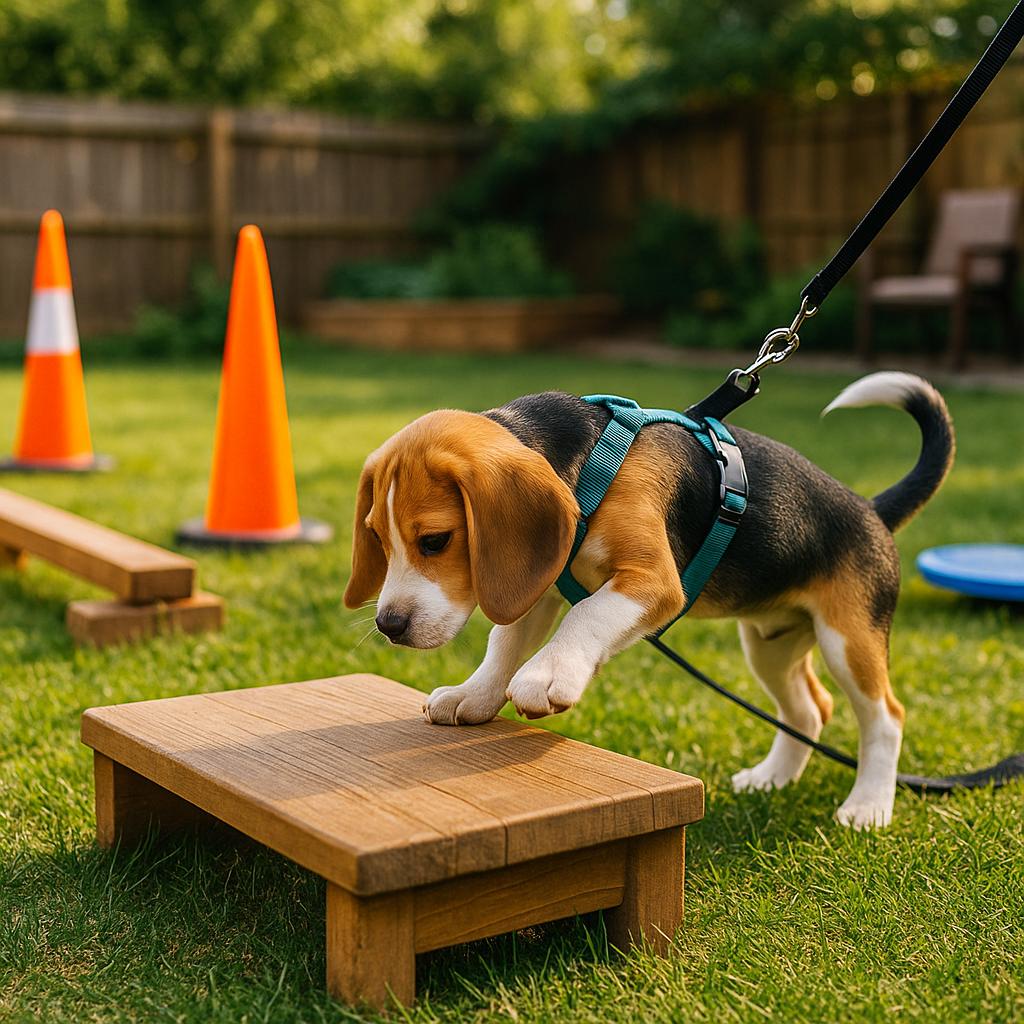
Teach the PLACE Command
Build a calm, confident stay with positive reinforcement.
- Cue
- Shape
- Distance
- Duration
- Distractions
Why This Works (The Science)
- Shaping: We build the final behavior (a long, calm stay) from tiny, achievable steps, rewarding each approximation to ensure the dog is always succeeding.
- Operant Conditioning: Calm behavior on the mat earns rewards (positive reinforcement), making the dog *want* to offer that behavior more often.
- Clear Communication: Using a consistent release word gives the dog a clear signal for when the job is done, building trust and reducing confusion.
- Generalization: We systematically “proof” the command against the “3 D’s”—*distance*, *duration*, and *distractions*—teaching the dog that “Place” means the same thing everywhere.
Pro Tips & Troubleshooting
- Real-World Use: Practice during normal daily events like the doorbell ringing, dinner prep, or while you’re on a Zoom call. Keep sessions short and positive (5–10 minutes).
- Dog Won’t Stay: You’ve asked for too much, too soon. Shorten the duration goal, reduce distractions, or reward more frequently for success.
- Dog Won’t Go to Mat: Make the mat a jackpot zone! Add a trail of treats or use a more comfortable, elevated surface to increase its value.
- Leaves Mat Early: You’re waiting too long to use the release word. Release them *before* they break, then gradually build up the time again.
- Keep it Positive: Avoid using “Place” only during chaotic times or as a punishment. It should be a calm, rewarding space for your dog.
How to Maintain the Place Command Long-Term
Once your dog is reliably holding Place in any room, it’s time to think maintenance.
Use it weekly in normal routines:
- Before feeding or dinner prep
- When answering the door
- During TV time or Zoom calls
Refresh the behavior occasionally with higher rewards. If it fades, return to shorter durations and rebuild gradually.
Stay consistent with your release word. Reinforce calm exits from the mat just as much as stillness.
Avoid only using Place during chaos or punishment—it should remain a positive retreat.
Troubleshooting How to Teach Your Dog the Place Command
- Dog won’t stay: Lower the difficulty—shorten the duration, reduce distractions, or increase rewards. For more behavioral guidance, check our positive reinforcement for problem behaviors guide.
- Dog won’t go to the mat: When teaching a dog the place command, reintroduce Step 1 and increase the mat’s value with treats, toys, or a comfy surface.
- Dog leaves early: You may be releasing too late. Practice short sessions with high-frequency rewards.
Don’t forget to reset calmly and avoid punishment. Frustration can break trust, especially in sensitive breeds.
Breed-Specific Tips
- Working breeds (Border Collies, GSDs): Use place to manage over-arousal and reinforce stillness.
- Toy breeds (Chihuahuas, Yorkies): Be sure the mat isn’t too large—smaller breeds may feel exposed.
- Senior dogs: Choose a padded, orthopedic bed to increase comfort during long holds.
- Bulldogs or brachycephalic dogs: Avoid overheating—keep the mat in a cool, quiet spot.
Place Command • Maintenance & Proofing Console
Toggle metrics to compare what matters for each situation.
Show Metrics
Legend
Tips: Keep sessions short (5–10 min). If behavior fades, increase reward rate and shorten duration, then rebuild.
Reinforcement Schedule
- Early Training: Reward every successful place training repetition.
- Intermediate: Start delaying rewards or offering fewer treats.
- Advanced: Random rewards, praise-only holds, or use life rewards like being invited to the couch.
Remember to keep sessions short—5 to 10 minutes is plenty. Multiple mini-sessions per day are more effective than long, exhausting ones.
Common Mistakes to Avoid
- Repeating the cue multiple times during dog place training
- Rewarding after they’ve already left the mat
- Using punishment if they fail—this is a learning process! Learn more about why positive reinforcement works better.
- Expecting too much too soon—place is a complex behavior chain.
- Using the command only when the dog is already overexcited
Looking for a second opinion? Dog training tips at PetHelpful cover a variety of methods and experiences from real trainers.
FAQ: Place Command
Can I teach place to a puppy? Yes! Start with short sessions and use a soft mat. For comprehensive puppy guidance, see our complete puppy training guide.
Can I use place outside?
Absolutely. Use a familiar mat and practice in quiet outdoor areas before trying it in busy environments.
I am wondering how to teach your dog the place command if your dog refuses the mat?
Use a treat trail to lead them, or try a new surface. Some dogs prefer elevated cots, while others love blankets.
How long should my dog hold place?
Start with 5–10 seconds and work up to several minutes or more with training. Advanced dogs can hold 20+ minutes.
Positive Puppy Enrichment — Quick Preview
Three unique, trainer-approved ideas. Open the full console for filters, time limits, and 40+ activities!

Lick Mat — Frozen
Details
- Spread thin layers (yogurt, pumpkin, wet food).
- Freeze 30–60 minutes to extend duration.
- Serve on a non-slip mat; rinse and rotate flavors.
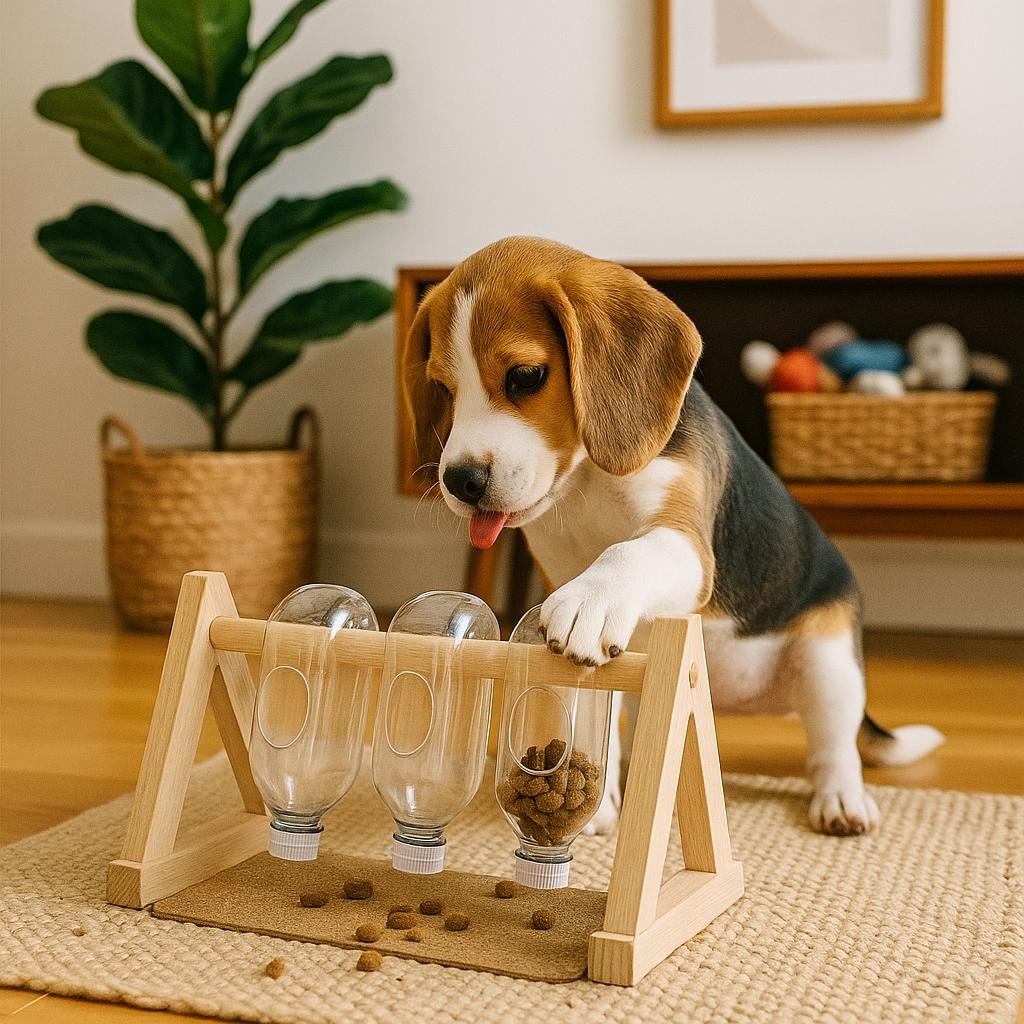
Bottle Feeder Rack
Details
- Load kibble; show one easy win.
- Let your pup learn to spin bottles for food.
- Short sessions prevent frustration; tidy edges.

Flirt Pole Bursts
Details
- 2–3 short chases with easy catches.
- Insert calm breaks; finish with sniffing.
- Avoid tight circles; protect growing joints.
How to Teach Your Dog the Place Command: Final Thoughts
Mastering the Place command helps create a calm, responsive dog. It also builds trust and mental discipline using only positive reinforcement.
Whether you’re dealing with a hyper puppy or a reactive adult, Place is a tool that promotes peace in your home and clarity in your dog’s world. For more advanced techniques, explore our crate training guide as a complementary approach.
The Psychology: Why the Place Command Works So Well
The “Place” command is more than just an obedience cue; it’s a powerful psychological tool that taps into a dog’s innate need for structure and purpose. When you learn how to teach a dog the place command, you are providing them with a predictable, safe job to do, which dramatically reduces anxiety and overstimulation. Instead of making chaotic choices when excited or stressed (like jumping on guests or barking at the door), your dog has a default behavior that earns them rewards.
This training method relies on two core principles: operant conditioning and shaping. By consistently rewarding your dog for interacting with their mat, you build a powerful positive association. The mat becomes a “zen zone”—a place that predicts calm and reinforcement. Shaping the behavior step-by-step ensures your dog is always succeeding, which builds confidence and prevents frustration.
The Key Takeaway: Predictability Creates Calm
Dogs thrive on predictability. A clear cue (“Place”), a consistent action (go to the mat and lie down), and a reliable outcome (praise or a treat) create a secure routine. The specific release word gives them a clear signal for when the “job” is over, removing ambiguity. Mastering how to teach a dog the place command is ultimately about clear communication, not just control.
By generalizing this skill to different rooms and situations, you teach your dog a universal coping mechanism, making them a more resilient and well-adjusted companion. This is an advanced goal for how to teach a dog the place command.

Christopher Quinn adopted his first dog, Loki, a spirited Border Collie/Jack Russell mix, after exiting Army service in the summer of 2012. That experience sparked a lifelong passion for canine behavior and positive reinforcement training.
He studied Principles of Dog Training & Behavior at Penn Foster and has since worked with hundreds of dogs from all backgrounds. Over the past two years, Christopher has fostered more than 30 rescue dogs, giving each one a chance at a better life.
Today, he continues to write, teach, and share insights on humane dog training, blending hands-on experience with a decade of dedicated study.