
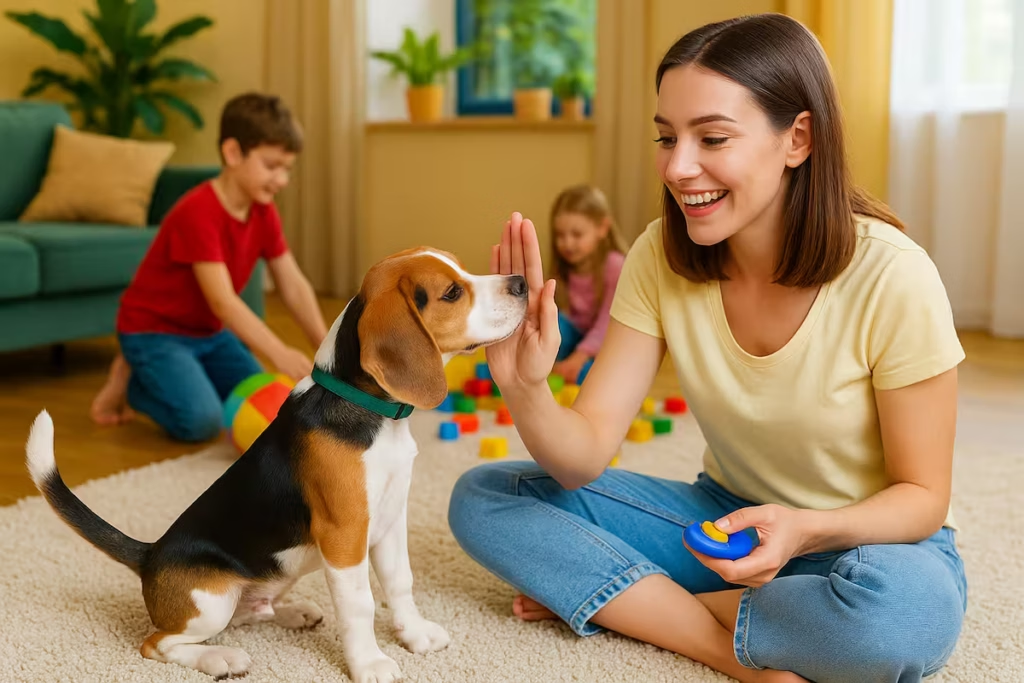
Teaching your dog the “Touch” command, also known as hand targeting, is one of the most versatile and enjoyable skills you can add to their training repertoire. Whether you have a curious puppy, a shy rescue dog, or a seasoned canine companion, this simple cue builds focus, boosts confidence, and opens the door to advanced behaviors.
In this guide, you’ll learn what the Touch command is, why it’s valuable, and exactly how to teach it using positive reinforcement techniques.
What Is the Touch Command?
In dog training, the Touch command means your dog learns to gently tap their nose to a specific target—usually your open hand. This target can later be anything you designate, such as a stick, a post-it note, or even an object you want them to push or move.
Core concept:
- Cue word: “Touch” (you can use another word, but consistency is key)
- Action: Dog touches nose to the target
- Reinforcement: Praise, treats, or play immediately after
Why Teach the Touch Command?
The touch command is built on positive reinforcement dog training principles that reward your dog for making the right choices. This reward-based approach creates a positive learning environment where your dog eagerly participates in training sessions. It offers both practical benefits and training advantages:
- Builds Focus & Engagement
Touching your hand requires your dog to pay attention, even in distracting environments. - Redirection Tool
If your dog is about to jump on someone or chase another animal, you can use Touch to redirect their energy. - Confidence Booster for Shy Dogs
Timid dogs often benefit from the low-pressure nature of touching a target—no scary grabbing, just a quick nose tap. - Foundation for Advanced Training
Touch can be the starting point for agility, scent work, service dog tasks, or fun tricks like spinning in a circle or turning off lights. - Positive Social Interaction
It gives strangers an easy, non-threatening way to interact with your dog without reaching to pet them immediately.
Touches
Success rate
Best streak
Avg reward time
Step-by-Step Guide to Teaching Touch
Once your dog masters the Touch command, you can use it as an effective tool for teaching your puppy impulse control and calmness. The focused attention required for nose targeting naturally develops self-control skills.
Step 1 — Prepare the Environment
Choose a quiet, low-distraction space. Have small, soft treats ready and keep your training sessions short (2–3 minutes for beginners).
Step 2 — Introduce Your Hand as the Target
- Hold out your open hand a few inches from your dog’s nose.
- Avoid moving toward them—let them come to you.
- The moment they sniff or touch your hand, mark the behavior with a clicker or a cheerful “Yes!” and give a treat.
Tip: At first, reward any interaction with your hand, even a glance. This builds initial interest.
Step 3 — Add the Cue Word
- Once your dog consistently touches your hand, say “Touch” right before presenting your hand.
- Mark and reward each correct nose tap.
- Repeat in short bursts, 5–10 repetitions per session.
Step 4 — Increase Difficulty
Gradually make the task more challenging:
- Change position: Hold your hand higher, lower, to the side, or a few steps away.
- Add movement: Have your dog walk toward your hand from across the room.
- Vary environments: Practice in the yard, during walks, or at the park to strengthen reliability.
Step 5 — Generalize to Other Targets
Once your dog understands the concept, you can transfer it to:
- A target stick (useful for guiding movement at a distance)
- Objects for chores (closing drawers, pressing buttons)
- Agility equipment markers
Once your dog masters the basic Touch command, you can expand into more specialized areas. Teaching your dog nose targeting (AKC) becomes essential for agility work, where directional cues and precise positioning are crucial for navigating obstacles successfully.

Common Training Challenges and Fixes
Problem: Dog ignores your hand.
Solution: Move your hand closer to their face, use smellier treats, or practice in a less distracting space.
Problem: Dog licks or mouths your hand.
Solution: Pull your hand away briefly after a gentle nose touch, reinforcing only the correct behavior.
Problem: Dog gets bored.
Solution: Keep sessions short, add movement games, and use higher-value rewards intermittently.
For rescue dogs or timid pets who struggle with confidence, the Touch command works exceptionally well alongside other techniques for socializing a shy puppy with strangers. The non-threatening nature of hand targeting helps fearful dogs build trust gradually.
Integrating Touch Into Everyday Life
Once learned, Touch becomes a multi-purpose command:
- Recall aid: “Touch” is a fun way to get your dog to come running.
- Positioning tool: Move your dog into heel position without physically manipulating them.
- Distraction buster: Redirect barking, lunging, or jumping with a quick Touch cue.
- Therapy & service work: Teach your dog to press buttons, ring bells, or retrieve objects by starting with nose targeting.
For timid or rescue dogs who may be hesitant to engage, the Touch command pairs beautifully with other training techniques for fearful dogs (AKC) recommended by animal behavior experts to help anxious pets develop confidence and social skills.
Positive Reinforcement: The Secret to Success
Like all humane training, Touch works best with reward-based methods:
- Use high-value treats when introducing new challenges.
- Incorporate verbal praise, petting, or play once the dog enjoys the behavior.
- Avoid punishment—this skill is meant to be lighthearted and fun.
Troubleshooting Slow Progress
If your dog is struggling:
- Break the behavior into smaller steps—reward just looking at your hand at first.
- Train in ultra-short sessions—stop before your dog loses interest.
- Keep your body language inviting—relaxed, friendly posture encourages engagement.
The Touch command works exceptionally well when combined with other positive reinforcement dog training techniques (AKC) that focus on rewarding your dog for the things they do right. This science-based approach from the AKC builds trust and makes learning enjoyable for your dog.
Final Thoughts
Teaching your dog the Touch command is more than just a fun trick—it’s a confidence builder, focus enhancer, and problem-solving tool. In just a few short sessions, your dog can master a skill that improves communication, strengthens your bond, and lays the groundwork for more advanced training.
With consistent practice, positive reinforcement, and gradual challenges, Touch will become one of your most-used—and most enjoyed—dog training cues.

Christopher Quinn adopted his first dog, Loki, a spirited Border Collie/Jack Russell mix, after exiting Army service in the summer of 2012. That experience sparked a lifelong passion for canine behavior and positive reinforcement training.
He studied Principles of Dog Training & Behavior at Penn Foster and has since worked with hundreds of dogs from all backgrounds. Over the past two years, Christopher has fostered more than 30 rescue dogs, giving each one a chance at a better life.
Today, he continues to write, teach, and share insights on humane dog training, blending hands-on experience with a decade of dedicated study.