
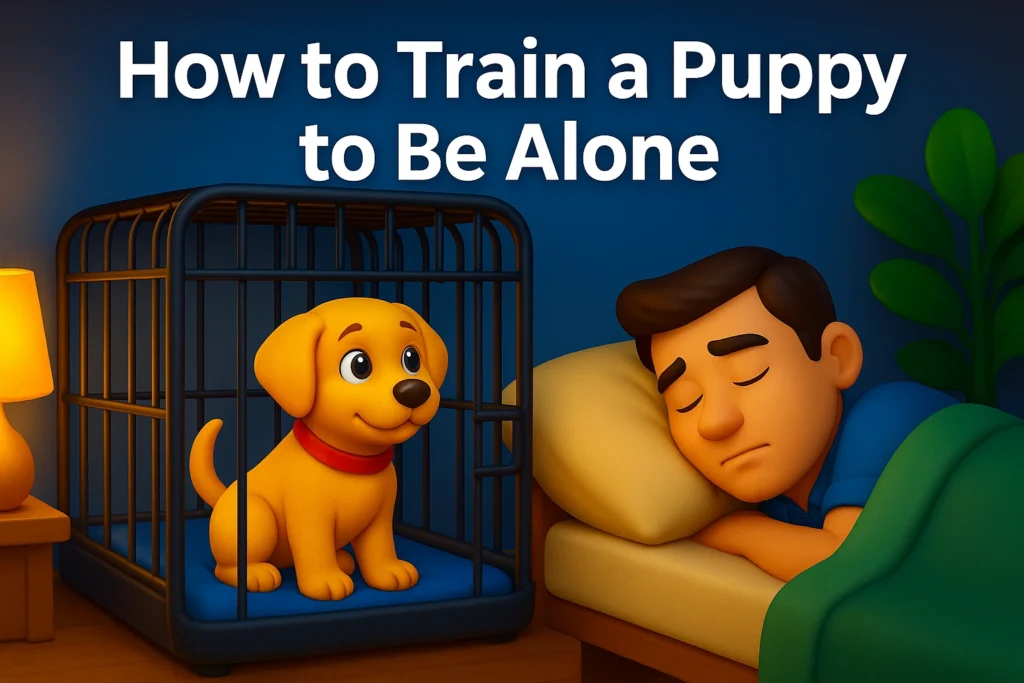
Bringing home a new puppy is a joyful experience—but when it comes time to leave them alone, things can quickly become stressful for both of you. Many puppies experience separation anxiety when left on their own, leading to barking, whining, destructive chewing, and even potty accidents.
Fortunately, you can train your puppy to be alone without anxiety using positive reinforcement—a science-backed method that builds your dog’s confidence instead of fear.
In this guide, you’ll learn step-by-step how to train a puppy to be alone without anxiety, helping them feel safe, calm, and independent even when you’re not in the room.
Why Puppies Struggle with Being Alone
Puppies are naturally social creatures. In the early weeks of life, they’re rarely alone. When they transition into a new home, it’s a massive adjustment—new smells, new routines, and suddenly, no littermates. Being left alone too abruptly can trigger distress.
Signs your puppy may be struggling with alone time:
- Crying or barking when you leave
- Scratching at doors or crates
- Pacing or panting
- Peeing or pooping indoors after being left
- Destructive chewing or digging
Rather than punishing these behaviors, the key is to teach your puppy that alone time is safe, predictable, and even enjoyable.
How to Train a Puppy to Be Alone Without Anxiety Step 1: Start Early, Start Small
Begin separation training the very first week your puppy comes home. Desensitize alone time with short, low-stress absences—even stepping out of the room for 30 seconds—to begin desensitizing them to your absence.
✅ Use a consistent cue like “I’ll be right back” when you leave. This lets your puppy predict what’s about to happen.
✅ Return before they panic. If your puppy starts to cry, wait for a calm moment (even 1–2 seconds of silence) before returning. This prevents reinforcing the crying behavior.
Step 2: Create a Safe Puppy Zone
Use a crate or puppy playpen as a positive, cozy den—not a punishment. Add soft bedding, chew-safe toys, and a worn T-shirt that smells like you. The goal is to build a space where your puppy feels relaxed and secure.
Helpful tools:
- Frozen Kongs: Stuff with peanut butter or treats to keep them busy
- Lick mats: Promote calm behavior through repetitive licking
- Snuffle mats: Turn mealtime into a foraging game
🔑 Positive reinforcement means rewarding calm, not ignoring distress. If your puppy chooses to rest quietly or engages with a toy, calmly praise or drop a treat.
Step 3: Gradually Increase Alone Time
As your puppy gets comfortable with short absences, slowly increase the time they spend alone. This gradual approach is essential when you train a puppy to be alone without anxiety.
Example progression:
- 1 minute (leave the room)
- 3 minutes (step outside)
- 5–10 minutes (go check the mail or walk to the end of the block)
- 15–30 minutes (quick errands)
- 1–2 hours (with camera monitoring if possible)
Track their behavior using a pet cam if you’re unsure how they act while you’re gone. You’re aiming to prevent panic, not push them to their threshold.
Quick Start Training Timeline
Week 1-2
Start with 30-second departures. Create a cozy safe space with toys and your scent. Use “I’ll be right back” as your cue.
Week 3-4
Gradually increase to 15-30 minute absences. Add frozen Kongs and puzzle toys to keep them engaged during alone time.
Month 2+
Build up to 1-2 hour periods. Practice calm departures and boring returns. Reward quiet, independent behavior.
Troubleshooting
If your puppy panics or regresses, go back to shorter times. Never punish anxiety—it only makes separation worse.
🎯 Remember: Patience + Consistency = Success
Step 4: Never Punish Anxiety
If your puppy barks, has an accident, or chews something during early training, remember: this is fear, not disobedience. Punishment can make alone time even more frightening.
Instead:
- Revisit shorter absences
- Provide more enrichment during separation
- Consider adjusting exercise or playtime before departures
Step 5: Normalize Departures and Arrivals
Many puppies associate your exit or return with intense emotional spikes. To reduce anxiety:
- Be calm when leaving. Avoid long, emotional goodbyes.
- Be boring when returning. Wait for your puppy to settle before greeting them.
This teaches them that your comings and goings are normal—not events to stress over.
Step 6: Practice “Place” or “Settle” Training
Teaching your puppy to relax on a mat or bed while you move around builds independence. Use positive reinforcement to mark calm behaviors like lying down or staying in one spot.
Pair this with calming cues like:
- “Go to your place”
- “Settle”
- Gentle background music or white noise
This skill translates beautifully to longer alone-time sessions later.
Pro Trainer Tips
Use a “practice departure” ritual: grab keys, put on shoes, then sit back down. This desensitizes your puppy to pre-leaving cues.
Feed meals in the crate or safe zone. This creates positive associations with their alone-time space.
The “5-minute rule”: If your puppy is still crying after 5 minutes, the session was too long. Reduce time and rebuild gradually.
Timeline for Success: What to Expect During Training
Training your puppy to be comfortable alone is a gradual process that requires patience—but most puppies show significant improvement within 2-4 weeks of consistent practice.
Week 1: Foundation Building
Focus on 30-second to 2-minute absences. Your puppy should start settling more quickly in their safe space and show less distress when you step out of sight. Expect some whining or restlessness—this is normal as they adjust to the routine.
Week 2-3: Building Confidence
Extend alone time to 10-30 minutes. Well-socialized puppies typically master this phase faster, while rescue puppies or those with early trauma may need extra time. Look for signs like choosing to rest in their crate voluntarily or engaging with puzzle toys during your absence.
Week 4+: Independent Comfort
Most puppies can handle 1-2 hours alone by this point. Some may progress faster—particularly if you’re consistent with positive reinforcement training and provide adequate mental stimulation before departures.
Remember: Every puppy develops at their own pace. Factors like breed, age, previous experiences, and your consistency all influence the timeline. If your puppy still struggles after 4-6 weeks, consider consulting a certified dog trainer who specializes in separation anxiety.
Key Success Factors
What If Your Puppy Still Struggles?
Some puppies—especially those adopted after stressful beginnings—may take longer to adjust. If your dog panics even after gradual training:
- Rule out medical issues with a vet by following veterinary guidelines for separation anxiety in dogs.
- Increase mental stimulation throughout the day.
- Try dog-safe calming aids (pheromone sprays, anxiety wraps).
- Work with a certified positive reinforcement dog trainer in your area.
Final Thoughts
Training a puppy to be alone without anxiety is 100% possible—without force, fear, or punishment. When you train a puppy to be alone without anxiety using these methods, you’re building lifelong confidence and independence.
Through patience, structure, and positive reinforcement, you’re not just preventing separation anxiety—you’re building a confident, resilient companion. Start small. Stay consistent. And remember: calm behavior deserves a reward.

Christopher Quinn adopted his first dog, Loki, a spirited Border Collie/Jack Russell mix, after exiting Army service in the summer of 2012. That experience sparked a lifelong passion for canine behavior and positive reinforcement training.
He studied Principles of Dog Training & Behavior at Penn Foster and has since worked with hundreds of dogs from all backgrounds. Over the past two years, Christopher has fostered more than 30 rescue dogs, giving each one a chance at a better life.
Today, he continues to write, teach, and share insights on humane dog training, blending hands-on experience with a decade of dedicated study.