
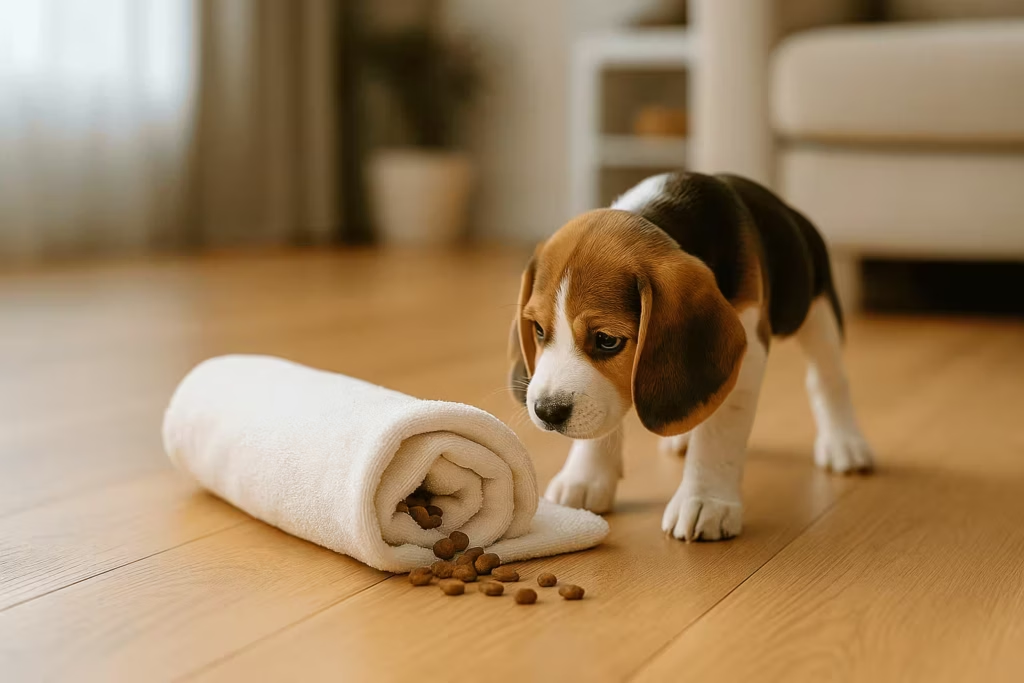
Free Leave-It Training Tool (Positive Reinforcement)
Teach “Leave It” with short, science-based sessions. Track reps, see your success streak grow, and auto-adjust difficulty so your dog learns to ignore food, toys, and floor finds. Great for dog training for impulse control and preventing a dog from eating things off the floor.
Open the interactive console ↓🛰️ Leave-It Training Mission Console
- Start easy: low-value item in closed fist; mark/pay when your dog backs off or offers eye contact.
- One cue only: say “Leave it” once; then wait. No repeating.
- Reinforce away: deliver treats from the other hand, away from the item.
- Advance axes: lengthen duration, make the gap smaller, and raise temptation (uncover/move/tastier) one at a time.
- Release separately: use a release (“Take it”) only on permission—never for breaking.
- If they lunge: cover the item, calmly reset, then reduce the next rep ~30–50%.
Why this tool helps
Builds reliable impulse control
The console shapes calm “ignore it” behavior through tiny wins. You’ll get streak coaching and progressive difficulty so your dog practices the right choice again and again—ideal when you’re figuring out how to teach a puppy leave it and dog-proof your home.
Science-based workflow
Short reps apply positive reinforcement and operant conditioning. Clean marker timing (reward timing) paired with classical conditioning turns “ignoring” into a feel-good behavior.
Prevents problem spirals
By reinforcing looking away from food, trash, socks, or wildlife, you reduce scavenging and jumping. This workflow is perfect for preventing a dog from eating things off the floor and avoiding conflict patterns linked to resource guarding.
When to use “Leave-It” in daily life
Dropped food in the kitchen
Teach your dog to pause and look to you when crumbs fall. Combine this with place training so they settle on a mat while you cook.
Walks past distractions
Use “Leave It” for street food, wildlife, and litter—then add loose-leash walking to keep momentum and attention on you.
Polite greeting routines
Ask for a leave-it on guests’ hands, bags, or shoes, then cue a calm sit or send to Stay. This reduces jumping while rewarding self-control.
Step-by-Step Training Plan
Start easy, end on wins, and move one axis at a time. Most families see fast progress with several 1–4 minute missions per day.
| Stage | Goal | Handler Actions | Advance when… |
|---|---|---|---|
| 1) Closed-fist intro | Dog backs off a low-value item | Say “Leave it” once → present item in closed fist → mark the back-off or eye contact → feed from the other hand away from the item. | 3–5 quick wins in a row at 1–2s. |
| 2) Open-hand | Dog ignores uncovered item for longer | Open hand slightly → be ready to close if they dive → mark and pay for looking away; lengthen duration. | 3 wins in a row at 3–5s. |
| 3) Floor items | Dog ignores item on floor with space | Place item on floor, foot ready to cover → mark turn-away → pay away. Reduce the gap slowly. | 3 wins at 4–6s with 4–6ft gap. |
| 4) Real life | Dog leaves higher temptations | Raise temptation: tastier food, movement, or tossing. Keep reps short, success high, and reinforce generously. | 3 wins per setting; vary rooms, surfaces, and times. |
Common Mistakes & Fixes
Repeating the cue
Saying “Leave it, leave it, leave it…” turns the cue into background noise. Say it once, then wait. If they struggle, reduce difficulty and try again.
Paying near the item
Deliver reinforcement away from the temptation to prevent darting back to it. Use a marker and pay by your leg or behind you.
Too big a jump
Change only one axis at a time (duration, gap, temptation). If your dog lunges, cover the item, take a calm break, then back off ~30–50%.
Leave-It FAQs
Is “Leave It” the same as “Drop It”?
No—“Leave It” means don’t take it. “Drop It” means let go of what’s in your mouth. For letting go, see our Drop-It training tool.
How long should sessions be?
1–4 minutes is perfect. Multiple tiny missions beat one long session. Stop while your streak is high.
What if my dog guards items?
Use easy, controlled setups—no snatching. Reinforce turning away early and often.