
Mastering Mat Relaxation for Dogs: A Simple Protocol for a Calmer Pet
The mat relaxation protocol for dogs is a foundational training exercise that teaches your pet to settle calmly on a designated mat or bed. This simple but powerful technique helps manage excitement, reduce anxiety, and creates a portable “safe space” for your dog anywhere you go. It’s more than a party trick; it’s a critical life skill.
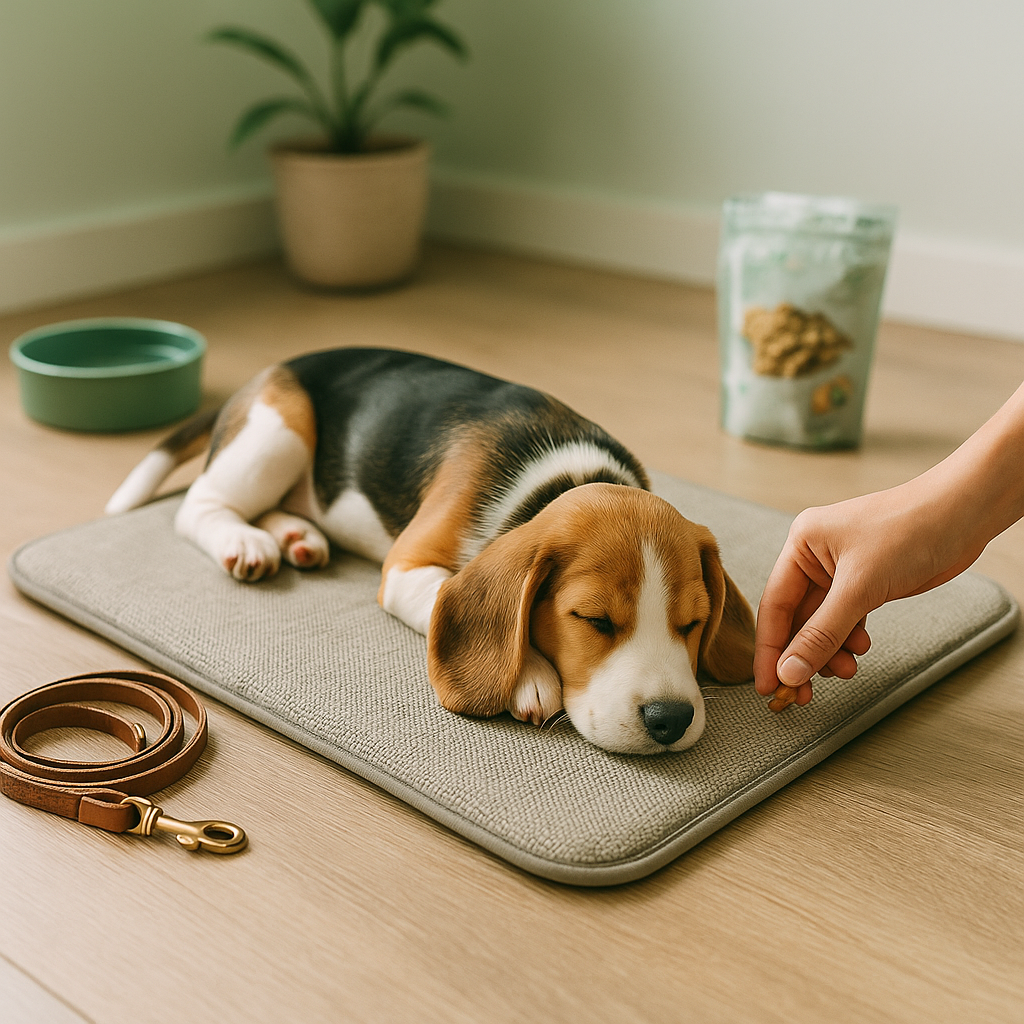
Step-by-Step Guide to Mat Relaxation for Dogs
This protocol relies on using positive reinforcement to build a strong positive association with the mat. Keep sessions short and fun!
Step 1: Introduce the Mat (Shaping)
The first goal is to make the mat the best place on earth. We’ll use a training technique known as shaping to build value.
- Place the mat on the floor in a quiet room.
- Reward any interaction: looking at the mat, sniffing it, or stepping on it. Toss a treat *on the mat*.
- When your dog steps on the mat to get the treat, say “Yes!” and give them another treat right away.
- Toss a “reset” treat away from the mat so they can choose to return. Repeat this game for 1-2 minutes.
Step 2: Capture a ‘Down’
Once your dog is happily going to the mat, we wait for them to offer a ‘down’ position. This is part of capturing calmness.
- Lure or wait for your dog to lie down on the mat. The moment they do, say “Yes!” and deliver several high-value treats in a row between their paws.
- Keep rewards low and calm to avoid re-exciting them.
- If they stay down, continue to reward them calmly every few seconds.
- Release them with a cue like “Okay!” before they decide to get up on their own.
Step 3: Build Duration & Add a Cue
This is where patience is key. We are slowly increasing the time your dog can relax on the mat.
- Gradually increase the time between rewards, from 2 seconds to 5, then to 10, and so on. Vary the interval to keep it unpredictable.
- If your dog gets up, it just means you went too fast. Simply reset and try again with a shorter duration.
- Once your dog is reliably going to the mat and lying down, you can add a verbal cue like “Place” or “Mat” just before they do it.
Why This Protocol Works: The Science of Calm
Teaching mat relaxation for dogs is effective because it leverages two key principles of operant conditioning and classical conditioning to change your dog’s emotional state.
- Classical Conditioning: Through repeated pairing, the mat itself becomes a predictor of good things (treats, praise) and a calm state of mind. The mat starts to *mean* “relax.” This is invaluable for helping a new puppy adjust to your home.
- Operant Conditioning: Your dog learns that the behavior of going to the mat and lying down calmly is what earns them reinforcement. They are actively choosing to be calm because it’s a rewarding behavior.
Success is heavily weighted towards setting up the environment for success. A quiet space with minimal distractions is crucial, especially in the beginning.
Ultimately, this protocol is one of the most versatile dog enrichment activities you can teach. It functions as an excellent environmental management tool, giving you a way to station your dog calmly when visitors arrive or when you need them to settle. It’s a foundational skill for our puppy socialization checklist and helps immeasurably with threshold management for reactive dogs.
Choosing the Right Mat for Your Dog
While any towel or bed can work, choosing the right mat can increase comfort and training success. The key is that it’s a distinct, portable object.
For Puppies & Chewers
Recommendation: A durable, chew-resistant mat made from canvas or ballistic nylon. Brands like K9 Ballistics or Kuranda offer raised, chew-proof beds.
Why: Puppies explore with their mouths. A tough mat prevents destruction and costly replacements. It’s also easy to clean after accidents, which is essential while they learn to be gentle and potty train.
For Adult Dogs
Recommendation: A simple, portable fleece or plush mat. A basic bath mat or a roll-up travel bed works perfectly.
Why: For most adult dogs, comfort and portability are key. A simple mat is easy to take to cafes, friends’ houses, or on vacation, making the “place” cue generalizable to any location.
For Senior or Arthritic Dogs
Recommendation: An orthopedic memory foam mat. Look for at least 2-4 inches of high-density foam.
Why: Joint support is critical for seniors. An orthopedic mat cushions joints, reduces pressure points, and makes lying down for extended periods much more comfortable, increasing their willingness to use it.
For Giant Breeds
Recommendation: A large, thick orthopedic bed or a purpose-built giant breed mat. Ensure it’s large enough for them to fully stretch out.
Why: Standard “large” beds are often too small. A giant breed needs ample space to avoid hanging off the edges, which can cause joint strain. Durability is also a factor due to their weight.
Troubleshooting Mat Relaxation for Dogs
This usually means the mat isn’t valuable enough yet. Go back to Step 1 and use higher-value treats (like small pieces of chicken or cheese). Make it a fun game of tossing the treat onto the mat. Don’t put any pressure on your dog; let them choose to investigate. For a puppy who is scared of new things, the mat itself might be intimidating. Leave it on the floor with treats on it for them to discover on their own time.
You’re likely asking for too much duration too soon. Go back to rewarding them with several treats in a row, delivered quickly between their paws, the second they lie down. This “jackpot” builds value for the position. Then, release them *before* they get up. The goal is for them to learn that staying down is what makes the good stuff happen.
If treat delivery makes your dog pop up in excitement, change your technique. Use lower-value, less exciting treats (like their kibble). Deliver the treat very calmly and slowly, placing it directly between their paws. Your own calm energy is contagious. You can also try rewarding more for calm behavior (e.g., a deep breath, head on the floor) rather than just the down position itself.
Frequently Asked Questions
Keep sessions very short initially, just 1-3 minutes at a time, a few times per day. As your dog’s duration improves, you can gradually extend the time. The goal is quality over quantity, always ending on a positive note before your dog gets bored or frustrated.
Absolutely! Using a crate bed or any existing dog bed is a great idea. The key is to use a consistent object that your dog can easily identify as their ‘calm spot’.
If your dog is chewing the mat, it may be a sign of boredom, anxiety, or simply that the training session has gone on too long. Immediately interrupt the behavior with a calm ‘ah-ah’ and redirect them to a chew toy. Keep future sessions shorter. Consider a more durable mat material if chewing is a persistent habit.
Only start practicing in new, more distracting environments after your dog has mastered settling on the mat at home with various distractions. Start with a quiet, low-distraction public space like a park bench far from the action. Generalize the skill slowly to ensure success.
Relaxation is more than just a ‘down’ position. Look for subtle signs of relaxation: a sigh, a head resting on the paws, or a hip rolling to the side. Reward these specific signs of calmness. If your dog is tense, the environment may be too distracting. Reduce the difficulty and focus on rewarding tiny moments of calm.
Next Steps: Integrating Calm into Daily Life
The mat relaxation protocol is a gift of calm you give to your dog. Once they have a solid foundation, start integrating it into your daily routine. Ask them to go to their mat while you cook dinner, watch TV, or when guests arrive. This practice transforms the exercise from a training trick into a real-life skill for a well-adjusted, peaceful companion.
Ready to explore more ways to help your dog thrive? Check out our complete list of training and enrichment resources.
Discover More Training Games
Christopher Quinn adopted his first dog, Loki, a spirited Border Collie/Jack Russell mix, after exiting Army service in the summer of 2012. That experience sparked a lifelong passion for canine behavior and positive reinforcement training.
He studied Principles of Dog Training & Behavior at Penn Foster and has since worked with hundreds of dogs from all backgrounds. Over the past two years, Christopher has fostered more than 30 rescue dogs, giving each one a chance at a better life.
Today, he continues to write, teach, and share insights on humane dog training, blending hands-on experience with a decade of dedicated study.