
Nosework Boxes — Easy Indoor Search Game for Dogs
A simple indoor search game that teaches your dog to use their nose, hunt calmly, and win with positive reinforcement.

How to do it (3 steps)
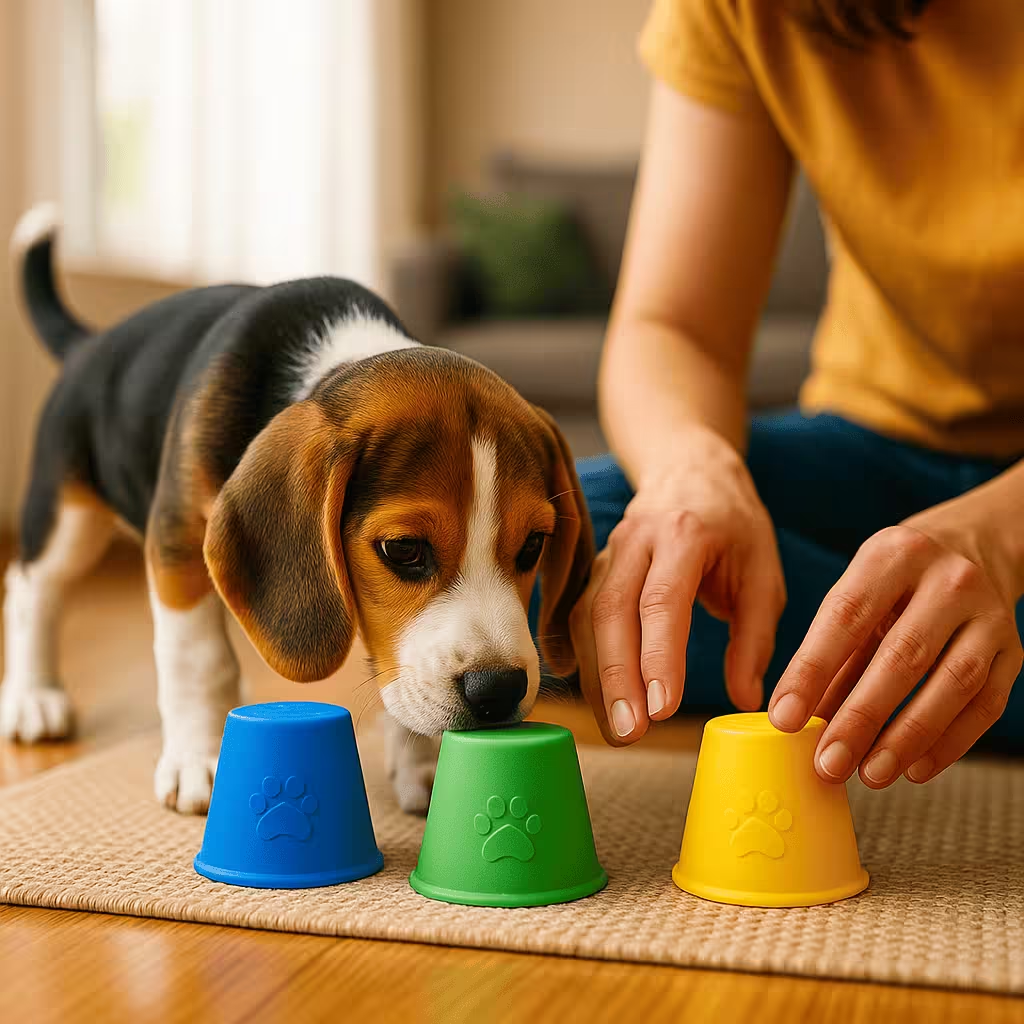
- Hide the treat under one box while your dog watches. Give the cue “Find it!”, and let them investigate. When the nose targets the correct box, lift it and deliver the treat at the source.
- Shuffle slowly while the dog sits or watches. Cue again and reward nose-at-source. Keep the movement easy at first so the dog learns the pattern and stays confident.
- Expand the search to more boxes or a neighboring room once they’re winning fast. Vary your hiding patterns and reward calmly at the box before resetting.
Each repetition is a small “win.” You’re shaping a search routine with clear criteria—read more about shaping in dog training.
Why it helps
Nosework taps into natural foraging and uses low-intensity movement, which often lowers arousal and builds focus. Repeated “finds” create a high rate of reinforcement and help your dog practice calm problem solving.
It’s also an easy way to meet indoor needs when weather or energy levels limit exercise. If you live with doorbell or window triggers, combine searches with threshold management techniques to keep arousal predictable.
Household management
Use simple rules to keep success high: start easy, keep boxes stable, and tidy after play. If shredding is likely, swap to non-tearable containers and review management & environmental control.
Make it easier
- Let your dog watch you place the treat before the cue.
- Use boxes with open sides or raised edges so odor flows out.
- Shorten the distance and keep the same hiding spot for 2–3 reps.
Level it up
- Add more boxes and shuffle faster, then change the pattern entirely.
- Hide in a second room, or place boxes on low furniture to vary height.
- Introduce a brief wait before the send to practice impulse control; you can connect this with your positive reinforcement routine.
Troubleshooting
My dog loses interest.
Increase the pay rate: let them watch the hide, reduce the number of boxes, and jackpot the first correct indication. End the session while they still want more. Later you can gradually add challenge again.
Boxes sliding or tipping worries my dog.
Switch to lighter containers, add non-slip mats, and keep movement predictable. Work under threshold and progress in tiny steps—see our guide to helping worried puppies.
Too much excitement after a few reps.
Shorten each session and slot in a calm decompression activity between rounds. Many families like to switch to a snuffle-style cool down before resuming searches.
Session structure
Try 2–3 micro-sessions of 3–5 finds each. Keep your cue consistent (“Find it!”), deliver the reward at source, then escort your dog away to reset. This rhythm makes the game predictable and reinforces the search pattern.
Try these variations next
Further reading
FAQs
How many boxes should I start with?
Begin with three boxes spaced 1–2 feet apart so the search is obvious and odor can flow. If your dog is new to games, start with just two boxes so the first success happens quickly. Add more only after several easy wins in a row.
What box types are safest?
Use clean, cardboard shipping or shoe boxes without staples. Lids are optional—many dogs do best with open boxes at first. If your dog likes to shred, remove the boxes as soon as the treat is eaten and replace cardboard with plastic storage bins or silicone containers that won’t tear.
How do I keep my dog from pawing or flipping boxes?
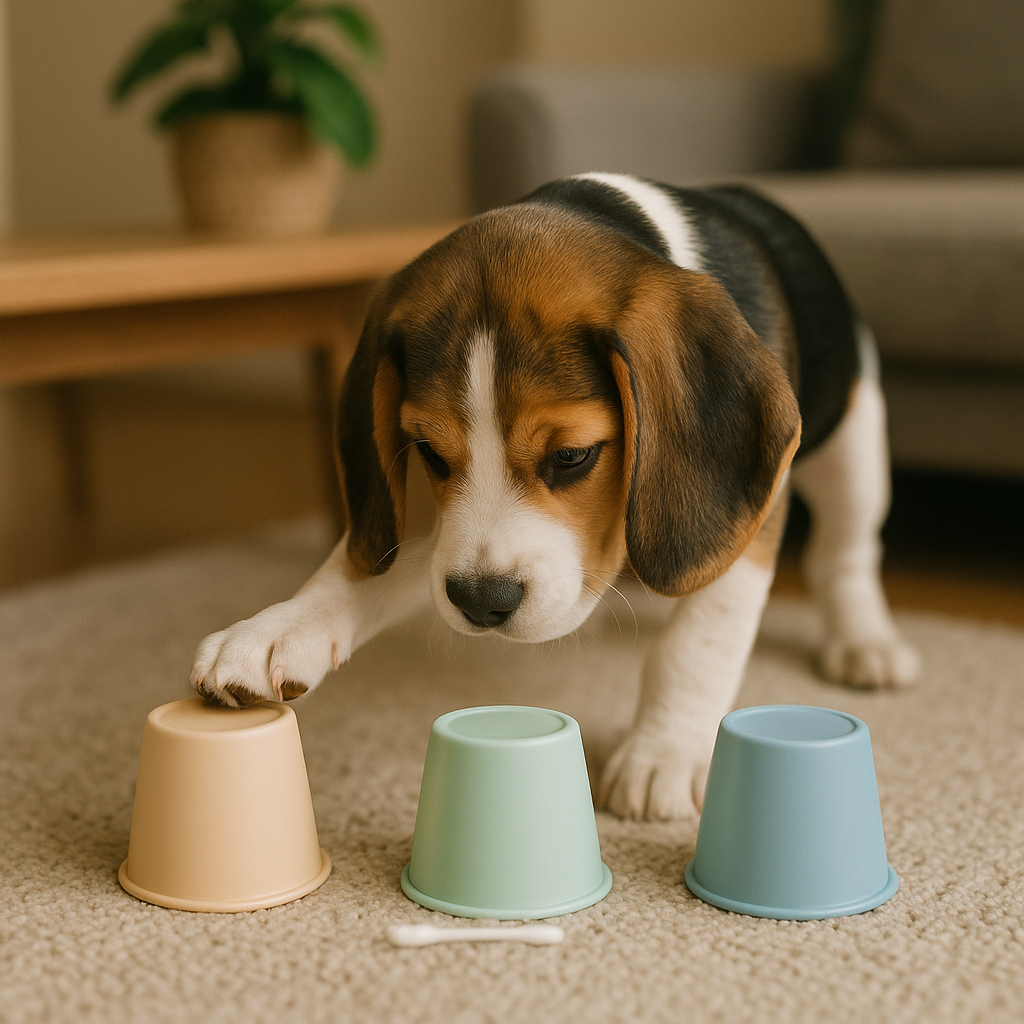
Reinforce calm nose targeting. When your dog holds their nose at the correct box, quietly lift it and pay at the source. If pawing continues, keep boxes light and reduce your shuffle so success feels easy. You can also add a brief sit before the send to practice impulse control.
Is this a good activity for worried puppies?
Yes—many timid dogs gain confidence from predictable, easy nosework. Keep movement slow, use extra-tasty rewards, and keep sessions short. If you see hesitation, reduce the challenge and consult our guide on helping a puppy who feels worried.

Christopher Quinn adopted his first dog, Loki, a spirited Border Collie/Jack Russell mix, after exiting Army service in the summer of 2012. That experience sparked a lifelong passion for canine behavior and positive reinforcement training.
He studied Principles of Dog Training & Behavior at Penn Foster and has since worked with hundreds of dogs from all backgrounds. Over the past two years, Christopher has fostered more than 30 rescue dogs, giving each one a chance at a better life.
Today, he continues to write, teach, and share insights on humane dog training, blending hands-on experience with a decade of dedicated study.