

If you’ve ever wondered how dogs learn — really learn — then understanding operant conditioning in dog training is essential. This principle is at the heart of all effective behavior shaping. Whether you’re teaching a brand-new puppy to sit or helping a rescue dog overcome bad habits, this science-backed method gives you the control, clarity, and compassion to guide any dog to success.
Let’s break down how it works, how to apply it, and why it’s so powerful — especially when combined with positive reinforcement techniques.
🔍 What Is Operant Conditioning in Dog Training?
Operant conditioning in dog training is a learning theory developed by B.F. Skinner. It states that behaviors are shaped and maintained by their consequences. In plain terms: dogs do what works for them. If a behavior gets a reward or removes something unpleasant, it’s more likely to happen again. If it leads to something bad or nothing at all, the behavior weakens.
This system works through four core consequences:
- Positive Reinforcement (adding something good)
- Negative Reinforcement (removing something bad)
- Positive Punishment (adding something bad)
- Negative Punishment (removing something good)
Each one affects behavior differently. But here at PupCommand, we strongly focus on positive reinforcement — the method proven to build trust, encourage learning, and reduce fear-based reactions.
B.F. Skinner dedicated decades to exploring how behavior is shaped by consequences. His landmark experiments using operant conditioning chambers—also known as “Skinner boxes”—demonstrated that behaviors reinforced by rewards increase in frequency.
These findings extend to dogs through modern positive-reinforcement-based training, as outlined in the American Kennel Club’s guide on operant conditioning.
IMPORTANT: The table below covers these 4 types of opperant conditioning in dog training equally. Today’s science mostly focuses on Positive Reinforcement- Adding something (usually desired) to increase the chances a dog will want to behave a certain way. Generally ignore the others until you have a much stronger understanding of dog behavior.
Master Operant Conditioning
Understand the Four Key Quadrants
Positive Reinforcement
Add a reward to increase a desired behavior.
Negative Reinforcement
Remove an aversive to increase a desired behavior.
Positive Punishment
Add an aversive to decrease an undesired behavior.
Negative Punishment
Remove a pleasant item to decrease an undesired behavior.
Application in Dog Training
By understanding these four core concepts, you can build a deeper bond and train your dog more effectively using clear, consistent signals.
The Four Quadrants At a Glance
(Add Stimulus)
(Remove Stimulus)
(Behavior Increases)
(Behavior Decreases)
🚦 The Four Quadrants of Operant Conditioning
Let’s briefly explore each quadrant using real dog training examples:
✅ 1. Positive Reinforcement
You give your dog a treat when they sit. This makes it more likely they’ll sit again. You’re adding something they want.
Best used for: teaching new behaviors, rewarding good decisions, strengthening trust.
For a more in-depth exploration of these rewarding methods, check out our complete guide to positive reinforcement dog training.
🔄 2. Negative Reinforcement
Your dog sits to stop you from applying gentle leash pressure. The pressure goes away. You’ve removed something unpleasant.
Often misunderstood: This can create confusion or dependency if not handled gently.
❌ 3. Positive Punishment
Your dog barks, and you spray them with water. You’re adding something unpleasant to stop a behavior.
Caution: Often leads to fear, not learning. Should be avoided unless working under a professional.
🔇 4. Negative Punishment
Your puppy nips you during play, so you stop the game. You remove something they like.
Great for bite inhibition: This teaches the dog that rough play ends the fun.
While operant conditioning focuses on the consequences of behavior, it’s also useful to understand other learning theories, such as classical conditioning dog training, which focuses on building associations.
🧠 Why Focus on Positive Reinforcement?
When applying operant conditioning in dog training, positive reinforcement has the greatest long-term benefits. It builds:
- A confident learner
- A willing partner
- A strong human-dog bond
- Lower stress levels during training
Dogs aren’t born knowing how we want them to behave. They explore, test, and observe. When you catch the right moment — and reward it — the behavior becomes a habit.
Pro Tips for Effective Dog Training
Build a stronger bond with your furry friend.
Be Consistent
Use the same commands and reward systems every time. Consistency is key to helping your dog understand expectations.
Timing is Everything
Reward desired behaviors immediately—within 1-2 seconds. This creates a strong, clear association for your dog.
Know Your Motivators
Rewards aren’t just treats. Find what your dog truly loves, whether it’s a specific toy, enthusiastic praise, or a good belly rub.
Keep it Positive
Focus on rewarding what your dog does right. Positive reinforcement builds a strong, trusting bond and makes learning fun.
How to Use Operant Conditioning in Real Life for a Well-Behaved Dog
Want to raise a dog who listens, cooperates, and thrives? Understanding the principles of operant conditioning is your key to unlocking clear communication and a stronger bond. It’s a science-based method that focuses on rewarding desired behaviors to make them more likely to happen again. Here’s a more thorough, step-by-step guide on how to apply this method effectively.
1. Set Up Clear and Consistent Triggers (Cues)
Before you can reward a behavior, you need a reliable way to ask for it. This is your cue, or trigger. A good cue is distinct, consistent, and easy for your dog to perceive. Have a specific cue ready: a hand signal, a single verbal command, or even a specific context (like picking up the leash). For example, when teaching a dog to “sit,” consistently say the word “sit” in a clear, upbeat tone while holding a treat.
Avoid repeating the command, as this can teach your dog that “sit, sit, sit” is the actual cue. It’s often effective to teach a hand signal first, as dogs are highly visual, and then pair it with the verbal cue. A consistent dog training command is the foundation for avoiding confusion and building a reliable response.
2. Capture or Lure the Desired Behavior
Now you need to get your dog to perform the action. There are two great ways to do this: luring and capturing.
Luring involves using a motivator, usually a high-value treat, to guide your dog into the desired position. To lure a “sit,” you might hold a treat near your dog’s nose and slowly move it upward and back over their head; their head will go up, and their rear will naturally go down.
Capturing involves waiting for your dog to offer the behavior on their own. For instance, if you want to teach “down,” you can simply wait for your dog to lie down naturally. The moment they do, you’ll proceed to the next step. Capturing a natural dog behavior is excellent for actions your dog already does and helps them become an active participant in the training process.
3. Mark the Exact Moment of Success
The timing of your feedback is arguably the most critical component of training. You need to tell your dog, “Yes, that exact thing you just did is what I wanted!” This is done with a “marker.” A marker can be a click from a training clicker or a consistent verbal marker like an enthusiastic “Yes!” or “Good!” The marker acts as a bridge, pinpointing the precise moment the correct behavior occurs and promising that a reward is coming.
For example, the very second your dog’s bottom touches the floor in a sit, you click or say “Yes!” This precision is vital because any delay can lead to confusion. If you mark the moment they start to stand up, you’re accidentally marking the wrong action. The importance of timing in positive reinforcement cannot be overstated.
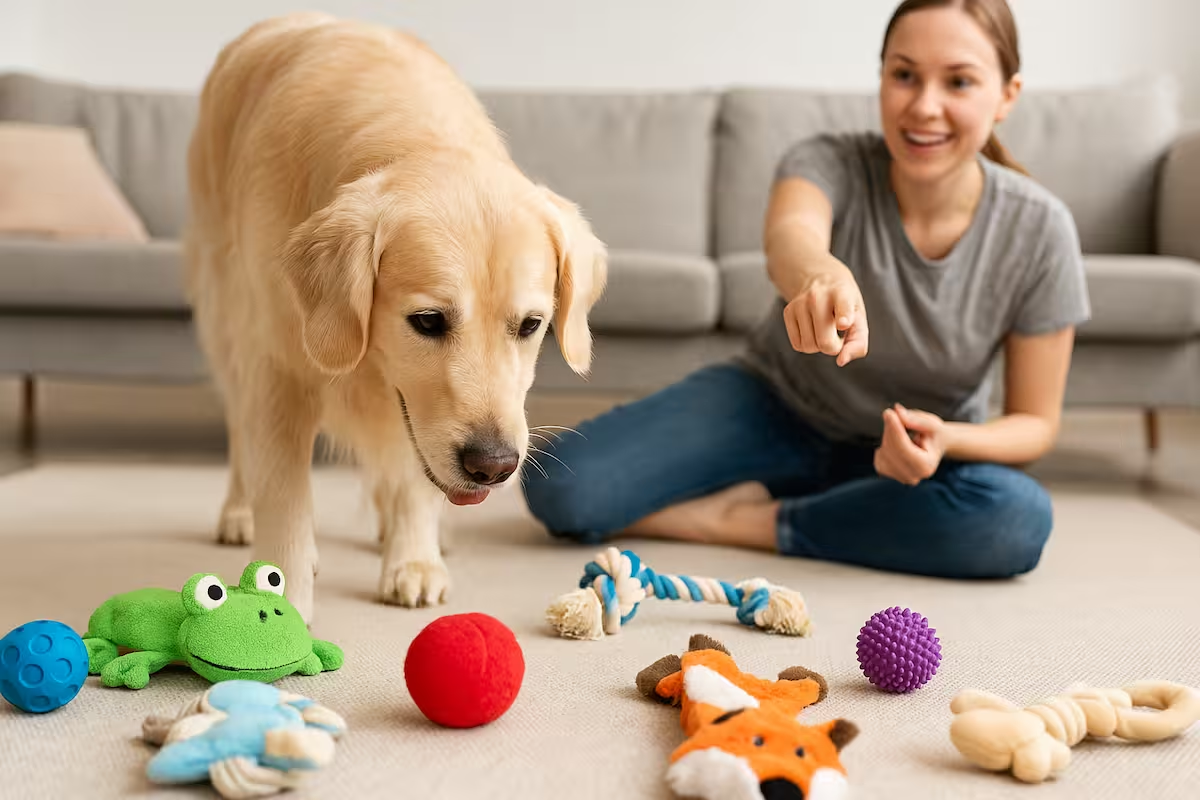
1. Lure or Capture Behavior
Get Your Dog in Position
To teach a new skill, you need your dog to perform the action. Two great, science-backed methods are luring and capturing.
Luring uses a treat to guide your dog into position. For a ‘sit,’ lead their nose up and back to help their rear go down.
Capturing means waiting for your dog to offer the behavior naturally. This makes them an active partner in learning.
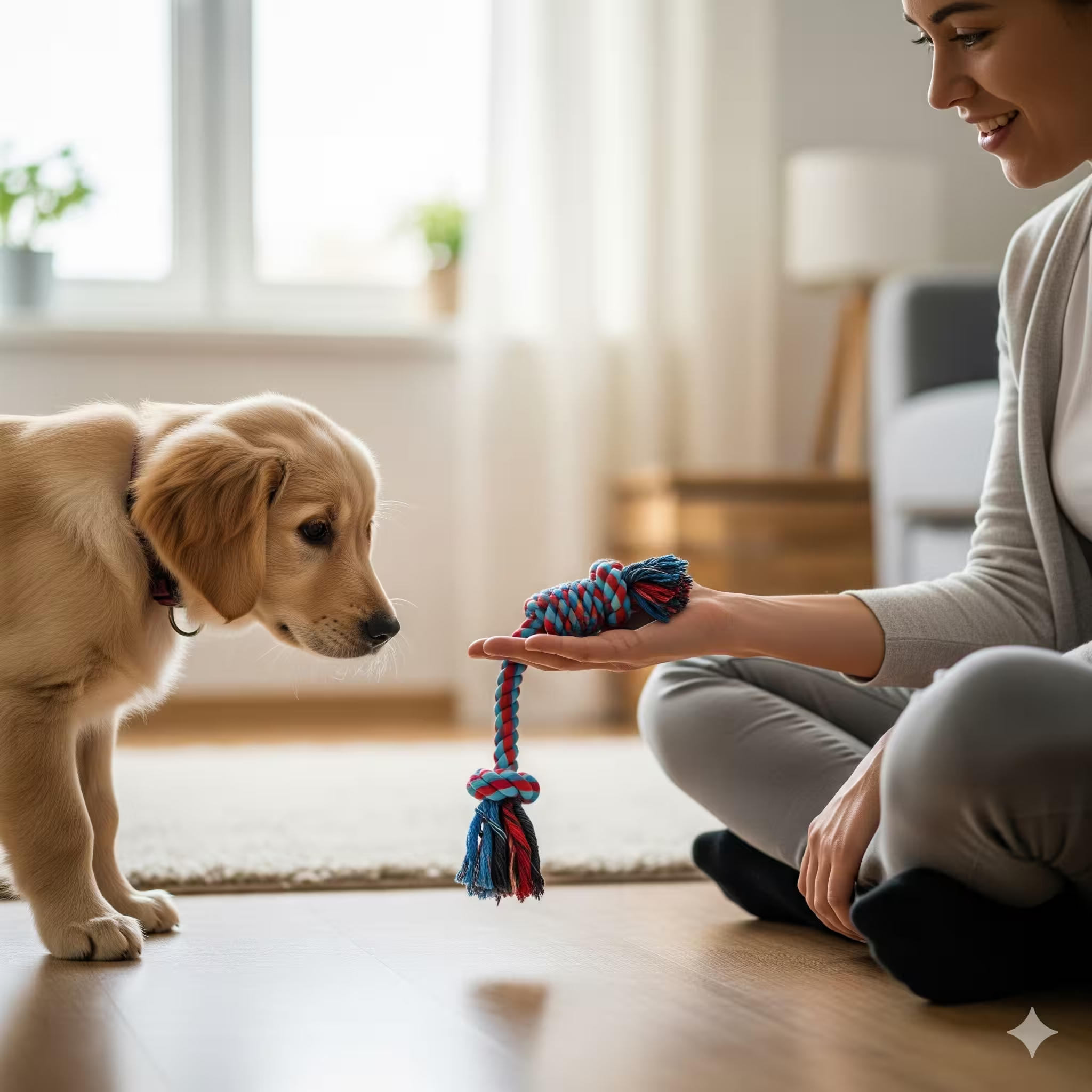
2. Mark the Exact Moment
Pinpoint Success with Timing
Timing is the most critical part of positive reinforcement. You must mark the exact moment your dog gets it right.
Use a “marker”—a clicker or a consistent word like “Yes!”—to bridge the gap between the action and the coming reward.
Click the instant their rear hits the floor for a sit. A delay will mark the wrong action and create confusion.
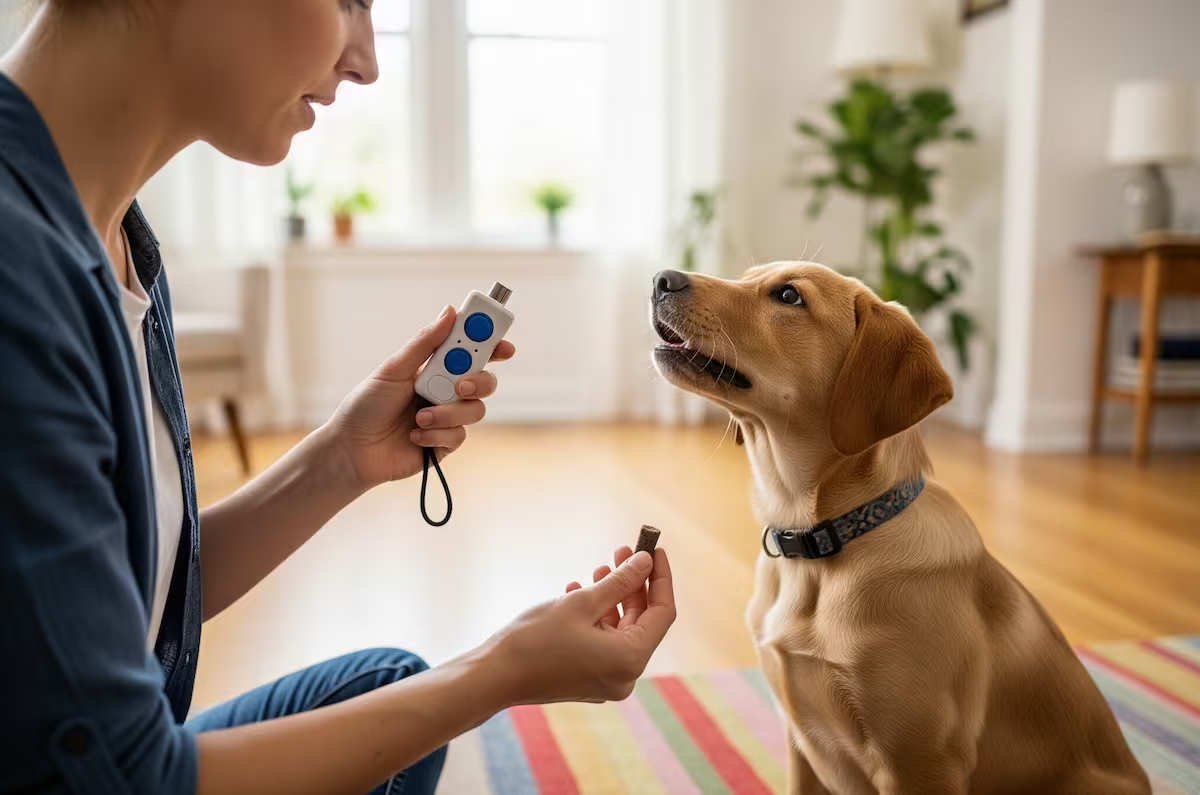
3. Reinforce Generously
Reward Every Correct Attempt
Reinforcement is the reward that follows your marker. When a skill is new, rewarding every correct attempt is essential to build your dog’s motivation.
Your marker is a promise of a treat. Always “pay” immediately to build trust and make your dog eager and excited to learn.
4. Reinforce Generously and Effectively
Reinforcement is the reward that follows the marker. Especially when a skill is new, you need a high rate of reinforcement in dog training to build motivation and solidify the behavior in your dog’s mind. Reward every single correct attempt at first. This generous reinforcement creates a strong positive association with the behavior and with the training session itself, making your dog eager to learn.
The reward must immediately follow the marker. Think of it as a contract: the marker is the promise, and the treat is the payment. Failing to “pay” after the promise breaks trust and renders the marker meaningless.
5. Add Variety to Your Rewards
While food is a powerful primary reinforcer for most dogs, relying on it exclusively can make training predictable or less effective if the dog isn’t hungry. To keep training exciting and build resilience, use a variety of rewards. Discover what your dog truly values. This could be a favorite squeaky toy, a quick game of tug-of-war, enthusiastic praise and petting, or the chance to sniff a particularly interesting spot on a walk.
Using toys as rewards for dog training can be especially effective for play-motivated breeds. By understanding your dog’s personal reward hierarchy—from everyday kibble to super high-value dried liver—you can match the reward to the difficulty of the task, keeping your dog engaged and eager to work with you.
6. Systematically Fade the Lure
Once your dog reliably performs the behavior with a food lure, it’s time to fade it so they respond to the cue alone. The goal is to transition from hand signals to verbal cues, or at least make the hand signal much more subtle. Fading the lure in dog training should be a gradual process. First, go through the same hand motion but without a treat in your hand, rewarding from your other hand after the behavior.
Next, make the hand motion smaller and less exaggerated over several repetitions. If your dog gets stuck, you may have faded the prompt too quickly; simply take a step back to the last successful level of prompting and proceed more slowly. Eventually, the verbal cue you’ve been pairing with the lure will be all you need to elicit the behavior.
7. Generalize the Behavior to New Environments
A common frustration for owners is a dog who performs perfectly in the living room but seems to forget everything at the park. Dogs are situational learners and don’t automatically generalize behaviors. “Sit” in the kitchen is a different picture to them than “sit” at a busy intersection. You must actively practice in new locations to “proof” the behavior.
Start with minimal distractions, like your backyard, then move to the quiet driveway, a calm sidewalk, and eventually to more distracting environments like a pet-friendly store or the edge of a park. This process of generalizing dog commands to new environments teaches your dog that the cues mean the same thing everywhere, regardless of the surrounding sights, sounds, and smells.
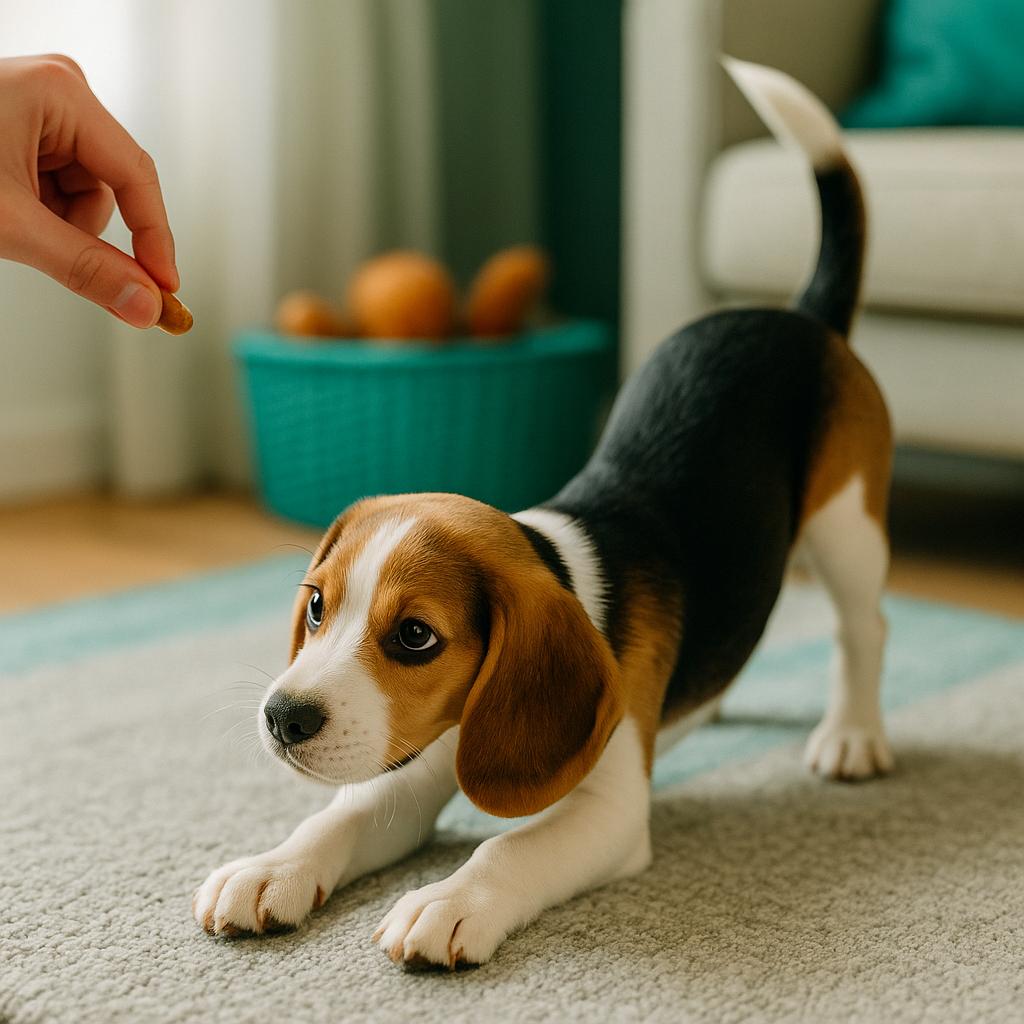
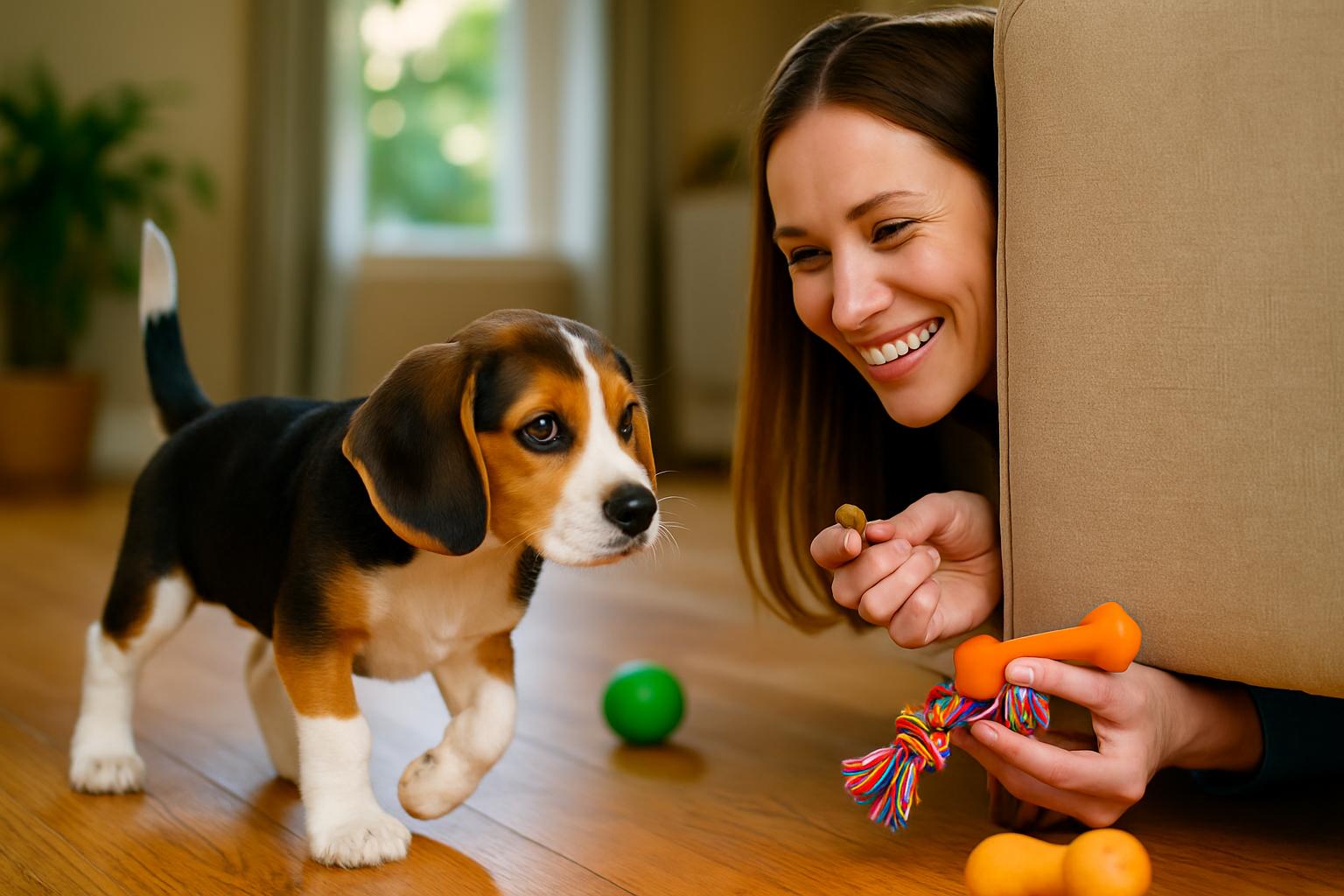
Jumping on Guests
How to Stop a Dog from Jumping
To stop jumping, use negative punishment by calmly turning your back to remove the attention they crave. Even saying “no” can accidentally reward the behavior.
Reward the right action. The moment all four paws are on the floor, praise and treat them. Teaching a “sit” for greetings gives them a positive alternative.
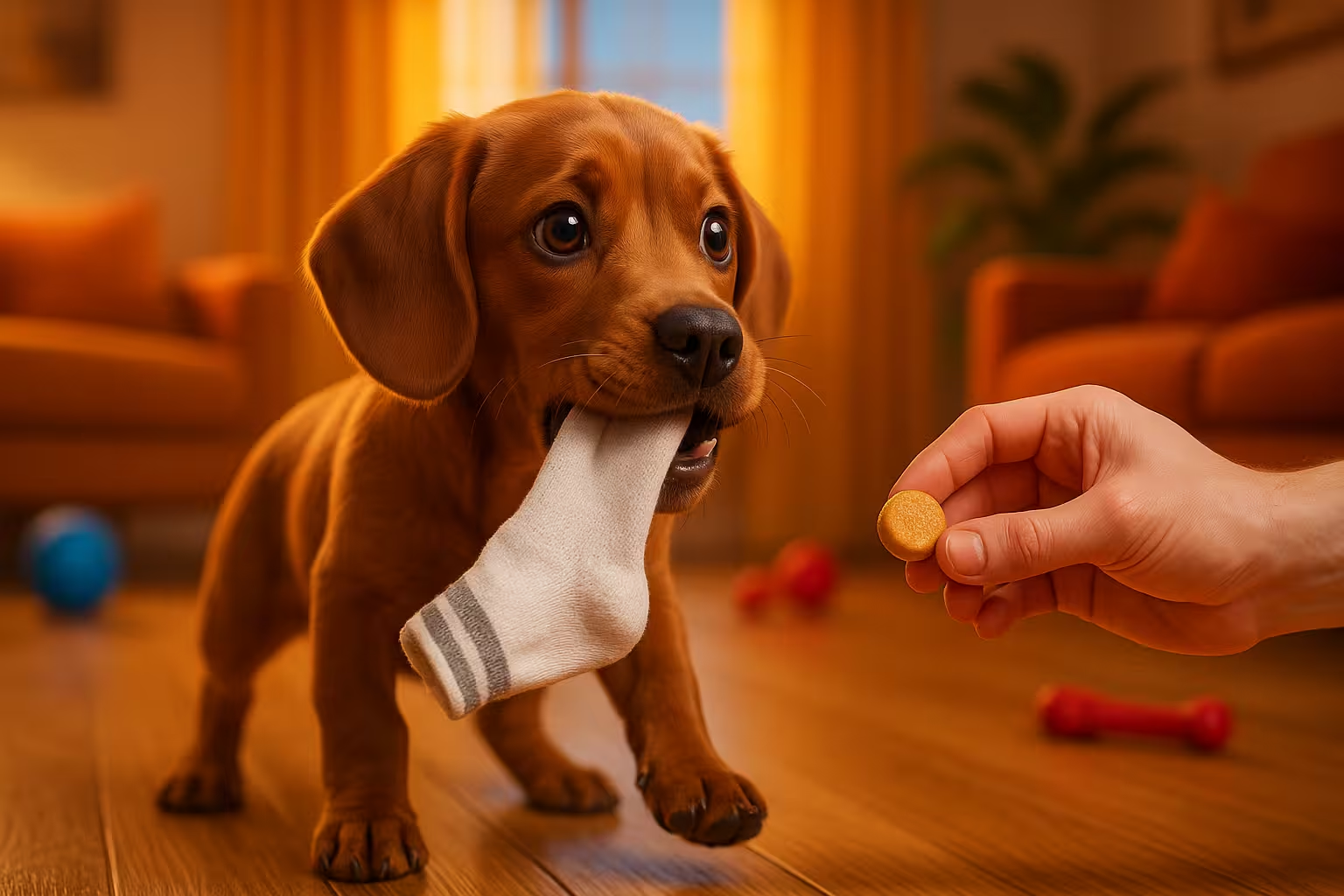
Barking at the Door
Dog Barking at Doorbell Solutions
Reward moments of quiet. When the doorbell rings and your dog pauses their barking, mark and reward that silence to encourage more of it.
Better yet, train an incompatible behavior. Teaching a dog the “place” command gives them a specific job. If they are on their mat, they can’t be at the door barking. This gives them a clear, positive alternative.
Pulling on Leash
Loose-Leash Walking Training Tips
The instant your dog pulls and the leash tightens, stop walking. This uses negative punishment by removing what they want: moving forward. They will learn that pulling gets them nowhere.
Generously reward your dog with praise and high-value treats for walking beside you on a loose leash. This positive reinforcement makes walking with you more rewarding than pulling ahead.
📉 What to Avoid
Even though operant conditioning in dog training includes punishment, using fear or intimidation has proven to be harmful. Research shows dogs trained with aversives often:
Show more stress signals
Become avoidant or aggressive
Lose trust in their handler
Take longer to learn new skills
At PupCommand, we advocate for ethical, science-backed training that nurtures your dog’s emotional and behavioral well-being.
Multiple studies support this finding. Research from the American Veterinary Society of Animal Behavior shows that dogs trained using fear-based methods exhibit significantly higher levels of stress. These dogs are more likely to:
🔄 Common Training Issues — and How Operant Conditioning Solves Them
These foundational principles can be applied to many difficult scenarios. If you are struggling with specific challenges, our guide on dog behavior problems and solutions can provide more targeted advice.
💬 Final Thoughts
Understanding operant conditioning in dog training gives you a powerful lens to shape your dog’s behavior. It’s not about dominating or “correcting” — it’s about communication. Every interaction is a chance to teach. Every consequence is a message.
Choose to be clear. Choose to be kind. Choose to reward the behaviors you want to see again — and watch your dog grow into the best version of themselves.
The Psychology Behind the Training
Effective dog training is rooted in the science of animal behavior. The primary learning theory we use is known as operant conditioning, a method where an animal makes an association between a particular behavior and its consequence. This process isn't about dominance; it’s about clearly communicating which behaviors are desirable. The learning happens through four distinct approaches, or quadrants.
Positive Reinforcement
Adding something the dog values (like a treat, toy, or praise) to increase the likelihood of a behavior happening again.
You ask your dog to sit, and when they do, you give them a piece of chicken.

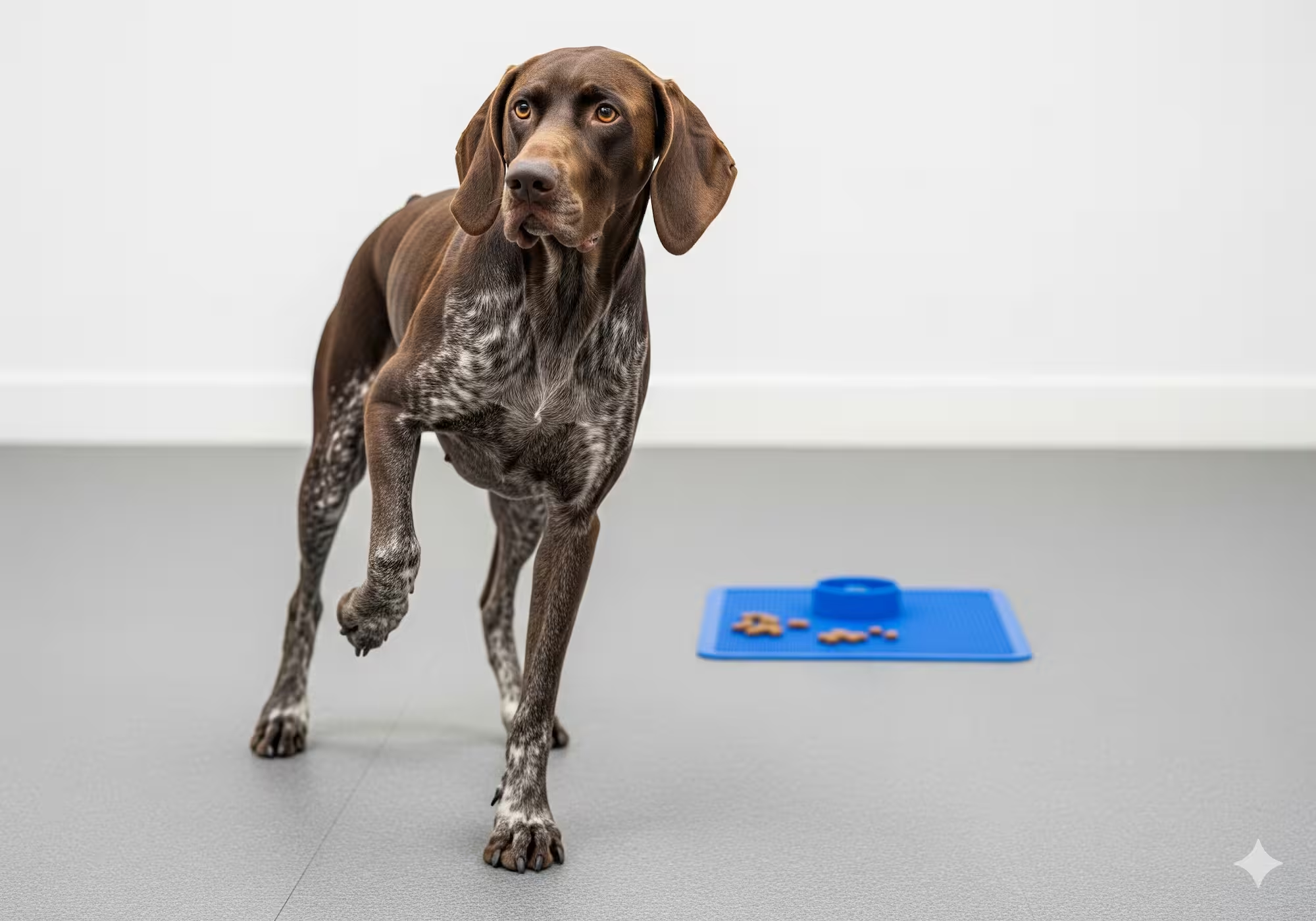
Negative Punishment
Removing something the dog values (like your attention or a toy) to decrease the likelihood of an unwanted behavior.
Your puppy is nipping at your hands, so you say "oops" and briefly walk away.
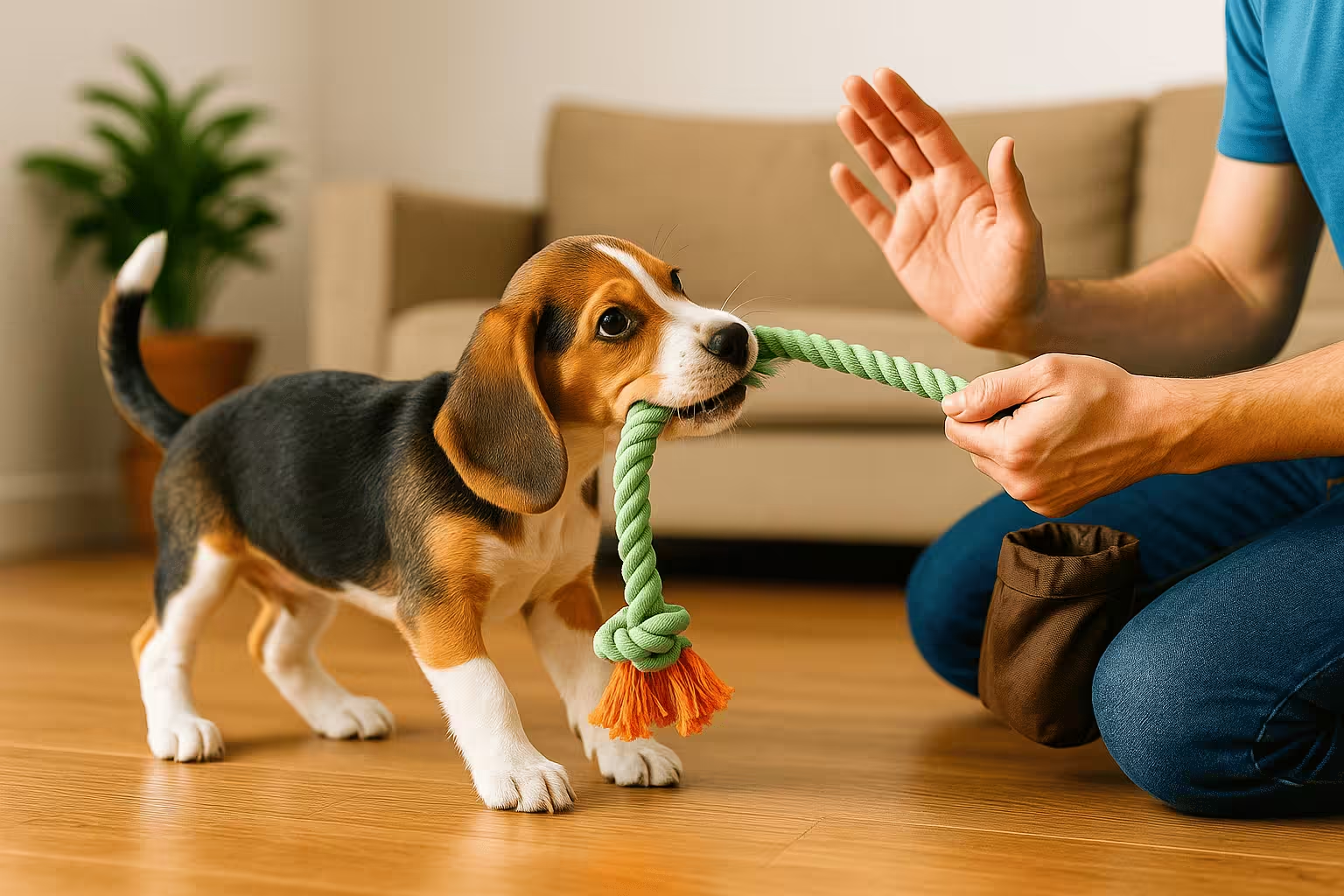
Positive Punishment
Adding something the dog finds unpleasant (like a leash correction or loud noise) to decrease an unwanted behavior.
A dog pulls on the leash, and an electronic collar delivers a stimulation.
Negative Reinforcement
Removing something the dog finds unpleasant to increase the likelihood of a desired behavior happening again.
Applying pressure to a dog's collar until they sit, then releasing the pressure as a reward.
Why We Focus on Reinforcement
While all four quadrants can change behavior, they are not equal in their outcomes. Modern, humane training methods prioritize positive reinforcement and negative punishment. This approach builds a dog's confidence and strengthens the bond between you and your pet.
Conversely, training methods that rely on positive punishment and negative reinforcement can create unintended consequences. These aversive techniques can increase fear, anxiety, and even aggression in dogs, as they learn to associate the handler with discomfort or pain. For a happy, confident, and reliable companion, building a foundation of trust through reinforcement is the most effective path.