

Overview
The Poodle dog breed is frequently misunderstood.
While they often appear in movies or magazines as fluffy show dogs, their brilliance and working potential run deep.
The truth is, this is one of the most intelligent, versatile, and emotionally responsive breeds on Earth.
Before falling in love with their stylish coats and graceful form, take a moment to assess your lifestyle. The Poodle dog breed is not content with being ornamental. These dogs crave structure, communication, and both mental and physical stimulation.
Whether you’re considering a Standard, Miniature, or Toy Poodle, the same truth applies: if you’re not mentally engaging your dog, you’re neglecting a core part of their wellbeing.
| Attribute | Details |
|---|---|
| Group | Non-Sporting |
| Origin | Germany / France |
| Sizes | Standard, Miniature, Toy |
| Lifespan | 12–16 years |
| Energy Level | Moderate to High |
| Trainability | Exceptionally High |
| Coat Type | Curly, low-shedding |
| Best for | Families, active individuals, performers |
If you’re considering adding a Poodle to your life, understand that you’re not just getting a dog. You’re gaining a partner—a witty, elegant, sensitive creature who thrives on connection.
Origins & History
Though many associate the Poodle dog breed with France, its roots trace back to Germany, where it was bred as a water retriever. The name “Poodle” comes from the German word “Pudel,” meaning “to splash in water.”
Originally, the Standard Poodle was used to retrieve waterfowl from lakes and rivers. Their dense, curly coats protected them from cold water, and their athleticism made them efficient, trainable workers. The familiar Poodle clips—often viewed as decorative—actually served a functional purpose, helping the dog move freely while protecting vital organs and joints from cold.
As the breed moved into France, it gained popularity among nobles and became a symbol of refinement and intelligence. French breeders created the Miniature and Toy varieties, focusing more on companionship and performance, especially in circuses and royal courts.
Regardless of size, the Poodle dog breed has always been about brains, balance, and beauty.
Intelligence & Mental Stimulation
Ranked just behind the Border Collie in Dr. Stanley Coren’s dog intelligence studies, the Poodle dog breed is capable of learning new commands in as few as five repetitions. They retain new skills quickly, often outperforming more traditionally “working” breeds.
| Breed | Commands to Learn | Obedience Rate |
| Border Collie | <5 | 95% |
| Poodle | 5–10 | 90% |
| German Shepherd | 5–10 | 85% |
| Golden Retriever | 5–10 | 85% |
This intelligence is a gift—but also a responsibility. The Poodle dog breed becomes bored easily, and when left unstimulated, they will invent jobs: unzipping backpacks, opening drawers, or pestering housemates.
Daily mental tasks such as puzzle toys, scent work, advanced tricks, or obedience routines are essential. Without them, even well-exercised Poodles may display problem behaviors.
Temperament & Behavior
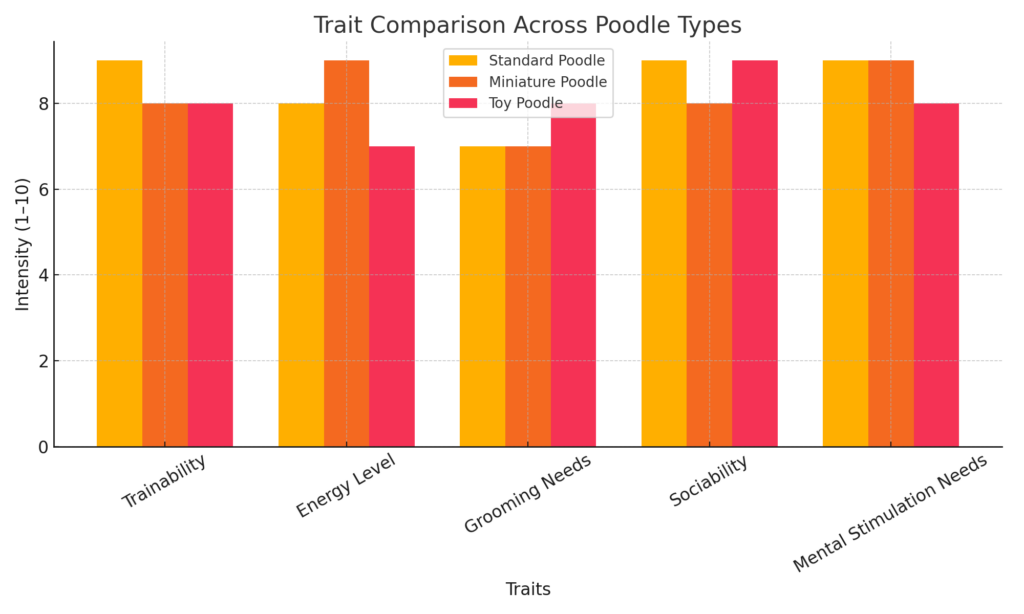
The Poodle dog breed is known for its emotional intuition. These dogs don’t just observe—they respond. They mirror your mood, body language, and energy levels with uncanny accuracy.
| Trait | Description |
| Affectionate | Deeply loyal; forms strong bonds with owners |
| Sensitive | Reacts strongly to tone of voice or emotional shifts |
| Alert | Highly aware of surroundings, making good watchdogs |
| Playful | Retains puppy-like energy well into adulthood |
| Adaptable | Adjusts well to different homes if mentally engaged |
Poodles are ideal for families, therapy work, or service tasks when raised in consistent, emotionally safe environments. However, harsh discipline or inconsistent rules can create stress-based behaviors like barking, pacing, or avoidance.
Socialization from an early age is critical. While friendly, they can become aloof or cautious if not regularly exposed to varied people and environments.
Training & Leadership
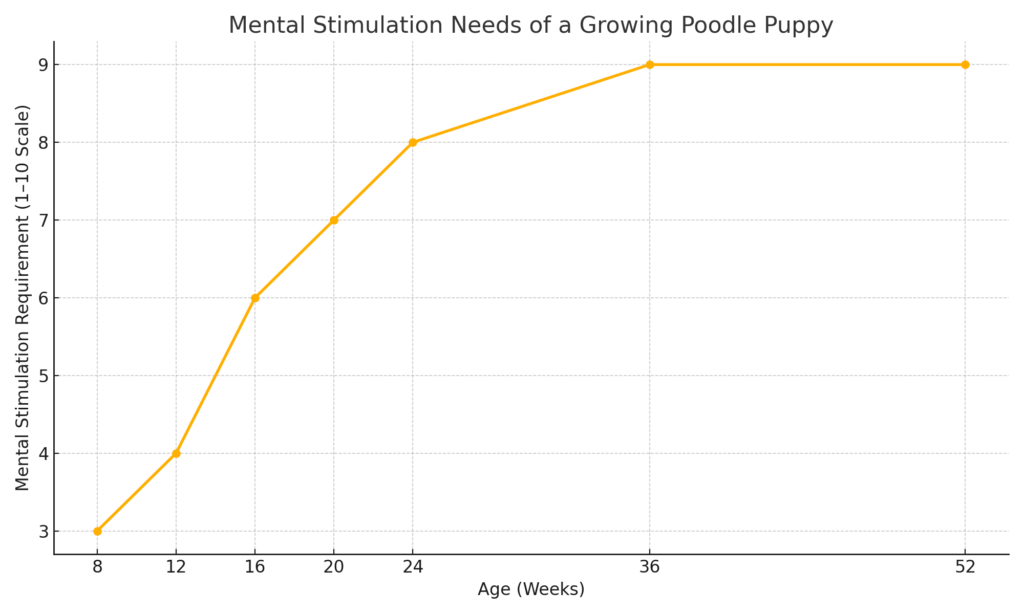
Training the Poodle dog breed is often described as a joy. They thrive on clarity, consistency, and the opportunity to learn new things. But that doesn’t mean they tolerate laziness or confusion in their handlers.
Ideal Methods:
- Clicker training with shaping and capturing techniques
- Canine freestyle and agility
- Scent detection and tracking
- Task-based challenges like opening drawers, ring bells, or carrying items
Mistakes to Avoid:
- Repetitive, boring routines
- Inconsistent rules or schedules
- Harsh corrections
Leadership should be calm, focused, and rewarding. The Poodle dog breed flourishes when given a role to play and a guide who respects their capacity for learning.
Poodles respond exceptionally well to positive reinforcement dog training, making them ideal candidates for humane, science-based behavior shaping.
Exercise & Activity Requirements
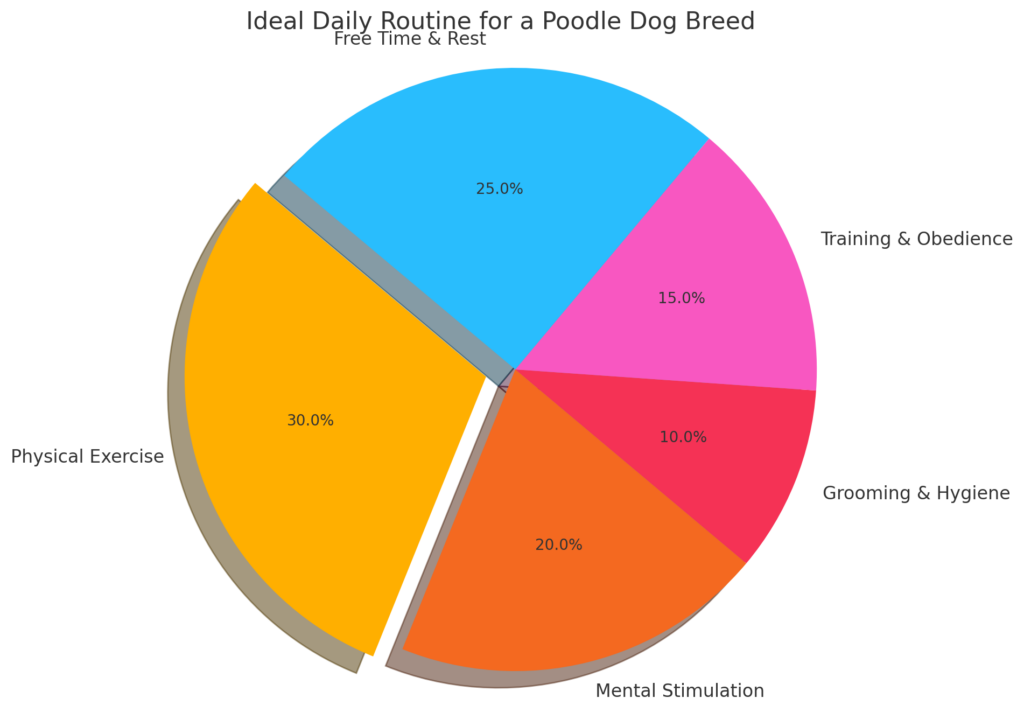
Don’t let the fancy haircut fool you—these dogs were bred to work.
Poodles need:
- 45–60 minutes of physical exercise daily
- 30+ minutes of structured mental engagement
Standard Poodles especially enjoy swimming, hiking, and advanced agility. Miniatures and Toys thrive with fetch, nose work, and home-based obstacle play. Fetch in the backyard is fine—but it must be part of a bigger routine.
| Activity Type | Examples |
| Physical | Swimming, running, agility, play |
| Mental | Puzzle toys, trick training, scent work |
| Social | Dog park trips, group training classes |
| Purposeful Work | Carrying items, therapy visits, performances |
A tired Poodle is a happy Poodle—but they must be mentally engaged as well.
Grooming & Coat Care
Perhaps the most defining physical trait of the Poodle dog breed is its curly, dense coat. But that coat is more than cosmetic—it’s a functional, water-resistant feature with very specific care needs.
| Area | Care Frequency | Notes |
| Brushing | 3–4 times/week | Prevents mats, maintains curl shape |
| Bathing | Every 3–4 weeks | Use mild shampoo to preserve skin oils |
| Trimming | Every 6–8 weeks | Professional grooming often required |
| Ears | Weekly check | Prevent wax buildup and infections |
| Teeth/Nails | 2–3x/week / biweekly | Dental care essential; nails grow fast |
Despite being low-shedding and often labeled “hypoallergenic,” the coat can easily mat if neglected. Many owners opt for a professional groomer, especially with more elaborate styles.
Nutrition & Feeding

The Poodle dog breed, whether Standard, Miniature, or Toy, thrives on a high-quality, well-balanced diet tailored to their size and energy output. Proper nutrition is critical for supporting their high intelligence, coat health, and long-term vitality.
Poodle Puppy Feeding (2–12 months):
Poodle puppies require food high in protein and healthy fats to support rapid growth and brain development. Feed 3–4 small meals per day. Choose a puppy formula specifically designed for small or medium breeds depending on your Poodle’s classification. Portion control is key—excessive feeding may lead to joint strain or obesity, especially in Standards.
Adult Poodle Feeding (12 months+):
Once fully grown, reduce feeding to 2 meals per day. Standard Poodles typically need 1.5–3 cups of food daily, while Miniature and Toy Poodles may only require ½ to 1 cup, divided into two meals. Look for a dog food rich in lean protein, omega-3 fatty acids (for skin and coat), and low in fillers. Avoid artificial dyes and preservatives.
General Feeding Tips:
- Use a food rotation method (chicken, fish, lamb) to reduce allergen risks.
- Fresh water should always be available.
- Treats should make up no more than 10% of daily calories.
- For active or working Poodles, consider performance blends with higher caloric density.
Always consult your veterinarian to fine-tune feeding based on your Poodle’s age, activity level, and any medical needs.
Common Health Issues
The Poodle dog breed is generally long-lived but can inherit specific health conditions, especially in poorly bred lines.
| Condition | Risk Level | Notes |
| Hip Dysplasia | Medium | Seen in Standard Poodles |
| Progressive Retinal Atrophy | High | Affects vision; common in all sizes |
| Addison’s Disease | High | Hormonal disorder; requires lifelong care |
| Epilepsy | Medium | Seizure management with meds |
| Dental Issues | High | Especially common in Toy and Miniature sizes |
Reputable breeders test for PRA, hip issues, and endocrine function. Regular vet visits, blood panels, and eye exams help detect issues early.
While the Poodle dog breed is generally considered healthy and long-lived, it’s important for potential owners to understand the specific health risks associated with the breed—particularly in lines that are poorly bred or inbred for appearance over function.
Hip dysplasia is a structural issue where the hip joint doesn’t fit properly, leading to arthritis and pain over time. While it’s most common in larger dogs like Standard Poodles, all sizes can be affected. Reputable breeders use X-rays and certifications to screen for this issue.
Progressive Retinal Atrophy (PRA) is a genetic condition that causes gradual vision loss, ultimately leading to blindness. All Poodle sizes are susceptible, making early genetic screening critical when choosing a puppy.
Addison’s Disease, a hormonal imbalance that affects the adrenal glands, is particularly dangerous if not caught early. It often mimics other issues and requires lifelong medication and bloodwork monitoring.
Epilepsy causes unpredictable seizures, often manageable with proper veterinary treatment. Dental disease is another high-risk concern—especially in Miniature and Toy Poodles—due to the crowding of small teeth in the jaw.
Prioritizing a breeder who health-tests for these issues greatly reduces your risk and helps ensure a long, happy life with your Poodle dog companion.
Pros & Cons Summary
| Pros | Cons |
| Exceptionally intelligent | Needs frequent mental and physical stimulation |
| Loyal and emotionally intuitive | Sensitive to conflict or tension |
| Low-shedding, allergy-friendly coat | High grooming maintenance |
| Excels in a variety of roles | May develop neurotic habits if understimulated |
Understanding the Poodle’s Temperament: What These Traits Really Mean
Poodles aren’t just pretty faces—they’re powerhouse dogs packed with intelligence, emotional intuition, and problem-solving ability. One of the biggest pros of the Poodle dog breed is their capacity to quickly learn new commands and adapt to training environments that use positive reinforcement techniques.
This makes them excellent for obedience competitions, service roles, and family life alike.
However, these same strengths can become drawbacks without proper structure. A bored Poodle is a destructive Poodle. Without enough mental stimulation, they may bark excessively, chew furniture, or develop obsessive behaviors like licking or pacing. These dogs are wired to think, work, and engage daily.
Their low-shedding coat is ideal for allergy-prone homes, but requires frequent grooming sessions to avoid painful matting. For many, this is a fair trade-off for minimal dander.
Still, it’s important to understand that a high-maintenance grooming routine comes with the territory.
If you’re seeking a loyal, alert, and emotionally bonded companion—and you’re willing to invest in consistent mental and physical enrichment—the Poodle dog breed is a standout choice. They’re not for everyone, but for the right home, Poodles deliver unmatched intelligence and love.
Who Should Own a Poodle?
✅ You love training, puzzles, and interactive games
✅ You want a loyal, elegant, highly capable dog
✅ You or someone in your home has allergies
✅ You’re consistent, calm, and emotionally available
Who Should Not Get a Poodle?
❌ You dislike grooming or maintenance routines
❌ You want a hands-off pet
❌ You get frustrated easily with sensitive animals ❌ You’re inconsistent with structure and discipline
For breed standards and historical background, visit the AKC’s Poodle Dog Breed page.
Final Thoughts
The Poodle dog breed is a triumph of canine design: intelligent, graceful, intuitive, and endlessly capable. But their full potential only shines when given the leadership, routine, and respect they deserve.
Don’t let the pompoms fool you. The Poodle dog breed was bred to work—and they’re just waiting for the right person to work with.

Christopher Quinn adopted his first dog, Loki, a spirited Border Collie/Jack Russell mix, after exiting Army service in the summer of 2012. That experience sparked a lifelong passion for canine behavior and positive reinforcement training.
He studied Principles of Dog Training & Behavior at Penn Foster and has since worked with hundreds of dogs from all backgrounds. Over the past two years, Christopher has fostered more than 30 rescue dogs, giving each one a chance at a better life.
Today, he continues to write, teach, and share insights on humane dog training, blending hands-on experience with a decade of dedicated study.