
Clicker Training Mastery for Dogs — Timing Coach & Positive Reinforcement Guide
Teach behaviors fast with crisp timing and clear feedback. This page explains how clicker training works, why it’s so effective, and gives you a simple plan to start today.
What is Clicker Training?
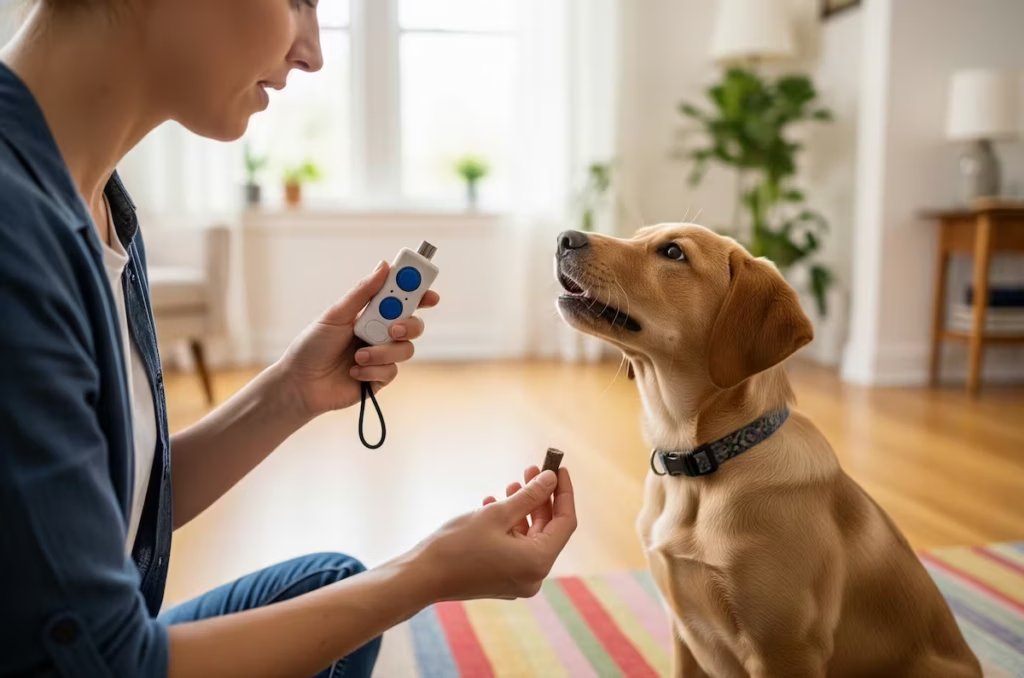
Clicker training uses a brief, unique sound to mark the instant your dog does the right thing. The click predicts a reward, so your dog learns which choice earned reinforcement.
It’s a form of marker training that fits beautifully with positive reinforcement. Marking turns fuzzy moments into clear “Yes, that!” which speeds learning and reduces frustration.
Why the Click Works (Psychology)
The click is a conditioned reinforcer and a bridge: it connects behavior to the treat even if the reward arrives a second later. That precise signal improves timing and strengthens the behavior.
Under the hood, you’re pairing classical conditioning (click → good feelings) with operant conditioning (behaviors that earn reinforcement happen more). Clear signals lower arousal and help with threshold management so puppies can think and succeed.
A 60-Second History
Marker training was popularized by marine mammal trainers in the mid-20th century. Karen Pryor helped bring it to the dog world, showing how a neutral sound could precisely capture behavior.
Since then, clickers and verbal markers have become staples in reward-based training programs. The same principles work for puppies learning house rules or advanced sport dogs polishing cues.
How the Timing Coach Helps
New to markers? The Timing Coach gives guided 60-second drills that build your reflexes. You’ll practice capturing sits, eye contact, and calm on a mat with instant feedback.
- Choose a drill → press click at the exact behavior → deliver a tiny treat.
- Scorecards track latency and streaks so your timing gets crisp.
- Swap the clicker for a soft “Yes!” if noise spooks your pup.
Pair Timing Coach sessions with smart environment management. Fewer temptations means more easy wins and faster progress.
Quick-Start Plan
- Charge the click. Click → treat, ten times in a row. No cues yet.
- Capture natural sits. When your dog sits, click, then feed at your leg.
- Add easy cues. Say “Sit” once. Click the sit, then treat. Keep reps tiny.
- Generalize. Practice in calm places before adding distractions and distance.
- Redirect rough play. If mouthing spikes, review polite mouth tips and lower arousal first.
If excitement is high outdoors, sprinkle “Find-It” and use management from your R+ toolbox to keep sessions clean.
Q&A
Do I need a physical clicker? No. A soft “Yes!” works as a marker. A clicker is simply consistent and easy to hear.
Will the click replace food? The click marks success; the food is the paycheck. Fade food later by using life rewards and variable schedules.
Is clicker training okay around kids? Yes—short, calm games are great. Use our tips for gentle kid-dog interactions and supervise all sessions.
Troubleshooting
My dog gets frantic after clicks. Lower value treats, slow the pace, and reset with calm sniffing. Review staying under threshold.
My timing is late. Practice with the Timing Coach in quiet rooms first. Add motion later and keep criteria tiny.
My dog ignores the click outside. Use distance and management strategies from environment control, then rebuild clicks → treats in easier spots.
As your puppy explores the world, keep sessions bite-sized and reinforce calm curiosity. Our guide to socializing dogs the right way pairs well with clicker games on quiet walks.
🐕 Dog Clicker Training Tool
Master positive reinforcement training with your furry friend
🎯 Clicker Training Basics
Clicker training is a positive reinforcement method that uses a distinct sound to mark desired behaviors, followed immediately by a reward.
How Clicker Training Works
The clicker serves as a bridge between the behavior and the reward. It tells your dog exactly what they did right at the precise moment they did it.
- Charge the Clicker: Start by creating a positive association between the click sound and treats. Click, then immediately give a treat. Repeat 10-15 times.
- Mark the Behavior: When your dog performs the desired behavior, click immediately at the exact moment it happens.
- Deliver the Reward: After clicking, always follow with a treat or praise within 2-3 seconds.
- Practice Consistency: Always click for the same behavior criteria and always follow with a reward.
- Fade the Clicker: Once the behavior is learned, gradually reduce clicker use and maintain with verbal praise and intermittent treats.
💡 Pro Tips for Success
- Keep training sessions short (5-10 minutes) but frequent
- Always end on a positive note with a successful behavior
- Use high-value treats that your dog absolutely loves
- Be patient – every dog learns at their own pace
- Practice your timing – click the instant the behavior occurs
Common Mistakes to Avoid
- Late Clicking: Clicking after the behavior is finished
- Multiple Clicks: One click per behavior – multiple clicks can be confusing
- Forgetting the Treat: Always follow a click with a reward
- Inconsistent Criteria: Changing what you’re rewarding mid-training
- Too Long Sessions: Overwhelming your dog with lengthy training periods
🔊 Virtual Clicker Simulator
Practice Your Timing
🕐 Timing Trainer
Good timing is crucial for effective clicker training. Use this exercise to improve your clicking accuracy.
Session Log
📚 Training Modules
Progressive training modules designed to teach you and your dog essential skills.
1. Basic Attention Training
Teach your dog to focus on you and respond to their name using clicker training.
2. Sit Command
Master the fundamental “sit” command with proper timing and reinforcement.
3. Stay Command
Build duration and distance with the stay command for better control.
4. Come When Called
Develop a reliable recall using positive reinforcement techniques.
5. Leash Walking
Train loose leash walking and eliminate pulling behaviors.
6. Complex Tricks
Chain behaviors together for impressive tricks and mental stimulation.
📊 Progress Tracker
Overall Training Progress
15% Complete – Keep up the great work!
Individual Module Progress
Basic Attention Training
Sit Command
Stay Command
🧠 Knowledge Quiz
Test your understanding of clicker training principles and techniques.
Question 1: When should you click during training?
Question 2: What should always follow a click?
Question 3: How long should training sessions typically last?
📖 Training Resources
📋 Training Checklists
Downloadable checklists for each training module to track progress.
- Basic Commands Checklist
- Advanced Tricks Checklist
- Problem Behavior Solutions
🎬 Video Demonstrations
Watch proper clicker training techniques in action.
- Clicker Conditioning
- Timing and Precision
- Common Mistakes
📚 Recommended Reading
Books and articles to deepen your understanding.
- “Don’t Shoot the Dog” by Karen Pryor
- “The Other End of the Leash” by Patricia McConnell
- “Getting Started: Clicker Training for Dogs” by Karen Pryor
🛠️ Equipment Guide
Essential tools for successful clicker training.
- Choosing the Right Clicker
- High-Value Treats
- Training Pouches and Accessories
🎯 Troubleshooting Guide
Solutions to common training challenges.
- Dog Not Responding to Clicks
- Timing Issues
- Motivating Reluctant Dogs
- Breaking Bad Habits
🏆 Success Stories
Real transformations achieved through clicker training.
- Rescue Dog Rehabilitation
- Puppy Training Success
- Senior Dog Learning