
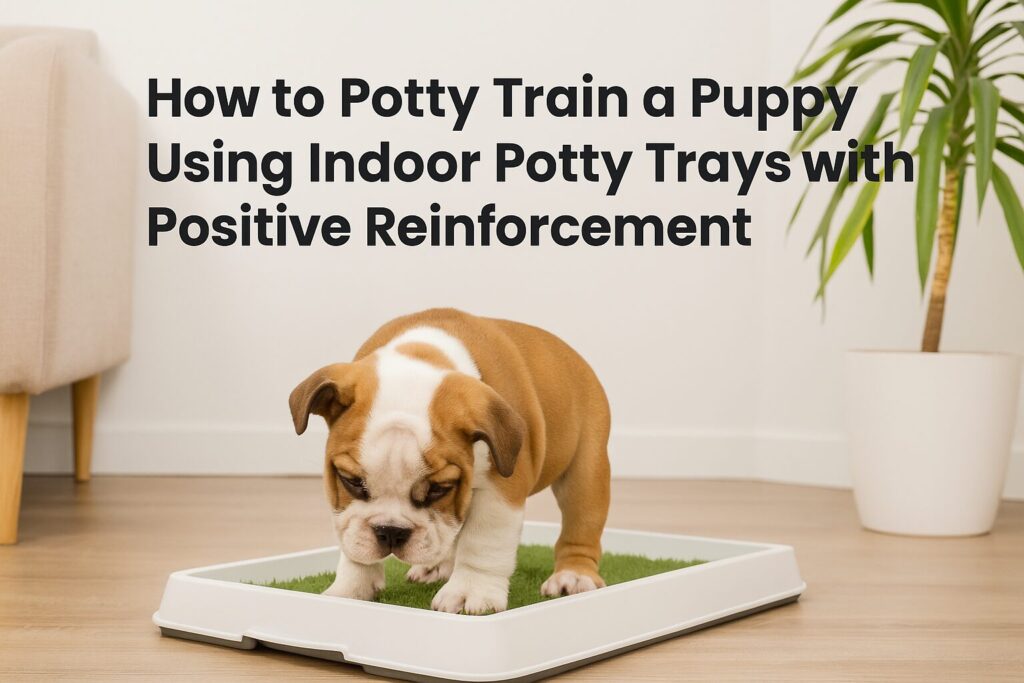
How to potty train a puppy using indoor potty trays can feel overwhelming at first.
That’s why learning how to potty train a puppy using indoor potty trays can be a game-changer for modern households.
Especially if you’re navigating apartment life or bad weather.
But this method is one of the cleanest, most realistic solutions for modern dog owners.
With the right tools and a reward-based approach, you can eliminate accidents—without confusion or punishment. This approach builds on fundamental positive reinforcement training principles that work across all aspects of puppy development.
In this guide, you’ll get a complete, step-by-step plan for how to potty train a puppy using indoor potty trays. All powered by positive reinforcement.
Why Choose Indoor Potty Trays?
Before we dive into the “how,” let’s explore the “why.” Many dog owners discover that how to potty train a puppy using indoor potty trays becomes a necessity—not just a convenience. Here are the most common reasons people opt for this method:
- You live in a high-rise or condo without quick outdoor access.
- Your puppy hasn’t completed vaccinations and can’t safely go outside.
- You have mobility limitations or are unavailable for frequent walks.
- You live in a region with extreme temperatures or seasonal barriers.
Indoor training is especially valuable for new puppy owners who are still learning how to teach your puppy to stay in one place while establishing routines.
Indoor potty trays give puppies a designated, sanitary spot to eliminate without risking accidents around the house or relying on inconsistent access to the outdoors.
According to the American Kennel Club, consistency and positive reinforcement are key when introducing indoor potty solutions to young puppies. These benefits make it much easier to potty train a puppy using indoor potty trays without stress.
Choosing the Right Indoor Potty Tray
Before you can begin how to potty train a puppy using indoor potty trays, you need to choose the right setup. There are three main types:
- Artificial Grass Trays: These mimic the look and feel of real grass and are often the most intuitive for dogs.
- Disposable Pee Pad Holders: A raised plastic tray holds a puppy pad, preventing slipping and containing waste.
- Real Grass Delivery Boxes: Made with natural sod, these are more eco-friendly but often more expensive.
Consider your puppy’s size, your living space, and your budget. Regardless of the type, the tray should be easy to clean and located in a consistent, low-distraction area of your home.
Step-by-Step: How to Potty Train a Puppy Using Indoor Potty Trays
Let’s break down the process into a reliable, science-based schedule. The key is consistency, timing, and positive reinforcement.
Step 1: Introduce the Tray
Place the potty tray in a quiet area that is easy for your puppy to access but not near their food or sleeping areas. Let your puppy sniff it without pressure. Reward with treats for any engagement.
If your puppy shows signs of anxiety or fear, combine this introduction with general crate training techniques to create positive associations with designated spaces.
Step 2: Establish a Routine
Puppies need to eliminate:
- After waking up
- After eating or drinking
- After playing
- Every 1–2 hours when awake
Take your puppy to the tray during these key moments. Repeat the cue phrase: “Go potty,” and praise them generously for success.
You’re not just teaching how to potty train a puppy using indoor potty trays—you’re establishing habits that carry over to adult behavior.
This routine works hand-in-hand with teaching your puppy to stay and other foundational commands that require consistency and timing.
Step 3: Reward Immediately
The biggest mistake new dog owners make is praising too late. You must mark the desired behavior the instant your puppy finishes eliminating on the tray.
- Use a cheerful voice and say “Yes!” or click if using a clicker.
- Offer a small, high-value treat within 1–2 seconds.
- Pet and praise calmly to avoid overstimulation.
This is the foundation of positive reinforcement. It tells your puppy: “This is exactly what I want you to do.” For more advanced techniques, explore our complete guide to positive reinforcement for problem behaviors.
Step 4: Supervise Closely
When not crated, your puppy should be within arm’s reach. Use a leash indoors if necessary. If you catch them mid-accident, calmly interrupt and redirect to the tray. Never punish.
If you want to master how to potty train a puppy using indoor potty trays, you must actively supervise in the beginning. Every successful repetition teaches your puppy where to go.
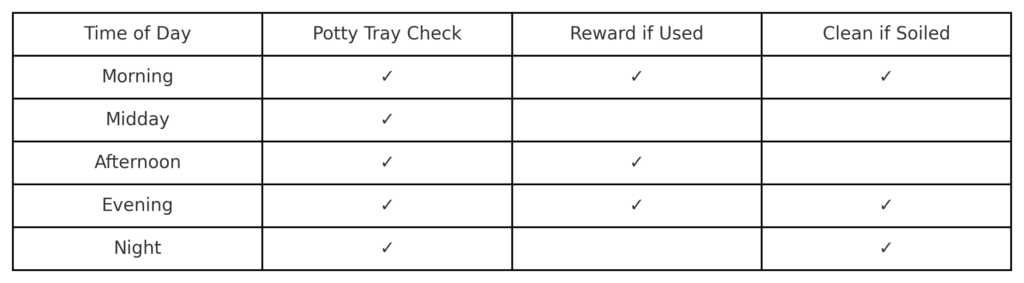
🛠️ Troubleshooting Accidents When Using Indoor Potty Trays
Even when you follow every step, accidents can still happen—especially in the early stages. If your puppy misses the tray, stay calm. Never punish or scold. Instead, clean the area thoroughly with an enzymatic cleaner to remove scent markers that encourage repeat accidents.
Redirect your puppy to the tray and reward generously when they get it right. Staying patient is essential if you want to successfully potty train a puppy using indoor potty trays, even when progress feels slow.
What If My Puppy Refuses the Tray?
It’s normal for some puppies to be confused at first. Here’s how to troubleshoot:
- Use scent cues: Soak a paper towel with your puppy’s urine and place it in the tray to encourage repeat behavior.
- Limit freedom: Too much access too soon leads to accidents. Use gates or a pen to shrink their roaming area.
- This containment strategy mirrors techniques used in crate training blueprints where gradual space expansion prevents overwhelming your puppy.
- Double down on praise: Make using the tray the most rewarding event of the day.
Patience is key. If you remain consistent, you’ll see progress in a matter of days.
Sample Daily Potty Schedule
Here’s a schedule to follow for an 8-week-old puppy (adjust for older pups):
| Time | Activity |
|---|---|
| 7:00 AM | Wake up, potty tray |
| 7:15 AM | Breakfast |
| 7:45 AM | Potty tray |
| 9:00 AM | Short play + potty tray |
| 12:00 PM | Potty tray after nap |
| 1:00 PM | Lunch |
| 1:30 PM | Potty tray |
| 3:00 PM | Potty tray after nap |
| 5:00 PM | Dinner |
| 5:30 PM | Potty tray |
| 7:30 PM | Potty tray |
| 9:00 PM | Final potty tray before bed |
This structure helps anchor how to potty train a puppy using indoor potty trays into a consistent rhythm your dog can trust.
Cleaning and Hygiene
A dirty tray will undermine all your efforts. Clean the potty tray at least once per day, or after each use if using real or artificial grass.
- Use enzyme cleaners to remove odor traces.
- Replace pads or grass weekly or as directed.
- Avoid bleach or strong disinfectants, which may repel your puppy.
Proper sanitation not only supports your training goals—it also protects your puppy’s health.
Common Mistakes to Avoid
If your training isn’t going as planned, review these common issues:
- Allowing free roam too early
- Using punishment after accidents
- Inconsistency with timing
- Skipping positive reinforcement
- Moving the tray before training is complete
Remember, mastering how to potty train a puppy using indoor potty trays is a marathon, not a sprint. Every mistake is a learning opportunity.
For comprehensive troubleshooting of training challenges, see our guide on dog behavior problems and solutions.
Will This Confuse My Dog Later?
Many owners worry their dog will think it’s okay to potty indoors forever. That’s a valid concern—but not if you transition correctly.
Once your puppy has mastered indoor tray use, you can begin gradually moving the tray closer to the door, and then outside if desired. Use the same cue and reward system.
Some owners choose to keep the indoor tray permanently. That’s okay too—as long as you maintain cleanliness and boundaries.
Bonus Tip: Use a Potty Log
Tracking your puppy’s potty times is invaluable. It helps you:
- Identify patterns
- Reduce accidents
- Improve timing
A simple notebook or app can help you optimize your routine and perfect your approach to how to potty train a puppy using indoor potty trays.
Frequently Asked Questions: Indoor Puppy Potty Training with Positive Reinforcement
1. Can you really potty train a puppy indoors with just a tray?
Yes, indoor potty trays can be an effective solution for apartment dwellers or pet parents without easy yard access. When paired with positive reinforcement training, most puppies learn to associate the tray with proper potty behavior within 1–2 weeks. Start by placing the tray in a consistent location and reward your puppy with treats and praise every time they use it correctly.
2. What’s the best type of potty tray for indoor training?
Look for trays with raised edges, leak-proof bases, and grass-like textures. Puppies naturally seek soft surfaces, so realistic faux grass trays help mimic the outdoor environment. Choose a size that fits your puppy’s breed—small breeds can use compact trays, while large-breed puppies may need wider options.
3. How often should I take my puppy to the indoor potty tray?
For optimal results, guide your puppy to the tray every 1–2 hours, especially after naps, play sessions, or meals. Consistency is key when you’re trying to potty train a puppy using indoor potty trays. Eventually, your puppy will initiate the trip on their own.
4. Should I also crate train if I’m using a potty tray indoors?
Absolutely. Crate training helps regulate your puppy’s bladder and builds structure. Even if your primary potty method involves indoor trays, crates can reinforce the “hold it” instinct and reduce accidents. Just ensure your crate routine aligns with your puppy’s age and potty schedule.
5. My puppy keeps missing the tray—what should I do?
If accidents happen, stay calm. Don’t punish. Clean the area thoroughly with an enzymatic cleaner to prevent scent marking. Revisit your positive reinforcement strategy and make sure you’re rewarding immediately after successful tray use. You can also confine your puppy to a smaller space near the tray until habits improve.
6. Is using a potty tray a long-term solution or just for early training?
It can be either. Many people start with potty trays and transition outdoors later, but some use them long-term—especially in high-rise buildings or during harsh weather. The method is flexible and can adapt to your lifestyle, as long as consistency and reinforcement remain intact.
Final Thoughts
If you’ve been overwhelmed by accidents, frustrated by inconsistency, or unsure how to balance your puppy’s needs with your schedule, this method offers hope.
How to potty train a puppy using indoor potty trays is not only possible—it can be the most compassionate, consistent method available for your lifestyle. Once you’ve mastered indoor training, you can expand your puppy’s skills with our complete puppy training guide for new dog owners to build a well-rounded, confident companion.
By using positive reinforcement, setting clear routines, and staying patient through the learning curve, you’ll raise a puppy who trusts you—and always knows where to go. With consistency and rewards, you can confidently potty train a puppy using indoor potty trays no matter your living situation.

Christopher Quinn adopted his first dog, Loki, a spirited Border Collie/Jack Russell mix, after exiting Army service in the summer of 2012. That experience sparked a lifelong passion for canine behavior and positive reinforcement training.
He studied Principles of Dog Training & Behavior at Penn Foster and has since worked with hundreds of dogs from all backgrounds. Over the past two years, Christopher has fostered more than 30 rescue dogs, giving each one a chance at a better life.
Today, he continues to write, teach, and share insights on humane dog training, blending hands-on experience with a decade of dedicated study.