
Puzzle Feeder Level 3 — Advanced Dog Puzzle Feeder Training
Master challenging slides + flips with clear shaping, clean reinforcers, and under-threshold sessions. Includes interactive chart and fix-it flow.
Learn using positive reinforcement, principles from operant conditioning, and incremental shaping. Keep sessions below arousal limits with smart threshold management.
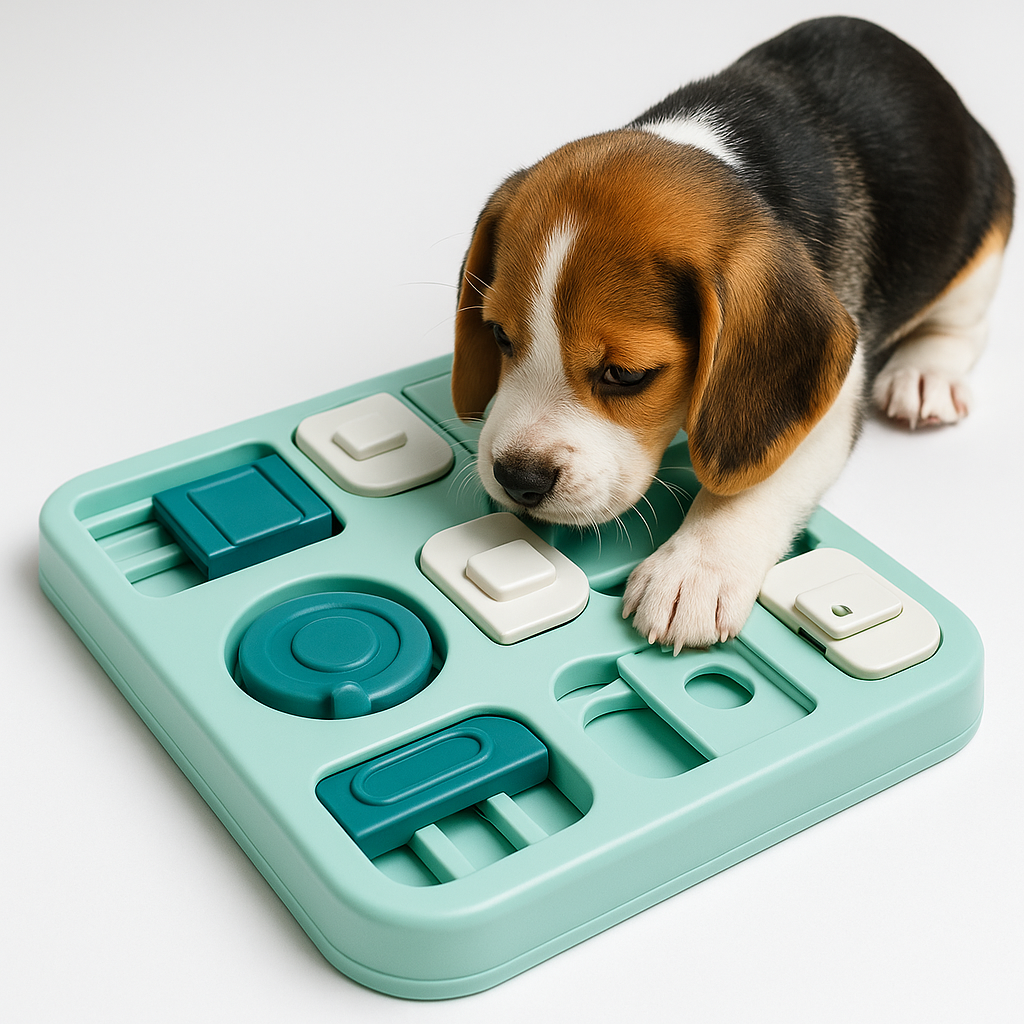
How-To: Step-by-Step for Puzzle Feeder Level 3
Interactive Load Chart (hover/focus to preview difficulty)
Tip: keep bars below ~70% early; raise one variable at a time.
Time & Cost
- Time per set: 3–6 minutes; 2–3 sets/day.
- Budget: use existing puzzle; vary treats by value and texture.
Why It Works: Learning Science in Plain English
The routine leverages operant conditioning—behaviors followed by reinforcement increase. We also use shaping (reinforcing micro-steps toward the goal) and strategic threshold management to prevent frustration. Reward placement builds “where to work,” and rate of reinforcement controls arousal. For sensitive puppies, pair with steady routines from help a new puppy adjust and calm alternatives from dog enrichment activities.
Everything is powered by ethical, modern positive reinforcement. If your dog is fearful of new objects, consult the worried puppy guide before increasing complexity.
Troubleshooting
- Open mechanisms wider; deliver a few easy wins.
- Raise food value; reinforce curiosity (sniffs/touches).
- Shorten sets; add rest on a mat between reps.
- Mark calmer attempts (nose nudges), ignore frantic pawing.
- Lower difficulty and slow the rate of delivery.
- Pre-open flips a few millimeters; reinforce nose to hinge side.
- Use easier treats under flip to increase trial count.
- Pause; switch to calm work (mat, scatter-sniff). See calm enrichment.
- Use management & environment control: guide here.
FAQ
2–4 sessions/week is plenty. Rotate puzzles weekly to prevent patterning.
Trade-up skills and management matter. See reinforcement done right and keep a light drag line to prevent keep-away.
Yes, with easier settings and short sets. For worried pups, start with the socialization planner and fear guide.
Soft, pea-sized, non-crumbly foods for fast delivery; place highest value in the hardest chamber.
When your dog solves each mechanism smoothly with a relaxed body and sustained interest across 2–3 short sessions.
Next Steps
Blend this enrichment with neighborhood calm and manners. Use the free interactive tool to queue new skills; layer real-life management with environmental control and reinforce wins using positive reinforcement 101.

Christopher Quinn adopted his first dog, Loki, a spirited Border Collie/Jack Russell mix, after exiting Army service in the summer of 2012. That experience sparked a lifelong passion for canine behavior and positive reinforcement training.
He studied Principles of Dog Training & Behavior at Penn Foster and has since worked with hundreds of dogs from all backgrounds. Over the past two years, Christopher has fostered more than 30 rescue dogs, giving each one a chance at a better life.
Today, he continues to write, teach, and share insights on humane dog training, blending hands-on experience with a decade of dedicated study.