
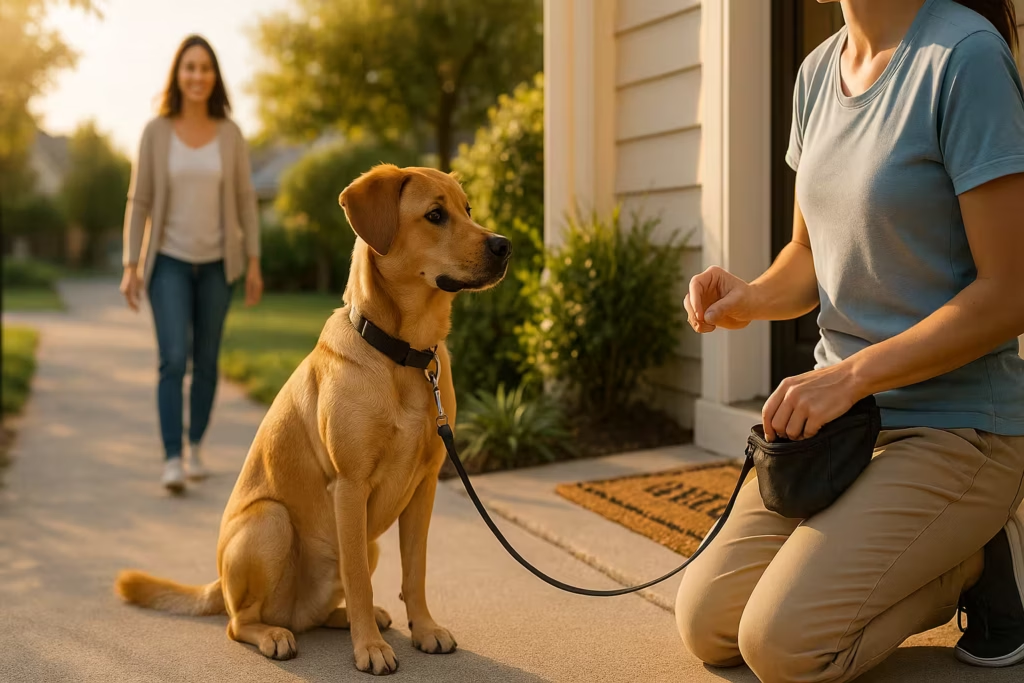
You understand the stress a dog barking at strangers, during a walk or whenever someone approaches your home, can cause!
While barking is a natural form of canine communication, excessive barking can turn social situations into difficult events. The goal isn’t to silence your dog completely, but to teach them that strangers are not a threat and that calm behavior is more rewarding.
This guide introduces the Calm Greeting Protocol, a proven, step-by-step system that uses positive reinforcement to address this behavior. We’ll explore why dogs bark, what common mistakes to avoid, and how you can replace chaos with confidence.
Why Do Dogs Bark at Strangers?
Understanding the root cause of the barking makes it much easier to address. Dogs don’t bark out of spite; their behavior is a response to an environmental trigger. Common reasons include:
Fear or Anxiety: Strangers can be overwhelming, especially for rescue dogs or puppies that haven’t been properly socialized. If you notice your pup is exceptionally timid, our guide for when your puppy is scared of everything provides a step-by-step plan to build their courage.
Territorial Instincts: Many dogs are naturally driven to guard their home and family from perceived intruders.
Lack of Training: Without clear guidance on how to greet people, puppies often default to impulsive, noisy behavior.
Overstimulation: A busy sidewalk, a ringing doorbell, or high-energy guests can easily overload a dog’s senses, leading to a frantic reaction.
Understanding Dog Reactivity & Training
An interactive look at the factors behind a dog barking at strangers and the keys to successful training.
The Calm Greeting Training Protocol
Effective training begins long before a stranger arrives. By teaching your dog how to be calm on command, you create a solid foundation for better greetings. Start by incorporating mat or crate exercises into your daily routine. A predictable nighttime schedule, as detailed in our guide to crate training a puppy at night, helps your dog learn to settle more quickly. Throughout the day, randomly reward calm behavior—when they make eye contact, rest quietly, or choose their bed. This proactive approach ensures your dog is less likely to spiral into barking when a visitor appears.
When you’re expecting guests, structure is your best friend. Managing the environment prevents explosive greetings and gives your dog a clear script to follow. Put your dog on a leash *before* opening the door and direct them to a designated “safe zone,” like their mat. Learning how to teach your dog the place command makes this step significantly easier. Politely instruct guests to ignore your dog at first—no touching, talking, or eye contact until your dog exhibits calm body language.
If your dog starts barking at strangers, intervene early with calm structure, not punishment. Use a simple, neutral interrupter word like “Enough” or “Thank you.” The moment they pause, redirect their focus to a high-value treat. For this to work, your dog needs solid impulse control, and practicing the “drop it” command is an excellent way to build that skill. By rewarding the instant the barking stops—even if it’s just for a second—you teach your dog that disengaging is more rewarding than barking.
Once your dog has disengaged, reinforce alternative behaviors. Cue a known command like “sit” or “down.” This is a perfect time to practice their “stay.” If you need help, our guide on teaching your puppy to stay breaks down how to build reliability. Next, have the guest toss a treat toward your dog without making direct contact. Repeat this process in short, successful sessions, gradually increasing the duration of calm behavior required before they earn a reward. This helps your pup rehearse patience instead of practicing barking.
Always end the training session before your dog becomes overwhelmed. Keep initial greetings brief, lasting only a few minutes. Escort your guest out while your dog remains calmly in their designated spot. Once the guest is gone, release your dog and celebrate the successful interaction. Finishing on a positive note prevents regression and reinforces that calmness leads to good things.
Recommendation
Related Data
Step 1: Build a Foundation of Calm
Effective training begins long before a stranger arrives. By teaching your dog how to be calm on command, you create a solid foundation for better greetings.
Start by incorporating mat or crate exercises into your daily routine. A predictable nighttime schedule, as detailed in our guide to crate training a puppy at night, helps your dog learn to settle more quickly in various situations. Throughout the day, randomly reward calm behavior—when they make eye contact, rest quietly, or choose their bed instead of pacing. This proactive approach ensures your dog is less likely to spiral into barking when a visitor appears.
Step 2: Manage the Environment
When you’re expecting guests, structure is your best friend. Managing the environment prevents explosive greetings and gives your dog a clear, predictable script to follow.
Put your dog on a leash before opening the door.
Direct them to a designated “safe zone,” like their mat or bed. Learning how to teach your dog the place command makes this step significantly easier.
Politely instruct guests to ignore your dog at first—no touching, no talking, and no eye contact until your dog exhibits calm body language.
Step 3: Intervene and Redirect
If your dog starts barking at strangers, intervene early with calm structure, not punishment. Use a simple, neutral interrupter word like “Enough” or “Thank you.” The moment they pause, redirect their focus to a high-value treat or toy. For this to work effectively, your dog needs solid impulse control, and practicing the “drop it” command is an excellent way to build that skill.
By rewarding the instant the barking stops—even if it’s just for a second—you teach your dog that disengaging from the stranger is more rewarding than barking at them.
Step 4: Reinforce Calm Alternatives
Once your dog has disengaged, reinforce alternative behaviors. Cue a known command like “sit” or “down.” This is also a perfect time to practice their “stay.” If you need help, our guide on teaching your puppy to stay breaks down how to build duration and reliability.
Next, have the guest toss a treat toward your dog without making direct contact. Repeat this process in short, successful sessions, gradually increasing the duration of calm behavior required before they earn a reward. This helps your pup rehearse patience and confidence instead of practicing their barking.
Step 5: End on a High Note
Always end the training session before your dog becomes overwhelmed. Keep initial greetings brief, lasting only a few minutes. Escort your guest out while your dog remains calmly in their designated spot. Once the guest is gone, release your dog and celebrate the successful interaction. Finishing on a positive note prevents regression and reinforces that calmness leads to good things.
How to Stop a Dog from Barking at Strangers on Walks
For many owners coping with a dog barking at strangers, the biggest hurdle is reactivity on walks. The Calm Greeting Protocol can be adapted for the outdoors with a focus on managing distance.
Create Distance: When you see a stranger approaching, calmly cross the street to create a comfortable buffer.
Mark and Reward: As soon as your dog notices the person, use a verbal marker like “Look at that!” and immediately give them a high-value treat. This helps change their emotional response from anxious to expectant.
Gradually Decrease Distance: Over many sessions, slowly reduce the distance between your dog and strangers, always rewarding calm observation.
Practice with a Friend: Arrange a “parallel walk” with a friend and their calm dog. This controlled scenario is a great opportunity to practice loose-leash walking training and build better handling skills.
Common Training Mistakes to Avoid

Don’t Punish or Yank
Why It Backfires
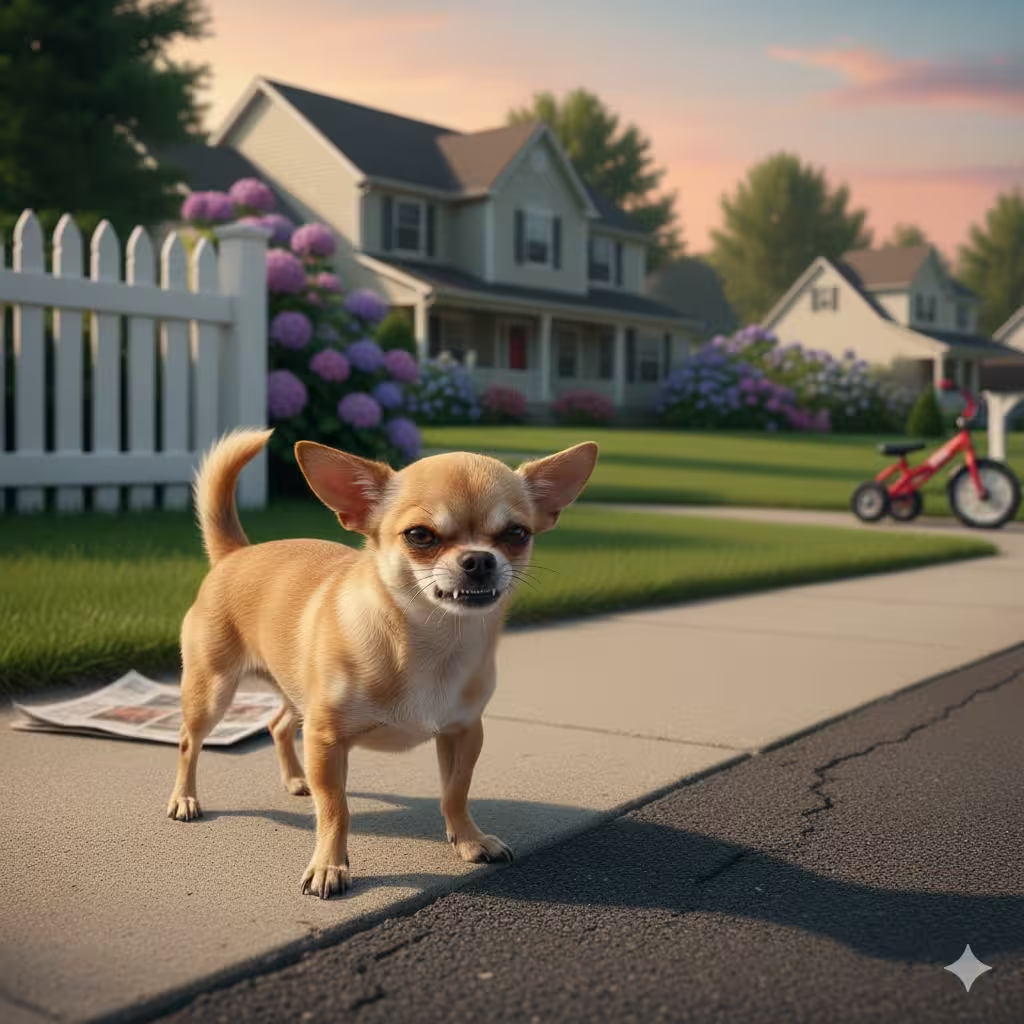
Yelling or yanking the leash increases a dog’s anxiety and can create aggression. This approach often worsens fearful dog behavior.
If you need to know how to stop aggressive puppy biting, focus on safe, positive redirection instead of punishment.
Don’t Overwhelm Your Dog
The Danger of ‘Flooding’
Forcing too much social interaction too soon, a practice known as “flooding,” can backfire and intensify your dog’s fear.
Successful socialization for a shy puppy involves gradual, positive exposure, not overwhelming them with triggers they can’t handle.
Don’t Allow Forced Interactions
Be Your Dog’s Advocate
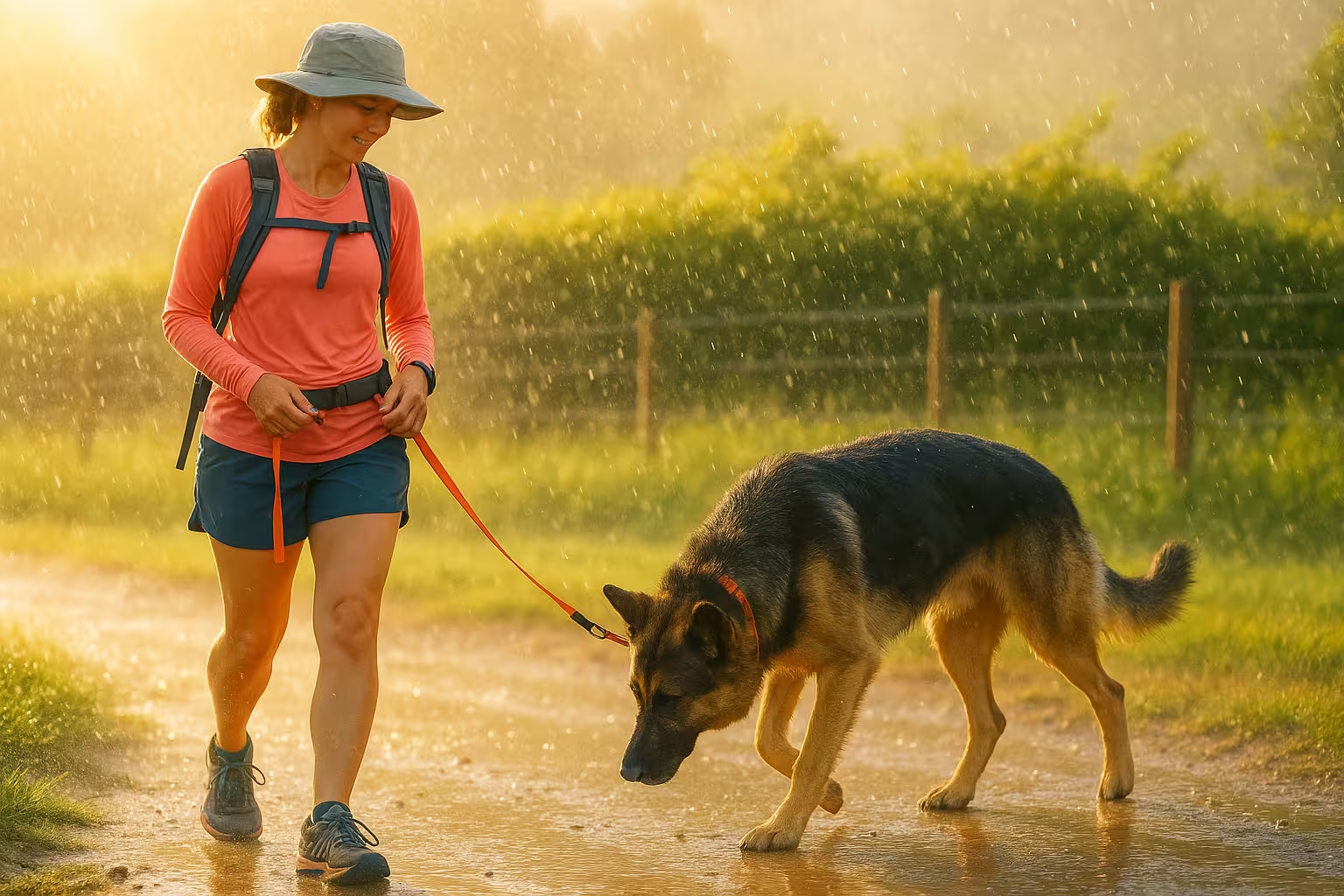
Always advocate for your dog’s well-being. Never let a stranger approach and pet them if your dog is showing signs of discomfort like lip licking or a tucked tail.
Forcing interactions damages their trust and can set back training progress significantly.
Don’t Punish or Yank the Leash: Yelling or using physical corrections increases a dog’s anxiety and can lead to aggression. If your puppy already nips when stressed, it’s crucial to use safe redirection methods, as outlined in our guide on how to stop aggressive puppy biting.
Tools That Can Help
While consistent training is the cornerstone of success, the right tools can support your efforts.
Front-Clip Harnesses: Provide better steering and control without causing pain or choking.
High-Value Treats: Use special rewards like cheese, liver, or freeze-dried meats that are reserved only for training. These are essential for any system based on positive reinforcement puppy training.
Baby Gates or Barriers: Help manage your dog’s space and reduce visual triggers inside the home.
Enrichment Toys: Offer a puzzle toy or snuffle mat after a greeting to help your dog decompress.
Building a Confident, Well-Rounded Dog
A dog who barks at strangers often benefits from strengthening other foundational skills. Consistent routines build stability and confidence across all areas of their life.
Dogs that bark impulsively often struggle with housebreaking. A structured positive reinforcement potty training guide helps them learn expectations faster.
If your dog is particularly nervous around children, it’s vital to teach respectful interactions. Our tutorial explains how to teach a puppy to be gentle with kids.
For a shy dog, proactively learning how to socialize a puppy with strangers in a controlled way can prevent future reactivity.
Frequently Asked Questions
Q: My dog barks at strangers only when they are in our house. What should I do? A: This is likely territorial barking. The Calm Greeting Protocol is the perfect solution. Also, providing appropriate enrichment exercises before guests arrive can help drain excess mental energy, leading to a calmer dog.
Q: How long will this training take? A: Every dog learns at a different pace, but with consistent daily practice, most owners see noticeable improvement within a few weeks.
Q: Can’t I just punish my dog for barking? A: Punishment may interrupt the behavior in the moment, but it fails to address the underlying emotion. Worse, it can create fear and damage the trust between you and your dog, making positive alternatives a more reliable long-term solution.
Essential Dog Confidence & Socialization Training
Building Foundational Confidence: Addressing Dog Reactivity
Show More Details on Behavioral Stability
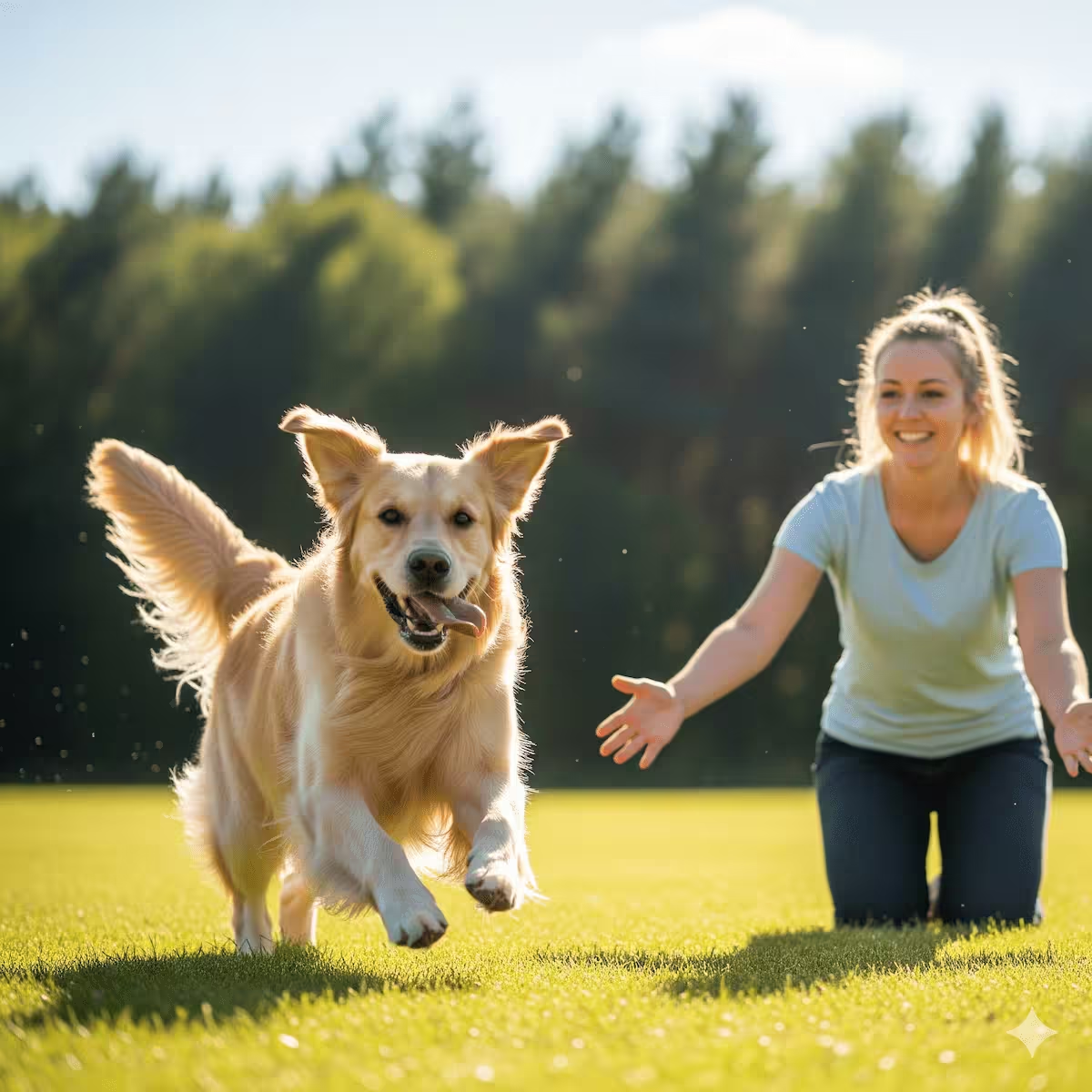
Reactivity, such as excessive barking at strangers, is typically an emotional response rooted in fear or anxiety, not just “bad behavior.” It occurs when a dog is too close to a trigger (like a stranger) and feels compelled to react to create distance. Foundational skills and consistent routines build the internal stability a dog needs to feel safe.
To effectively address a reactive dog, we use structured behavioral science: systematically increasing the dog’s emotional distance from the trigger while utilizing positive reinforcement. This process, known as counter-conditioning and desensitization, teaches the dog to form a positive emotional association with the trigger, replacing fear with expectation of reward and leading to a calmer, more confident dog over time.

Proactive Puppy Socialization: Introducing Kids and Strangers
Discover Techniques for Gentle Interactions
If your dog is particularly nervous or awkward around children, it’s vital to teach them respectful interactions. The fundamental method for teaching a puppy to be gentle with kids focuses on supervised, positive-only exposure to ensure safety and reinforce desirable calm behaviors.
For a shy dog or young puppy, proactively learning how to socialize a puppy with strangers in a controlled and positive way is key. This measured approach helps to establish positive emotional associations with novel people, which is the most effective method for preventing future reactivity in adolescent and adult dogs.
About the Psychology
A dog barking at strangers is not being ‘bad’—it is communicating. This behavior is rooted in deep-seated canine psychology and instincts.
Fear and the Amygdala: Often, barking is a fear response controlled by the amygdala, the brain’s threat-detection center. A stranger is an unknown variable, and barking is a dog’s way of saying, “Stay back, I’m not sure you’re safe!” This is a key aspect of fearful dog behavior.
Territorial Instinct: Dogs are hardwired to protect their territory. A person approaching the home can trigger this instinct, resulting in barking to alert the pack and ward off potential intruders.
Counter-Conditioning: Positive reinforcement for dogs works by changing these emotional responses. By pairing a scary stimulus (a stranger) with something positive (a high-value treat), you create new, positive neural pathways. The goal is to make the dog’s automatic emotional response one of happy anticipation rather than fear, which is why a calm greeting protocol is so effective.
Training methods used:

Christopher Quinn adopted his first dog, Loki, a spirited Border Collie/Jack Russell mix, after exiting Army service in the summer of 2012. That experience sparked a lifelong passion for canine behavior and positive reinforcement training.
He studied Principles of Dog Training & Behavior at Penn Foster and has since worked with hundreds of dogs from all backgrounds. Over the past two years, Christopher has fostered more than 30 rescue dogs, giving each one a chance at a better life.
Today, he continues to write, teach, and share insights on humane dog training, blending hands-on experience with a decade of dedicated study.