
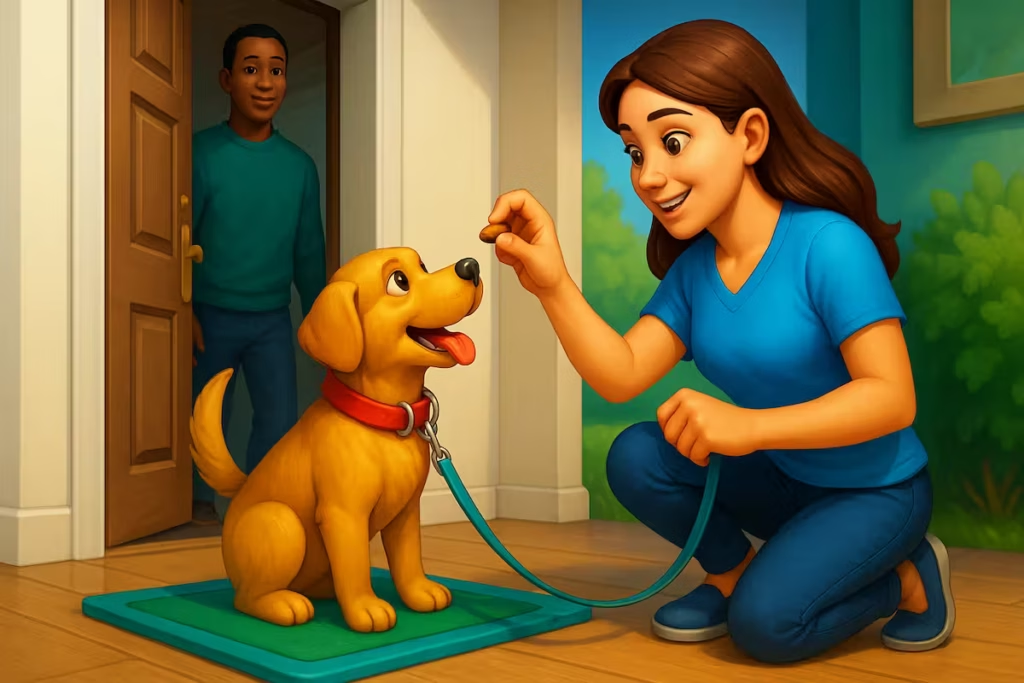
Introduction: Why Dogs Jump and Why You Need to Fix It
If your dog jumping on people is your daily reality, you’re not alone. This guide shows you how to turn greetings into calm, four-on-the-floor moments using positive reinforcement—short reps, smart distance, and easy wins.
The good news? You can stop a dog from jumping without yelling, pushing them down, or using harsh corrections. By applying positive reinforcement dog training consistently, you’ll replace the unwanted behavior with a polite, calm greeting your dog is proud to offer.
Why Dogs Jump on People
Understanding the “why” makes it easier to address the “how.” Dogs jump because:
- Excitement & Affection: You’re home! A visitor arrives! The dog’s emotions overflow.
- History of Reinforcement: As a puppy, they may have been rewarded with attention, pets, or laughter when they jumped.
- Attention-Seeking Behavior: Even being told “No!” or gently pushed down can feel like play or interaction.
- Natural Canine Communication: Dogs often greet one another face-to-face. Jumping is their way of getting closer to your face.
Dog Jumping on People
Rule of thumb only—start easier if arousal is high or mistakes happen.
Timer + Logger
| Time | Event | Note |
|---|
Adaptive Tips
Why Old-School Punishment Doesn’t Work
Kneeing the dog in the chest, yanking on a leash, or shouting might make them hesitate, but it doesn’t teach them what to do instead. In fact, these methods can:
- Create fear or anxiety about greetings
- Damage trust between dog and handler
- Lead to new problems like submissive urination or avoidance
Positive reinforcement works better because it focuses on replacing jumping with a rewarding, polite behavior rather than simply suppressing excitement.
The Positive Reinforcement Approach to Stopping Jumping
When your dog jumping on people becomes a persistent problem, positive reinforcement offers the most effective and humane solution. This method works by teaching your dog alternative behaviors that are more rewarding than jumping, while consistently removing any payoff they get from the unwanted behavior.
Rather than suppressing their excitement through punishment, you’ll channel that energy into polite greetings that make both you and your dog feel proud.
Step 1: Choose a Replacement Behavior
Your dog needs a “job” to do instead of jumping. The most effective is usually:
- Sit for greetings – simple, easy to train, keeps paws grounded
- Four on the floor – reward when all paws are on the ground
- Go to place – sends them to a mat or bed until released
Step 2: Practice “Sit to Say Hello” at Home
- Start in a quiet room: Call your dog, ask for a sit.
- Reward instantly: Treat and calm praise when they hold the sit.
- Add movement: Stand up, sit down, walk toward them — and reward if they remain seated.
- Simulate greetings: Step outside for a moment, then come back in. If they sit instead of jump, reward generously.
Step 3: Remove All Payoffs for Jumping
Every time a dog jumping on people gets attention, the habit strengthens. To prevent this:
- Turn your back immediately — no talking, touching, or eye contact.
- Step away calmly until all four paws are on the ground.
- Resume interaction only when they’re calm.
Pro tip: Teach everyone in your home (and visitors) the same rules. Consistency is key.
Step 4: Reinforce Calm Behavior — All Day Long
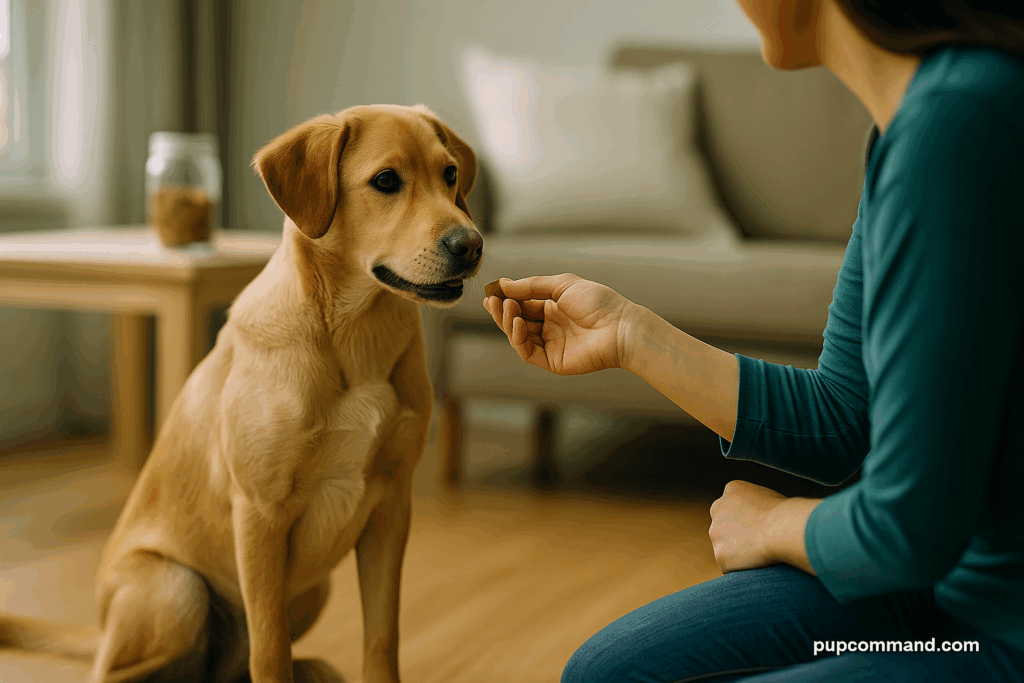
Don’t wait for guests to arrive to practice.
- Reward your dog any time you approach and they stay grounded.
- Keep small treats in different rooms so you can reward good greetings on the spot.
- Pair rewards with a calm “Good dog” to avoid amping up their excitement.
The AKC’s comprehensive guide on dog impulse control training and emotional self-control techniques directly supports your advanced training methods for a dog jumping on people. Their proven strategies for teaching dogs better greeting behavior reinforce your positive reinforcement approach to dog behavior modification.
Step 5: Manage the Environment for Success
You can’t train effectively if your dog keeps practicing the bad habit. Use management tools to prevent jumping during high-energy moments:
- Leash control at the door: Keep a short leash when greeting visitors.
- Baby gates: Create a controlled space for your dog to calm down before meeting people.
- Place training: Send your dog to a bed or mat when the doorbell rings, then reward them there.
Advanced Training for Tough Cases
| Time | Event |
|---|
Practice with “Staged Visitors”
Ask friends or family to help. Have them approach, wait for your dog to sit or keep paws down, then reward with calm petting or treats. If the dog jumps, your helper should step back and ignore until calm behavior returns.
Layer in Distractions
Once your dog can greet politely in a calm setting, increase difficulty:
- Have guests clap or call the dog’s name.
- Greet your dog after jogging around the yard to simulate high excitement.
- Practice in public spaces with strangers (when safe).
Combine Jump Prevention with Impulse Control Games
Games like “Wait,” “Leave It,” and “It’s Your Choice” help your dog think before acting. Dogs who learn impulse control in training games often carry it over to greetings.
Troubleshooting
- The dog only jumps on certain people: Practice with those individuals until the polite greeting becomes a habit.
- Jumping combined with mouthing: Work on both by rewarding calm, closed-mouth behavior.
- Regression: If the dog starts jumping again, go back to easy setups and rebuild success.
The Humane Society’s science-based approach to dog obedience training and behavior problems provides additional credible support for pet owners seeking effective alternatives to punishment-based dog training methods.
The Importance of Exercise and Enrichment
A tired dog is less likely to leap out of sheer excitement. Incorporate daily:
- Physical exercise: Walks, fetch, tug-of-war, off-leash play (when safe)
- Mental stimulation: Puzzle feeders, scent games, trick training
- Structured downtime: Teach them to settle on a mat with a chew toy
Long-Term Success Blueprint
- Consistency: Everyone your dog meets should follow the same rules.
- Clear alternative behavior: Sit, stand calmly, or go to place.
- No reward for jumping — ever: Even negative attention is attention.
- Ongoing reinforcement: Keep rewarding polite greetings even after the habit is strong.
Why is my dog jumping on people?
Excitement, attention-seeking, and past reinforcement are common causes. Start with distance control and reinforce calm.
How long does it take to stop dog jumping on people?
Many dogs improve in 1–2 weeks of consistent, short sessions.
Final Thoughts
Stopping your dog from jumping on people is about teaching, not punishing. With patience, clear communication, and a consistent reward system, you’ll transform an embarrassing habit into a source of pride. Whether your goal is to stop your dog from jumping on guests, neighbors, or strangers in public, positive reinforcement is the most humane and effective way forward.
Over time, polite greetings will become second nature — and you’ll wonder why you ever worried about muddy paw prints on your clothes.

Christopher Quinn adopted his first dog, Loki, a spirited Border Collie/Jack Russell mix, after exiting Army service in the summer of 2012. That experience sparked a lifelong passion for canine behavior and positive reinforcement training.
He studied Principles of Dog Training & Behavior at Penn Foster and has since worked with hundreds of dogs from all backgrounds. Over the past two years, Christopher has fostered more than 30 rescue dogs, giving each one a chance at a better life.
Today, he continues to write, teach, and share insights on humane dog training, blending hands-on experience with a decade of dedicated study.