
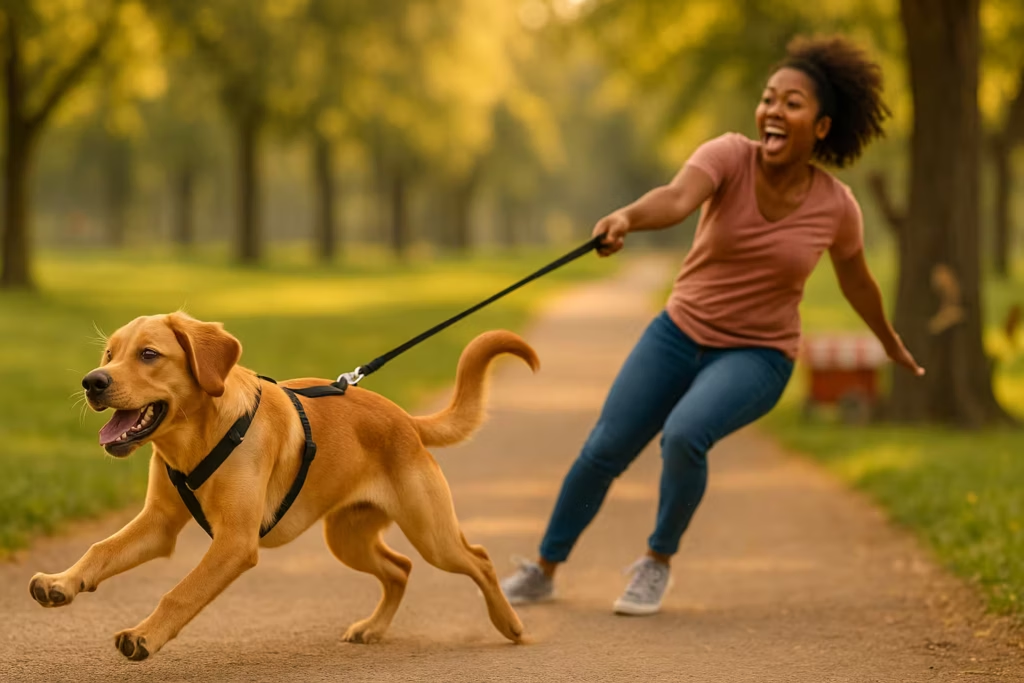
Loose leash walking for puppies is simpler than it sounds: with a well-fitted harness, tasty rewards, and short, upbeat sessions, you can prevent pulling before it becomes a habit.
This step-by-step, positive guide shows you how to set up, when to reward, what to do the moment your pup forges ahead, and how to practice in real-world places. The same plan works for adult dogs too—building calm focus, safer walks, and a dog who chooses to stay by your side.
Quick takeaways
- Dogs pull because pulling works (it makes the world move) and because of the opposition reflex—pressure on the leash triggers them to lean in.
- Switch to humane gear, pay well for the behavior you want (a loose leash by your side), and give scheduled sniff breaks so your dog’s needs are met.
- Short, upbeat sessions beat long battles. Aim for ~10 minutes of training layered into normal walks.
The foundation of successful loose leash training lies in understanding the core principles of reward-based methods. Before implementing specific walking techniques, dog owners must master the fundamental concepts that make training effective and humane.
Our comprehensive guide on positive reinforcement puppy training methods explains the scientific principles behind why reward-based training creates lasting behavioral changes. This foundational knowledge ensures that your loose leash walking sessions build trust and cooperation rather than fear or confusion, making the training process more enjoyable for both you and your puppy.
Why dogs pull
- History pays it. If pulling has moved your dog toward smells, squirrels, or people, the behavior is self-reinforcing.
- Reflex + arousal. Pressure on the leash often triggers more forward drive, especially with fast, curious dogs.
- Pace mismatch. Most humans stroll; most dogs explore.
- Environment. Tight spaces, exciting routes, and pent-up energy make pulling more likely.
When implementing positive reinforcement techniques for loose leash walking, it’s essential to follow expert guidelines from recognized canine authorities. Professional dog trainers and behaviorists consistently recommend structured training programs that build foundational skills.
The American Kennel Club’s comprehensive puppy leash training guide provides scientifically-backed methods that complement the techniques outlined above.
Their expert-developed curriculum emphasizes the importance of consistent reinforcement and proper timing when teaching loose leash walking behaviors. For puppy owners specifically, AKC-certified training protocols ensure your young dog develops proper walking etiquette from an early age, preventing the development of problematic pulling habits that can become entrenched in adult dogs.
What you’ll need
- Front-clip Y-harness (fits snug, allows shoulder movement). A 6–8 ft leash. Avoid retractables for training.
- High-value treats in a pouch; tiny and frequent. A toy works for play-motivated dogs.
- Optional: clicker/marker word (“Yes!”) to pinpoint success.
- A calm starting place (driveway, yard, quiet sidewalk).
Loose leash walking is just one component of a well-rounded training program that creates a confident, well-behaved companion. New dog owners often struggle with knowing where to start and how to prioritize different training goals effectively.
A complete puppy training guide for new dog owners provides a structured curriculum that integrates leash training with essential obedience commands, house training, and socialization. This systematic approach ensures that your loose leash training efforts complement other behavioral goals, creating a cohesive training experience that addresses all aspects of puppy development.
Safety: check harness fit; no aversive tools (choke, prong, e-collar). If your dog is painful or gasping on leash, consult a vet before training.
Loose Leash Walking for PuppiesTraining plan
Stage 1 — Pay the “position” (at home)
Goal: Your dog learns that being near your left/right leg with a J-shaped leash makes rewards happen.
- Stand still. When the leash slackens or your dog orients to you, mark and feed by your leg (low and close—don’t lure out front).
- Take a single step. If the leash stays slack, mark and feed by your leg. Repeat in short sets.
- Add the cue you want (“Let’s go”). Keep sessions under 3–4 minutes; two or three sets daily.
Stage 2 — Micro-walks indoors & driveway
- Walk 1–3 steps; mark and feed at your leg.
- Build to 5–10 steps before each reward. If the leash tightens, stop. Don’t jerk; simply become a tree. When your dog returns or the leash slackens, mark, feed by your leg, then move again.
- Sprinkle in hand-target or U-turn games (turn away, celebrate, and pay when your dog swings into position).
Stage 3 — Add direction changes & Premack “Go Sniff”
Dogs pull because the environment is valuable. Use it as a reward:
- Before that amazing bush, ask for 3–5 loose-leash steps; then release: “Go sniff!”
- Any time the leash tightens, stop. When it slackens, mark → treat by your leg → then forward motion. Your dog learns: loose leash = unlocks forward/sniffing; tight leash = pause.
- Mix in zig-zags, circles, and U-turns to keep the game engaging.
Stage 4 — Distractions & duration (the 3 Ds)
- Distance: Start far from triggers (dogs, kids, skateboards).
- Duration: Gradually increase steps between rewards.
- Distraction: Slowly approach busier areas as success stays ~80%.
- Use Look-At-That (LAT): when your dog notices a trigger, mark that glance and feed by your leg; turn away if needed.
Stage 5 — Real-world polish
- Randomize reinforcement: sometimes food, sometimes forward motion, sometimes a quick tug party.
- Install an emergency U-turn cue (“This way!”) you’ve practiced at home—turn, feed rapidly for 3–5 steps, then reassess.
- Keep sniff breaks in the plan. A decompression walk (long line in a safe space) on rest days prevents re-building that “need to sprint.”
Loose-Leash Walking for Puppies — Mini Trainer
- Warm-up (30–60s): Stand still → slack leash by hip → mark & feed at your side.
- Step game: “Let’s go”, take 1 step(s) → mark & feed at hip.
- Pull? Stop early, wait for slack → mark & feed; take 2 easy reps, then continue.
Level-up Ladder
Management for strong pullers
- Front-clip harness (or double-clip) to reduce leverage.
- Head collar only with a careful desensitization plan and two-point attachment to a harness.
- Long line (15–30 ft) for legal, safe spaces—train recall and allow natural sniffing without practicing pulling next to you.
Successful loose leash training requires understanding the fundamental principles behind canine learning theory and positive reinforcement methods. Many dog owners struggle with inconsistent results because they lack access to professional-grade training resources.
The Animal Humane Society’s evidence-based loose leash walking training program offers detailed step-by-step instructions that have been tested with thousands of dogs across different breeds, ages, and temperaments. Their approach focuses on humane, force-free training techniques that build trust between dog and owner while effectively eliminating pulling behaviors.
This resource is particularly valuable for rescue dogs or adult dogs with established pulling habits, as it addresses common behavioral challenges with proven intervention strategies.
Common sticky spots (and fixes)
- Pulling to greet people/dogs. Increase distance. Pay eye contact or a sit, then release to “Say hi” only if the leash is loose. If it tightens, greeting vanishes—try again.
- Explodes out the door. Practice “wait,” reinforce one step at a time until the first 20–30 feet are calm; then release to sniff.
- Chasing triggers. Don’t muscle through. Use U-turns, parked-feed (rapid treats behind your leg), or a barrier (car, hedge) to regain thinking distance.
- Won’t take food outside. You’re too close to triggers or your dog is under-paid. Back up, use softer, smellier rewards, and shorten sessions.
Measuring progress
- Steps per treat (SPT): can you go from 3 to 10 to 30 steps between food without losing the leash?
- Tight-leash incidents: aim to cut them by half weekly in a given environment.
- LAT reps: clean, quick look-back after spotting a trigger.
Understanding the psychology behind canine learning helps dog owners implement more effective training strategies and troubleshoot common problems with confidence. Modern dog training relies on decades of behavioral research that reveals how dogs process information and form associations.
The science behind positive reinforcement in dog training explains why timing, consistency, and reward selection are crucial factors in loose leash training success. This knowledge empowers owners to make informed training decisions and adapt techniques based on their individual dog’s learning style and personality.Retry
Loose Leash Walking for Puppies Tools & cues cheat-sheet
- Cue to start: “Let’s go”
- Release to environment: “Go sniff!” (Premack power)
- Emergency U-turn: “This way!”
- Gear: Front-clip Y-harness, 6–8 ft leash, treat pouch, high-value food, optional toy.
Advanced loose leash training techniques often require troubleshooting specific behavioral challenges that standard methods don’t address. Dogs with high prey drive, reactivity issues, or extreme excitement around distractions need specialized training approaches.
The rel Ontario SPCA’s professional dog training methodology for loose leash walking includes detailed solutions for common training obstacles, including the effective “penalty yards” technique and proper implementation of the “be a tree” method. Their certified animal behaviorists provide insights into reading canine body language during training sessions, helping owners understand when their dog is learning versus becoming frustrated.
This resource is invaluable for dog owners dealing with persistent pulling behaviors that haven’t responded to basic training approaches.
Loose Leash Walking Mistakes
Avoid These Common Training Errors
-
Using Punishment Methods
Yanking or jerking the leash when teaching loose leash walking for puppies creates fear and actually increases pulling behavior.Stop and wait when your puppy pulls, then reward when the leash becomes loose -
Inconsistent Training
Sometimes allowing pulling undermines your loose leash walking for puppies training progress and confuses your dog.Stop every single time your puppy pulls – consistency is key to success -
Using Retractable Leashes
Retractable leashes teach puppies that pulling provides more freedom, making loose leash walking for puppies nearly impossible to achieve.Use a standard 6-foot leash for all training sessions -
Training Sessions Too Long
Puppies have short attention spans. Extended sessions frustrate both you and your puppy during loose leash walking for puppies training.Keep sessions to 5-10 minutes for young puppies, 10-15 minutes for older puppies -
Starting in Busy Areas
Beginning loose leash walking for puppies training in high-distraction environments sets your puppy up for failure.Start indoors, then progress to quiet outdoor spaces as skills improve
Bottom line
Loose leash walking for puppies isn’t one giant rule; it’s a set of small, well-paid habits. Make being next to you the easiest, most rewarding choice, let the environment reinforce good choices (hello, Go Sniff!), and keep sessions short and upbeat. With consistent practice and humane gear, your dog can learn to walk calmly anywhere.

Christopher Quinn adopted his first dog, Loki, a spirited Border Collie/Jack Russell mix, after exiting Army service in the summer of 2012. That experience sparked a lifelong passion for canine behavior and positive reinforcement training.
He studied Principles of Dog Training & Behavior at Penn Foster and has since worked with hundreds of dogs from all backgrounds. Over the past two years, Christopher has fostered more than 30 rescue dogs, giving each one a chance at a better life.
Today, he continues to write, teach, and share insights on humane dog training, blending hands-on experience with a decade of dedicated study.