
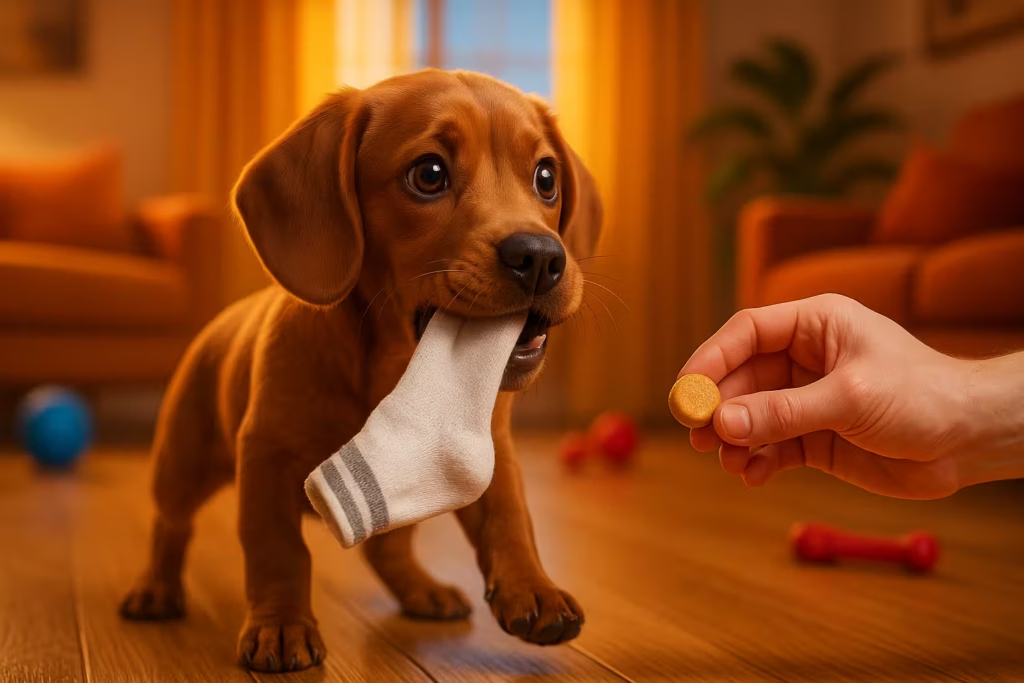
Teaching a dog the “drop it” command is one of the most useful skills in everyday life. It keeps your puppy safe, prevents resource guarding, and stops tug-of-war over socks, sticks, or dangerous items. In this step-by-step guide you’ll learn how to teach a dog to drop it using positive reinforcement, simple trade games, and short daily practice. No scolding, no prying mouths—just clear training your dog understands and enjoys.
Why “Drop It” Matters
- Safety first: Puppies explore with their mouths. “Drop it” lets you remove unsafe items—medicine, sharp objects, grapes—without a chase.
- Prevents guarding: When dogs learn that releasing items makes good things happen, they’re less likely to guard or run away with stolen objects. This approach is part of comprehensive positive reinforcement dog training methods that build trust.
- Polite play: Tug toys, balls, and chews become easy to manage. Your dog learns to release on cue and re-engage when invited.
- Less stress at home: No more yelling “No!” or grabbing. A calm, reliable cue keeps everyone relaxed.
What You Need
“Drop It” Cockpit
- Swap game (treat at nose → mark → treat → toy back)
- Say “Drop it” → then show treat
- Say “Drop it” → wait 1s → help if needed
- Cue-only: reward drop; sometimes restart play
- A safe item to start (soft toy, rope tug).
- High-value treats your dog loves (chicken, cheese, freeze-dried meat).
- A quiet space with few distractions.
- A mark word (“Yes!”) or clicker.
- Sessions of 1–3 minutes, a few times per day.
Tip: Start with easy objects your dog doesn’t adore. As the skill improves, move to more tempting things. For more advanced training techniques, you can also incorporate clicker training for dogs to mark the exact moment of success.
Core Idea: Trade and Win
Dogs repeat what pays. “Drop it” means “open your mouth and you’ll get something better.” We don’t pry jaws or threaten. We trade and then give the item back often so letting go never feels like a loss.
Dogs repeat what pays. ‘Drop it’ means ‘open your mouth and you’ll get something better.’ We don’t pry jaws or threaten. We trade and then give the item back often so letting go never feels like a loss, as recommended by positive reinforcement dog training experts.
Step-by-Step: Teach the “Drop It” Command
Teach “Drop It”: The 5-Step Swap Game
Step 1: Build the Swap Game
- Offer a low-value toy. Let your dog take it.
- Bring treats to the dog’s nose. Keep your hand still.
- As your dog sniffs and the mouth opens—mark (“Yes!”) the instant the toy drops.
- Treat, then immediately give the toy back: “Take it!”
- Repeat 5–8 times. Dog learns: “Release → treat → toy returns.” Win-win.
Why this works (psychology)
Operant conditioning: releasing the toy is reinforced by food and sometimes the toy’s return (two rewards). Premack Principle: access to a preferred activity (keep/chew the toy) acts as reinforcement for the less preferred behavior (letting go). Classical conditioning: your hand near the toy predicts good things, reducing guarding risk.
Step 2: Add the Cue “Drop It”
- Present the toy; let your dog take it.
- Say “Drop it” once, calmly.
- Pause one second, then present the treat to trigger the release.
- Mark and reward. Give the toy back.
- After a few reps, say the cue before moving the treat. If your dog releases on the cue, celebrate—now they understand.
Why this works (psychology)
Stimulus control: the cue is introduced before the prompt so the word predicts the behavior and the reward. Avoid repeating the cue—one clean cue prevents “cue poisoning.”
Step 3: Fade the Food Lure
- Say “Drop it.” Wait one second.
- If the toy falls, mark and treat from the other hand.
- If not, help with the treat at the nose, then reward.
- Across sessions, your dog drops on the word—not the lure.
- Sometimes return the toy to keep its value high.
Why this works (psychology)
Prompt fading: you’re removing the visible bait so the cue—not the sight of food—drives behavior. Reinforcement schedules: keep a high rate early, then vary (not eliminate) to build persistence without bribery.
Step 4: Practice with Easy Distractions
- Try new rooms, mild background noise, or step on the toy’s leash.
- Keep wins high: 3–5 successes → tiny difficulty bump → end the session.
- Light tug: cue “Drop it,” then resume play with “Get it!” so cues don’t end fun.
Why this works (psychology)
Generalization & proofing: dogs don’t auto-transfer skills to new contexts—gradually add distance, duration, and distraction while staying under threshold to prevent frustration.
Step 5: Use It in Real Life
- Grabs a paper towel? “Drop it.” Trade, treat, then offer a chew instead.
- During tug: cue “Drop it,” pause, then “Get it!” to restart—releasing doesn’t end fun.
Why this works (psychology)
Competing reinforcers: you’re swapping unsafe items for approved chews (functional alternatives). Premack again: brief loss of the toy followed by game resumption keeps the cue strong without conflict.
Step 1: Build the Swap Game
- Offer a low-value toy. Let your dog take it.
- Bring treats to the dog’s nose. Keep your hand still.
- As your dog sniffs the treat, their mouth opens—mark (“Yes!”) the moment the toy drops.
- Treat, then immediately give the toy back: “Take it!”
- Repeat 5–8 times. Your dog learns: “Release → treat → toy returns.” That’s a win-win.
Step 2: Add the Cue “Drop It”
- Present the toy, let your dog take it.
- Say “Drop it” once in a calm tone.
- Pause a second, then present the treat to trigger the release.
- Mark and reward. Give the toy back.
- After a few reps, say “Drop it” before moving the treat. If your dog releases after the cue and before they see the treat, celebrate—this is understanding!
Step 3: Fade the Food Lure
- Say “Drop it.” Wait one second.
- If the toy falls, mark and treat from the other hand.
- If not, help with the treat at the nose, then reward.
- Over sessions, your dog begins to drop on the word, not the lure.
- Keep the toy return sometimes. Randomly give the toy back to maintain value.
How to Teach Your Dog to “Drop It”
Click or tap on a card to flip it for details.
Step 1: Build the Swap Game
Step 1: Build the Swap Game
- Offer a low-value toy. Let your dog take it.
- Bring treats to the dog’s nose. Keep your hand still.
- As your dog sniffs, their mouth opens—mark (“Yes!”) the moment the toy drops.
- Treat, then immediately give the toy back: “Take it!”
- Repeat 5–8 times. Your dog learns: “Release → treat → toy returns.” That’s a win-win.
Step 2: Add the Cue “Drop It”
Step 2: Add the Cue “Drop It”
- Present the toy, let your dog take it.
- Say “Drop it” once in a calm tone.
- Pause a second, then present the treat to trigger the release.
- Mark and reward. Give the toy back.
- After a few reps, say “Drop it” before moving the treat. If your dog releases after the cue and before they see the treat, celebrate—this is understanding!
Step 4: Practice with Easy Distractions
- Try different rooms, add mild background noise, or step on the toy’s leash.
- Keep wins high: 3-5 successes, tiny difficulty bumps, end the session.
- Practice during light tug games, saying ‘Drop it,’ then resuming play with ‘Get it!’ This teaches your dog that commands don’t end fun, similar to other dog behavior management strategies.
Step 5: Use It in Real Life
- Dog picks up a paper towel? “Drop it.” Trade, treat, and give a chew instead.
- During tug, say “Drop it.” When released, pause a beat, then “Get it!” to restart the game. This proves that releasing doesn’t end the fun.
Common Mistakes (and Easy Fixes)
- Prying the mouth open: Feels scary and can create guarding. Use trades, not force.
- Chasing the dog: Turns it into a game of keep-away. Instead, move away and call cheerfully; be more interesting than the item.
- Only taking, never returning: If “drop it” always ends the fun, your dog won’t want to comply. Often give the item back or start a new fun activity.
- Cue overload: Don't repeat 'Drop it, drop it, DROP IT!' Say it once, then help with a treat at the nose if needed. This principle applies to all dog training commands and consistency.
- Too hard, too fast: Start with an easy toy, not the favorite goose-squeaker on day one.
Gentle Troubleshooting
- Dog freezes or growls: Back up. Use higher-value trades, increase distance, and protect your dog's space. This is especially important for puppy impulse control training. Do short, easy swaps. If guarding persists, consult a certified trainer for a resource guarding plan.
- Spits the item then snatches it back: Mark the drop, deliver the treat a step away, and place your foot gently over the item until the treat is eaten; then invite a re-take or offer a different toy.
- Releases only when food appears: Keep practicing cue → 1-second pause → treat. Gradually extend that pause. Mix in random toy returns so the cue predicts good outcomes, not just loss.
Reward Ideas That Work
- Tiny soft treats (chicken, cheese).
- A quick restart of play (tug resumes after drop).
- A tossed cookie to reset space and reduce grabbing.
- “Find it!” scatter of kibble on the floor to change focus.
- Access to the item again after a short pause—powerful for toy lovers.
7-Day Dog Drop It Training Plan
Master positive reinforcement techniques with this proven puppy obedience schedule
Proofing the Cue (Make It Reliable)
- Objects: Toy → rope → ball → cardboard → sock (safe and clean only).
- Locations: Living room → hallway → yard (long line) → porch.
- People: You → other adult → calm teen.
- Arousal: After fetch, during tug, then around routine distractions.
Move one step at a time; if success dips below 80%, dial the challenge back, following professional dog training certification standards.
Positive Puppy Enrichment — Quick Preview
Three unique, trainer-approved ideas. Open the full console for filters, time limits, and 40+ activities!

Lick Mat — Frozen
Details
- Spread thin layers (yogurt, pumpkin, wet food).
- Freeze 30–60 minutes to extend duration.
- Serve on a non-slip mat; rinse and rotate flavors.
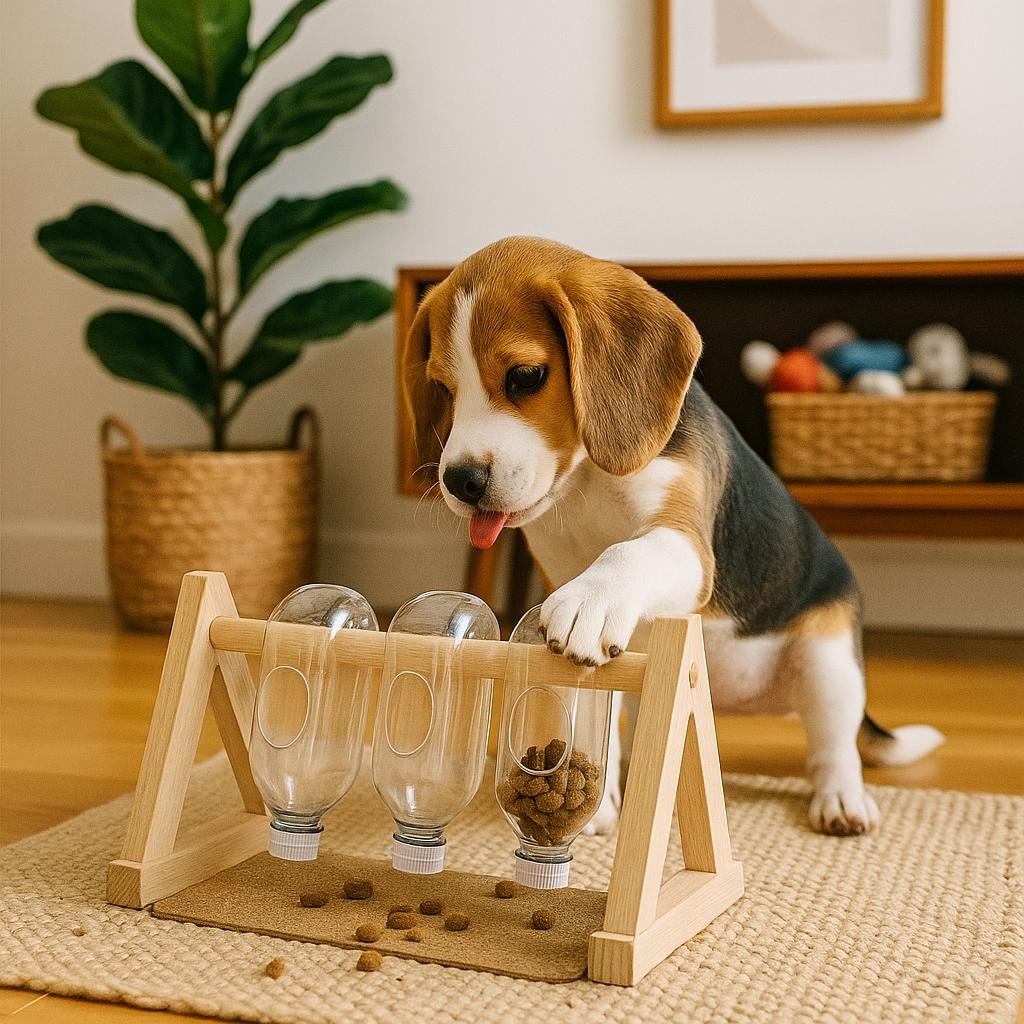
Bottle Feeder Rack
Details
- Load kibble; show one easy win.
- Let your pup learn to spin bottles for food.
- Short sessions prevent frustration; tidy edges.

Flirt Pole Bursts
Details
- 2–3 short chases with easy catches.
- Insert calm breaks; finish with sniffing.
- Avoid tight circles; protect growing joints.
The Big Picture
A reliable 'drop it' command is part of essential basic dog obedience training that every dog owner should master for safety and household harmony. Your dog learns that letting go makes life better: more treats, more games, more freedom. When you trade fairly, praise generously, and keep sessions short and sweet, your dog will happily drop socks, toys, sticks—whatever is in that curious mouth.
Practice a few minutes a day. Celebrate the wins. And when your dog hears “Drop it” and spits out the treasure like it’s no big deal, you’ll know you taught a skill that protects your pup and brings calm to your home—the positive reinforcement way.
The Psychology: Why "Drop It" Is a Game of Trust, Not Force
The psychology of teaching a dog to "drop it" is rooted in cooperation, not dominance. Instead of forcing a dog to surrender an item, this method reframes the entire interaction as a profitable trade. It taps into operant conditioning: the dog learns that the action of releasing an object (the behavior) is consistently followed by a high-value reward (the consequence). This makes them *want* to offer the behavior again in the future.
This trade-based system is also the most effective way to prevent resource guarding. When a dog learns that an approaching hand doesn't mean their treasure will be taken, but rather that something better is coming, it removes the incentive to guard. This is how to teach 'drop it' without creating resource guarding, as it builds an association of trust around valuable items.
The Key Takeaway: Shifting from Conflict to Cooperation
At its core, a positively trained "Drop It" command changes the dog's emotional response to giving things up. It teaches them that humans are partners who bring good things, not adversaries who take them away. Every successful trade reinforces this positive emotional state, strengthening the bond and making future interactions smoother. This is why a trade-based 'drop it' builds a stronger bond with your dog.
By making it a win-win game, you create a dog who willingly and happily releases items on cue, confident that they are making a great choice. This fosters a relationship based on clear communication and mutual trust.

Christopher Quinn adopted his first dog, Loki, a spirited Border Collie/Jack Russell mix, after exiting Army service in the summer of 2012. That experience sparked a lifelong passion for canine behavior and positive reinforcement training.
He studied Principles of Dog Training & Behavior at Penn Foster and has since worked with hundreds of dogs from all backgrounds. Over the past two years, Christopher has fostered more than 30 rescue dogs, giving each one a chance at a better life.
Today, he continues to write, teach, and share insights on humane dog training, blending hands-on experience with a decade of dedicated study.