
How to Teach a Dog to Clean Up Toys: The Ultimate Guide
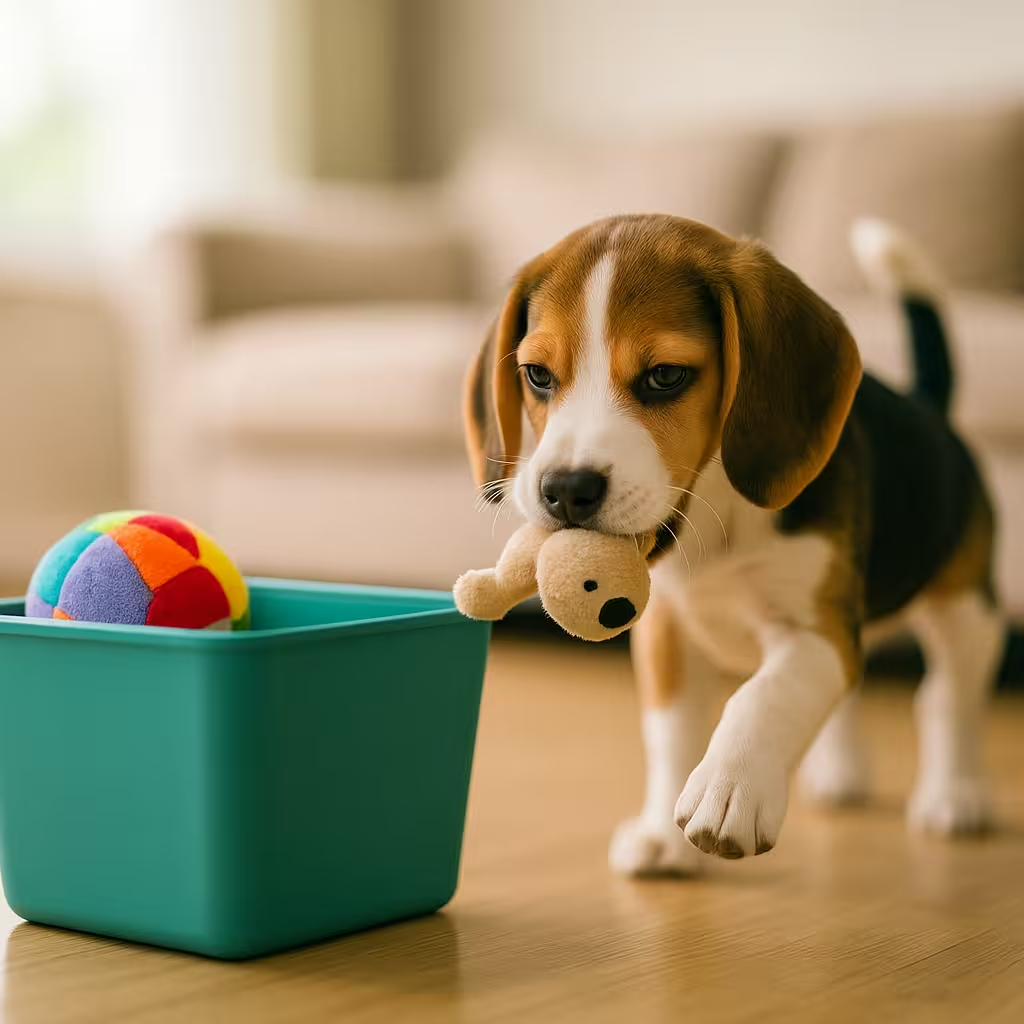
Turn a messy floor into a confidence-building brain game. Below you’ll find a proven, reward-based plan that uses positive reinforcement fundamentals, operant conditioning, and shaping. It’s a friendly way to teach a dog to clean up toys while boosting problem-solving and optimism, turning a daily chore into a highlight of their day.
Key Takeaways
- Use short, enthusiastic sessions (5–10 minutes) and always end on a high note.
- Reward successive approximations—tiny micro-steps toward the final goal.
- Add the verbal cue “Clean up” only when the behavior is reliable.
- Generalize the skill by practicing with different toys, in various rooms, and on new surfaces.
Teach the “Clean Up” Cue (Put Toys in the Box)
This step-by-step routine shows exactly how to teach a dog to clean up toys: mark toy-in-mouth, reinforce approaches to the bin, lure the drop, then add the cue and generalize. Success lies in patience and celebrating small wins.
Time Required
About 15–20 minutes to learn the pattern. Several short, daily sessions to polish and make it reliable.
What You’ll Need
- Low-sided toy box/basket: A shallow container makes it physically easier for the dog to succeed, reducing frustration.
- 3–6 toys your dog already enjoys: Start with favorites to build momentum before moving to less-exciting toys.
- Small, high-value treats: These should be extra-special rewards, not their regular kibble. Think tiny pieces of chicken, cheese, or freeze-dried liver.
- Clicker or a verbal marker (“Yes!”): A marker pinpoints the exact moment of correct behavior, making communication crystal clear.
-
Step 1: Mark and Reward Toy Interaction
The entire foundation of this trick is a strong, positive association with holding a toy. Before you even think about the box, you must reward the pickup. Scatter a few favorite toys on the floor. The instant your dog’s mouth touches a toy, mark it with your clicker or “Yes!” and give them a treat.
Repeat this over and over. Your only goal is to make your dog think that putting a toy in their mouth is a brilliant idea. This initial stage is the first crucial milestone to teach a dog to clean up toys.
- Common Pitfall: Waiting too long to mark. You must capture the exact moment their mouth makes contact.
- Pro-Tip: If your dog is hesitant, start by rewarding them for simply sniffing or nudging a toy. This is especially helpful if you have a puppy who is scared of new things.
-
Step 2: Introduce the Toy Bin
Once your dog is eagerly picking up toys, place the toy bin between you and the dog. Now, you’ll only reward them for picking up a toy and making any movement *toward* the bin. This is called shaping, where you reward successive approximations of the final behavior.
At first, you might mark and reward just a glance toward the bin. Then, a single step. Then, getting close enough to have their head over the rim of the box. Don’t expect a drop yet; you are building a chain of behaviors piece by piece.
- Common Pitfall: Expecting too much, too soon. A dog learning to put toys in a box needs to be rewarded for tiny steps.
- Pro-Tip: Place the bin right next to a toy at first, so even an accidental interaction with the bin after picking up the toy can be rewarded.
-
Step 3: Lure the Drop—Into the Box
When your dog is comfortably holding a toy with their head over the bin, it’s time to encourage the drop. Hold a very high-value, smelly treat right over the bin, near their nose. Naturally, they will open their mouth to get the treat, causing the toy to fall into the box.
The moment it drops, mark and deliver a “jackpot”—a handful of treats, one after another, or an excited play session. You’re using classic operant conditioning: the behavior of dropping the toy in the box predicts an amazing outcome.
- Common Pitfall: Luring with a treat that isn’t valuable enough. The reward must be better than the joy of keeping the toy.
- Pro-Tip: Over time, fade the lure by pretending to have a treat, then rewarding from your other hand after the drop.
-
Step 4: Add the Cue and Generalize
Only when your dog is reliably and intentionally dropping toys into the box should you add the verbal cue. Just as they are about to perform the action, say your cue clearly, such as “Clean up!” or “Tidy time!” Now, you must generalize. Start moving the toys further from the box. Move the box to a different part of the room. Practice on carpet, then on a hardwood floor.
This final step is what makes it possible to teach a dog to clean up toys from anywhere in the house, turning a fun trick into a useful skill. For these sessions to go smoothly, effective threshold management is key to keeping excitement from boiling over into frustration.
- Common Pitfall: Adding the cue too early, which can confuse the dog and “poison” the cue by associating it with uncertainty.
- Pro-Tip: When you change the context (e.g., a new room), make it extremely easy again for the first few repetitions. Reward heavily to build confidence in the new environment.
Visualize the Training Flow
Hover or tap to flip each card and see the coaching note for that stage.
Toy in Mouth
Mark instantly; build value fast.
Approach Bin
Reinforce look → step → head over rim.
Drop in Box
Treat over bin → toy falls → jackpot.
Add Cue
Say it just before the behavior.
The Science Behind the Clean Up Game
Understanding the core training principles at play can troubleshoot issues and make it easier to teach a dog to clean up toys. This game isn’t just about obedience; it’s a deep dive into how dogs learn and solve problems.
Cognitive Enrichment and Problem-Solving
Dogs, especially intelligent breeds, need mental exercise just as much as physical. A bored dog is often a destructive dog. The task of identifying a target (toy), performing an action (pick up), and completing a sequence (move to bin and drop) is a complex cognitive puzzle. The mental exercise involved when you teach a dog to clean up toys provides significant cognitive benefits, warding off boredom and reducing anxiety. It fulfills their innate desire to have a “job,” channeling their energy into a constructive task.
The Power of Chaining and Back-Chaining
This guide primarily uses shaping, building the behavior from the first step to the last. However, the success of the game relies on a concept called “behavior chains.” Each step—pick up, walk, drop—becomes a link. The reward at the end reinforces the entire chain. An alternative but related method is “back-chaining,” where you’d teach the last step first (e.g., dropping a toy you place in their mouth over the box) and work backward. Both methods are powerful ways to build complex behaviors from simple parts.
Why the Clean Up Game Works
This tidy-up routine is more than a cute trick—it’s structured enrichment. When you teach a dog to clean up toys as a simple chain (pick up → move to bin → drop), you create clarity that lowers frustration and speeds learning. For brand-new puppies, it also supports routine and predictability as they adjust to your home.
- Confidence: Each successful drop is a win. This series of predictable successes builds a dog’s confidence and optimism, teaching them that trying new things leads to rewards. This is vital for a puppy who seems scared of everything.
- Appropriate Outlets: For breeds with a retrieving instinct (like Labs and Goldens), this game provides a perfect outlet for their genetic predispositions. It gives them a productive “job” and can be paired with other dog enrichment activities for a well-rounded routine.
- Family-friendly: It’s an excellent, safe way for children to participate in training. It offers a perfect opportunity to teach gentle mouth skills with kids, as the goal is a soft drop, not a game of tug-of-war.
- Calmer Sessions: The focused nature of the task requires thought, which helps prevent over-arousal. By using smart training management & environmental control, you can keep your dog in the optimal zone for learning.
Troubleshooting Common Issues
Even the best plans can hit a snag when you try to teach a dog to clean up toys. Patience is key. Never punish your dog for not getting it right; simply make the task easier so they can succeed.
Dog drops the toy before reaching the box
Dog won’t pick up toys
Dog grabs and runs off
Dog loses interest halfway through a session
Frequently Asked Questions
Here are answers to common questions people have when they set out to teach a dog to clean up toys and make it a reliable, fun activity.
How long does it take to teach a dog to clean up toys?
Can an older dog learn this trick?
What if my dog isn’t food-motivated?
Should I use punishment if my dog doesn’t clean up?
How do I fade lures and treats?
How do I generalize across rooms?
Is this a good enrichment activity?
My dog only cleans up one specific toy. How do I get them to put away others?
Visualizing the 'Clean Up' Game Psychology
This graph shows how core training principles contribute to positive outcomes for your dog.
Understanding the Concepts
Positive Reinforcement
Adding something the dog loves (like a treat or praise) immediately after a behavior to make that behavior more likely to happen again.
Operant Conditioning
A learning process where a dog makes an association between a behavior and a consequence (e.g., putting a toy in the box results in a reward).
Shaping
Rewarding small, successive steps toward a final, desired behavior. We reward looking at the box, then moving toward it, then dropping the toy in it.
The Psychology Behind the 'Clean Up' Game
This training method is built on a proven, reward-based plan that uses positive reinforcement fundamentals, operant conditioning, and a powerful technique called shaping to build this fun and useful skill.
Why This Method Works So Well
The tidy-up routine is more than a cute trick—it’s a form of structured enrichment. It pairs light physical movement with problem-solving, which helps most dogs relax and decompress afterward. For new puppies, it also establishes routine and predictability as they adjust to a new home.
Builds Confidence
Repeated success grows a dog's optimism and self-assurance. This is especially helpful for a puppy who might seem scared of everything, as it teaches them they can positively affect their environment.
Provides Appropriate Outlets
Giving a dog a "job" channels their natural instincts to work and problem-solve. This mental stimulation is just as important as physical exercise and helps prevent boredom-related behaviors.
Is Family-Friendly
This game is a fantastic way to involve children in dog training. It teaches the dog gentle mouth skills (how to hold and drop items softly) while also teaching kids how to interact with the dog in a positive, structured way.

Christopher Quinn adopted his first dog, Loki, a spirited Border Collie/Jack Russell mix, after exiting Army service in the summer of 2012. That experience sparked a lifelong passion for canine behavior and positive reinforcement training.
He studied Principles of Dog Training & Behavior at Penn Foster and has since worked with hundreds of dogs from all backgrounds. Over the past two years, Christopher has fostered more than 30 rescue dogs, giving each one a chance at a better life.
Today, he continues to write, teach, and share insights on humane dog training, blending hands-on experience with a decade of dedicated study.