
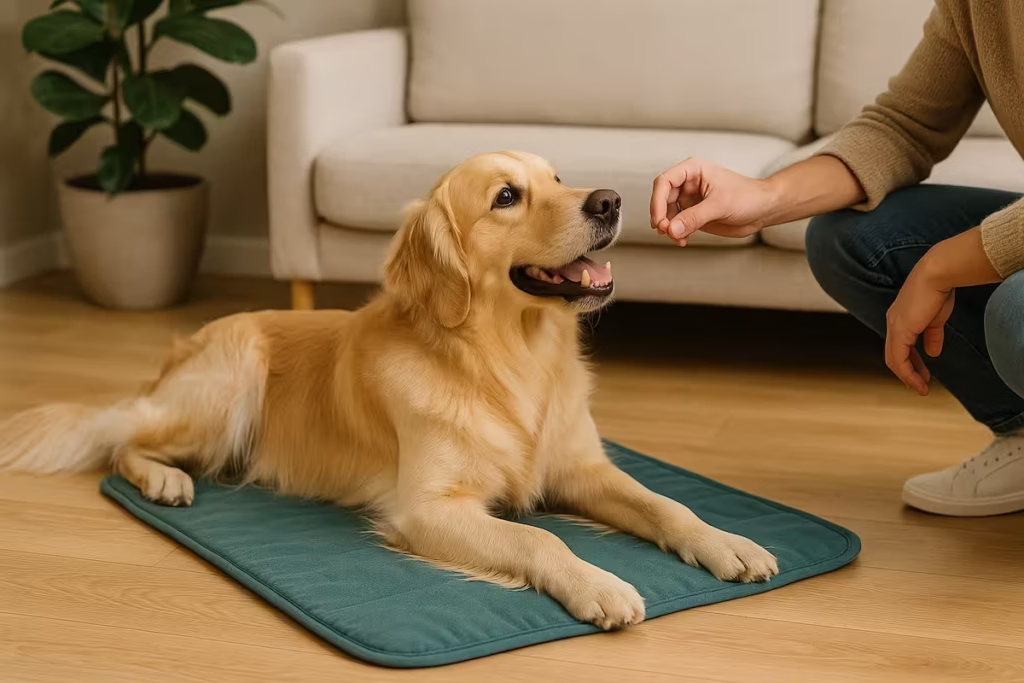
Does your dog have an “off” switch? For many dog owners, the idea of their canine companion calmly relaxing on a mat while life happens around them seems like a distant dream. Whether you’re dealing with a boisterous puppy, an anxious rescue, or just a dog with endless energy, teaching them to settle is a game-changer.
This guide will walk you through, step-by-step, how to teach your dog to settle on a mat with treats, creating a peaceful oasis for both you and your furry friend.
Teaching your dog to settle on a mat isn’t just about obedience; it’s about giving your dog a valuable life skill. A designated “settle” spot provides them with a sense of security and predictability. It’s their safe space to go when visitors arrive, when you’re cooking dinner, or simply when it’s time to unwind. By using positive reinforcement mat training, we can build a strong, positive association with the mat, making it a place your dog chooses to be.
Why Dog Mat Training is a Must-Have Skill
Before we dive into the “how,” let’s explore the “why.” Mat training is more than just a cute trick. It’s a foundational behavior that can profoundly impact your dog’s overall well-being and your life together.
Building Calmness and Confidence
For a dog, knowing what’s expected of them can significantly reduce anxiety. A mat provides a clear, predictable station where they know they are safe and can relax. This is especially beneficial for dogs who are easily overstimulated or for a puppy scared of everything, as it gives them a concrete task: stay here and chill. Over time, this predictable routine helps build their confidence in various situations.
Consistent, rewarding experiences are the cornerstone of positive reinforcement puppy training, creating a dog that is eager to learn and trusts your guidance.
Management for a Harmonious Home
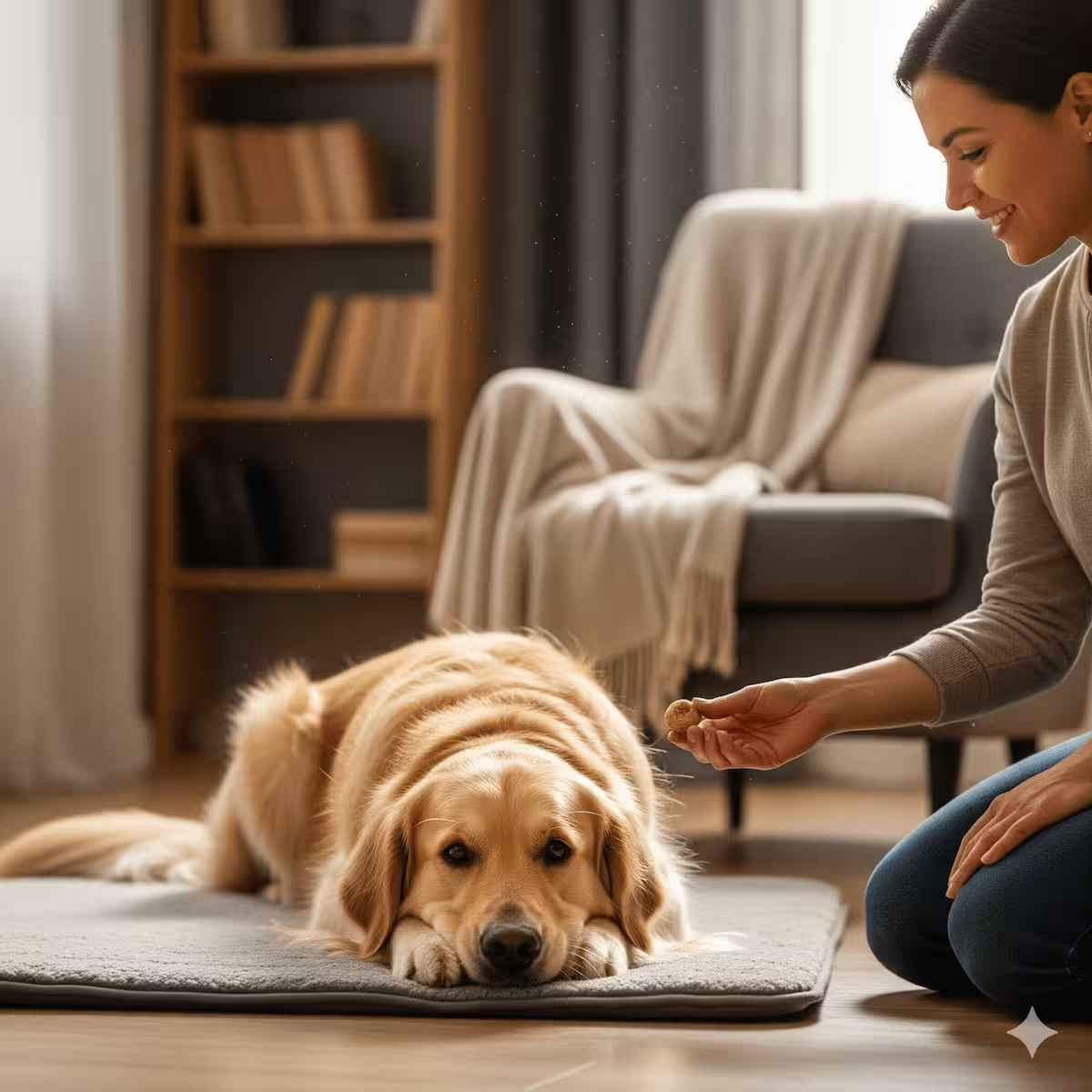
Mastering Calmness with Mat Training
Imagine this: the doorbell rings, and instead of a barking, jumping frenzy, your dog calmly trots to their mat. This is the power of mat training, a cornerstone of effective dog behavior management.
Learn More
From a scientific standpoint, mat training works by using operant conditioning—specifically, positive reinforcement. You teach your dog to associate the mat with positive outcomes (like treats or praise), creating a powerful conditioned emotional response. This makes the mat a “safe” and rewarding place.
It’s an invaluable management tool for:
- Greeting Guests: Prevents jumping by giving your dog a specific, rewarded “job.” This structured interaction reduces anxiety for both your dog and your guests.
- Mealtimes: Effectively stops begging at the table, a common household challenge. A solid “go to your mat” cue helps manage impulses.
- Calm Down Time: Helps high-energy dogs learn to self-regulate. The mat becomes a cue for relaxation, crucial for developing an emotional “off-switch.”
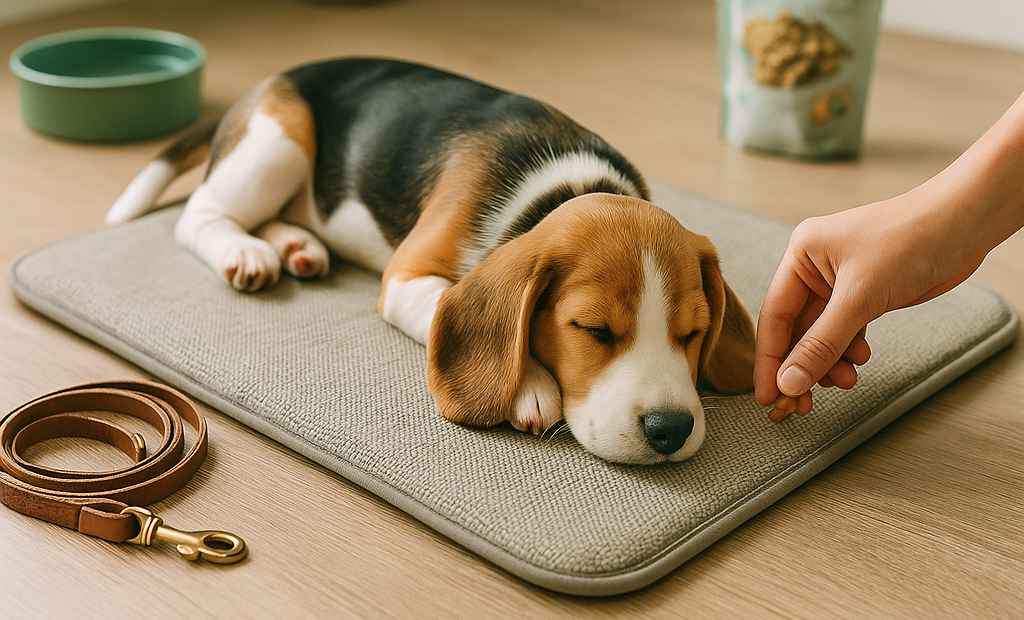
Creating Boundaries & Safe Spaces
A structured home environment is key to reducing stress and conflict, especially with multiple pets or children. Designated spaces provide predictability and security, which are essential for an animal’s well-being.
See the Benefits
This approach to home management helps prevent common behavioral issues by proactively addressing their root causes—anxiety and resource competition. By teaching boundaries, you create a more predictable and safer environment for everyone.
Key applications include:
- Multi-pet Households: Gives each animal their own designated safe area, minimizing potential conflicts over resources like food, toys, or resting spots.
- Dogs and Children: Teaches impulse control and helps establish clear boundaries, similar to how you might teach a puppy to be gentle with kids. This is critical for bite prevention and fostering positive relationships.
- Reducing Anxiety: A predictable routine and designated “safe zones” can significantly lower a dog’s baseline stress levels, leading to a calmer companion overall.
This structured approach to calmness can also be a wonderful way to teach boundaries, similar to how you might teach a puppy to be gentle with kids, creating a more predictable and safer environment for everyone.
Getting Started: What You’ll Need
The beauty of this training is its simplicity. You don’t need fancy equipment.
A Distinct Mat: Choose a mat, blanket, or raised bed that is used only for this training. It should be comfortable and easily portable.
High-Value Treats: Small, soft, and extra-delicious treats work best. Think tiny pieces of chicken, cheese, or commercial training treats. The goal is to make the mat the best place on earth.
A Clicker (Optional): A clicker can help you mark the desired behavior with precision, but a consistent verbal marker like “Yes!” works just as well.
The 5 Steps to Positive Reinforcement Mat Training
Patience is key. These steps should be broken down into short, fun sessions of just a few minutes each day. The goal is to build a foundation of success.
Step 1: Make the Mat a Magical Place
First, we want to build a powerful positive association with the mat. This step is all about making your dog think the mat is a treat dispenser.
Place the mat on the floor.
The moment your dog looks at, sniffs, or steps on the mat, say “Yes!” (or click) and toss a treat onto the mat.
Let them eat the treat and move away. Repeat this process several times. We’re not asking for any specific behavior yet, just rewarding any interaction. The key here is choice; we want the dog to discover the mat on their own. This process of rewarding small choices is also effective when you teach the “drop it” command.
Step 2: Encouraging Four Paws On
Once your dog is readily approaching the mat, we’ll start to shape the behavior.
Wait for your dog to put at least one paw on the mat. “Yes!” and treat on the mat.
Gradually, wait for them to offer more. Wait for two paws, then three, and finally, all four paws on the mat before you mark and reward. This technique of building on small successes is crucial for all kinds of training, including loose-leash walking, where you reward small moments of a slack leash.
Step 1: Create a Magical Mat
Build Positive Association
This initial phase of positive reinforcement mat training is about making the mat a “treat dispenser.” When your dog looks at, sniffs, or steps on the mat, mark the behavior with “Yes!” and toss a high-value treat onto it. The key is allowing your dog to make their own choice to interact.
Shape the Behavior
Once they reliably approach the mat, we begin shaping the behavior by rewarding bigger actions. Wait for one paw, then two, and eventually all four paws on the mat before rewarding. This method of building on small successes is foundational for effective, science-based dog training.
Step 2: Capture the “Down”
Wait for the “Down”
With your dog comfortable on the mat, we now wait for them to offer a “down” position. Patiently wait with treats ready. The moment they lie down on their own, reward them with a jackpot—several treats in a row between their paws! This heavily reinforces the calm, down position on the mat.
This technique, known as capturing a behavior, creates a much stronger and more reliable command than luring. Letting your dog solve the puzzle themselves is a core concept in modern dog training and is vital for building a confident, thinking canine partner.
Step 3: Build & Generalize
Build Duration
To improve your dog’s impulse control, we slowly build duration. After they lie down, wait one second before treating. Then gradually and variably increase the time between rewards (e.g., 2s, 5s, 3s, 7s). This teaches them to stay settled until released.
Add a Cue & Generalize
Once reliable, add a verbal cue like “Mat” or “Place” as they move towards it. Then, begin generalizing the command by practicing in different rooms and environments. This teaches your dog that the cue means the same thing everywhere, making the “place” command a powerful tool for management.
Step 3: Capturing the “Down”
Now that your dog is comfortably standing on the mat, we’ll wait for them to offer a “down.”
With your dog on the mat, just wait. Have your treats ready.
The moment they lie down, have a mini “jackpot” party. Say “Yes!” and give them several treats in a row on the mat between their paws. This makes the down position extra rewarding.
If your dog is struggling, you can lure them into a down position once or twice, but try to let them figure it out on their own. Capturing a freely offered behavior makes it much stronger. This is a core concept in positive reinforcement mat training. This patient approach is also vital when helping a shy puppy socialize with strangers, allowing them to move at their own pace.
Step 4: Building Duration
Your dog is now lying on the mat! The next step is to teach them to stay there for longer periods.
Ask your dog to go to their mat. Once they lie down, mark and treat.
Wait just one second, then mark and treat again (while they are still lying down).
Slowly increase the time between treats: two seconds, then five, then three, then seven. Vary the duration to keep them engaged. This is very similar to the impulse control required when teaching your puppy to stay.
Step 5: Adding a Cue and Generalizing
Once your dog is reliably going to the mat and lying down, you can add a verbal cue like “Mat,” “Place,” or “Settle.”
As your dog is moving toward the mat, say your cue.
Mark and reward when they lie down.
Start practicing in different rooms of the house. This helps your dog understand that “Mat” means the same thing everywhere. This is a more advanced version of the “place” command, which is a great starting point for many dogs. You can learn the basics of how to teach your dog the place command here.
A Peaceful Pup: Interactive Guide to Dog Mat Training
Visualize the science behind teaching your dog to settle on a mat.
Understanding Reinforcement Schedules
This chart illustrates one of the core principles of positive reinforcement dog training. A Variable Ratio schedule, where treats are given unpredictably after a random number of correct behaviors, builds the strongest and most reliable “settle” behavior over time. This is because the dog learns that persistence pays off, much like a slot machine. In contrast, a Continuous schedule (a treat for every success) is excellent for initially teaching the behavior but can fade quickly once treats are removed.
Understanding these scientifically-backed positive reinforcement dog training techniques is key for long-term success in how to teach a dog to settle on a mat, even with distractions.
Troubleshooting How to Teach Your Dog to Settle on a Mat with Treats
My dog keeps getting up: Your sessions are likely too long, or you’re increasing the duration too quickly. Go back a step and reward more frequently for shorter durations. Ensure your dog’s other needs, like enrichment, are met. A bored dog will have a harder time settling. Explore different enrichment activities to keep their minds engaged.
My dog chews the mat: This can be a sign of boredom or teething in puppies. Redirect the behavior. If they start to chew, calmly remove the mat for a minute. Re-introduce it and reward heavily for lying down. Chewing can sometimes be linked to over-arousal, which is a common reason for aggressive puppy biting.
My dog won’t lie down: Be patient! Just reward being on the mat for a while. You can also practice this training when your dog is naturally a bit tired. Just as with crate training a puppy at night, timing can make a big difference.
The teach your dog to settle on a mat with treats process is a journey, not a race. By using positive reinforcement mat training, you are not just teaching a command; you are building a stronger bond, fostering confidence, and creating a calmer, more well-behaved companion. This skill will serve you both for years to come, providing a simple solution for countless situations, much like how successful puppy potty training makes home life infinitely more pleasant.
The Psychology: Creating a Calm Canine
Teaching your dog to settle on a mat is a powerful exercise in canine psychology. This training method doesn’t just teach obedience; it shapes your dog’s emotional responses. The goal is to build a strong, positive association with the mat, turning it into a portable safe space where your dog chooses to relax.
This process primarily uses positive reinforcement to encourage calm behavior. By rewarding your dog for interacting with the mat, you make the act of settling a desirable and rewarding choice for them, which is far more effective than forcing them to stay put.

Christopher Quinn adopted his first dog, Loki, a spirited Border Collie/Jack Russell mix, after exiting Army service in the summer of 2012. That experience sparked a lifelong passion for canine behavior and positive reinforcement training.
He studied Principles of Dog Training & Behavior at Penn Foster and has since worked with hundreds of dogs from all backgrounds. Over the past two years, Christopher has fostered more than 30 rescue dogs, giving each one a chance at a better life.
Today, he continues to write, teach, and share insights on humane dog training, blending hands-on experience with a decade of dedicated study.